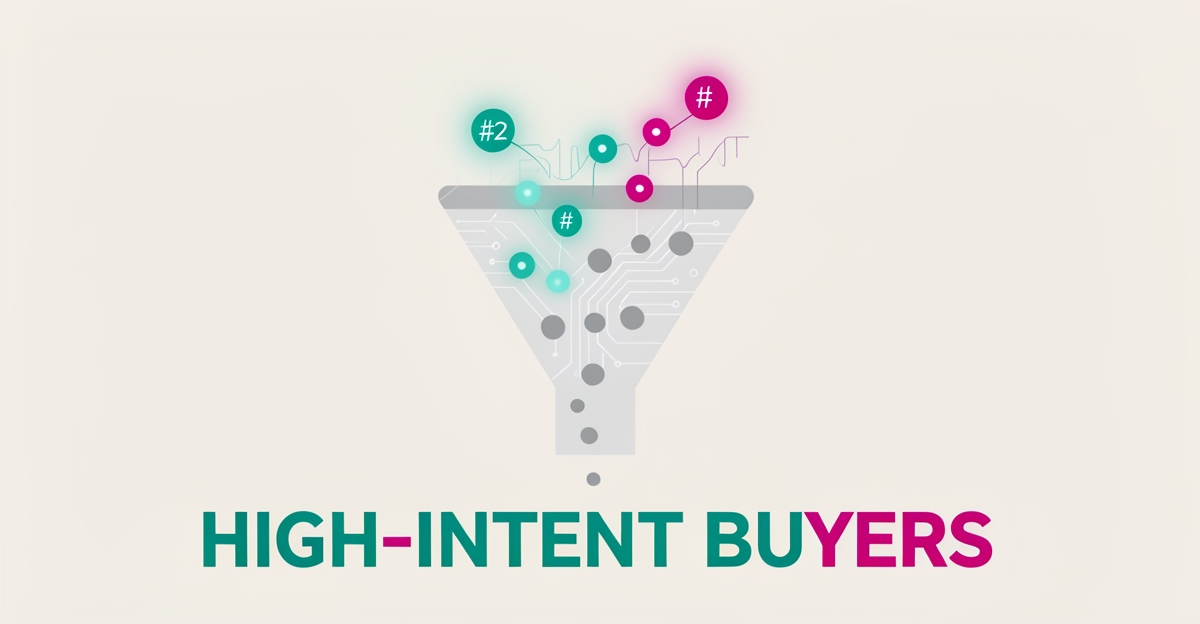
AI-Powered Lead Scoring for B2B Hardware Sales: How to Identify High-Intent Buyers
Key Facts
- Industry analyses consistently report that the majority of B2B leads never convert into sales, highlighting major inefficiencies in traditional qualification according to The Nine Hertz
- Only a small fraction of marketing-qualified leads typically advance to sales-qualified status, showing poor alignment in current scoring per The Nine Hertz
- AI-powered lead scoring can meaningfully lift conversion rates by analyzing behavioral and firmographic data in real time per Articsledge
- Organizations using AI-driven account scoring have reported faster pipeline velocity and shorter time-to-close per Starr Conspiracy benchmarks
- AI qualification can dramatically cut wasted effort, identifying best prospects in seconds rather than weeks per Empathy First Media
- Real-time score updates reflect every new interaction — content downloads, pricing page visits, demo requests per Articsledge
- The lead scoring software market has grown steadily since 2022 as B2B teams adopt predictive prioritization per Ortto
Hire a team member that works 24/7 — for less than a part-time wage.
AI receptionists, SDRs, dispatchers and 99+ roles. Trained on your business, fully managed.
Not sure where to start? Ask our AI planner
Why Traditional Lead Scoring Fails in B2B Hardware Sales
Many B2B hardware companies still rely on traditional lead scoring methods that assign points based on basic demographics or simple engagement metrics like form fills or email opens. These static models struggle to capture the nuanced buying signals in complex sales cycles involving multiple stakeholders and long decision timelines. As a result, sales teams waste significant effort on leads that appear qualified but lack genuine intent to purchase.
Industry analyses consistently find that most leads never convert into sales, highlighting the inefficiency of current qualification approaches. Even among marketing-qualified leads (MQLs), only a small fraction typically advance to become sales-qualified leads (SQLs), meaning much of the effort goes toward prospects unlikely to buy. This misalignment between scoring and actual buying behavior leads to missed opportunities and inflated customer acquisition costs.
Traditional systems also fail to adapt to evolving buyer behavior, relying instead on predefined rules that don't account for real-time intent signals such as repeated visits to pricing pages, engagement with technical content, or interactions across multiple stakeholders within an organization. Without dynamic, data-driven insights, sales teams operate with incomplete information, often prioritizing leads based on outdated criteria.
- Inability to weigh behavioral intent over firmographic fit
- Static scoring models that don't update with new interactions
- Overemphasis on easily measurable but low-value activities
- Limited visibility into multi-stakeholder engagement patterns
- No mechanism to detect early-stage buying signals in long sales cycles
These shortcomings are especially costly in B2B hardware sales, where deals often involve six-figure investments and require alignment across engineering, procurement, and operations teams. When lead scoring doesn't reflect true purchase readiness, sales cycles lengthen and win rates suffer. AI-powered lead scoring addresses these gaps by continuously analyzing behavioral, firmographic, and engagement data to surface high-intent prospects in real time—helping teams focus where it matters most.
How AI Lead Scoring Identifies High-Intent Buyers in Real Time
Traditional lead scoring treats every prospect the same, but B2B hardware buyers signal intent through complex patterns that manual rules simply miss. AI-powered systems analyze behavioral, firmographic, and historical data simultaneously, calculating conversion probability with precision that static models cannot achieve.
The mechanics rely on predictive modeling and behavioral pattern recognition working in concert. Machine learning algorithms ingest CRM records, website activity, past purchase history, and third-party intent signals to identify the sequences that precede a purchase decision. According to industry analysis, these systems continuously learn from outcomes and update scores in real time, helping sales teams prioritize high-value opportunities and lift conversion rates.
- Logistic regression and random forests calculate the probability a lead converts within a defined window
- Neural networks detect non-linear relationships between engagement signals and deal closure
- Real-time score updates reflect every new interaction — content downloads, pricing page visits, demo requests
- Firmographic filters ensure scoring aligns with ideal customer profiles for construction and manufacturing verticals
Research from B2B marketing benchmarks shows organizations using AI-driven account scoring have reported faster pipeline velocity and shorter time-to-close. Meanwhile, sales automation experts note that AI qualification can cut wasted effort dramatically, identifying best prospects in seconds rather than weeks.
For hardware manufacturers and distributors, this means sales representatives engage only when a lead's digital footprint matches proven buying patterns. AIQ Labs builds custom scoring engines as part of its AI Workflow Builds, integrating directly with existing CRM and marketing stacks to turn raw behavioral data into ranked, actionable priority lists that shrink sales cycles and boost close rates.
Implementing AI Lead Scoring: From Data Integration to Sales Enablement
B2B hardware sales teams are drowning in unqualified opportunities while high-intent buyers slip through the cracks. With most leads never converting into sales, manual prioritization is no longer sustainable for firms selling to large construction or manufacturing accounts.
A practical rollout starts with data integration. CRM records, website behavior, marketing automation data, and past purchase history must be unified to create a comprehensive view of buyer behavior. AI lead scoring then analyzes historical conversion data, behavioral patterns, and engagement signals across channels to predict likelihood to buy. This foundation enables real-time score updates as prospects interact with pricing pages, spec sheets, or RFQ forms.
Implementation follows a focused roadmap:
- Connect CRM, website analytics, and purchase data into a single scoring pipeline
- Train predictive models on your sales history to rank leads by conversion probability
- Enable real-time score changes triggered by intent signals and content engagement
- Embed scores directly in sales workflows with clear playbooks for follow-up
Sales enablement determines adoption. Even sophisticated models fail if reps distrust the output. Teams need transparent score explanations, feedback loops to correct mis-ranked leads, and incentives aligned to AI-prioritized accounts. Change management should include role-specific training and quick wins that show reduced qualification time.
The market pressure is clear. A majority of professional services companies say it is now more challenging to win a new lead, and MQL-to-SQL conversion rates remain low across B2B industries. AI lead scoring addresses this by continuously learning from outcomes and updating priorities without manual rules.
AIQ Labs integrates AI-powered lead qualification into sales platforms for B2B hardware companies—whether as a focused AI Workflow Build priced in milestones, or as part of a broader AI Operating System your team owns outright. With 200+ multi-agent systems deployed, the focus is practical: improve conversion rates and reduce sales cycle length, one workflow at a time.
Still paying for 10+ subscriptions that don’t talk to each other?
We build custom AI systems you own outright. No vendor lock-in. Full control.
Not sure where to start? Ask our AI planner
Frequently Asked Questions
Why does traditional lead scoring keep missing good buyers in B2B hardware?
How much better is AI lead scoring compared to manual rules?
Can AI really qualify leads faster than my team can?
What signals does AI actually look at for high-intent hardware buyers?
Will my sales reps trust and actually use AI scores?
Where do I start implementing AI lead scoring without a big overhaul?
Stop Chasing Ghosts: Turn Your Pipeline into a Precision Engine
B2B hardware sales cycles are too complex and costly to rely on static scoring models that miss real buying intent. By unifying CRM, website, and purchase data, AI-powered systems surface high-intent prospects in real time—teams using AI-driven account scoring have reported faster pipeline velocity and shorter time-to-close, according to B2B marketing benchmarks. The result is less wasted effort on unqualified leads and more time engaging buyers who are actually ready to move. If your team is still manually prioritizing leads or relying on outdated point systems, the gap between effort and outcome will only widen. AIQ Labs builds bespoke AI lead scoring engines—whether as a single fixed-price AI Workflow Build or as part of a connected AI Operating System—that integrate directly with your existing sales stack, turning raw behavioral data into ranked, actionable priorities that shrink cycles and boost win rates. Ready to see which leads are actually worth your time? Start with the two-minute Fit Check at https://aiqlabs.ai/apply, then book a free 30-minute strategy call at https://aiqlabs.ai/book to map your highest-ROI automation opportunity. No pitch—just a clear-eyed assessment of where AI can move the needle for your sales team.
Make AI your competitive advantage — not just another tool.
Strategy, implementation and ongoing optimization. One partner, end to end.
Not sure where to start? Ask our AI planner