AI-Powered Lead Scoring: How Surety Bonding Agencies Can Prioritize High-Value Contractors
Key Facts
- HubSpot has reported that customers saw roughly a 36% increase in deals closed after implementing lead scoring improvements according to HubSpot customer data
- Businesses using AI-powered lead scoring have reported acquiring substantially more leads and closing more deals within a year per HubSpot customer data
- Sales teams that automate admin tasks, data collection, and customer insights can typically reclaim a meaningful share of rep time — often cited around 29% per sales automation research
- A majority of sales teams — often cited at 60% — report being overwhelmed by administrative work according to sales transformation research
- AI-powered lead scoring enables agencies to prioritize outreach to contractors with proven reliability and growth potential
- Clean, complete, and up-to-date CRM data is essential for accurate AI lead scoring models per lead scoring research
Hire a team member that works 24/7 — for less than a part-time wage.
AI receptionists, SDRs, dispatchers and 99+ roles. Trained on your business, fully managed.
Not sure where to start? Ask our AI planner
The High Cost of Chasing the Wrong Contractors
Surety bonding agencies often find themselves chasing leads that drain resources without delivering proportional returns. Manual qualification processes consume valuable time that could be spent nurturing high-potential contractors, leading to inefficiencies across the sales pipeline. Teams end up sifting through incomplete or outdated contractor profiles, making it difficult to distinguish between low-risk, high-renewal prospects and those unlikely to convert.
According to industry research, a majority of sales teams — often cited at 60% — report being overwhelmed by administrative work, which directly impacts their ability to focus on relationship-building and strategic outreach. This administrative burden not only slows response times but also increases the likelihood of overlooking contractors with strong bonding history or upcoming project pipelines. As a result, agencies miss opportunities to engage with clients who offer the highest lifetime value.
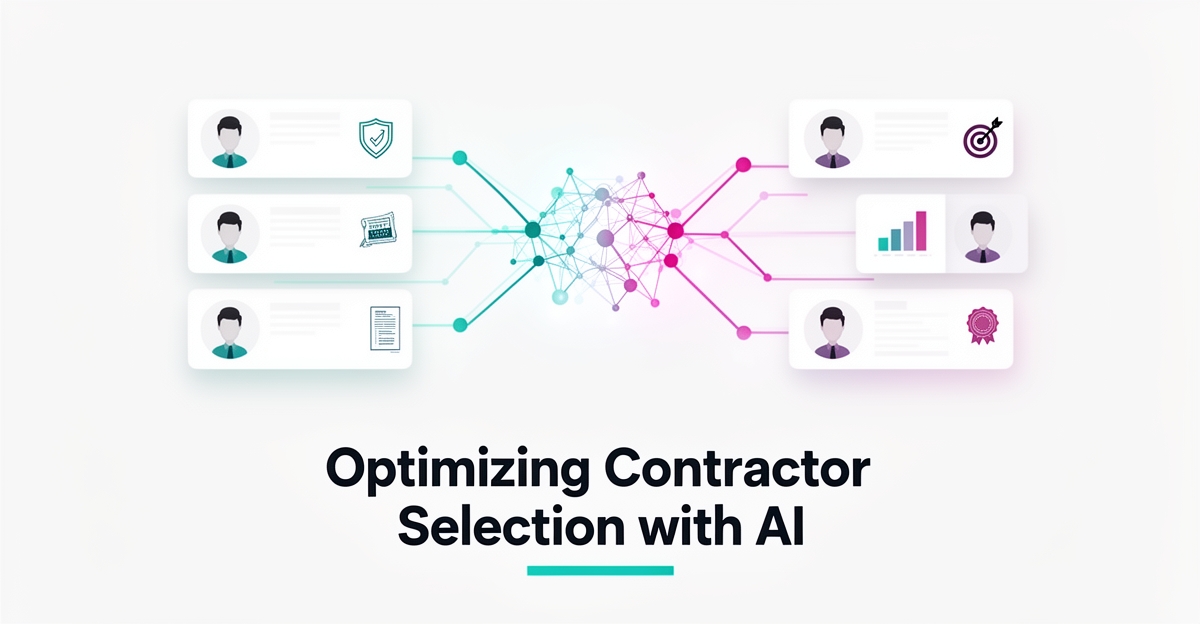
Automating lead scoring allows agencies to shift focus from volume to value. By analyzing contractor profiles, past bond performance, and project types, AI models can score leads based on profitability, risk exposure, and renewal likelihood. This enables sales teams to prioritize outreach where it matters most — targeting contractors with proven reliability and growth potential. HubSpot has reported roughly a 36% increase in deals closed for customers implementing lead scoring improvements, demonstrating how prioritization drives better outcomes.
When teams are freed from manual data entry and repetitive qualification tasks, they can dedicate more time to personalized engagement. Research suggests that around 29% of a sales rep's time can be reclaimed by automating admin tasks, data collection, and customer insights — time that can be redirected toward understanding contractor needs and tailoring bond solutions. This shift not only improves conversion rates but also strengthens client trust through more meaningful interactions.
AIQ Labs supports this transformation through [AI Workflow Builds](/workflow-builds) — rebuilding the one workflow that costs your agency the most, at a fixed price and in phases. Lead scoring systems built this way integrate directly with agency CRMs, enabling real-time prioritization and smarter resource allocation. Rather than replacing human judgment, AI enhances it — providing sales teams with data-backed insights to make faster, more informed decisions.
The result is a more efficient sales process where effort aligns with opportunity. Agencies reduce wasted outreach on low-value leads while increasing their chances of securing high-margin, long-term contractor relationships. In an industry where trust and track record are paramount, AI-powered lead scoring ensures that the right contractors are identified early, engaged effectively, and retained profitably.
How AI Analyzes Contractor Profiles to Predict Profitability
A contractor with a spotless credit score might still be a terrible bond risk — and an AI model can see why long before a human underwriter does. That gap between what manual review catches and what machine learning detects is where surety agencies either win profitable accounts or waste weeks chasing the wrong contractors.
Traditional lead scoring relies on a handful of surface signals: company size, years in business, maybe a credit check. Machine learning models go far deeper, analyzing historical bonding data, prior claims activity, project type and size patterns, work-in-progress schedules, and financial indicators simultaneously. The algorithms learn which combinations of these factors actually predict premium revenue, low claims risk, and multi-year renewals — not just which leads look good on paper.
The performance difference is measurable. According to HubSpot's customer data, businesses using AI-powered lead scoring have reported acquiring substantially more leads and closing roughly 36% more deals within a year. For a surety agency, that translates directly into more bound contractors and a healthier book of business.
What makes AI scoring particularly valuable in surety is pattern detection across variables humans rarely connect:
- Project mix signals — a contractor shifting from private to public work may signal growth or distress depending on context
- Renewal timing patterns — identifying which contractors are approaching bond renewal and likely to shop carriers
- Financial trajectory analysis — evaluating working capital trends rather than single-point balance sheet snapshots
- Claims adjacency — flagging profiles that resemble past accounts with early claims activity
The efficiency gains compound the accuracy gains. Research on sales automation suggests around 29% of a rep's time can be reclaimed by automating data collection and administrative tasks — critical when a majority of sales teams report being buried in admin work. For bonding agents, that's time redirected from spreadsheet triage to relationship-building with pre-qualified contractors.
None of this works without clean data. AI models are only as reliable as the CRM records, bonding histories, and financial inputs they train on — which is why agencies often need to fix data hygiene before scoring delivers value. AIQ Labs builds these predictive models directly into an agency's existing sales workflow, training them on the agency's own book of business so scores reflect its specific risk appetite and profitability profile.
The result is a prioritized pipeline where every outreach hour targets contractors most likely to bind, perform, and renew. As sales strategists have put it, AI won't replace salespeople — but salespeople who use AI strategically will outperform those who don't. In a relationship-driven industry like surety, that edge compounds fast.
The Data Foundation: Why Clean CRM Data Determines Success
Every AI lead scoring model is only as good as the data feeding it. For surety bonding agencies, that means the difference between a system that reliably surfaces high-value contractors and one that confidently ranks prospects based on stale, incomplete records.
The problem is common. Contractor records in a typical CRM are riddled with gaps: missing bond amounts, outdated project histories, inconsistent naming conventions, and contact details that were accurate two years ago. When machine learning algorithms analyze this data, they identify patterns in whatever they're given — including patterns that reflect messy data entry rather than genuine contractor quality. High-quality data is essential for accurate lead scoring, and it must be clean, complete, and up-to-date, according to lead scoring research.
The stakes are real. Sales teams that automate admin tasks, data collection, and customer insights can reclaim a meaningful share of a rep's time — but that automation only pays off when the underlying records are trustworthy. Feed an AI model incomplete contractor profiles, and it will score a risky prospect as a renewal-ready account simply because the historical data was never updated.
Before deploying any AI scoring model, agencies should audit their existing CRM data. This first implementation step involves reviewing contractor records for:
- Completeness — every contractor profile should include bond history, project types, and current contact information
- Consistency — standardized data entry formats so the model doesn't treat "GC" and "General Contractor" as different entities
- Currency — outdated project histories and stale renewal dates flagged and refreshed before training
- Duplicates — merged or repeated records that would skew scoring patterns
The payoff for this groundwork is measurable. HubSpot customers who invested in structured lead scoring reported substantially more leads acquired and roughly 36% more deals closed after one year — results that depend on accurate data, not just the scoring tool itself.
This is also where preparation matters more than technology. As one sales leader puts it, AI agents are coming to sales whether you're ready or not — and the difference between those who thrive and those who struggle isn't the technology, it's the preparation. Data hygiene is that preparation.
For agencies building custom scoring systems, the audit phase is where implementation partners earn their keep. AIQ Labs approaches bespoke lead scoring by first integrating with existing CRMs and assessing data infrastructure before any predictive model is trained — because a model built on flawed contractor data will produce confident, expensive mistakes.
Clean data won't score your leads for you. But without it, nothing else in your AI stack will work the way it should.
Building Your AI Lead Scoring System: A 5-Step Implementation Path
The gap between agencies that thrive with AI lead scoring and those that stall rarely comes down to the technology itself — it comes down to preparation. Before a single algorithm scores a contractor, the groundwork of clean data, documented processes, and team alignment determines whether the system delivers or disappoints.
Step 1: Survey Your Team's Current Tools
Start by identifying the AI tools your team is already using informally, then create an approved list of tools for everyone to follow. This prevents shadow AI usage and establishes a consistent foundation for scoring. With a majority of sales teams — often cited at 60% — reporting being overwhelmed by administrative work, according to sales transformation research, standardizing tools is the first move toward reclaiming lost capacity.
Step 2: Clean Up Your CRM Data
High-quality data is the non-negotiable foundation of accurate lead scoring. Your contractor records should be clean, complete, and up-to-date — bond amounts, project types, license classifications, and renewal history all feed the model. Incomplete data produces misleading scores, which means relationship managers chase the wrong contractors.
Step 3: Document Your Sales Process
Map out your bonding sales process from first inquiry to bond issuance and identify exactly where AI can support your efforts. This documentation reveals which qualification steps are repetitive enough to automate and which require the judgment of an experienced producer. It also defines what "high-value" means for your agency — profitability, risk profile, and renewal potential.
Step 4: Build a Real-Time Sales Loop
Connect your CRM to instant-response tools so scores update automatically as new contractor data arrives. Automated workflows ensure consistency in scoring and eliminate the manual bottlenecks that slow response times. The payoff is substantial: industry analysis suggests around 29% of a rep's time can be reclaimed by automating admin tasks, data collection, and customer insights.
Step 5: Measure and Adjust Continuously
Lead scoring is never a set-and-forget project. Track conversion outcomes against scores, retrain the model as your book of business evolves, and refine your thresholds each quarter. The results justify the discipline — HubSpot customer data shows companies using lead scoring report substantially more leads acquired and roughly 36% more deals closed after one year.
Keep the Human in the Loop
AI should prioritize leads and surface insights — your relationship managers should own the high-value conversations. As sales experts note, AI won't replace salespeople, but salespeople who use AI strategically will outperform those who don't. This partnership model is exactly how AIQ Labs approaches bespoke AI lead scoring: predictive models built on your sales history, integrated directly into your CRM, with your team focused where human judgment matters most.
- Survey existing AI tools and create an approved list
- Clean, complete, and update CRM records
- Document the sales process and define high-value criteria
- Connect CRM to real-time scoring workflows
- Measure results and retrain the model continuously
Implementation complexity is real, but it's manageable with the right sequence. For agencies that want a guided path — from readiness assessment through custom build and CRM integration — AIQ Labs starts every engagement with a free strategy call to map the highest-ROI opportunity first, and every build is delivered in milestones so you pay for progress, not promises. See how it works at [AI Workflow Builds](/workflow-builds) and [pricing](/pricing).
Measuring ROI: From Lead Volume to Conversion Quality
Surety bonding agencies often measure lead scoring success by raw lead volume, but true ROI lies in conversion quality. AI-powered lead scoring shifts focus from quantity to value by predicting which contractors are most likely to convert, renew, and generate long-term profitability. Agencies using AI-driven scoring typically see measurable improvements in key performance indicators that directly impact revenue. For example, HubSpot has reported roughly a 36% increase in deals closed for customers implementing lead scoring systems, demonstrating how better lead prioritization translates to tangible sales outcomes.
Beyond conversion rates, AI lead scoring reduces time-to-close by automating administrative burdens that consume sales reps' time. Research suggests around 29% of a sales representative's time can be reclaimed by automating admin tasks, data collection, and customer insights — time that can be redirected toward high-value contractor engagement. This efficiency gain allows bonding agencies to handle more qualified leads without increasing headcount, directly improving sales productivity. Additionally, a majority of sales teams report being overwhelmed by administrative work, highlighting the widespread need for automation that frees up capacity for strategic outreach.
To measure true ROI, agencies should track three core metrics: conversion rate improvement from lead to bonded contractor, reduction in average sales cycle duration, and increase in revenue per contractor relationship over time. Continuous model refinement is essential — AI scoring models must be updated with actual bonding outcomes, renewal patterns, and claims history to maintain accuracy. By feeding real-world results back into the system, agencies ensure their scoring logic evolves with market dynamics and contractor behavior. AIQ Labs supports this continuous improvement cycle as part of every build, helping agencies establish feedback loops that align lead scoring with actual business outcomes. For agencies that want lead scoring as one connected layer across the whole operation, [AI Operating Systems](/ai-operating-systems) extends the same approach beyond sales. This data-driven approach ensures AI remains a strategic asset, not just an automated task.
Still paying for 10+ subscriptions that don’t talk to each other?
We build custom AI systems you own outright. No vendor lock-in. Full control.
Not sure where to start? Ask our AI planner
Frequently Asked Questions
How much time can sales reps actually save by automating admin tasks with AI lead scoring?
What specific contractor data does AI analyze to predict profitability in surety bonding?
Why is clean CRM data so important for AI lead scoring to work effectively?
Can AI lead scoring really improve deal closure rates for surety bonding agencies?
Will AI replace surety bonding agents or just assist them?
What's the first step an agency should take before building an AI lead scoring system?
Stop Chasing Leads. Start Choosing Them.
The math is simple: surety bonding agencies that keep chasing every lead will keep losing hours to contractors who never bind. As this article has shown, AI-powered lead scoring changes that equation — analyzing contractor profiles, bonding history, and project patterns to surface the prospects most likely to convert, perform, and renew. But the technology only works when the foundation is right: clean CRM data, a documented sales process, and continuous refinement against real bonding outcomes. Get those pieces in place, and the payoff is real — businesses using lead scoring report substantially more leads acquired and roughly 36% more deals closed within a year. Your next step doesn't have to be a massive overhaul. Start by auditing your CRM data quality and mapping where manual qualification slows your team down. If you want a guided path, AIQ Labs builds custom lead scoring systems trained on your own book of business and integrated directly into your CRM — built in milestones, at a fixed price, and owned outright when complete. Take the two-minute Fit Check at [aiqlabs.ai/apply](/apply), then book a free 30-minute strategy call — a working session with an AI engineer to map your highest-ROI opportunity. If there isn't a clear win, we'll tell you that too.
Make AI your competitive advantage — not just another tool.
Strategy, implementation and ongoing optimization. One partner, end to end.
Not sure where to start? Ask our AI planner