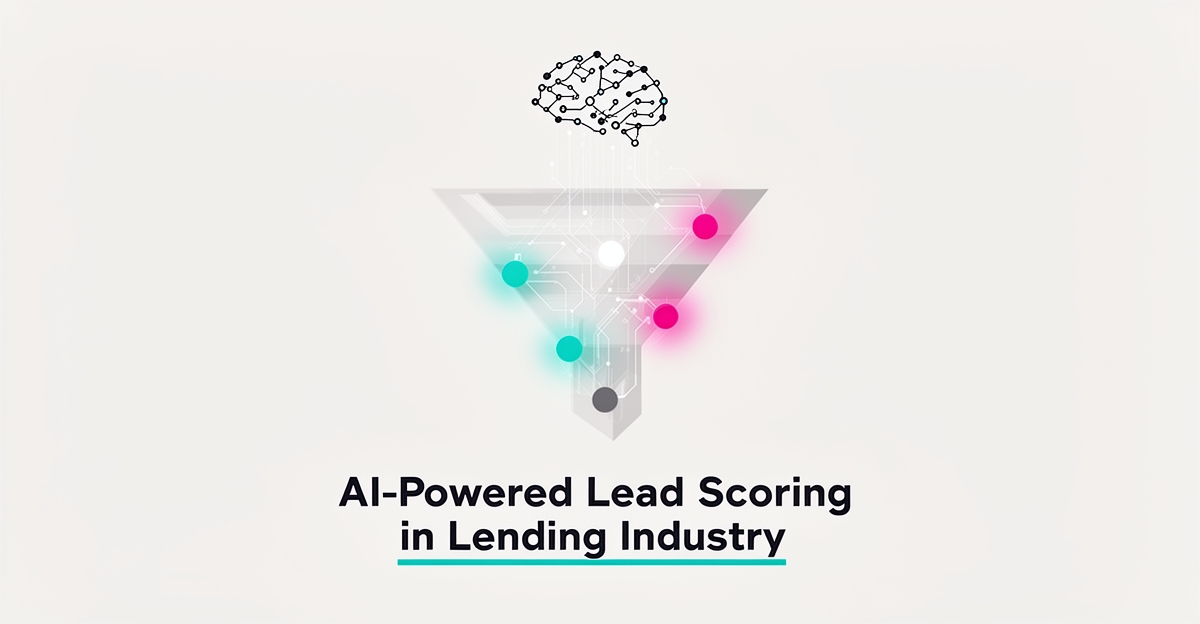
AI-Powered Lead Scoring: How Title Loan Companies Can Identify High-Value Customers
Key Facts
- AI-powered lead scoring is widely reported to lift sales acceptance rates meaningfully compared to rules-based scoring, according to Forrester research
- Industry benchmarks consistently show most marketing-qualified leads never become sales-qualified leads according to industry research
- A large share of leads—often cited around 79%—never convert into sales as reported in lead scoring benchmarks
- Speed matters: leads contacted within an hour are far more likely to convert research on sales timing shows
- Businesses implementing AI lead scoring typically report meaningful close-rate improvements on scored leads within the first few months according to deployment data
- AI scoring systems can analyze 100+ features simultaneously compared to manual systems' 5-10 static rules based on performance gap analysis
- Automated scoring typically frees up dozens of hours of sales capacity per month for title lenders per implementation research
Hire a team member that works 24/7 — for less than a part-time wage.
AI receptionists, SDRs, dispatchers and 99+ roles. Trained on your business, fully managed.
Not sure where to start? Ask our AI planner
The Lead Waste Problem in Title Lending
Title loan teams are drowning in inbound volume while revenue stalls. Every unqualified form, call, and website visit that gets treated the same as a high-intent borrower costs time, salary, and missed opportunities.
Industry benchmarks consistently show that only a small fraction of marketing-qualified leads ever become sales-qualified according to industry research, and a large share of leads—often cited around 79%—never convert into sales as reported in lead scoring benchmarks. For title lenders, that waste shows up as sales reps manually reviewing low-intent prospects, chasing incomplete applications, and following up days after interest cools.
Speed-to-lead compounds the problem. Research on sales timing shows leads are far more likely to convert when contacted within an hour. Without real-time prioritization, high-value borrowers who signal urgency through call duration, repeat site visits, and form completion slip to competitors while teams work the wrong list.
Manual prioritization creates predictable drag:
- Static rules score only 5-10 signals and degrade as buyer behavior changes
- Sales capacity is lost to manual research instead of closing
- Low-intent leads consume follow-up that should go to high-repayment-probability prospects
The result is a pipeline that looks busy but converts poorly. Poor lead prioritization directly increases cost per funded loan and bad debt exposure because intent and repayment ability are not separated early.
AI lead scoring changes the equation by analyzing hundreds of behavioral and firmographic signals from website visits, phone calls, and forms simultaneously. Models learn from closed-won and closed-lost outcomes to refine predictions automatically, surfacing borrowers most likely to complete the loan process successfully.
For title loan businesses, this means repayment ability and purchase intent can be scored in real time as new data arrives. Sales teams engage hot prospects while intent is fresh, and lower-scoring leads route to automated nurture instead of live reps.
AIQ Labs builds AI lead qualification engines as part of its AI Workflow Builds, integrating with your CRM and marketing tools for smarter outreach, helping title lenders prioritize follow-up and reduce bad debt. The focus is on identifying high-value customers faster, not just more leads.
When prioritization is accurate, teams reclaim sales capacity and protect margins. Speed-to-lead becomes a system advantage rather than a coincidence.
How AI Scoring Identifies High-Value Borrowers
Most title loan companies still qualify leads the way they did a decade ago—gut instinct, a few checkbox rules, and whoever calls back first. Meanwhile, industry data shows most leads never convert into sales, largely because teams waste time on prospects with the lowest probability of closing.
AI-powered scoring replaces guesswork with a four-stage architecture that learns from every customer interaction. Data ingestion captures every touchpoint—website visits, call duration and frequency, form completions, chat conversations, and CRM notes. Each signal feeds the model as raw material.
Feature engineering transforms that raw data into predictive indicators. A single visit to your loan terms page becomes multiple signals: visit count, recency, time-on-page, and whether the visit followed an email click. For title lenders, this means identifying repayment ability signals hidden in behavioral patterns—how a borrower navigates your site, how long they stay on the phone, and how completely they fill out applications.
Model training then runs on your historical outcomes. Supervised learning algorithms analyze which feature combinations correlate with closed-won loans versus defaults or abandoned applications. Most implementations call for a solid base of historical leads with outcome labels—commonly on the order of 1,000 or more—to train effectively, per implementation research.
Real-time inference scores every new lead the moment it enters your pipeline. As fresh behavioral data arrives, scores update instantly—no waiting for manual review. This speed matters because research shows leads are far more likely to convert when contacted within an hour.
The performance gap between manual and AI scoring is stark:
- Manual systems analyze 5-10 static rules; AI processes 100+ features simultaneously
- Rule-based scores degrade over time; AI models improve through automated retraining
- Manual qualification takes 20 minutes per lead; AI scores in milliseconds
- Traditional setups require quarterly audits; AI systems self-optimize continuously
Businesses implementing AI lead scoring typically report meaningful close-rate improvements on scored leads within the first few months, according to deployment data. For title loan companies generating hundreds of monthly leads, that translates to reclaiming dozens of hours of sales capacity while reducing bad debt through better borrower identification.
AIQ Labs builds these custom scoring engines—whether as a standalone AI Workflow Build or as part of a broader AI Operating System—to integrate directly with your existing CRM, analyzing the behavioral signals specific to title lending: call patterns, form behavior, and repayment indicators, so your team focuses only on borrowers most likely to complete loans successfully.
Building a Repayment-Focused Scoring System
Most title loan companies already have the data they need to predict repayment outcomes—they just haven't connected the dots yet. Building an AI scoring system isn't about buying new software; it's about systematically transforming your existing lead history into a predictive asset that identifies borrowers most likely to complete their loans successfully.
Start by auditing your current lead reporting infrastructure. According to Forrester research, predictive scoring can meaningfully increase sales acceptance rates compared to rules-based approaches, but only when the underlying data is clean and comprehensive. Examine how you currently capture website behavior, call logs, and form submissions. Identify gaps where valuable signals—like time spent on repayment terms pages or specific questions asked during calls—aren't being recorded systematically.
Next, integrate AI scoring models with your existing CRM and marketing platforms. Solutions like HubSpot's AI-assisted scoring and ActiveCampaign's predictive analytics demonstrate how modern systems analyze fit and engagement data directly within contact records. For title lenders, this means your scoring engine should pull from phone systems, web analytics, and application forms simultaneously, updating lead scores in real-time as borrowers interact with your digital properties.
The technical foundation requires substantial historical data. Implementation guidance generally calls for roughly 1,000 or more historical leads with clear outcome labels—closed-won and closed-lost—to train effectively. Without this volume of quality data, predictions become unreliable. If your database falls short, consider starting with a hybrid approach that combines basic predictive models with business rules while you accumulate more outcome data.
Once integrated, merge real-time intent data with your predictive models. This combination allows you to distinguish between a casual browser and someone urgently seeking funds against their vehicle title. The system should weigh behavioral signals like repeat visits to specific loan amount calculators alongside demographic indicators of repayment capacity.
Implementation follows a specific sequence:
- Audit current lead capture points and identify data silos
- Integrate scoring models with your CRM and phone systems
- Train the AI on your historical lead outcomes
- Train sales staff to interpret and act on AI-generated scores
- Establish automated retraining schedules to prevent model drift
However, predictive power brings responsibility. AI models can inherit biases from historical lending decisions, potentially discriminating against qualified borrowers from certain demographics. Regular audits of feature importance and automated bias detection are essential, particularly in regulated financial services. Ensure your system maintains audit-ready decision records and complies with fair lending practices while protecting consumer data under privacy regulations.
Finally, treat your scoring system as a living asset. Markets shift, and borrower behavior evolves. Automated retraining protocols ensure your model adapts to these changes without manual intervention. AIQ Labs specializes in building these compliance-first AI qualification engines that integrate directly with existing CRM infrastructure, turning raw lead data into actionable repayment probability scores while maintaining the rigorous audit trails financial services require.
From Score to Action: Prioritizing Follow-Up and Reducing Bad Debt
From score to action, AI-powered lead scoring transforms how title loan companies prioritize follow-up and reduce bad debt by focusing on repayment ability and intent. When leads are scored in real time based on website behavior, call patterns, and form submissions, sales teams can instantly identify high-value prospects who are most likely to complete the loan process successfully. This enables faster qualification, with AI-scored leads being engaged while intent is hot—critical since leads are far more likely to convert if contacted within an hour. By surfacing the best leads first, companies reclaim significant sales capacity; businesses implementing AI lead scoring typically free up dozens of hours of sales capacity per month and report meaningful close-rate improvements on scored leads within the first few months.
Lower-scoring leads are not discarded but intelligently routed into automated nurture sequences that warm them over time, ensuring no opportunity is wasted while maintaining team focus on high-intent prospects. This smarter nurture routing improves overall pipeline efficiency and increases revenue predictability, as AI-scored pipelines quantify conversion probability at every stage, producing more accurate forecasts. Crucially, by analyzing repayment ability indicators alongside purchase intent, AI scoring helps identify customers most likely to repay loans successfully, directly reducing default risk and bad debt. Industry research confirms that predictive scoring can meaningfully increase sales acceptance rates compared to rules-based scoring, while most leads still never convert—highlighting the cost of inefficient lead prioritization.
AIQ Labs' lead qualification engines integrate with CRM and marketing tools to deliver this capability, enabling title loan businesses to act on scored leads with precision. Engagement is flexible: Start Monthly for a low-commitment start, Build in Milestones where you approve and pay per phase as workflows ship, or Own It Outright for a system you keep. Whether you need a single scoring workflow rebuilt, AI Employees handling inbound qualification around the clock, or a full AI Operating System connecting your lending operation, the goal is the same: turn lead scores into measurable outcomes—faster follow-up, smarter nurturing, and reduced bad debt through data-driven prioritization.
Still paying for 10+ subscriptions that don’t talk to each other?
We build custom AI systems you own outright. No vendor lock-in. Full control.
Not sure where to start? Ask our AI planner
Frequently Asked Questions
How much historical data do I need to start using AI lead scoring for my title loan business?
Will AI lead scoring replace my sales team or make their jobs obsolete?
How quickly can we expect to see results after implementing AI scoring?
Can AI scoring actually help us reduce bad debt and defaults?
What happens to leads that don't score highly enough for immediate sales contact?
How does AI scoring handle compliance and fair lending regulations?
Turning Lead Waste into Profitable Action
AI-powered lead scoring transforms how title loan companies operate by replacing guesswork with data-driven prioritization. As the article outlined, manual systems waste sales capacity on low-intent prospects while high-value borrowers slip away due to delayed follow-up. By analyzing hundreds of behavioral signals—from website visit patterns to call duration and form completion—AI scoring identifies repayment-ready prospects in real time, enabling teams to engage hot leads while intent is fresh. This approach directly addresses the industry reality that most leads never convert and only a small fraction of marketing-qualified leads become sales-qualified according to industry research. The result is measurable: businesses typically report meaningful close-rate improvements within the first few months while reclaiming dozens of hours of monthly sales capacity. Lower-scoring leads aren't discarded but nurtured intelligently, ensuring no opportunity is wasted. For title lenders ready to stop chasing dead ends and start funding more qualified loans, the next step is clear: take the 2-minute Fit Check, then book a free 30-minute strategy call to map your specific bottlenecks and see how a custom AI scoring engine could turn your existing data into a predictive advantage—no vendor lock-in, just owned systems built for your workflow.
Make AI your competitive advantage — not just another tool.
Strategy, implementation and ongoing optimization. One partner, end to end.
Not sure where to start? Ask our AI planner