AI-Powered Locksmith Dispatching: How It Saves Time and Reduces Costs
Key Facts
- Most callers who reach voicemail hang up and dial the next locksmith on the list, industry surveys have long suggested the majority never leave a message.
- AI-handled inbound calls typically book at substantially higher rates than voicemail or after-hours answering services.
- Locksmith businesses using AI answering commonly report tens of thousands of dollars per year in recovered revenue from previously missed calls.
- AI dispatch can sharply reduce customer service and dispatch overhead compared to traditional answering services, which typically run several hundred dollars per month.
- First response times generally fall when AI handles triage and dispatch, since no human handoff slows the ring-to-route step.
- Modern autonomous dispatch engines evaluate dozens of factors, location, skills, workload, priority, continuously to re-plan schedules in seconds.
Hire a team member that works 24/7 — for less than a part-time wage.
AI receptionists, SDRs, dispatchers and 99+ roles. Trained on your business, fully managed.
Not sure where to start? Ask our AI planner
The Emergency-First Reality of Locksmith Dispatch
A customer locked out at 2 a.m. doesn't care about your sleep schedule, they need help now, and they'll call whoever answers first. Industry surveys have consistently suggested that most callers won't leave a voicemail when a call goes unanswered; they simply dial the next locksmith on their list. This emergency-first reality creates three distinct operational pressures that traditional dispatch methods struggle to handle: urgent 24/7 call volume, location-based routing complexity, and pricing variability that shifts with every job type and time of day.
- Ad hoc emergency dispatch where nearest-qualified-tech speed wins the job
- After-hours capture and dispatch with premium pricing
- Route density management between scheduled work and surprise lockouts
Most field service platforms still rely on manual drag-and-drop boards, meaning a human dispatcher remains the bottleneck at midnight. The market has effectively split into two tiers: AI receptionists that only book the slot, and autonomous AI dispatchers that own the schedule end-to-end, re-planning the entire board in seconds when an emergency lands. Locksmith businesses using AI answering commonly report meaningful additional revenue each year by capturing calls that would have otherwise gone to competitors.
AIQ Labs builds exactly this kind of system through AI Employees, managed AI staff like receptionists and dispatchers that work 24/7 at a fraction of the cost of a human hire, so the 2 a.m. lockout gets dispatched without waking anyone up.
How AI Dispatch Solves Call Capture and Technician Routing
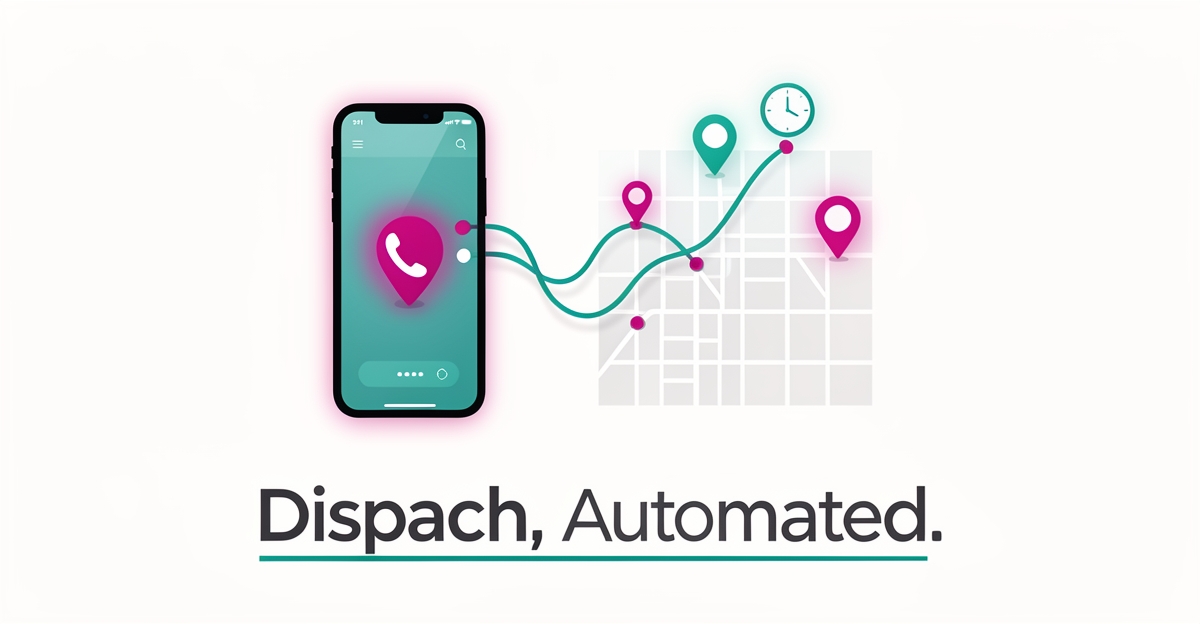
Missed calls are lost jobs in locksmithing, where the business that answers first and arrives fastest wins. AI dispatch closes the gap between ring and route by replacing slow human handoffs with instant capture, qualification, and assignment.
Call capture starts with availability. Because most callers won't leave a voicemail, every unanswered ring is a job handed to a competitor. AI-handled inbound calls typically book at substantially higher rates than voicemail or traditional answering services, because the caller gets an immediate, competent response. That capture is then qualified without delay.
Pricing accuracy is built into qualification. AI asks targeted questions about lock brands, door configurations, or vehicle makes and models to provide a quote before dispatch. This eliminates back-and-forth and sets expectations that reduce no-shows.
The market breaks AI dispatch into three maturity tiers:
- AI Assist suggests a tech or time slot, but a human dispatcher still drags every job onto the board. Most field service platforms operate here, leaving the dispatcher as the bottleneck at 2 a.m.
- AI Receptionist answers, qualifies, and books a slot, but assignment and routing remain manual or rule-based. This solves capture but not assignment.
- Autonomous AI Dispatcher owns the schedule end-to-end: it assigns, routes, balances workloads, and re-plans the whole board in seconds when an emergency lands.
Autonomous dispatch is where time and cost savings compound. Modern dispatch engines evaluate dozens of factors, technician location, skills, workload, job priority, continuously, generating long-horizon schedules in seconds and re-planning as reality changes. When a P0 emergency lockout arrives, the system bumps lower-priority jobs and rebuilds affected techs' routes instantly.
The impact is measurable. Locksmith businesses using AI answering commonly report significant additional annual revenue by capturing calls that would have gone to competitors, alongside a sharp reduction in customer service and dispatch overhead compared to traditional answering services. First response times generally fall as well, since AI triage removes the human handoff between ring and route.
For service-based operations, this is workflow automation applied to a high-stakes, location-based process. AIQ Labs' AI Workflow Builds rebuild the one workflow that costs you the most, dispatch is usually it, at a fixed price, in phases. The result is fewer missed opportunities, tighter routes, and a dispatch function that works 24/7 without waking a human.
Quantifying the Financial and Operational Impact
For locksmith businesses, the financial and operational impact of AI dispatching is measurable and immediate. AI-powered systems can sharply reduce customer service and dispatch costs compared to traditional answering services, which typically run several hundred dollars per month. This reduction stems from eliminating the need for human dispatchers to handle call intake, qualification, and routing, tasks that AI manages 24/7 without fatigue.
Beyond cost savings, AI dispatching drives significant revenue recovery by capturing calls that would otherwise go to competitors. Businesses using AI answering commonly report tens of thousands of dollars in additional annual revenue from calls that would have been missed due to voicemail or after-hours gaps. For many shops, that recovered revenue covers the cost of the system many times over, making AI dispatch a self-funding upgrade rather than an expense.
Operationally, AI dispatching enhances efficiency across scheduling and technician utilization. Automated SMS reminders and confirmation requests reduce no-shows, preserving technician time and minimizing wasted travel. Simultaneously, intelligent scheduling eliminates phone tag and double-booking, improving scheduling efficiency and enabling tighter route density between emergency calls. These improvements allow locksmith companies to handle more jobs with the same or fewer resources, directly boosting profitability.
- Sharp reduction in customer service and dispatch costs versus traditional answering services
- Meaningful annual revenue recovery from captured after-hours and overflow calls
- Fewer no-shows and tighter scheduling through automated confirmations and intelligent routing
For businesses evaluating AI transformation, AIQ Labs provides end-to-end dispatch automation that integrates call capture, intelligent routing, and dynamic rescheduling, while ensuring you own the system outright and can scale it as you grow. This positions AI dispatch not as a cost center, but as a strategic lever for sustainable growth in competitive service markets.
Implementing AI Dispatch: From Selection to Scale
Locksmith businesses face a critical decision when adopting AI dispatch: selecting the right solution for their scale and operational complexity. A one-person emergency lockout service has different needs than a 50-technician company handling commercial access control projects and scheduled rekeys. Business size directly impacts which AI dispatch tier delivers the most value, basic AI answering for solo operators, integrated reception-plus-dispatch for growing teams, and fully autonomous dispatch for multi-tech operations.
Implementation begins with mapping existing workflows to identify bottlenecks in call capture, technician assignment, and emergency rerouting. Businesses using traditional field service management tools often operate at the AI Assist or AI Receptionist level, where humans still drag jobs onto the board at 2 a.m. Transitioning to autonomous dispatch requires integrating AI with current systems so dispatch, CRM, and payment data stay synchronized. AIQ Labs handles this through its AI Operating Systems offering, one connected operating layer, built in phases and owned outright by you.
A phased rollout minimizes risk and builds team confidence. Start with an AI receptionist to capture after-hours calls and qualify leads, this alone recovers revenue currently lost to missed calls. Once call handling is stable, layer in autonomous dispatch for dynamic rerouting and long-horizon schedule generation. AIQ Labs' payment models map cleanly onto this path: Start Monthly to prove the capture layer, Build in Milestones so you approve and pay for each phase as it ships, or Own It Outright for full code and data control when dispatch becomes core infrastructure. For locksmith firms ready to see where they stand, the two-minute Fit Check at aiqlabs.ai/apply is the fastest starting point.
Still paying for 10+ subscriptions that don’t talk to each other?
We build custom AI systems you own outright. No vendor lock-in. Full control.
Not sure where to start? Ask our AI planner
Frequently Asked Questions
How much revenue can a locksmith business actually recover by using AI dispatch?
Will customers trust an AI voice agent when they're locked out at 2 a.m.?
What's the real difference between an AI Receptionist and an Autonomous AI Dispatcher?
How accurate are AI-generated quotes for locksmith jobs before a technician is dispatched?
Can AI dispatch integrate with the field service software we already use?
How much does AI dispatch cost compared to a traditional answering service?
The 2 A.M. Test: Is Your Dispatch Ready to Answer Without You?
The logic is hard to argue with: AI dispatch cuts dispatch overhead, recovers revenue from calls that would have gone to competitors, and shortens first response times, all while a human dispatcher sleeps. The difference between a business that wins the 2 a.m. lockout and one that loses it to the next locksmith on the list comes down to whether call capture and technician routing happen instantly or wait for someone to wake up. The path forward doesn't require an overnight overhaul: start by capturing after-hours calls, then layer in autonomous dispatch once call handling is stable. If you're ready to see where AI dispatch fits into your operation, take the two-minute Fit Check at aiqlabs.ai/apply and book a free 30-minute strategy call, a real working session with an AI engineer to map your biggest bottleneck. If there isn't a clear win, we'll tell you that too. Prefer to talk it through first? Reach the team at [email protected].
Make AI your competitive advantage — not just another tool.
Strategy, implementation and ongoing optimization. One partner, end to end.
Not sure where to start? Ask our AI planner