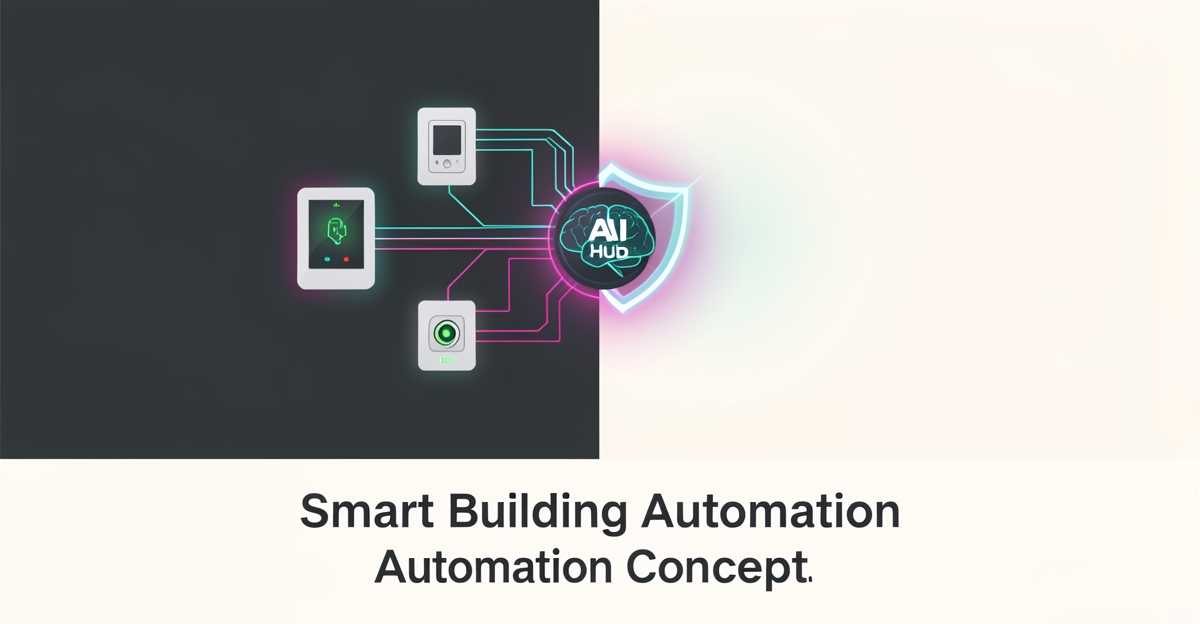
AI-Powered Maintenance Alerts: How to Prevent System Failures Before They Happen
Key Facts
- Emergency repairs typically cost several times more than planned maintenance, according to industry analysts.
- Research from firms like McKinsey suggests predictive maintenance can cut maintenance costs by up to 40%.
- Cross-industry studies suggest AI-powered predictive maintenance can reduce unplanned downtime by up to 50%.
- A majority of organizations applying AI in maintenance report measurable value within roughly six months, per industry research.
- Reported deployments, such as a chemicals manufacturer using SAP APM, have achieved roughly 35% less unplanned downtime and 20% higher asset uptime.
- Studies suggest AI predictive maintenance can substantially reduce infrastructure failures while extending asset lifespans.
Hire a team member that works 24/7 — for less than a part-time wage.
AI receptionists, SDRs, dispatchers and 99+ roles. Trained on your business, fully managed.
Not sure where to start? Ask our AI planner
The Cost of Reactive Maintenance: Why Waiting for Failure Is No Longer an Option
Waiting for a system to fail before taking action is a costly gamble that modern businesses can no longer afford. Reactive maintenance, where equipment is run until it breaks, may seem simple, but it triggers a cascade of hidden expenses: emergency repairs, rushed part sourcing, and extended downtime that disrupts operations and erodes customer trust. For smart building systems like thermostats, lighting, and security, unplanned failures don’t just inconvenience occupants, they can compromise safety, increase energy waste, and violate service-level agreements. Industry analysts consistently find that emergency interventions often cost several times more than planned maintenance. Even preventive maintenance, which schedules service based on time or usage rather than actual condition, leads to inefficiencies, servicing equipment that doesn’t need it while missing emerging faults that develop between intervals. This “guesswork” approach wastes labor, parts, and operational focus, especially in environments where smart devices run continuously and generate rich streams of performance data. AIQ Labs helps businesses move beyond these models by transforming raw device telemetry into intelligent, actionable insights, turning maintenance from a cost center into a proactive advantage. Through AI Workflow Builds, the focus is on rebuilding the one maintenance workflow that costs you the most, at a fixed price and in clear phases. By analyzing trends in temperature fluctuations, power draw, or response latency across smart thermostats, lighting arrays, and access control systems, AI-driven alerts can detect subtle degradation long before it threatens system stability. The result isn’t just fewer breakdowns, it’s a shift from firefighting to foresight, where maintenance happens only when truly needed, preserving both equipment lifespan and operational continuity. Organizations that make this transition typically report meaningful gains, studies suggest up to a 50% reduction in unplanned downtime and a 40% decrease in maintenance costs when AI-powered predictive methods replace reactive or schedule-based routines. For smart infrastructure, where reliability directly impacts tenant satisfaction and energy efficiency, this precision translates into tangible business value, fewer disruptions, lower operational risk, and stronger confidence in the systems that keep buildings running smoothly. The era of waiting for failure is over; the future belongs to those who listen to their equipment before it speaks in alarms.
How AI-Powered Predictive Maintenance Works: From Sensor Data to Actionable Alerts
The promise sounds simple: detect equipment failure before it happens. The reality, as practitioners in the field put it, is that predictive maintenance is not a dashboard feature, it is a data discipline. Whether a prediction can be trusted depends on whether physical signals, historical context, and response workflows are connected as one loop.
It starts with machine telemetry. Sensors capture critical signals from equipment, vibration, temperature, pressure, current draw, and performance metrics. The quality of any prediction depends directly on the quality and comprehensiveness of these signals, which is why sensor selection is the foundation of the entire system.
Raw sensor streams, however, are just noise until they are managed. Data flow management cleans, organizes, and makes those streams comparable over time. Then historical context enters the picture: maintenance logs, failure records, and operating conditions provide the training data that teaches the system what degradation actually looks like. Without that history, anomalies read as random noise rather than warning signs.
Edge preprocessing keeps the pipeline efficient. Gateways filter incoming signals locally, reducing bandwidth requirements, improving latency, and maintaining functionality even when connectivity is imperfect. From there, machine learning algorithms handle pattern detection, identifying subtle changes humans would miss, such as vibration drift, temperature variance, pressure instability, or combinations of factors that only matter together. Early warning systems flag these small deviations before they become critical failures.
But detection alone changes nothing. Prediction without action is just reporting. The final component is the automated action workflow, where alerts, inspections, work orders, and replacement decisions happen automatically enough to change organizational behavior. Real-world deployments show what this looks like in practice. In food processing facilities, AI agents using edge AI can detect belt tension anomalies locally, then generate contextual alerts like: “Centrifuge 4 shows 15% harmonic distortion. Bearings are in stock in Aisle 3. Schedule 30-min LOTO during 2PM shift?” Similarly, reported deployments, such as a chemicals manufacturer using SAP APM with IoT sensors and failure history, have achieved roughly a 35% reduction in unplanned downtime and a 20% increase in asset uptime, with alerts reaching maintenance teams weeks before probable failure.
The broader market reflects this shift. Industry research suggests a majority of organizations are using or piloting real-time equipment monitoring, and most of those applying AI in maintenance report measurable value within six months. Research from firms like McKinsey indicates predictive maintenance can reduce maintenance costs by up to 40% and decrease downtime by up to 50%.
This sensor-to-alert loop is exactly how AIQ Labs approaches proactive maintenance automation, building AI agents that analyze device performance trends across smart thermostats, lighting, and security systems, then automatically trigger service requests before clients ever notice a problem. When prediction and action are designed as one continuous loop, maintenance stops being a cost of doing business and becomes a source of reliability and client trust.
From Alert to Action: Implementing AI Maintenance Workflows That Drive Real Operational Value
Turning AI-generated maintenance alerts into real operational value requires more than just detection, it demands integration, timing, and actionable workflows. As industry experts emphasize, predicting a failure is only the first step; the real value lies in deciding whether to repair immediately, defer service, or reallocate resources based on production schedules and asset strategy. This alignment transforms maintenance from a cost center into a source of business intelligence.
Successful implementations connect AI alerts directly with CMMS platforms to automate work order creation, ensuring insights don’t sit idle in dashboards. For example, one food processing facility used edge AI and conversational agents to detect belt tension anomalies locally, query maintenance history and spare parts inventory, then generate contextual alerts like: “Centrifuge 4 shows 15% harmonic distortion. Bearings are in stock in Aisle 3. Schedule 30-min LOTO during 2PM shift?” This approach reportedly reduced unplanned downtime by 35% and increased asset uptime by 20%, demonstrating how prediction becomes prevention when integrated into existing workflows.
To drive adoption, organizations should align maintenance tasks with planned service windows or off-hours, bundle related repairs to minimize disruption, and translate AI insights into clear, practical steps that fit seamlessly into technicians’ routines. AI only matters if it respects how teams actually work and turns insight into action without friction, otherwise, it’s just another alert no one has time for. By embedding predictive maintenance into operational rhythms, businesses achieve measurable impact: most organizations applying AI in maintenance report measurable value within six months, and public-sector deployments have reported substantially fewer unplanned failures. The shift from reactive to predictive isn’t just technical, it’s organizational, requiring trust in data, process alignment, and a commitment to acting on what the machines are telling us. When AI, sensors, and operations are designed as one loop, maintenance stops being a necessary cost and starts driving strategic advantage, studies suggest this approach can substantially reduce infrastructure failures while extending asset lifespans and cutting maintenance costs. For AIQ Labs, this is a natural extension of its AI Operating Systems work, turning intelligent alerts into owned, integrated workflows that improve reliability and client trust, built in phases and owned outright. To explore how AI-powered maintenance workflows can be built into your operations, start with the 2-minute Fit Check, then book a free 30-minute strategy call to identify high-ROI automation opportunities.
Still paying for 10+ subscriptions that don’t talk to each other?
We build custom AI systems you own outright. No vendor lock-in. Full control.
Not sure where to start? Ask our AI planner
Frequently Asked Questions
How much can AI-powered maintenance actually reduce downtime and costs?
What's the difference between preventive maintenance and AI-powered predictive maintenance?
How does AI actually predict when equipment will fail?
Will AI maintenance alerts work with our existing CMMS and workflows?
What happens if the AI generates false alarms or misses real problems?
Is AI predictive maintenance worth it for smaller businesses or just enterprises?
From Data to Decisions: How Predictive Maintenance Powers Smarter Operations
AI-powered predictive maintenance transforms how businesses manage critical infrastructure by turning raw sensor data into timely, actionable insights, shifting from costly reactive fixes to precision interventions that prevent failures before they disrupt operations. As this article outlined, the approach can reduce unplanned downtime by up to 50% and cut maintenance costs by as much as 40%, while extending asset lifespans and improving system reliability. For organizations using smart thermostats, lighting, and security systems, the value goes beyond cost savings: it means fewer service interruptions, stronger tenant trust, and maintenance teams empowered to act on real intelligence rather than guesswork. The shift isn’t just technical, it’s operational, requiring aligned workflows, trusted data, and a commitment to letting equipment speak before it fails. If you’re ready to explore how AI-driven maintenance workflows can be built into your operations, start with the 2-minute Fit Check, then book a free 30-minute strategy call to identify high-ROI automation opportunities and see what proactive maintenance can do for your business.
Make AI your competitive advantage — not just another tool.
Strategy, implementation and ongoing optimization. One partner, end to end.
Not sure where to start? Ask our AI planner