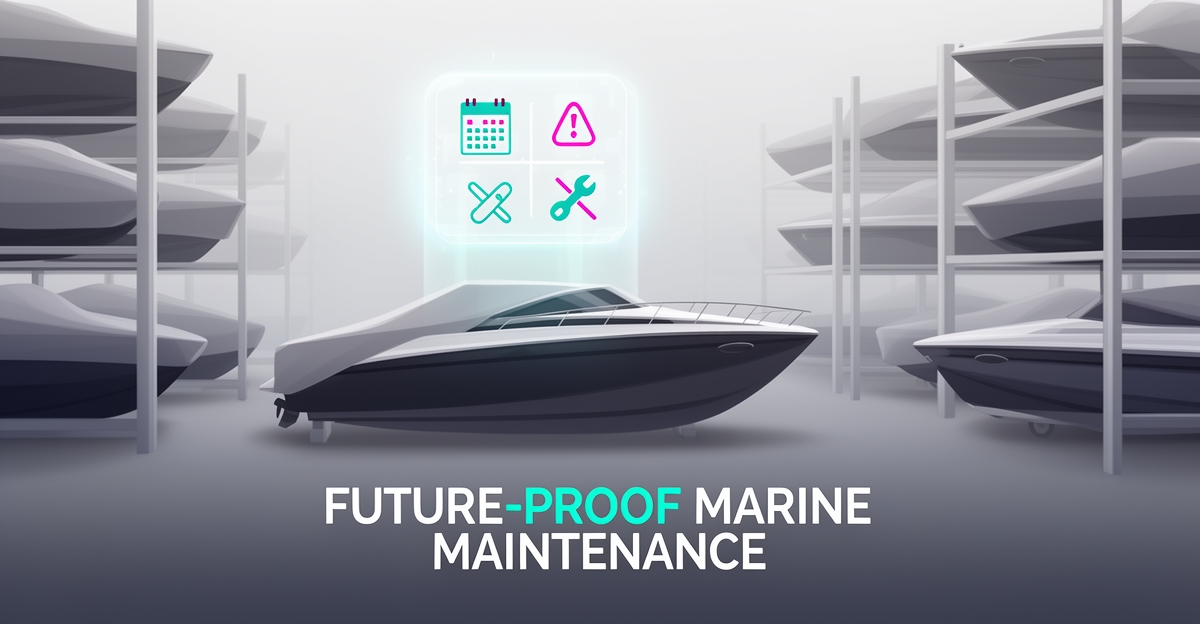
AI-Powered Maintenance Scheduling: How Boat Storage Facilities Can Predict and Prevent Issues
Key Facts
- Industry research on predictive maintenance consistently shows meaningful reductions in unplanned downtime when facilities shift from reactive to proactive approaches
- AI-powered predictive maintenance typically improves asset uptime and extends equipment lifespans by catching failures early
- AI scheduling optimizes labor costs and improves team productivity by removing manual decision-making from routine maintenance tasks
- Custom AI systems for storage facilities can reduce damage claims by addressing issues before they escalate
- AI-powered maintenance scheduling transforms reactive cycles into proactive advantages by analyzing historical data and usage patterns
- AI scheduling reduces human errors in maintenance coordination while providing real-time visibility and automated task assignment
Hire a team member that works 24/7 — for less than a part-time wage.
AI receptionists, SDRs, dispatchers and 99+ roles. Trained on your business, fully managed.
Not sure where to start? Ask our AI planner
The Hidden Cost of Reactive Maintenance in Boat Storage
Reactive maintenance in boat storage facilities creates a cascade of hidden costs that extend far beyond immediate repair bills. When issues are addressed only after failure, facilities face unplanned downtime that disrupts operations and frustrates boat owners expecting reliable service. Industry research on predictive maintenance consistently finds that a large share of unplanned downtime is preventable, meaning many operational interruptions stem from avoidable equipment failures.
These reactive patterns directly impact revenue and reputation. Unexpected breakdowns often lead to costly damage claims when boats suffer harm due to delayed maintenance, such as hull corrosion from unattended leaks or engine damage from neglected systems. Each incident not only incurs direct repair expenses but also erodes trust, as owners question the facility's ability to protect their valuable assets. Over time, repeated incidents damage online reviews and word-of-mouth referrals, making it harder to attract and retain clients in a competitive market.
The financial toll compounds through inefficient resource allocation. Staff scramble to address emergencies, pulling them from scheduled tasks and increasing labor costs through overtime and rushed repairs. Parts may need expedited shipping at premium rates, and temporary storage solutions become necessary when boats cannot be safely housed. These reactive expenses lack the predictability of planned maintenance budgets, creating cash flow volatility that complicates long-term planning for storage facility operators.
AI-powered maintenance scheduling transforms this reactive cycle into a proactive advantage. By analyzing historical maintenance data, usage patterns, and environmental factors, AI systems can predict when specific boats or storage infrastructure components are likely to need attention. This enables facilities to schedule preventative care during optimal windows, minimizing disruption to owners while extending asset lifespans. Automated notifications keep owners informed about upcoming services, demonstrating transparency and commitment to their investment.
For storage facilities seeking to mitigate these risks, AIQ Labs builds custom systems that integrate predictive maintenance scheduling into operational workflows, starting with a single AI Workflow Build targeting the maintenance process that costs you the most. These systems reduce damage claims by addressing issues before they escalate, improve client satisfaction through proactive communication, and stabilize maintenance budgets by shifting from emergency repairs to planned interventions. The result is a more resilient operation where downtime decreases, owner trust increases, and the facility's reputation for reliability becomes a competitive differentiator rather than a liability.
How AI Predicts Maintenance Needs Before Failures Occur
Most boat storage facilities operate on a reactive maintenance model, waiting for equipment to fail before taking action. This approach leads to costly emergency repairs, frustrated boat owners, and potential damage claims that could have been prevented.
AI-powered predictive maintenance changes this dynamic by analyzing patterns in historical usage data, environmental conditions, and real-time sensor readings. Facilities that implement predictive maintenance typically report meaningful reductions in unplanned downtime and measurable gains in asset uptime, according to widely cited enterprise asset management research.
The system works by collecting data from IoT sensors that monitor factors like humidity levels, temperature fluctuations, and structural stress on storage racks. AI algorithms then analyze this information to identify patterns that precede equipment failure, allowing facility managers to schedule maintenance before problems escalate.
What sets AI-powered maintenance apart is its ability to identify root causes rather than just symptoms. Rather than simply detecting that equipment is failing, the technology can surface the underlying causes, enabling facilities to address issues at their source.
For boat storage facilities, this means the AI system can detect early warning signs across multiple areas:
- Corrosion patterns on metal components exposed to saltwater air
- Unusual vibration signatures in lift systems and hoists
- Temperature anomalies in climate-controlled storage areas
- Moisture intrusion that could lead to mold or hull damage
The system then automatically schedules maintenance during off-peak hours, orders necessary parts, and notifies boat owners if their vessel needs attention. This proactive approach transforms maintenance from a cost center into a value-added service that improves client satisfaction.
AI scheduling also optimizes labor costs and improves team productivity by removing manual decision-making from routine maintenance tasks. Facility staff can focus on complex repairs while the AI handles scheduling, prioritization, and resource allocation.
AIQ Labs builds these predictive capabilities into custom systems for storage facilities, integrating sensor data with maintenance workflows and customer communication tools. With 200+ multi-agent systems deployed, the team has seen how this kind of system not only prevents equipment failures but also strengthens relationships with boat owners through proactive communication and reliable service.
From Prediction to Action: Automating Scheduling and Owner Notification
AI transforms maintenance predictions into immediate action by generating optimized work orders and triggering automated owner notifications. This shift eliminates manual calendar coordination and reduces response delays. Facilities move from reactive fixes to proactive care, ensuring boats receive attention precisely when needed.
AI scheduling optimizes task assignment by analyzing technician availability, skill sets, and location in real time. This reduces labor costs and minimizes human error in maintenance planning. The result is a streamlined workflow where the right technician receives the right task at the right time.
Automated notifications keep owners informed without requiring staff intervention. When the AI predicts a maintenance need, it schedules the service and sends a personalized alert via email or SMS. Owners gain transparency into their boat's care schedule, building trust and reducing surprise repair bills. This proactive communication directly supports client satisfaction goals and lowers the likelihood of damage claims stemming from neglected maintenance.
By integrating predictive insights with automated scheduling and notification, boat storage facilities create a closed-loop maintenance system. AIQ Labs enables this transformation through custom builds that unify data, prediction, and action, turning foresight into reliable, owner-approved service. The outcome is not just fewer breakdowns, but a stronger client relationship grounded in consistency and care.
Implementing AI Maintenance Systems: A Practical Path for Storage Facilities
The gap between knowing AI maintenance scheduling could transform your storage facility and actually running one comes down to a structured implementation path. The good news: you don't need enterprise-scale investment or a data science team to get there.
Start with an honest assessment. Before any system is built, map your current state, where maintenance requests come in, how they're tracked, and where boats sit unattended between check-ins. This readiness evaluation identifies which workflows generate the most damage claims and customer friction, and which data you already collect that could feed predictive models. Skipping this step is why so many AI pilots stall before they scale. AIQ Labs' 2-minute Fit Check is designed to surface exactly this.
Build the system around your facility, not a template. Off-the-shelf software treats every storage yard the same. A custom-built approach, like an AI Workflow Build, rebuilds the one maintenance workflow that costs you the most, at a fixed price and in phases. It analyzes your historical maintenance data to predict when individual boats need attention, schedules preventative care automatically, and notifies owners proactively before small issues become damage claims. The value of predictive maintenance is well documented across industry research: it consistently reduces downtime and extends asset uptime when implemented well.
Integrate with the tools you already use. The system should connect directly to your existing scheduling software, communication platforms, and payment tools, not replace them. Integration is where many implementations fail, but it's also where the payoff lives. AI scheduling removes manual decision-making and reduces human errors in maintenance coordination, while giving your team real-time visibility and automated task assignment throughout the day.
A practical implementation typically follows this sequence:
- Assess current workflows, data quality, and high-value automation targets
- Build the custom prediction and scheduling engine trained on your facility's history
- Integrate with existing CRM, scheduling, and communication tools
- Deploy with staff training and owner-facing notification workflows
- Optimize continuously as the system learns from outcomes
Own what you build. Perhaps the most important decision is the ownership model. Subscription-based point solutions create platform dependencies and recurring costs that compound over time. An AI Operating System built in phases and owned outright, code, agents, and data, becomes an appreciating asset rather than a rent payment. This is the difference between buying a tool and building infrastructure.
That distinction matters more than ever. As AI moves from a software race to an infrastructure race, the businesses that own their intelligent systems will operate with a durable advantage.
For facilities ready to explore this, the entry point is low-risk: take the Fit Check, then book a free 30-minute strategy call to map your biggest bottleneck and identify high-ROI automation opportunities. If there isn't a clear win, a good partner will tell you that too. You can also reach the team directly at [email protected].
Your Next Maintenance Cycle Starts Now
The shift from reactive to predictive maintenance represents more than an operational upgrade, it transforms how boat storage facilities protect assets and build trust. By implementing AI-powered scheduling that analyzes historical data and environmental factors, facilities can address issues before they escalate into costly damage claims, optimize technician workflows, and keep owners informed through automated notifications. The result is a measurable impact: predictive approaches consistently deliver meaningful reductions in unplanned downtime and gains in asset uptime. For facility operators ready to move beyond emergency repairs and budget volatility, the path forward begins with understanding your specific maintenance patterns and automation opportunities. AIQ Labs builds these custom predictive systems for storage facilities, whether as a single AI Workflow Build or a full AI Operating System you own outright, turning maintenance from a cost center into a competitive advantage. Start with the 2-minute Fit Check to map your facility's highest-value automation targets and discover whether AI-powered scheduling fits your operational goals.
Make AI your competitive advantage — not just another tool.
Strategy, implementation and ongoing optimization. One partner, end to end.
Not sure where to start? Ask our AI planner