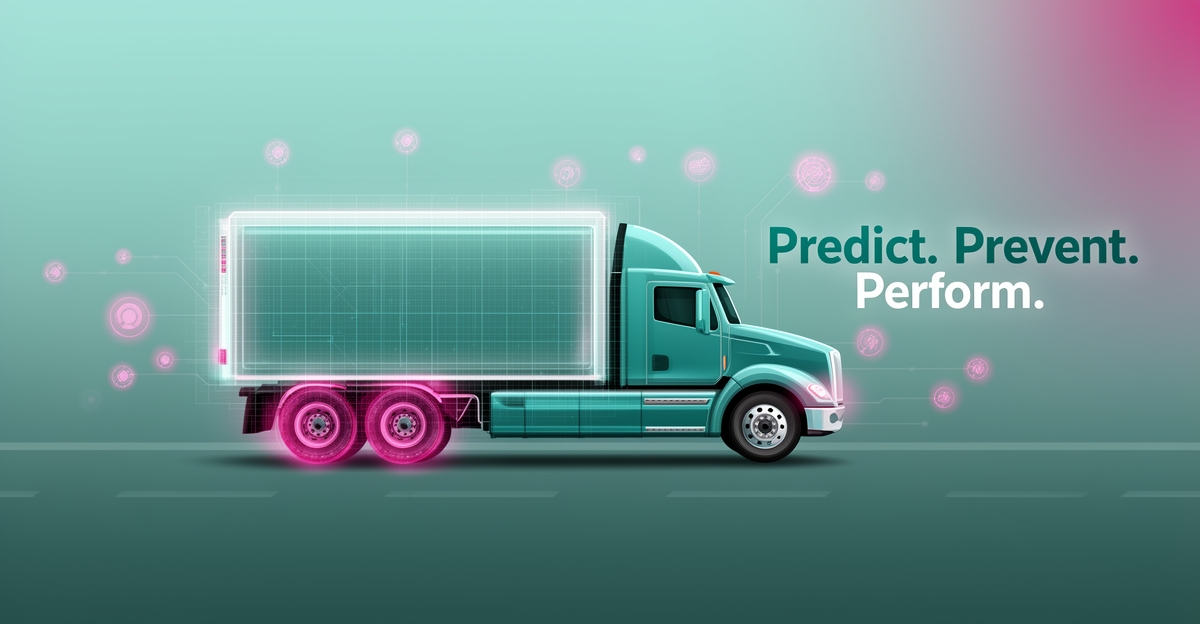
AI-Powered Maintenance Scheduling: How Refrigerated Fleets Can Prevent Breakdowns
Key Facts
- Businesses with full asset visibility typically boost maintenance productivity and cut repair costs through proactive intervention according to industry research
- Predictive maintenance is commonly reported to reduce downtime by 30-50% and save 18-25% on maintenance costs per market analysis
- AI-powered systems are frequently reported to deliver strong ROI within 12-18 months when replacing reactive maintenance per documented results
- Emergency repairs and overtime labor from sudden failures are avoidable cost drivers in refrigerated fleets per cold storage analysis
- AI analyzes vehicle usage, temperature cycles, and route data to predict maintenance needs before failures occur as noted in fleet operations research
- The AI predictive maintenance software market is projected to reach roughly $91 billion by 2033 per industry projections
- Unplanned downtime from reactive maintenance disrupts route planning and capacity in refrigerated transport per operational impact findings
Hire a team member that works 24/7 — for less than a part-time wage.
AI receptionists, SDRs, dispatchers and 99+ roles. Trained on your business, fully managed.
Not sure where to start? Ask our AI planner
The Hidden Cost of Reactive Maintenance in Refrigerated Fleets
A single unplanned breakdown in a refrigerated trailer can mean spoiled cargo, missed deliveries, and emergency repair bills that erase a week of margin. For fleets running on reactive maintenance, those events are not exceptions — they are the operating model.
Reactive maintenance waits for a failure signal. That signal often arrives as a temperature excursion, a seized compressor, or a roadside breakdown with perishable freight on board. Traditional approaches cannot leverage usage patterns, temperature cycles, or route data for foresight, so teams are forced to respond instead of prevent.
The financial and operational toll compounds quickly. According to industry research, businesses with full visibility into their assets have reported meaningful gains in maintenance productivity and notable reductions in repair costs. Without that visibility, fleets absorb higher labor hours, expedited parts, and lost revenue from downtime.
Results reported across platforms commonly show 30-50% downtime reduction and 18-25% maintenance cost savings when predictive approaches replace reactive ones, per market analysis of AI predictive maintenance software. The shift is from fixing what broke to preventing what will break.
Reactive maintenance creates recurring cost drivers that are avoidable with foresight:
- Emergency repairs and overtime labor triggered by sudden failures
- Cargo loss and customer penalties from temperature excursions in transit
- Unplanned vehicle downtime that disrupts route planning and capacity
- Shortened asset life from repeated stress on components operating past optimal thresholds
These costs hide in separate budgets — maintenance, operations, claims — which makes the total impact hard to see until a quarter review. AI analyzes vehicle usage, temperature cycles, and route data to predict maintenance needs before failures occur. This proactive approach reduces downtime and repair costs, a capability AIQ Labs builds into custom AI workflow builds designed for heavy-duty refrigerated fleets.
In cold storage operations, analysis of AI operating systems notes that AI shifts temperature control, inventory tracking, and equipment maintenance from reactive to predictive. The same logic applies on the road, where sensor data and telematics create a continuous health picture for each unit.
The market is responding. The AI predictive maintenance software market is projected to reach roughly $91 billion by 2033, reflecting broad adoption beyond refrigerated fleets into cold storage, manufacturing, and energy. For fleet operators, the question is no longer whether predictive maintenance works, but how quickly reactive costs can be replaced with predictable uptime.
How AI Predicts Maintenance Needs Before Failures Occur
Refrigerated fleets face constant pressure to maintain cargo integrity while minimizing costly breakdowns. Traditional reactive maintenance often leads to unexpected failures during critical delivery windows, resulting in spoiled goods and missed deadlines. AI-powered predictive maintenance transforms this dynamic by analyzing real-time data from vehicle usage, temperature cycles, and route patterns to forecast issues before they occur. This shift from fixing failures to preventing them delivers measurable operational resilience for temperature-sensitive logistics.
AI systems process continuous streams of telematics and sensor data to detect subtle anomalies that precede mechanical wear or refrigeration unit degradation. By correlating historical failure patterns with current operating conditions, the technology identifies early warning signs invisible to manual inspections. According to industry research, this approach is commonly reported to reduce unplanned downtime by 30-50% across heavy-duty fleets, directly translating to fewer missed deliveries and higher asset availability. The predictive capability allows maintenance teams to schedule interventions during planned stops, eliminating emergency roadside repairs.
The financial impact extends beyond avoided downtime to significant reductions in both repair expenses and parts inventory costs. Addressing minor issues before they escalate prevents catastrophic failures that require expensive component replacements or extended shop time. As noted in the same research, businesses implementing AI-powered predictive maintenance commonly report 18-25% lower maintenance costs within the first year of deployment. For refrigerated fleets specifically, this means protecting both the vehicle investment and the high-value perishable cargo it carries, creating a dual layer of risk mitigation.
Key data inputs that fuel accurate predictions include engine hours under load, compressor cycling frequency, ambient temperature exposure, and route-specific stressors like mountainous terrain or urban stop-and-go traffic. AI models weigh these variables against historical failure databases to generate risk scores for individual subsystems. This enables prioritization of maintenance tasks based on actual condition rather than fixed intervals, optimizing technician time and parts utilization. The result is a maintenance strategy that evolves with each vehicle's unique operational profile.
By anchoring maintenance decisions in data-driven predictions rather than calendar-based guesses, refrigerated fleets gain real control over their operational reliability. This proactive stance not only safeguards the cold chain but also positions fleets to scale confidently, knowing their assets are maintained precisely when and where needed. For businesses seeking to implement such systems, AIQ Labs builds owned, production-ready predictive maintenance platforms — either as a standalone workflow build or as part of a broader AI operating system — tailored to the specific data streams and failure modes of refrigerated transport operations.
Implementing AI-Powered Scheduling: From Data to Action
Deploying AI-powered maintenance scheduling begins with a clear assessment of fleet assets and operational patterns. Refrigerated fleets must first identify critical equipment — such as compressors, temperature control units, and insulation systems — that directly impacts cargo integrity and uptime. This foundational step ensures monitoring efforts focus on components where failure carries the highest operational and financial risk, aligning with AIQ Labs' discovery phase that prioritizes high-value automation targets based on business impact.
Next, fleets install IoT sensors to capture real-time data on vibration, temperature cycling, power consumption, and runtime hours. These data points feed into AI models trained on historical maintenance logs, repair records, and failure events. As noted in industry research, businesses with full visibility into their assets typically improve maintenance productivity and reduce repair costs through proactive intervention enabled by continuous monitoring and predictive analytics.
Once integrated, the AI system analyzes usage patterns, route data, and environmental stressors to forecast component wear and predict optimal maintenance windows. Training the algorithm on historical data allows it to distinguish between normal operational variance and early failure signals. Results reported across platforms commonly show 30-50% downtime reduction and 18-25% maintenance cost savings when AI-driven predictions trigger timely interventions, transforming maintenance from a reactive cost center into a predictable, optimized process.
Finally, the system generates automated work orders when risk thresholds are exceeded, routing alerts to maintenance teams or triggering AI Employees for scheduling coordination. This closed-loop approach ensures predictions lead to action, minimizing unplanned breakdowns and extending asset lifespan. By following these steps — sensor deployment, data integration, model training, and automated response — refrigerated fleets can achieve measurable improvements in reliability and cost efficiency, turning predictive insights into sustained operational advantage.
Still paying for 10+ subscriptions that don’t talk to each other?
We build custom AI systems you own outright. No vendor lock-in. Full control.
Not sure where to start? Ask our AI planner
Frequently Asked Questions
How much downtime can AI-powered predictive maintenance actually reduce for refrigerated fleets?
What kind of maintenance cost savings can I expect in the first year of implementing AI predictive maintenance?
Is AI predictive maintenance only useful for refrigerated fleets, or can it work in other industries too?
What data does AI use to predict maintenance needs in refrigerated transport?
How quickly can I see a return on investment from AI predictive maintenance for my fleet?
What are the main challenges when implementing AI-powered predictive maintenance software?
From Roadside Emergencies to Predictable Uptime
The math is hard to argue with. Fleets that replace reactive maintenance with AI-driven prediction commonly report 30-50% less downtime and 18-25% lower maintenance costs, with strong ROI often reported within 12-18 months. For refrigerated operations, that means fewer spoiled loads, fewer missed delivery windows, and compressors replaced on your schedule — not the highway's. The path forward doesn't have to be overwhelming: start by identifying the components where failure hurts most, instrument them with sensors, and let AI trained on your own usage, temperature, and route data surface problems before they become breakdowns. Because every fleet's data streams and failure modes are different, this is exactly where a custom-built system outperforms off-the-shelf software — something AIQ Labs builds for heavy-duty refrigerated fleets, with the flexibility of starting monthly, building in milestones, or owning the system outright. Curious what that could look like for your fleet? Take the two-minute Fit Check, then book a free 30-minute strategy call — a real working session with an AI engineer to map your biggest maintenance bottleneck and, if there's a clear win, exactly how to capture it.
Make AI your competitive advantage — not just another tool.
Strategy, implementation and ongoing optimization. One partner, end to end.
Not sure where to start? Ask our AI planner