AI-Powered Mapping: How Utility Contractors Can Predict Line Breaks Before They Happen
Key Facts
- 46% of global infrastructure assets are 40+ years old according to Eurostat
- The U.S. faces a multi-trillion-dollar infrastructure investment gap per ASCE
- 39% of U.S. roads are in poor or mediocre condition per ASCE
- AI-powered predictive maintenance is associated with roughly 25% longer asset life per iFactory research
- Data-driven capital planning can cut lifecycle costs by up to 35% per iFactory research
- Mobile inspections run up to 40% faster with AI risk maps per iFactory research
- AI-powered mapping reduces emergency repair frequency by identifying failure points early per iFactory research
Hire a team member that works 24/7 — for less than a part-time wage.
AI receptionists, SDRs, dispatchers and 99+ roles. Trained on your business, fully managed.
Not sure where to start? Ask our AI planner
The Hidden Cost of Reactive Utility Maintenance
Reactive repairs don't just fix breaks, they compound them. For utility contractors, aging networks and a break-fix mindset create a cycle of escalating cost, risk, and customer disruption that predictive systems are built to interrupt.
Infrastructure age is a baseline risk. Eurostat data shows 46% of global infrastructure assets are 40+ years old, placing vast portions of water, power, and gas networks past their prime design life. Older pipe and cable systems are more vulnerable to soil movement, corrosion, and weather stress, which increases the likelihood of sudden failures in the field.
The financial pressure is systemic. The United States faces a multi-trillion-dollar infrastructure investment gap, a shortfall that forces contractors to stretch maintenance budgets while demand for reliability rises. With 39% of U.S. roads in poor or mediocre condition, the broader asset condition picture signals underinvestment that utility networks mirror.
Reactive maintenance amplifies those costs. Emergency callouts, overtime crews, traffic control, and restoration work drive up total cost of risk far beyond the repair itself. Outages erode customer trust and trigger regulatory exposure, while repeated spot fixes defer the data-driven capital planning needed for long-term resilience.
Predictive approaches change the economics. Infrastructure asset management research finds AI-powered predictive maintenance can deliver roughly 25% longer asset life and up to 35% lower lifecycle costs through data-driven capital planning. Field operations also benefit, with mobile inspections running up to 40% faster when risk maps guide crews to the right locations first.
The hidden cost of reactivity shows up across operations:
- Unplanned outages that interrupt service and require emergency mobilization
- Asset degradation accelerating because failure points are identified too late
- Capital misallocation from repairing symptoms instead of prioritizing high-risk segments
- Crew fatigue and safety exposure from repeated emergency deployments
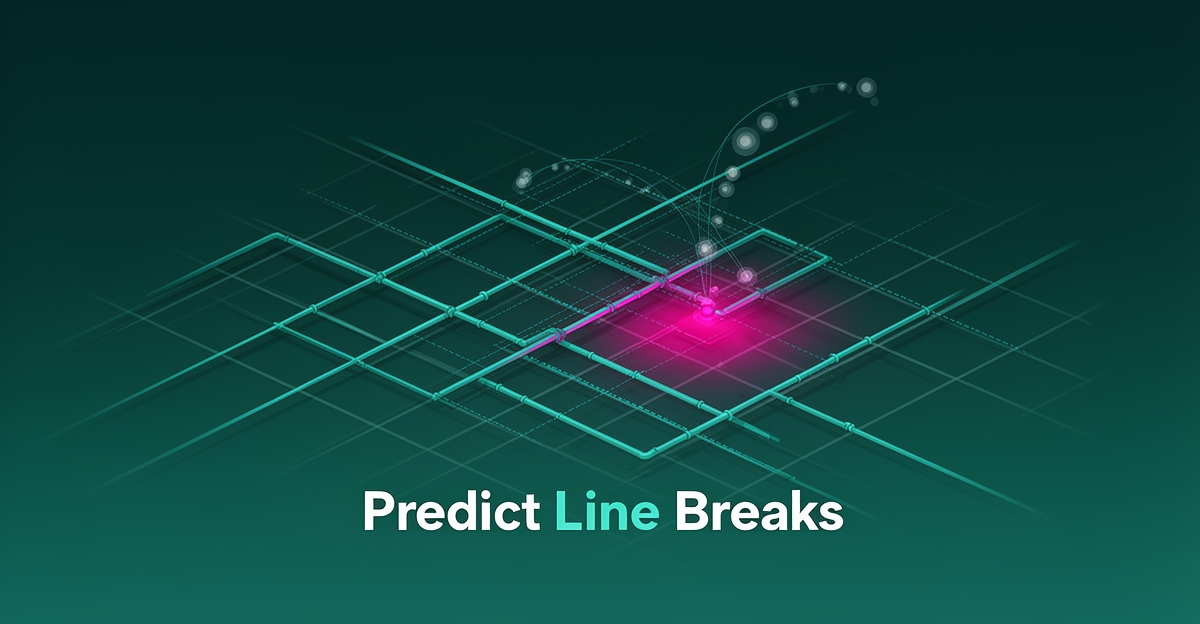
A proactive maintenance strategy replaces this cycle with foresight. By analyzing historical data, soil conditions, and weather patterns, AI models can identify potential failure points and alert maintenance teams before a break occurs. This is the core of AI-powered mapping, where detailed risk maps prioritize maintenance efforts and reduce outage risks.
For contractors operating under tight margins, shifting from reactive to predictive is both a reliability and a commercial imperative. AIQ Labs builds these predictive models into your operations, either as a standalone AI Workflow Build that rebuilds your highest-cost maintenance workflow at a fixed price, or as part of a broader AI Operating System that connects prediction, dispatch, and scheduling in one layer you own outright.
How AI-Powered Mapping Predicts Line Breaks Using Historical, Soil, and Weather Data
Predictive maintenance powered by AI transforms how utility contractors approach infrastructure reliability by turning historical failure patterns into actionable foresight. By analyzing decades of past line breaks alongside real-time soil and weather data, machine learning models uncover hidden correlations that signal imminent risk. This method enables teams to shift from reactive repairs to targeted interventions before failures occur, directly supporting longer asset life and reduced lifecycle costs.
Research indicates that AI-powered predictive maintenance can deliver roughly 25% longer asset life by identifying stress points early, while data-driven capital planning can cut lifecycle costs by up to 35% through smarter resource allocation. These gains stem from the model's ability to weigh variables like pipe age, soil corrosivity, freeze-thaw cycles, and precipitation trends, factors that traditional inspections often overlook. When integrated into field operations, this intelligence allows crews to prioritize high-risk segments with precision, minimizing unnecessary digs and extending service intervals.
- Historical failure data reveals recurring weak points in aging networks, especially in regions with 40+ year-old infrastructure
- Soil conditions such as high acidity or rocky terrain accelerate corrosion and mechanical stress on buried lines
- Weather patterns including rapid temperature shifts and heavy rainfall increase ground movement and hydrostatic pressure
- Combined analysis of these three data streams improves prediction accuracy beyond what any single factor can achieve
- Early detection through AI mapping reduces emergency repair frequency and associated service disruptions
AIQ Labs supports utility contractors in deploying these predictive models as part of broader AI transformation efforts, ensuring insights flow directly into maintenance workflows and decision-making systems. The result is a proactive stance that not only prevents costly outages but also optimizes long-term infrastructure resilience.
Integrating AI Predictions into Field Operations for Proactive Maintenance
AI-powered risk maps transform how utility contractors approach maintenance by turning predictive insights into actionable field operations. When AI models analyze historical failure data, soil composition, and weather patterns to generate real-time risk scores, these outputs feed directly into existing work order systems via secure API integration. This enables maintenance teams to shift from reactive repairs to targeted inspections based on quantified vulnerability, ensuring resources are deployed where they prevent the most costly failures.
Integrating AI predictions into daily workflows creates a closed-loop system where field data continuously refines model accuracy. Technicians receive prioritized work orders on mobile devices, complete with risk heat maps highlighting segments with elevated failure probability, such as aging pipes in corrosive soil zones or sections exposed to frequent freeze-thaw cycles. This targeted approach can reduce inspection time by up to 40% while increasing the likelihood of identifying developing issues before they cause service disruption, directly supporting asset longevity and operational efficiency.
A proactive maintenance strategy powered by AI-driven mapping delivers measurable risk reduction by addressing failures at their earliest stages. By identifying high-risk segments through predictive analytics, contractors can schedule preventive repairs during planned outages, avoiding emergency response costs and minimizing customer impact. Industry research indicates that organizations using AI for predictive maintenance see meaningful improvements in asset availability and total cost of risk when integrated with existing management systems. Expert insights emphasize that seamless API connectivity between AI models and field operations is critical for turning predictions into timely, preventative action.
- API integration with CMMS and GIS platforms
- Risk-based work order prioritization
- Mobile delivery of heat maps to field crews
- Feedback loop for model retraining
- Alignment with maintenance scheduling cycles
Still paying for 10+ subscriptions that don’t talk to each other?
We build custom AI systems you own outright. No vendor lock-in. Full control.
Not sure where to start? Ask our AI planner
Frequently Asked Questions
How much can AI-powered predictive maintenance extend the life of utility infrastructure assets?
What percentage of global infrastructure assets are over 40 years old and at higher risk of failure?
How does AI-powered mapping improve field inspection efficiency for utility crews?
What are the main data sources used by AI models to predict utility line breaks?
Can AI predictions be integrated into existing utility maintenance workflows?
What financial impact does reactive maintenance have compared to predictive approaches?
From Break-Fix to Foresight: The New Standard for Utility Resilience
The shift from reactive repairs to AI-powered prediction isn't just a technology upgrade, it's a fundamental change in how utility contractors protect infrastructure and margins. By combining decades of failure history with real-time soil and weather intelligence, predictive mapping turns buried risk into visible priority, enabling crews to intervene before breaks occur. The results are measurable: research points to roughly 25% longer asset life and up to 35% lower lifecycle costs when maintenance decisions are driven by data rather than emergency. For contractors navigating aging networks and tightening budgets, this approach transforms maintenance from a cost center into a risk mitigation function that extends infrastructure life and preserves customer trust. AIQ Labs operationalizes these models for utility teams, as a fixed-price Workflow Build targeting your costliest maintenance workflow, or as a full AI Operating System connecting prediction, dispatch, and scheduling in one layer you own outright. The next step isn't more analysis; it's a focused conversation about where predictive mapping delivers the fastest return in your network. Take the 2-minute Fit Check and then book a free 30-minute strategy call to identify your highest-impact integration points.
Make AI your competitive advantage — not just another tool.
Strategy, implementation and ongoing optimization. One partner, end to end.
Not sure where to start? Ask our AI planner