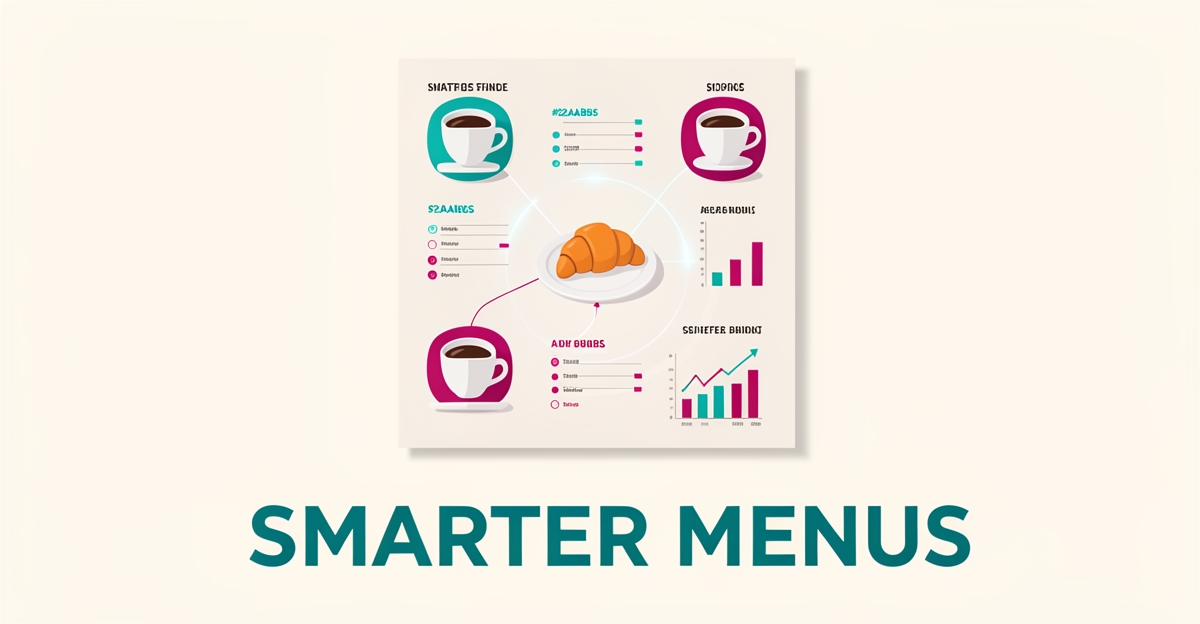
AI-Powered Menu Optimization: How Coffee Shops Can Increase Average Order Value
Key Facts
- Coffee shops already capture the transaction data AI needs through their existing POS systems
- AI identifies item pairing patterns, like which pastries sell with specific drinks at different times of day
- Businesses implementing AI automation typically report meaningful efficiency gains and faster decision-making, though exact figures vary by operation
- Most businesses see ROI from targeted AI automation within roughly a year, depending on scope
- Attachment-rate lift is measurable against a control period, so you can prove the payoff before scaling
- Shops that build their own AI systems own the models and data outright, no vendor lock-in
Hire a team member that works 24/7 — for less than a part-time wage.
AI receptionists, SDRs, dispatchers and 99+ roles. Trained on your business, fully managed.
Not sure where to start? Ask our AI planner
The Hidden Revenue Leak in Coffee Shop Menus
Every latte sold without a pastry attached is a small, silent leak in your revenue. Most coffee shops never notice it because the loss doesn't show up as a line item, it shows up as what customers didn't order.
The problem is structural. Static menus and intuition-based upselling rely on a barista's gut feeling in the moment, which means recommendations vary by shift, by staff member, and by how busy the counter is. Nobody is actually analyzing which drinks pair with which pastries, which add-ons customers accept most often, or which items sit untouched at 3 p.m. That's guesswork dressed up as a strategy.
Meanwhile, the businesses that do embrace data-driven automation are pulling ahead. Industry reporting on AI automation consistently points to material efficiency gains and faster decision-making after implementation, with error rates dropping as manual steps are removed. Exact numbers vary by operation, but the direction is clear: shops that act on their data in real time outperform those that discover patterns a month late in a sales review.
For a coffee shop, that shift from reactive to proactive matters. Instead of discovering in a monthly sales review that croissants underperformed on Tuesdays, an AI system identifies those patterns as they emerge and acts on them. It can surface the pairings customers actually buy together, then translate those insights into the menu itself, bundles, cross-sell prompts, and descriptions that make the upsell feel natural rather than pushy.
The opportunities hiding in customer behavior data typically include:
- Drink-and-pastry bundles built from actual purchase pairings, not assumptions
- Time-of-day cross-sells, like afternoon snack pairings when morning coffee add-ons taper off
- Menu descriptions rewritten to highlight the items that drive the highest order value
- Personalized recommendations based on repeat customers' ordering history
This is where the gap between having data and using it becomes expensive. The raw signals, transaction histories, pairings, time patterns, are already sitting in your POS system. What's missing is the layer that turns them into actionable menu changes. AI systems built for this purpose can analyze customer behavior and generate data-backed menu descriptions and cross-sell recommendations, the kind of work AIQ Labs does through focused workflow builds for businesses making this transition.
The competitive math is straightforward. Your competitor's menu doesn't have to be better, it just has to know things yours doesn't.
How AI Transforms Menu Optimization for Higher AOV
Picture a coffee shop where every menu board, every barista suggestion, and every display case arrangement is informed by thousands of actual customer purchases, not guesswork. That's the reality artificial intelligence is creating for forward-thinking café owners, and it's fundamentally changing how menus drive revenue.
The transformation begins with data analysis at a scale humans simply cannot match. AI systems process purchase histories, identify time-of-day patterns, and recognize which items customers naturally pair together. Businesses implementing these systems typically report meaningful efficiency gains and faster decision-making, improvements that translate directly to smarter menu engineering and more profitable customer interactions.
The real power emerges when AI identifies item affinity patterns that human observation misses. Perhaps customers who order oat milk lattes between 2-4 PM are far more likely to add an almond croissant when prompted, or cold brew drinkers on weekday mornings consistently respond to protein box suggestions. These insights enable coffee shops to move beyond generic "would you like a pastry with that?" scripts toward intelligent, personalized recommendations that feel natural rather than pushy.
This shift from reactive to proactive operations represents a fundamental change in hospitality management. Rather than discovering which menu combinations worked last month, AI systems predict what will sell tomorrow based on weather forecasts, local events, seasonal preferences, and individual customer histories. The technology continuously learns and refines its recommendations, creating a self-optimizing menu ecosystem that improves with every transaction.
The applications extend across multiple operational areas:
- Dynamic bundle suggestions that pair high-margin items with popular drinks based on real-time purchase patterns
- Time-sensitive menu displays that automatically emphasize breakfast sandwiches during morning rush and desserts during afternoon slowdowns
- Personalized loyalty app recommendations that suggest items based on individual customer history and preferences
- Inventory-aware promotions that suggest pairings featuring ingredients approaching expiration dates
The business case is compelling. For coffee shops operating on thin margins, even modest attachment-rate improvements compound quickly across thousands of transactions. The point isn't a dramatic overhaul, it's a measurable lift you can verify against a control period before scaling.
AIQ Labs helps hospitality businesses implement these intelligent systems through custom builds that analyze customer behavior and generate data-backed menu descriptions and cross-sell recommendations. The technology doesn't replace the human touch that makes coffee shops special, it amplifies it by ensuring every team member has access to insights that would otherwise require years of experience to develop.
From Insight to Action: Implementing AI Menu Optimization
The gap between knowing AI can optimize your menu and actually implementing it often feels wider than it is. Most coffee shops already sit on the data they need, transaction histories, peak-hour patterns, and item pairing frequencies, all captured by their POS systems.
Starting small is the smartest path forward. A focused pilot might analyze six months of sales data to identify which pastries sell best with specific drinks, then test bundled suggestions at the register. This approach mirrors how businesses across sectors are deploying AI in 2026: targeted workflow fixes that deliver measurable results before scaling. Businesses implementing AI automation typically report efficiency gains and faster decision-making, with most seeing a return on their investment within roughly a year when the scope stays focused.
The next layer adds intelligence to the customer-facing experience. Dynamic menu descriptions that adapt to time of day, weather, or inventory levels can nudge high-margin items without staff intervention. Real-time cross-sell prompts, triggered when a customer orders a latte but skips food, can increase attachment rates at the moment of decision. These capabilities align with the broader shift from reactive to proactive operations, where AI identifies patterns and acts on them before opportunities slip away.
- Audit existing POS data for pairing patterns and peak-hour behaviors
- Deploy a single AI workflow to test bundle recommendations at one location
- Measure attachment rate lift against a control period
- Scale successful prompts to dynamic displays and mobile ordering
- Retain full ownership of the models and data throughout
Ownership matters as much as the technology itself. When you build custom AI systems rather than renting vendor platforms, you avoid lock-in and control how the system evolves with your business. AIQ Labs architects these solutions so coffee shops own their intelligence layer, models, integrations, and data, whether they start monthly, build in milestones, or own it outright. The result is a system that compounds in value rather than becoming another subscription line item.
Still paying for 10+ subscriptions that don’t talk to each other?
We build custom AI systems you own outright. No vendor lock-in. Full control.
Not sure where to start? Ask our AI planner
Frequently Asked Questions
How can AI actually help a coffee shop increase its average order value without being pushy?
What kind of ROI can a coffee shop expect from implementing AI for menu optimization, and how long does it take?
Do I need to replace my current POS system to use AI for menu optimization?
Is AI menu optimization only for big chains, or can independent coffee shops benefit too?
Won’t automating menu suggestions make the customer experience feel less personal or robotic?
How does AI handle changes like seasonal menus or local events that affect what people want to buy?
Your Menu Already Knows the Answer
Every latte that leaves your counter without a pastry attached is revenue you'll never recover, but it doesn't have to stay that way. The data needed to fix this is already sitting in your POS system: pairing patterns, peak-hour behaviors, and attachment rates that reveal exactly which bundles and cross-sells your customers actually want. Start small: audit your sales data, test one bundle prompt at a single register, and measure the lift against a control period before scaling to dynamic displays and mobile ordering. And when you build your system, own it, models, data, and all, so the value compounds instead of becoming another subscription. AIQ Labs helps coffee shops and hospitality businesses turn raw transaction data into data-backed menu descriptions and cross-sell systems they own outright, whether that starts as a single workflow build or grows into a full AI operating system. Curious what's hiding in your sales data? Take the two-minute Fit Check at aiqlabs.ai/apply, then book a free 30-minute strategy call, a real working session with an AI engineer to map your highest-ROI opportunity. If there isn't a clear win, we'll tell you that too.
Make AI your competitive advantage — not just another tool.
Strategy, implementation and ongoing optimization. One partner, end to end.
Not sure where to start? Ask our AI planner