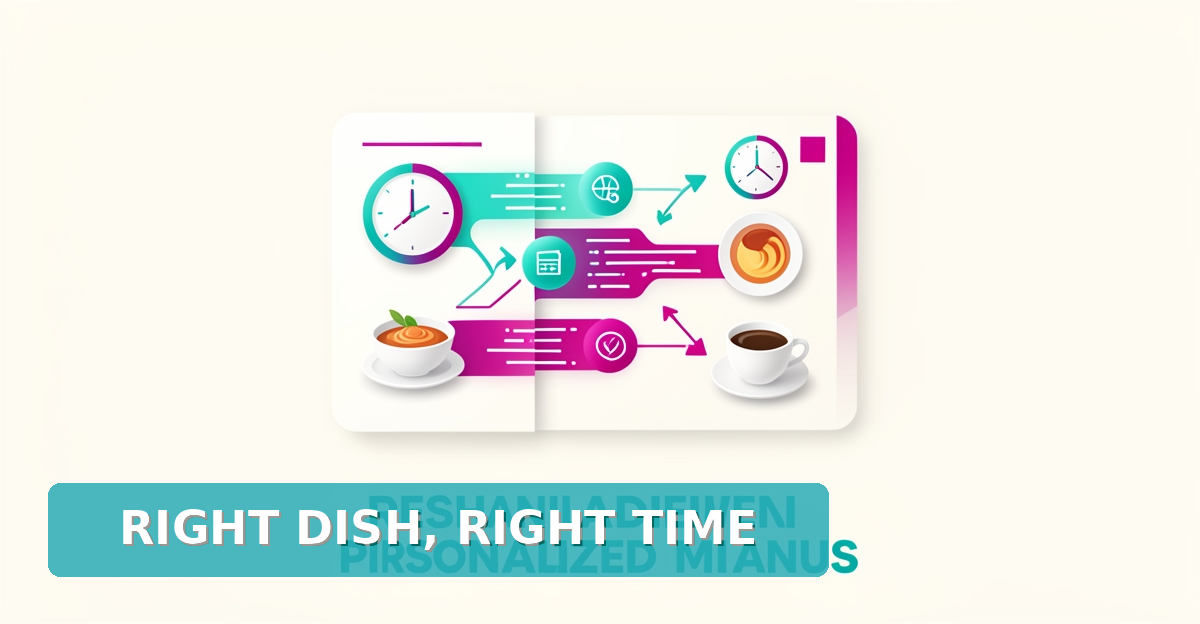
AI-Powered Menu Personalization: How Diners Can Serve the Right Food at the Right Time
Key Facts
- AI-powered menus use real-time personalization to lift customer orders, industry case studies commonly report gains in the double digits.
- Smart inventory management using AI can meaningfully cut food waste by predicting demand more accurately.
- Industry surveys consistently show most restaurant executives plan to increase AI investment in the coming fiscal year.
- AI-assisted drive-thrus and ordering systems typically process orders faster with fewer mistakes.
- AI analyzes order history, time of day, and weather to recommend dishes at the exact moment of decision.
- Human-curated menus still win on creativity and authenticity, making AI and chefs best paired together.
Hire a team member that works 24/7 — for less than a part-time wage.
AI receptionists, SDRs, dispatchers and 99+ roles. Trained on your business, fully managed.
Not sure where to start? Ask our AI planner
Why Static Menus Are Costing Your Restaurant Revenue
Every time a diner opens a generic menu, the restaurant misses a chance to sell. A static menu treats a first-time lunch guest, a returning regular, and a rainy-day takeout order exactly the same, ignoring customer history, time of day, and even weather. That blind spot leaves money on the table with every single order.
The cost is measurable. Case studies across the food-service industry consistently show that real-time personalization with AI-powered menus can drive a meaningful lift in customer orders, often reported in the double digits. A menu that never adapts captures none of that upside, because it never asks what this customer, at this moment, actually wants.
Generic menus also fail in quieter ways. They push dishes that don't match dietary preferences, recommend heavy plates on hot afternoons, and surface items the kitchen may struggle to stock, contributing to waste rather than reducing it. AI-driven smart inventory management is widely credited with meaningful reductions in food waste, a benefit static menus simply cannot deliver on their own.
The industry has noticed. Surveys of restaurant executives consistently find that a large majority plan to increase their AI investments over the next fiscal year. Restaurants are no longer debating whether to personalize, they're funding it.
What a static menu fails to account for:
- A returning customer's ordering history and dietary preferences
- Time of day, which shapes appetite from coffee to late-night comfort food
- Weather and seasonality, which shift demand toward soups, salads, or warm plates
- Inventory levels, meaning popular dishes sell out while slow movers pile up as waste
The good news is that closing this gap no longer requires a data science team. AI can now generate personalized menu suggestions based on customer history, time of day, or weather, and AIQ Labs integrates this capability directly into diner operations through its AI Workflow Builds, delivering a tailored experience without requiring staff training. The restaurant keeps its menu; the menu simply gets smarter about who is looking at it.
Every order taken by a static menu is an order shaped by guesswork. As competitors adopt systems that recommend the right dish to the right person at the right moment, generic menus stop being neutral, they become a liability.
How AI Menu Personalization Actually Works
AI menu personalization isn't magic, it's a continuous loop of data collection, pattern recognition, and real-time decision-making. Understanding how this system works reveals why it delivers measurable results for restaurants.
The process starts with data capture. Every interaction a customer has with your restaurant, online orders, POS transactions, loyalty app activity, even drive-thru voice recordings, feeds into the system. AI algorithms then analyze these inputs to identify patterns: which dishes pair together, what times certain items spike in popularity, how weather affects cravings, and which dietary restrictions appear most frequently among your regulars.
The recommendation engine operates on three core functions:
- Real-time analysis of current conditions, time of day, local weather, inventory levels, and kitchen capacity
- Preference mapping that builds individual customer profiles based on order history and stated dietary needs
- Dynamic suggestion generation that surfaces the most relevant menu items at the moment of decision
When a customer opens your app or approaches a kiosk, the AI doesn't just display a static menu. It generates a personalized selection based on that specific moment. This is exactly the kind of contextual intelligence that restaurant executives, in survey after survey, say they plan to invest in over the coming fiscal year.
The impact shows up in hard numbers. Industry case studies on real-time personalization commonly report double-digit lifts in customer orders, while AI-driven demand prediction is widely credited with significant food-waste reductions. These aren't theoretical gains, they're operational improvements that hit both revenue and cost lines simultaneously.
Implementation doesn't require your staff to become data scientists. Modern systems integrate directly with existing POS and inventory management tools, learning and adjusting automatically as new data flows in. At AIQ Labs, these personalization engines are built as owned assets for food service businesses, typically through a phased AI Operating System or a single fixed-price Workflow Build, connecting them to your current operations without requiring ongoing technical maintenance from your team.
AI Recommendations vs. Chef-Curated Menus: Why You Need Both
Many diners worry that AI-driven menus will replace the creativity of human chefs, but the evidence points the other way: these approaches work best together. AI-powered menus excel in efficiency, personalization, and waste reduction, while human-curated offerings bring irreplaceable creativity and authenticity to the table. Rather than competing, AI amplifies chef-curated menus by handling data-driven personalization at scale, freeing chefs to focus on innovation and emotional connection.
The operational gains are consistent across the industry: real-time personalization lifts order volume, AI-driven demand prediction cuts waste, and AI-assisted drive-thrus and ordering systems typically process orders faster with fewer mistakes. These gains let restaurants serve the right food at the right time without overburdening staff.
- AI delivers consistent, data-backed personalization based on dining history, time of day, or weather
- Chefs provide creative flexibility to adapt menus for local events or ingredient shortages
- Human-curated offerings ensure authenticity and emotional resonance that algorithms can't replicate
- Together, AI and chefs reduce waste while maintaining menu excitement and trust
AIQ Labs integrates these capabilities into diner operations through personalized menu suggestions that require no staff training, allowing restaurants to blend technological precision with human artistry. The result is a dining experience where efficiency enhances, not replaces, the chef's craft.
Implementing AI Personalization Without Staff Training or Disruption
The biggest barrier to AI menu personalization isn't the technology itself, it's the fear of operational chaos during rollout. Most restaurant owners assume implementing AI requires retraining staff, overhauling workflows, and weeks of downtime, but modern integration approaches have eliminated these friction points entirely.
The implementation path begins with connecting your existing ordering data rather than replacing it. Whether you use QR code menus, self-service kiosks, or online ordering platforms, AI personalization layers sit on top of your current infrastructure, analyzing historical transactions to identify patterns in customer preferences, peak ordering times, and dish popularity. This is precisely why so many restaurant executives say they're increasing AI investment: these systems now integrate without disrupting daily operations.
Real-time recommendation engines then deploy across all customer touchpoints simultaneously. When a regular opens your QR menu at lunch, the system might highlight their usual salad with today's seasonal special; at dinner, it suggests heartier entrees based on weather patterns and past weekend orders. This level of real-time personalization is what drives the order-volume lifts reported across the industry, while smart inventory integration reduces food waste by predicting demand more accurately.
Data quality remains the primary technical hurdle, but not an insurmountable one. AI systems require clean, consistent ordering information to generate accurate suggestions, which means standardizing how menu items, modifiers, and customer preferences appear across your POS and delivery apps. The solution involves a brief data audit during setup rather than ongoing manual maintenance.
This is where the no-training-required integration model changes the equation for independent diners and small chains. Instead of forcing staff to learn new software or memorize AI protocols, the system operates invisibly in the background. AIQ Labs handles the technical heavy lifting, connecting APIs, cleaning historical data, and configuring recommendation logic, so your team continues using the same interfaces they already know while the AI optimizes what customers see.
For operators concerned about upfront costs, AIQ Labs' payment models remove the traditional capital expenditure barrier. You can Start Monthly with a plan that costs a fraction of a human hire, Build in Milestones, paying per phase, perhaps starting with QR menu personalization before expanding to kiosks, or Own It Outright, retaining full ownership of the system as it evolves. No fake prices, no surprises; see the current options at aiqlabs.ai/pricing.
The result is a personalization engine that works immediately upon activation. Your kitchen staff keeps cooking, your servers keep serving, and your customers simply notice that their favorite diner suddenly seems to know exactly what they're craving before they do.
Your Next Step: Map Your Restaurant's AI Opportunity
The gap between restaurants experimenting with AI and those actually profiting from it comes down to one thing: choosing the right starting point. With most restaurant executives expecting to increase their AI investment in the next fiscal year, the question is no longer whether to adopt AI-powered personalization, it's where it will pay off fastest for your specific operation.
Not every restaurant's highest-ROI opportunity looks the same. A quick-service diner chasing an order-volume lift through real-time personalization has different priorities than a full-service restaurant focused on cutting waste. That's why the smartest first move is a structured assessment, not a purchase.
- Map your current data: what ordering history, dietary preferences, and time-of-day patterns do you already capture?
- Identify the single workflow, menu suggestions, inventory forecasting, or order accuracy, where personalization delivers measurable returns first.
- Confirm the opportunity fits your existing systems, so staff training isn't a barrier to adoption.
- Establish a clear ROI target before any technology is deployed.
This is exactly how AIQ Labs approaches the problem. Rather than pushing a generic tool, the team starts with a free two-minute Fit Check at aiqlabs.ai/apply, followed by a free 30-minute strategy call at aiqlabs.ai/book. It's a no-obligation working session with an AI engineer, not a sales pitch, designed to pinpoint your highest-ROI personalization opportunity and map a realistic implementation plan. If there isn't a clear win, they'll tell you that too.
The approach matters because AI-powered menus depend on high-quality data to deliver accurate recommendations, a genuine challenge for restaurants with limited data infrastructure. A working session surfaces those gaps early, before you've invested in technology that can't perform. It also respects what makes your restaurant yours: human-curated creativity, authenticity, and flexibility remain essential to the dining experience, so the goal is AI that amplifies your kitchen's strengths rather than replacing them.
For diners and operators alike, personalization should feel like a better-hosted meal, not a software rollout. That's the standard AIQ Labs builds to, personalized menu suggestions based on customer history, time of day, or weather, integrated into diner operations without requiring staff training. With 200+ multi-agent systems deployed and four live SaaS products the company runs daily, the team has seen what works and what doesn't across food service.
Prefer to start with people rather than menus? AIQ Labs also places AI Employees, receptionists, dispatchers, and 99+ other managed roles at roughly 80% less cost than a human hire. Either way, you'll walk away with clarity on your biggest opportunity, and whether AI personalization is the right next step for your restaurant.
Still paying for 10+ subscriptions that don’t talk to each other?
We build custom AI systems you own outright. No vendor lock-in. Full control.
Not sure where to start? Ask our AI planner
Frequently Asked Questions
How much can AI-powered menu personalization actually increase customer orders?
Will using AI for menu suggestions require my staff to learn new systems or undergo training?
Can AI-powered menus help reduce food waste in my restaurant?
Is AI going to replace the creativity of my chef or make menus feel robotic?
What kind of data does AI need to generate accurate menu recommendations?
How do I know if AI menu personalization is the right next step for my restaurant?
Turn Your Menu Into Your Most Intelligent Team Member
AI-powered menu personalization isn't just about smarter suggestions, it's about capturing the order lifts and waste reductions that static menus leave behind. By aligning real-time data like time of day, weather, and customer history with your existing operations, restaurants can serve the right food at the right moment without disrupting workflows or requiring staff retraining. The technology works quietly in the background, amplifying your team's strengths while reducing guesswork and inefficiency. For restaurants ready to move beyond experimentation and into measurable impact, the first step is understanding where AI delivers the fastest return. Start with a free two-minute Fit Check at aiqlabs.ai/apply to map your data and opportunities, then schedule a no-obligation 30-minute strategy call with an AI engineer at aiqlabs.ai/book to see exactly how personalization can work for your diner, without the complexity or risk.
Make AI your competitive advantage — not just another tool.
Strategy, implementation and ongoing optimization. One partner, end to end.
Not sure where to start? Ask our AI planner