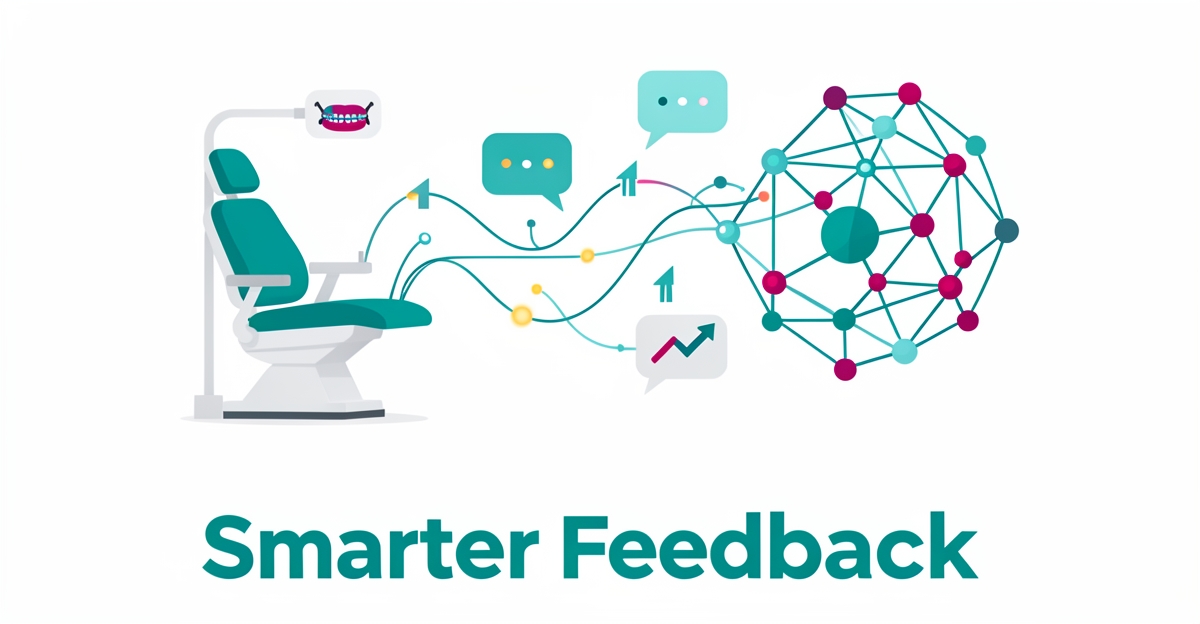
AI-Powered Patient Feedback Collection: How Orthodontic Practices Can Improve Service
Key Facts
- AI use among clinicians grew substantially through 2025, with adoption in some US specialties reported above 60 percent.
- AI-powered platforms can analyze patient feedback in real time, identifying trends manual review misses.
- Patient feedback helps organizations understand how needs, emotions, and satisfaction change throughout care.
- Manual feedback review is time-consuming and difficult to scale.
- AIQ Labs has deployed 200+ multi-agent systems and runs four live SaaS products daily.
Hire a team member that works 24/7 — for less than a part-time wage.
AI receptionists, SDRs, dispatchers and 99+ roles. Trained on your business, fully managed.
Not sure where to start? Ask our AI planner
The Growing Challenge of Managing Patient Feedback in Orthodontics
Every treatment plan an orthodontic practice delivers ends with a verdict from the patient, and that verdict now arrives everywhere at once. Post-visit surveys, Google reviews, social media comments, and text messages create a constant stream of opinions that most practices simply cannot keep up with manually.
The volume is only part of the problem. Feedback arrives in different formats, with varying degrees of detail, from patients whose expectations differ widely. A front-desk team member sorting through survey responses after a full day of appointments rarely has the time to also monitor review sites or social platforms, which means important signals go unnoticed for weeks.
The consequences of slow feedback management are significant:
- Recurring complaints about scheduling or wait times stay hidden until they surface as negative public reviews.
- Insights about how patient needs, emotions, and satisfaction change throughout the care experience arrive too late to act on.
- Manual review is prone to human bias, coloring how staff interpret and prioritize what patients actually said.
- Opportunities to refine service delivery are missed while feedback sits unread in spreadsheets or inboxes.
The stakes are rising as AI adoption accelerates across healthcare. Through 2025 and into 2026, clinician use of AI for work-related purposes has grown substantially, with adoption in some US specialties reported above 60 percent. Practices that continue relying on manual feedback review risk falling behind competitors who surface patient sentiment in near real time.
The contrast between manual and AI-driven analysis is stark. Manual review can produce rich qualitative insights, but it is time-consuming and difficult to scale. AI-powered platforms, by comparison, can analyze large volumes of patient feedback in real time, identifying trends and insights that would be difficult to uncover manually.
This is where sentiment analysis and feedback automation become practical rather than theoretical. AIQ Labs builds sentiment analysis into AI Workflow Builds that collect, analyze, and summarize patient feedback from surveys and social media, flagging emerging issues before they escalate and identifying themes worth acting on. For orthodontic practices, that means turning a scattered trickle of comments into a structured, ongoing picture of the patient experience, one that supports continuous improvement instead of reactive damage control.
How AI Transforms Patient Feedback into Actionable Service Improvements
Orthodontic practices collect feedback from multiple sources, post-visit surveys, social media, and online reviews, creating data volumes too large for manual review. AI-powered sentiment analysis and thematic analysis solve this by processing thousands of comments in real time, identifying emotional tone and recurring themes with consistency and speed. Growing clinician adoption of AI through 2025 and 2026 reflects increasing trust in these tools for operational insights.
These AI systems go beyond simple positive/negative scoring to detect nuanced emotions like frustration with wait times or appreciation for clear explanations, then group feedback into actionable themes such as appointment scheduling, communication clarity, or treatment comfort. AI-driven feedback analysis helps organizations understand how patient emotions and satisfaction levels change throughout the healthcare experience, enabling targeted improvements. By removing human bias and fatigue from the analysis, practices gain a more objective view of patient sentiment across thousands of interactions.
- Scalability: AI processes feedback volumes impossible to review manually, ensuring no insight is missed
- Objectivity: Algorithms apply consistent criteria, reducing variability in interpretation
- Real-time insights: Trends emerge as feedback arrives, allowing rapid response to emerging issues
- Actionable themes: AI identifies specific pain points like billing confusion or chairside manner for direct improvement
AIQ Labs integrates these capabilities into orthodontic practices through custom AI workflows that connect feedback collection to service refinement, turning raw data into prioritized action plans. With adoption rates in some US specialties reported above 60 percent, AI-powered feedback analysis is becoming a standard tool for practices committed to continuous patient experience enhancement. The result is a feedback loop that not only captures patient voices but translates them into measurable service improvements.
Implementing AI Feedback Systems in Orthodontic Practices: A Practical Guide
Deploying AI feedback collection in an orthodontic practice doesn't require a technology overhaul, it requires a structured, phased approach. With clinician AI adoption growing steadily through 2025 and 2026, the question is no longer whether to adopt, but how to do it well.
Step 1: Map Your Feedback Channels. Start by identifying where patient feedback already lives: post-visit surveys, email and SMS responses, online reviews, and social media comments. Most practices collect feedback across several of these channels but analyze none of them systematically.
Step 2: Deploy AI-Powered Collection Tools. Implement platforms that capture feedback automatically at the right moments, after appointments, at treatment milestones, or following new patient onboarding. AI-powered collection integrated into existing survey workflows typically delivers higher response quality than manual approaches.
Step 3: Integrate With Your Practice Management System. This is where many implementations stall. Your AI feedback system should connect directly to your practice management software so responses link to appointment types, providers, and treatment stages. Integration complexity is a real challenge, but deep two-way API connections eliminate the manual data entry that undermines most feedback programs.
Step 4: Apply Sentiment and Thematic Analysis. Once data flows, AI algorithms analyze sentiment and themes across every response, flagging recurring complaints like long wait times or unclear billing, and surfacing positive patterns worth amplifying. AI offers objectivity and scalability that manual review cannot: it processes large volumes of feedback without personal bias and delivers near real-time insight into emerging issues.
Step 5: Turn Insights Into Operational Changes. Raw data means nothing without action. Build a simple review cadence:
- Weekly review of flagged negative feedback requiring immediate follow-up
- Monthly thematic reports identifying trends across providers and locations
- Quarterly operational changes tied directly to identified pain points
- Continuous monitoring to measure whether changes actually move sentiment
Step 6: Maintain Human Oversight. AI should inform decisions, not make them alone. Human review remains essential for ethical use, and practices must ensure HIPAA-compliant data handling throughout, since patient feedback often contains sensitive information.
This is the approach AIQ Labs follows: discovery and architecture first, then custom development and integration, followed by deployment, training, and ongoing optimization. Practices can start with a single workflow, such as automated post-visit survey analysis, on a Start Monthly basis, rebuild the one feedback workflow that costs the most through an AI Workflow Build at a fixed price, or work toward a fully owned AI Operating System delivered in milestones. With 200+ multi-agent systems deployed, AIQ Labs builds these systems to be owned outright, not rented.
The payoff is a feedback loop that actually closes: patients share experiences, AI surfaces what matters, and the practice responds with visible improvements that strengthen loyalty and reputation.
Still paying for 10+ subscriptions that don’t talk to each other?
We build custom AI systems you own outright. No vendor lock-in. Full control.
Not sure where to start? Ask our AI planner
Frequently Asked Questions
How does AI-powered feedback analysis actually work for orthodontic practices?
What are the main benefits of using AI for patient feedback compared to manual review?
Is AI adoption in healthcare growing, and do orthodontic practices really need to use it for feedback management?
What steps should an orthodontic practice take to implement an AI feedback system without disrupting current operations?
How does AI ensure patient feedback is handled securely and ethically, especially with sensitive health information?
Can AI really detect nuanced emotions in patient feedback, or does it only classify comments as positive or negative?
From Patient Voices to Practice Growth
Patient feedback is no longer a quiet post-visit form, it’s a continuous signal coming from surveys, reviews, and messages that can reveal how service is actually experienced. When that signal is reviewed manually, important themes about scheduling, communication, and comfort are missed, delayed, or filtered through bias. AI-powered sentiment and thematic analysis changes that by processing thousands of comments in real time, surfacing objective trends and actionable themes so practices can respond while the moment still matters. For orthodontic teams, this means turning scattered opinions into a structured picture of the patient experience and closing the loop with visible improvements that build loyalty and reputation. If you’re ready to see where your feedback is hiding and how it can drive service refinement, start with the two-minute Fit Check at https://aiqlabs.ai/apply, then book a free 30-minute strategy call to map your biggest bottleneck. With clinician AI adoption climbing through 2025 and 2026, practices that listen faster are already pulling ahead.
Make AI your competitive advantage — not just another tool.
Strategy, implementation and ongoing optimization. One partner, end to end.
Not sure where to start? Ask our AI planner