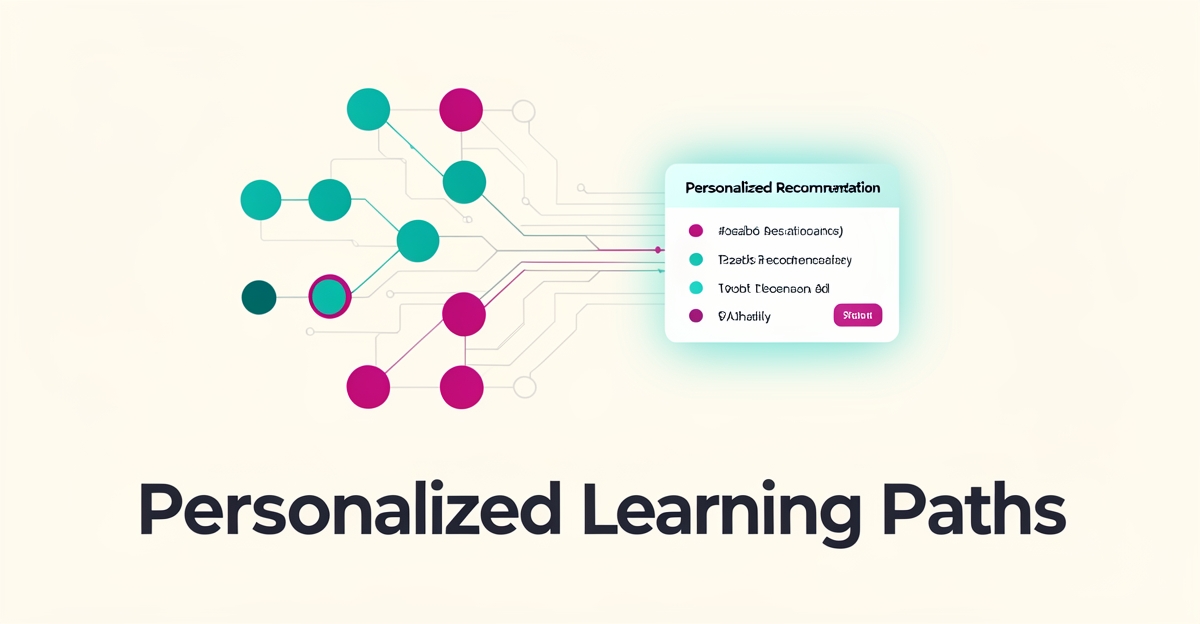
AI-Powered Personalization: How to Tailor Course Recommendations to Student Needs
Key Facts
- Most consumers now expect personalized interactions as a baseline, not a bonus, industry customer-experience research has consistently shown this in recent years
- A large majority of consumers report frustration when experiences are not personalized, and education is no exception
- AI-driven learning guides can be designed to provide a personalized experience for each user, as noted in LinkedIn Learning guidance
- AI can support learning by providing context and memory, enabling users to recall previous interactions
- AI systems can detect emotion, intent, sentiment, and effort from behavioral signals, enabling personalized responses
- AI can analyze user data to predict preferences and provide personalized recommendations, a principle widely reported across industry analysis
- AI-driven personalization uses machine learning to analyze behavior data and predict preferences
Hire a team member that works 24/7 — for less than a part-time wage.
AI receptionists, SDRs, dispatchers and 99+ roles. Trained on your business, fully managed.
Not sure where to start? Ask our AI planner
The Personalization Gap: Why Generic Course Catalogs Fail Modern Learners
Modern learners arrive with expectations shaped by every app and service they use. They expect learning to adapt to them, not the other way around. Generic course catalogs force them to adapt instead, creating friction before learning even begins.
Customer-experience research has consistently shown that a majority of consumers, often cited around 71%, expect personalized interactions. In education, that expectation translates to pathways that reflect prior knowledge, interests, and goals. When platforms offer the same list to everyone, relevance drops and disengagement rises.
The cost of that mismatch is measurable. The same body of research finds that roughly 76% of consumers become frustrated when not given personalized experiences. Frustration in learning shows up as drop-off, low completion, and churn. For EdTech companies, that is lost revenue and wasted content investment.
One-size-fits-all catalogs also ignore how learning actually works. LinkedIn Learning guidance notes AI-driven learning guides can be designed to provide a personalized experience for each user. AI can support learning by providing context and memory, enabling users to recall previous interactions. Without that continuity, students repeat material, miss prerequisites, and lose motivation.
The personalization gap appears in three persistent patterns:
- Static recommendations based on popularity, not individual behavior or performance
- No memory of past courses, assessments, or stated interests across sessions
- Generic onboarding that treats a novice and an advanced learner the same
These patterns signal a catalog-first mindset rather than a learner-first journey. AI-driven journey optimization changes that by analyzing student behavior and recommending relevant courses or modules based on interest and performance. The result is timely relevance instead of overwhelming choice.
AIQ Labs helps EdTech companies integrate AI-driven personalization into their platform, increasing learner satisfaction and conversion rates. For teams that need to rebuild the one workflow costing them the most, like a recommendation engine stuck on popularity rankings, our AI Workflow Builds offer a fixed-price, phased path from static catalogs to adaptive pathways.
The shift is not cosmetic. Personalized learning experiences increase engagement and improve outcomes by meeting learners where they are. When personalization is missing, learners vote with their attention and leave.
How AI Analyzes Student Behavior to Predict Learning Needs
AI analyzes student behavior by tracking patterns in engagement, performance, and interaction data to predict individual learning needs. Machine learning models process metrics such as time spent on modules, quiz scores, and content revisit frequency to identify knowledge gaps and learning preferences. This enables systems to recommend courses or modules that align with a student’s demonstrated interests and proficiency levels, creating a more responsive educational experience. As industry research has widely described, AI-driven personalization uses machine learning to analyze behavior data and predict preferences, a principle directly applicable to adaptive learning environments.
The technology goes beyond simple tracking by detecting emotional cues, intent, and effort through behavioral signals, allowing for nuanced adjustments in content delivery. For example, if a student consistently struggles with concept application despite strong theoretical understanding, the system can recommend practical exercises or supplemental resources tailored to that specific deficit. AI systems can detect emotion, intent, sentiment, and effort from behavioral signals, a capability that translates effectively to educational AI tutors and recommendation engines. This depth of analysis ensures recommendations are not just based on past performance but on anticipated future needs.
- Behavioral sequencing analysis identifies learning patterns over time
- Performance trend forecasting predicts readiness for advanced topics
- Engagement depth measurement distinguishes surface-level from mastery interaction
- Knowledge mapping visualizes conceptual understanding across subjects
- Adaptive difficulty adjustment maintains optimal challenge levels
AIQ Labs applies these principles in EdTech platforms by integrating behavior analysis engines that continuously refine course recommendations based on real-time student data. The system learns from each interaction, whether a student pauses a video, replays a section, or abandons a quiz, to build a dynamic profile that evolves with the learner. This approach mirrors the personalization strategies seen in marketing, where AI analyzes customer data to predict preferences and provide personalized recommendations. In education, this translates to suggesting the next logical module not just based on completion, but on demonstrated mastery and engagement quality. The result is a learning path that feels individually crafted, increasing both satisfaction and completion rates without requiring manual instructor intervention for every student.
Real-World Impact: From Engagement to Conversion in EdTech
Real-world impact shows that AI-powered personalization does more than improve recommendations, it transforms learner outcomes and business performance. EdTech platforms using AI to analyze student behavior and suggest relevant courses typically see measurable gains in engagement and satisfaction. When learners receive content aligned with their interests and progress, they are more likely to stay active and complete modules. This shift from generic to individualized learning paths directly supports higher retention and deeper involvement in the educational journey.
Research consistently shows that most consumers expect personalized interactions and become frustrated when those expectations aren’t met. In education, this translates to students disengaging when course recommendations feel irrelevant or repetitive. AI-driven systems prevent this by continuously adapting suggestions based on real-time performance and preferences. As a result, platforms typically report not only higher satisfaction but also increased time spent learning and improved course completion rates, key indicators of meaningful engagement.
These engagement improvements naturally lead to stronger conversion metrics. Students who feel understood are more likely to enroll in additional courses, upgrade to premium offerings, or recommend the platform to peers. AIQ Labs helps EdTech providers implement these intelligent recommendation engines as part of a broader AI transformation, turning personalized experiences into sustainable growth. For platforms ready to connect personalization into enrollment, support, and retention as one system, our AI Operating Systems approach builds that connected layer in phases, owned outright.
Implementing AI Course Recommendations: A Strategic Framework
Implementing AI course recommendations requires a strategic framework that balances technological capability with educational integrity. EdTech companies must first establish robust data infrastructure to collect and analyze student behavior, performance metrics, and learning preferences, foundational elements that enable AI systems to identify patterns and predict relevant course pathways. This foundation supports the shift from generic catalogs to dynamic, individualized learning journeys that adapt as students progress.
Privacy considerations are non-negotiable in this process, especially given that most consumers expect personalization and become frustrated when experiences lack it. Transparent data practices, explicit consent mechanisms, and compliance with regulations like FERPA or GDPR must be embedded from the outset to build trust and avoid alienating learners. AIQ Labs emphasizes that ethical AI deployment isn’t optional, it’s the cornerstone of sustainable personalization that respects student autonomy while delivering value.
Successful implementation also hinges on balancing AI automation with human oversight. While AI excels at processing vast datasets to surface hidden correlations, such as identifying that students who struggle with foundational concepts benefit from supplemental micro-modules, educators must retain authority over curriculum design and intervention strategies. A hybrid approach ensures recommendations remain pedagogically sound, mitigating risks of over-reliance on algorithms or biased outcomes. By combining AI’s scalability with human insight, EdTech platforms can create recommendation engines that are both intelligent and accountable, ultimately driving higher satisfaction and conversion rates without compromising educational quality. To begin building such a system, start with a 2-minute Fit Check, then book a free 30-minute strategy call to map your personalization opportunities and assess readiness.
Navigating Challenges: Privacy, Bias, and the Human Element
While AI-powered personalization offers significant potential for educational platforms, its successful implementation hinges on addressing critical challenges that directly impact student trust and learning outcomes. Balancing technological innovation with ethical responsibility ensures that personalization enhances rather than undermines the educational experience.
Data privacy remains a paramount concern, learners expect personalization, but that expectation must be balanced against the need for transparent data practices. Educational institutions and EdTech providers must establish clear consent mechanisms and robust data protection frameworks to safeguard sensitive student information while still enabling meaningful personalization. Algorithmic bias presents another significant risk, as AI systems trained on historical data may inadvertently perpetuate inequities in course recommendations, potentially limiting opportunities for underrepresented students. Mitigating this requires diverse training datasets, regular bias audits, and human oversight to ensure recommendations promote equitable access to learning pathways.
Maintaining the human element is equally vital; over-reliance on automation can diminish the mentorship and emotional support that educators provide. A hybrid approach, where AI handles data analysis and initial suggestions while human advisors interpret context, address individual circumstances, and foster motivation, creates a more resilient and empathetic learning environment. This balance not only improves recommendation accuracy but also strengthens student engagement and long-term success. By proactively addressing privacy, bias, and the irreplaceable role of human guidance, educational platforms can harness AI’s potential responsibly, ensuring that personalization serves as a tool for empowerment rather than a source of exclusion. For organizations navigating these complexities, partnering with experienced AI specialists can provide the strategic guidance needed to implement ethical, effective personalization systems at scale. To explore how tailored AI solutions can address these challenges while driving measurable outcomes in learner satisfaction and course conversion, start with a free strategy call to assess your readiness and identify high-impact opportunities.
Still paying for 10+ subscriptions that don’t talk to each other?
We build custom AI systems you own outright. No vendor lock-in. Full control.
Not sure where to start? Ask our AI planner
Frequently Asked Questions
How does AI personalization actually improve course recommendations for students?
What happens when learners don't get personalized course recommendations?
Can AI detect if a student is struggling emotionally or just needs different types of content?
Is it ethical to use AI for student data in course recommendations?
Will AI recommendations replace the need for teachers or advisors?
How do I know if my EdTech platform is ready for AI-powered course recommendations?
From Generic Catalogs to Learner-Centric Growth
AI-powered personalization transforms EdTech platforms by closing the gap between learner expectations and static course catalogs, driving measurable gains in engagement, satisfaction, and conversion. By analyzing behavior, predicting needs, and adapting recommendations in real time, institutions turn browsing into progression while respecting privacy and maintaining educational integrity. The result is not just smarter suggestions, it’s sustainable growth rooted in relevance. Most learners now expect personalized interactions, and meeting that expectation in education begins with understanding where to start. Take the 2-minute Fit Check to see if AIQ Labs is the right partner for your platform.
Make AI your competitive advantage — not just another tool.
Strategy, implementation and ongoing optimization. One partner, end to end.
Not sure where to start? Ask our AI planner