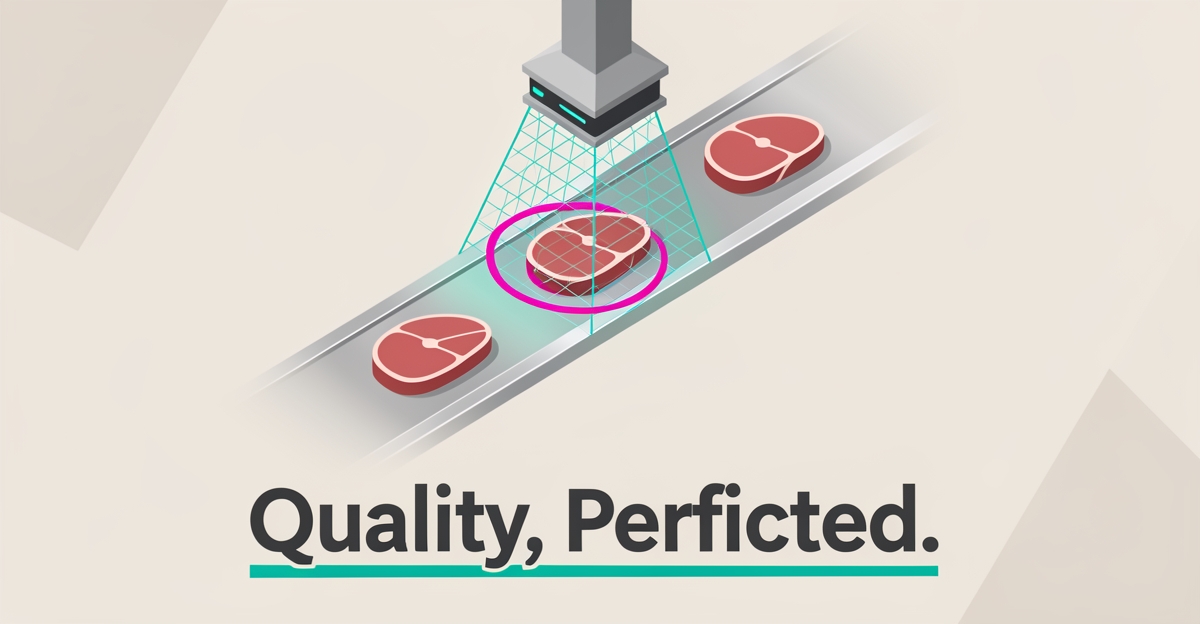
AI-Powered Quality Control: How Meat Processors Can Reduce Spoilage and Recalls
Key Facts
- AI-powered vision systems can meaningfully reduce discard levels in poultry and beef processing, with industry sources reporting reductions of up to 40% in some operations according to process optimization data
- Predictive maintenance using AI can significantly cut unplanned downtime in processing facilities, as of late 2026, industry research commonly cites reductions approaching 40% as shown in industry research
- The AI food sector has grown rapidly in recent years, with market analysts projecting continued strong expansion through the end of the decade based on market analysis
- Many manufacturers typically see ROI on AI inspection within 6-12 months per implementation timelines
- AI inspection systems achieve higher accuracy by detecting subtle defects difficult for the human eye to catch consistently confirmed by industry research
- AI systems apply consistent inspection criteria across multiple production lines and facilities, eliminating human variability per comparative analysis
- AI-powered analytics enable early spoilage prediction by analyzing batch data, temperature logs, and customer complaint patterns as detailed in predictive quality control approaches
Hire a team member that works 24/7 — for less than a part-time wage.
AI receptionists, SDRs, dispatchers and 99+ roles. Trained on your business, fully managed.
Not sure where to start? Ask our AI planner
The Hidden Cost of Spoilage and Recalls in Meat Processing
The meat processing industry operates under intense pressure to deliver safe, high-quality products at scale, yet traditional quality control methods are increasingly failing to keep pace. Manual inspections are prone to human error, fatigue, and inconsistency, especially during long shifts or high-volume runs, leading to undetected defects that can result in costly spoilage or widespread recalls. As consumer expectations for food safety rise and regulatory scrutiny tightens, processors face mounting financial and reputational risks when quality failures occur. These challenges are compounded by the limitations of reactive systems that only catch problems after products have already left the facility, turning quality control into a damage-control exercise rather than a preventive safeguard.
A recent study found that human inspectors are significantly more likely to miss defects due to fatigue and subjective judgment, directly contributing to variability in product quality and increased risk of contamination going undetected. In high-throughput environments, even small error rates can accumulate quickly, resulting in entire batches being compromised before issues are identified. This not only leads to waste but also increases the likelihood of recalls, which carry severe financial penalties, legal exposure, and long-term damage to brand trust. The inability of manual systems to scale consistently across shifts or facilities further undermines reliability, making it difficult to maintain uniform quality standards at scale.
Beyond immediate losses, recalls trigger cascading costs: regulatory fines, litigation, retailer penalties, and the expense of retrieving and destroying affected products. Reputational harm often follows, eroding consumer confidence and impacting sales long after the incident is resolved. AIQ Labs recognizes that modern meat processors need more than just faster inspection, they require intelligent systems that analyze batch data, temperature logs, and customer complaint patterns to predict spoilage before it happens. By integrating AI-powered analytics directly into production lines, processors can shift from reactive recalls to proactive prevention, improving traceability and reducing the financial and operational toll of quality failures. This approach transforms quality control from a bottleneck into a strategic advantage, aligning with the growing demand for transparency, safety, and efficiency in food manufacturing.
How AI Inspection Outperforms Manual Quality Control
Manual quality control in meat processing often relies on human inspectors who, despite their expertise, face limitations in speed, consistency, and detecting subtle defects. AI-powered inspection systems overcome these constraints by delivering objective, high-speed analysis that integrates seamlessly with production lines. This technological shift enables processors to maintain rigorous quality standards while reducing waste and recall risks.
AI algorithms achieve higher accuracy than manual checks by identifying subtle defects that human inspectors routinely miss, such as micro-fractures in bone-in cuts or early-stage indicators of microbial contamination. Human inspectors are prone to fatigue and subjective judgment, which can lead to inconsistent evaluations across shifts or product lines. In contrast, AI systems apply uniform criteria with precision, directly enhancing product safety and reducing customer complaints. Industry research confirms that this level of detail detection is critical for preventing spoilage before it spreads through a batch.
Beyond accuracy, AI inspection operates at millisecond speeds, keeping pace with high-throughput production without creating bottlenecks. Manual inspections slow down lines as workers pause to examine products, whereas AI systems analyze items in real time as they move along conveyors. This efficiency supports continuous operation and improves overall cycle times, with industry data showing AI-powered vision systems can reduce discard levels in poultry and beef by up to 40% in well-implemented deployments. Process optimization data highlights how this speed translates into measurable waste reduction and yield improvement.
AI systems also ensure consistent inspection criteria across multiple production lines and facilities, eliminating variability caused by human interpretation. Scaling manual QC requires hiring and training additional staff, a slow and costly process, while AI systems scale through software updates and modular hardware integration. This consistency supports reliable quality standards and simplifies compliance with food safety regulations. Furthermore, the data generated by AI inspection enables comprehensive traceability, linking defects to specific batches, temperature logs, and supplier records for rapid root cause analysis and recall prevention. Comparative analysis underscores how these capabilities transform quality control from a reactive checkpoint into a proactive, data-driven safeguard. AIQ Labs builds custom systems that integrate this analytical power with existing production infrastructure, turning inspection data into actionable insights for spoilage prediction and process optimization.
From Batch Data to Early Spoilage Prediction
For meat processors, the difference between a safe product and a costly recall often lies hidden in routine data, batch records, temperature logs, and customer complaints. AI transforms this seemingly disparate information into a predictive early-warning system for spoilage risk. By analyzing patterns across these data streams, AI algorithms can identify subtle deviations that precede visible quality degradation, enabling intervention before issues escalate into widespread contamination or customer illness. This shift from reactive inspection to proactive prediction is fundamental to reducing waste and protecting brand reputation.
Integrating batch data with real-time environmental monitoring allows AI to correlate specific production conditions with historical spoilage outcomes. For instance, slight temperature fluctuations during chilling or deviations in processing time, when combined with ingredient lot codes and supplier data, can signal elevated risk for microbial growth or chemical changes. AI models trained on this multidimensional data learn to recognize complex risk signatures that human analysts might miss, turning passive record-keeping into an active quality safeguard. This capability is especially valuable in high-volume operations where manual oversight is impractical.
Beyond immediate quality prediction, AI-driven analysis of historical batch and sensor data supports predictive maintenance strategies that further reduce spoilage risk. By forecasting equipment failures, such as refrigeration unit inefficiencies or conveyor misalignments, before they occur, processors can maintain optimal processing conditions consistently. As of late 2026, industry research commonly cites unplanned downtime reductions of up to 40% from these approaches, contributing to more stable production environments and fewer quality excursions. When combined with early spoilage detection, this dual-layered approach creates a resilient quality control framework.
The ultimate impact of this data-driven prediction is a significant reduction in product discard. AI-powered vision and analytics systems have demonstrated the potential to lower discard levels in poultry and beef processing, by up to 40% in documented cases, primarily by catching defects earlier and preventing the propagation of issues through subsequent processing stages. This not only cuts direct waste costs but also minimizes the labor, energy, and packaging resources expended on products destined for disposal. For processors operating on thin margins, such efficiency gains translate directly to improved profitability and sustainability.
AIQ Labs develops custom AI systems that ingest batch records, IoT sensor data, and customer feedback streams to build these predictive quality models. By integrating directly with existing production lines and enterprise systems, these solutions enable real-time risk scoring and automated alerts without disrupting current workflows. The result is a quality control system that doesn’t just detect problems, it anticipates them, giving meat processors the foresight to act decisively and keep safe, high-quality products flowing to consumers.
Implementing AI Quality Control Without Disrupting Production
Meat processors can’t afford downtime while they modernize. The right implementation path keeps lines running, preserves traceability, and builds a data foundation for predictive spoilage control.
Start with an honest assessment of current QC. Map manual inspection points, temperature logs, batch records, and complaint patterns. This baseline reveals where fatigue and subjective judgment create risk and where AI-powered quality inspection can deliver consistent criteria across shifts and plants.
Select vision and sensor systems that fit the line, not the other way around. Cameras, hyperspectral sensors, and inline temperature probes feed a model that learns your specific defects, cuts, and packaging formats. Integration is designed around existing PLCs and MES so inspection happens in milliseconds without creating bottlenecks.
Training uses production data you already generate. Historical images of acceptable and defective product, paired with batch data and temperature logs, teach the model to recognize subtle defects humans miss. Synthetic data accelerates adaptation for new SKUs without extensive manual collection.
Deploy for real-time inspection with human-in-the-loop oversight. The system flags suspect units, logs results to batch records, and triggers alerts before a lot progresses. This creates comprehensive traceability that links inspection results to batch records for rapid isolation during recalls.
Monitor and optimize continuously. Performance dashboards track accuracy, false rejects, and discard rates. Models retrain as product mix changes, keeping criteria consistent across lines.
A practical rollout typically follows these steps:
- Assess current QC workflows and data availability
- Select and integrate AI vision and sensor hardware with existing lines
- Train models on production data and validate against manual audits
- Deploy real-time inspection with monitoring and feedback loops
The business case keeps strengthening. The AI food sector has been expanding rapidly, market analysis projected growth from US$9.68 billion in 2024 toward nearly US$49 billion by 2029, a CAGR of roughly 38%. In meat processing, AI-powered vision systems have reduced discard levels in poultry and beef by up to 40%, and predictive maintenance has cut unplanned downtime by similar margins in documented deployments.
AIQ Labs builds custom systems that integrate with existing production lines, and you own the data. Depending on scope, that can mean rebuilding the single workflow that costs you the most through AI Workflow Builds, or connecting inspection, batch analysis, temperature logs, and complaint correlation into one predictive layer through AI Operating Systems. Engagement is structured to match your risk tolerance: start monthly, build in milestones, or own the system outright.
With many manufacturers seeing ROI on AI inspection in 6-12 months, a phased, production-first approach delivers measurable waste reduction without disrupting throughput.
Still paying for 10+ subscriptions that don’t talk to each other?
We build custom AI systems you own outright. No vendor lock-in. Full control.
Not sure where to start? Ask our AI planner
Frequently Asked Questions
How can AI actually predict spoilage before it happens?
What’s the real difference between AI inspection and manual quality control?
How long does it take to see ROI from AI quality control systems?
Will implementing AI inspection disrupt my current production line?
How does AI improve traceability during a recall?
Is AI quality control worth the investment for meat processors?
From Reactive Recalls to Predictive Profit
Manual inspection can’t keep pace with modern throughput, and the cost of that gap shows up as spoilage, lost yield, and recalls that damage both margins and brand trust. AI-powered quality control closes the gap by delivering consistent, millisecond inspection, correlating batch records, temperature logs and customer complaints to predict spoilage before it spreads, and creating full traceability for faster root-cause isolation. When implemented line-by-line with existing PLCs and MES, it has reduced discard levels in poultry and beef by up to 40% while supporting predictive maintenance that cuts unplanned downtime. For processors, the shift is from damage control to a data-driven safeguard that protects revenue and reputation. AIQ Labs builds custom systems that ingest your production and customer data and integrate with current lines to enable early risk scoring without disrupting throughput. Start the Fit Check at https://aiqlabs.ai/apply for a free 30-minute strategy call to map your highest-risk workflows, or reach the team directly at [email protected].
Make AI your competitive advantage — not just another tool.
Strategy, implementation and ongoing optimization. One partner, end to end.
Not sure where to start? Ask our AI planner