# AI-Powered Recipe Synchronization: How Specialty Food Manufacturers Can Automate Recipe Updates and Ingredient Adjustments
**Quick Answer:** AI-powered recipe sync automates updates across production, labeling and marketing in real time, eliminating the manual errors and compliance risk that come from updating systems one at a time.
## Key Facts
- Most food and beverage businesses are now actively investigating or piloting AI, with adoption accelerating across production, quality, and marketing functions as of late 2026.
- Manual recipe updates typically require cross-referencing spreadsheets, emails, and paper records across production, marketing, and supplier teams, a major source of labeling and compliance errors.
- AI synchronization systems can read a formulation change from manufacturing records and automatically rewrite product descriptions, ingredient notes, and marketing copy.
- Human-in-the-loop checkpoints remain best practice for brand-critical and compliance-sensitive changes.
- Phased implementations, assess, integrate, validate, scale, let manufacturers realize value at each stage instead of waiting for a full rollout.
## Table of Contents
1. [The Cost of Manual Recipe Management in Specialty Food Manufacturing](#the-cost-of-manual-recipe-management-in-specialty-food-manufacturing)
2. [How AI-Powered Recipe Synchronization Automates Updates Across Systems](#how-ai-powered-recipe-synchronization-automates-updates-across-systems)
3. [Implementation Framework: From Assessment to Ongoing Optimization](#implementation-framework-from-assessment-to-ongoing-optimization)
## The Cost of Manual Recipe Management in Specialty Food Manufacturing
Manual recipe management in specialty food manufacturing creates significant operational inefficiencies that ripple across the entire business. When recipe updates require manual changes across multiple systems, from production sheets to marketing materials to supplier communications, errors inevitably occur. These discrepancies can lead to incorrect ingredient listings on packaging, mismatched nutritional information, and marketing materials that no longer reflect the actual product being produced.
The financial and operational costs of these manual processes are substantial. Food and beverage manufacturers typically report spending excessive hours weekly on recipe documentation updates, with teams manually cross-referencing spreadsheets, emails, and paper records to ensure consistency. This labor-intensive approach not only diverts skilled employees from value-added activities like product innovation and quality improvement but also increases the risk of human error at every transfer point. A single outdated ingredient note in a recipe file can trigger a cascade of inaccuracies affecting production planning, inventory management, and customer communications.
Industry research consistently shows that the vast majority of food and beverage businesses are now investigating AI to solve these challenges, with a growing share already implementing solutions. The drive toward automation stems from painful experiences with manual systems, where a seasonal ingredient substitution or supplier change requires hours of coordinated updates across departments. Without synchronized systems, marketing teams may promote products with ingredients that are no longer available, while production teams work from outdated specifications, creating costly waste and potential compliance issues.
- Inconsistent product descriptions across sales channels
- Supply chain misalignment causing production delays
- Wasted labor on repetitive verification tasks
- Increased risk of regulatory non-compliance
- Customer trust erosion from inaccurate labeling
These inefficiencies directly impact specialty food manufacturers' ability to respond quickly to market changes. When recipes must be adjusted due to seasonal availability or supply chain disruptions, the manual update process creates dangerous lag times during which incorrect information circulates through the business. This misalignment between what's being produced, what's being marketed, and what's actually in inventory represents a fundamental breakdown in operational coherence that AI-powered synchronization is uniquely positioned to resolve.
## How AI-Powered Recipe Synchronization Automates Updates Across Systems
Recipe changes no longer need to trigger a manual cascade across production, labeling, and marketin
AI Employees
Hire a team member that works 24/7 — for less than a part-time wage.
AI receptionists, SDRs, dispatchers and 99+ roles. Trained on your business, fully managed.
See If You’re a Fit — AI Employees from $700/mo
Not sure where to start? Ask our AI planner
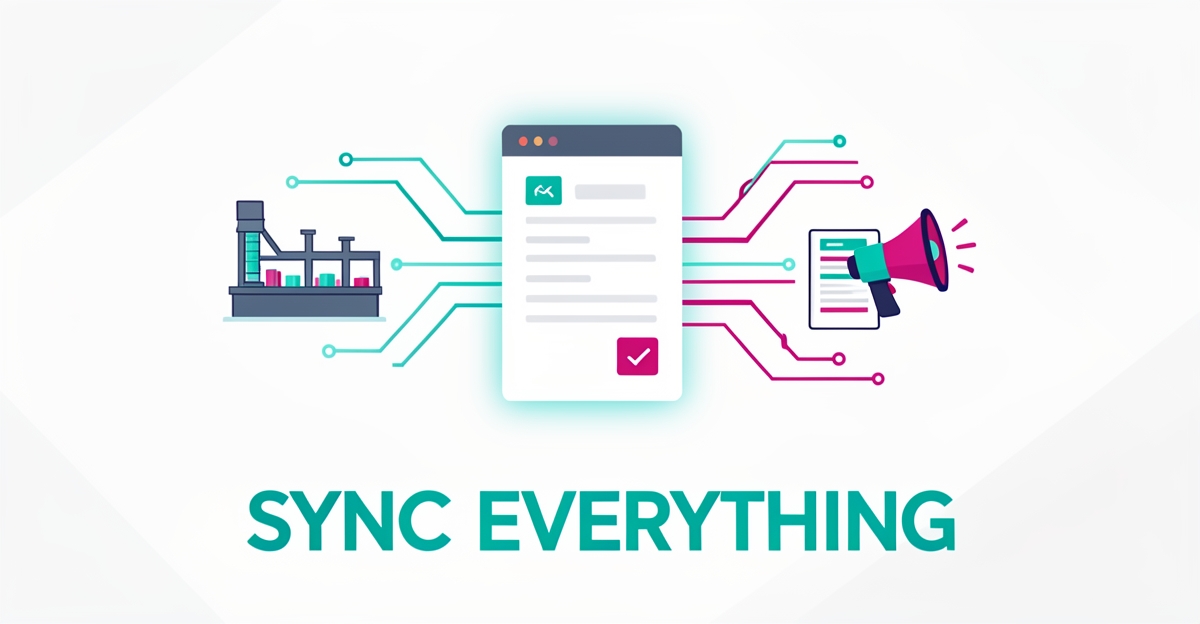
g. AI-powered synchronization connects the systems that create food with the systems that describe it, so updates propagate instantly and accurately.
When a supplier shortage or seasonal shift alters a formulation, the AI reads the change from the manufacturing record and rewrites product descriptions, ingredient notes, and marketing copy in real time. This keeps consumer-facing content aligned with what is actually produced, reducing errors and compliance risk.
Modern manufacturing platforms show how this works at scale. Connected production systems track assets, work orders, and calibration compliance, while AI vision monitoring feeds quality data back into the recipe system. The principle is the same whether the plant runs two lines or twenty: production reality becomes the source of truth that everything else syncs to.
That real-time data becomes the trigger for content updates. Instead of waiting for a weekly manual review, the system flags a substitution, recalculates nutrition, and pushes revised ingredient lists to e-commerce and packaging templates. Seasonal availability is handled the same way.
Consumer-facing AI tools illustrate the same principle from the other direction. Assistants like ChatGPT and Google Gemini can already adapt recipes and shopping lists to available ingredients, dietary preferences, and seasonal produce. Manufacturers apply the logic in reverse: production reality drives marketing language.
Synchronization delivers three operational gains for specialty food brands:
- Automatic product description and ingredient note updates when recipes change
- Real-time alignment with supply chain constraints and seasonal ingredient availability
- Reduced manual rework and error rates across marketing and sales systems
Accuracy and scalability matter because adoption is accelerating industry-wide. Teams need systems that can handle frequent changes without adding headcount.
This is where [AIQ Labs' AI Workflow Builds](/workflow-builds) come in. Rather than rebuilding everything at once, we rebuild the one workflow that costs you the most, often recipe-to-marketing synchronization for seasonal product lines, at a fixed price, in phases. For manufacturers who want recipe sync connected to inventory, supplier communications, and e-commerce as one connected layer, our [AI Operating Systems](/ai-operating-systems) approach builds that operating layer incrementally, and you own it outright. The goal is marketing that stays accurate and relevant without manual intervention.
The result is a closed loop where manufacturing data, supply signals, and marketing content stay in sync. **Dynamic recipe synchronization** ensures customers see the right ingredients, claims, and story for the product they receive.
## Implementation Framework: From Assessment to Ongoing Optimization
Implementing AI-powered recipe synchronization requires a structured approach that moves beyond pilot projects into embedded operational capability. With most food and beverage businesses investigating AI but many stalled at the experimentation stage, manufacturers need a clear pathway from assessment to ongoing optimization.
The journey begins with a comprehensive process audit that maps current recipe documentation, identifies manual handoffs between R&D and marketing, and quantifies the cost of outdated product descriptions. This assessment reveals where **real-time synchronization** delivers the highest ROI, typically in seasonal product lines or ingredients with volatile supply chains. From there, system integration connects ERP, PLM, and marketing platforms through APIs that enable bidirectional data flow, ensuring a formulation change in production automatically triggers updates to ingredient declarations, allergen statements, and consumer-facing content.
- Define trigger rules for automatic updates, seasonal availability, supplier substitutions, cost thresholds, regulatory changes
- Establish human-in-the-loop checkpoints for brand-critical modifications and compliance-sensitive adjustments
- Deploy validation layers that compare AI-generated descriptions against source-of-truth formulation data
- Create rollback procedures for when automated updates conflict with marketing campaigns or regional requirements
Quality controls must mirror the rigor of food safety protocols. Apply the same discipline that governs production lines to content synchronization: automated fact-checking against formulati
AI Development
Still paying for 10+ subscriptions that don’t talk to each other?
We build custom AI systems you own outright. No vendor lock-in. Full control.
See If You’re a Fit — AI Employees from $700/mo
Not sure where to start? Ask our AI planner
on databases, brand voice consistency scoring, and audit trails for every published change.
Staff training completes the framework. Teams need fluency in both the AI tools and the governance protocols that surround them, understanding when to trust automated updates and when to escalate. The insight applies across the specialty food industry: AI brings speed, structure, and scale, while your experts bring judgment, insight, and real transformation. The competitive advantage belongs to manufacturers who operationalize this partnership, not those who simply install software.
Ongoing optimization treats the implementation as a living system. Monthly reviews of synchronization accuracy, stakeholder feedback loops, and quarterly rule refinement ensure the AI evolves alongside product portfolios and market demands. AIQ Labs structures engagements around three payment models, Start Monthly, Build in Milestones, or Own It Outright, so manufacturers can realize value at each stage while building toward a fully synchronized recipe-to-marketing pipeline they control.
## Frequently Asked Questions
**How much time does manual recipe management actually waste in specialty food manufacturing?**
Manual updates force teams to cross-reference spreadsheets, emails and paper records across production, marketing and suppliers, creating lag and errors. The manual handoffs increase risk of incorrect ingredient listings, mismatched nutrition and compliance issues every time a recipe changes.
**Will AI really keep my product descriptions and ingredient lists in sync automatically?**
Yes. AI-powered synchronization reads a formulation change from manufacturing records and rewrites product descriptions, ingredient notes and marketing copy in real time. This keeps consumer-facing content aligned with what is actually produced and reduces rework across sales systems.
**What does AI recipe synchronization look like in a real food plant?**
Connected manufacturing systems track production reality, assets, work orders, calibration status, and quality checks, and feed it back into recipe and content systems. When a substitution or quality event occurs, the change propagates automatically to labeling, e-commerce, and marketing templates.
**Is the industry actually adopting AI for recipe and production management?**
Adoption is accelerating. As of late 2026, the large majority of food and beverage businesses are investigating AI, with a growing share already using it to solve manual update challenges.
**Can AI handle seasonal ingredients and supplier substitutions without human oversight?**
AI can flag substitutions, recalculate nutrition and push revised ingredient lists to e-commerce and packaging templates automatically. Human-in-the-loop checkpoints are still recommended for brand-critical modifications and compliance-sensitive adjustments.
**How do I start implementing AI recipe synchronization without a massive IT project?**
Start with a process audit to map recipe documentation and manual handoffs, then connect ERP, PLM and marketing platforms via APIs for bidirectional data flow. AIQ Labs structures engagements through phased milestones, assess, integrate, validate, scale, so value is realized at each stage.
## Turning Recipe Chaos into Competitive Advantage
Specialty food manufacturers no longer need to choose between operational agility and marketing accuracy. As we've seen, AI-powered recipe synchronization closes the loop between production reality and consumer-facing content, automatically updating ingredient lists, nutritional data, and product descriptions when recipes change due to seasonality, supply shifts, or supplier substitutions. This eliminates costly manual rework, reduces compliance risks, and ensures customers always see what's actually in the package. With AI adoption accelerating across the industry, the opportunity isn't just to keep up, it's to build a synchronized, responsive operation where marketing keeps pace with the production line. The next step is simple: assess where your recipe workflows create the most friction and explore how AI can turn those pain points into streamlined, automated processes. Start with a [free strategy call](/book) to see where AI-driven synchronization delivers the fastest ROI for your specific product lines and operational challenges, or [complete the 2-minute Fit Check](/apply) and we'll follow up directly. Questions first? Reach us at [email protected].
AI Transformation Partner
Make AI your competitive advantage — not just another tool.
Strategy, implementation and ongoing optimization. One partner, end to end.
See If You’re a Fit — AI Employees from $700/mo
Not sure where to start? Ask our AI planner