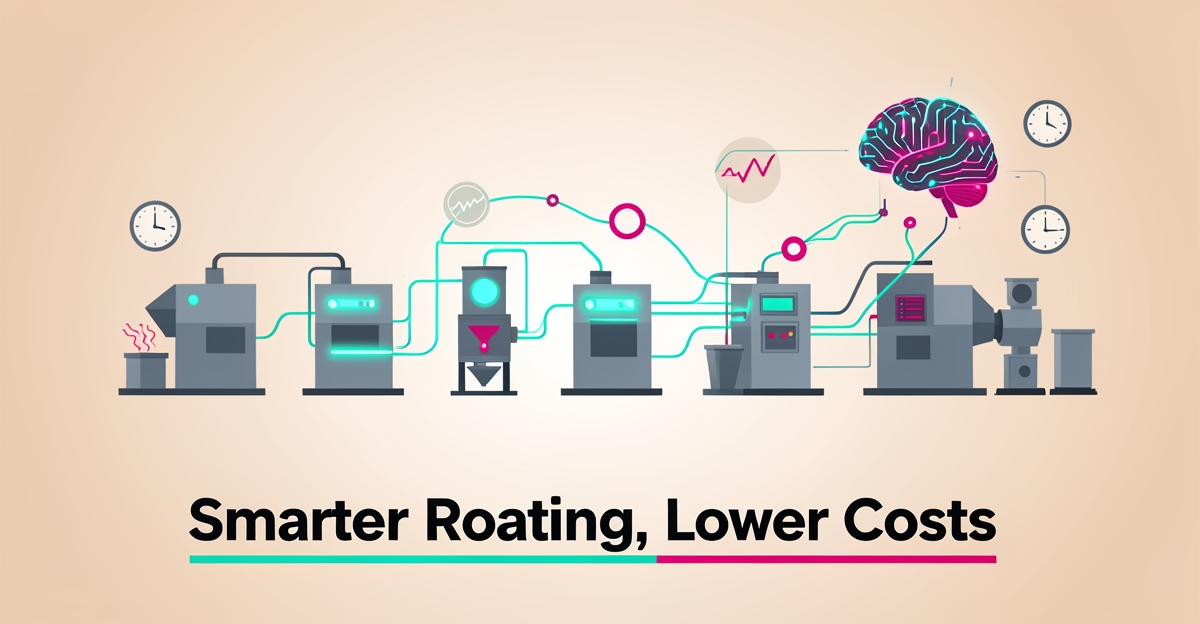
AI-Powered Roast Schedule Optimization: How to Reduce Energy Costs and Increase Throughput
Key Facts
- Static roasting schedules lock ovens into peak-price energy windows and ignore demand spikes, so roasters routinely pay premium rates for power
- AI-powered scheduling can shift energy-intensive cycles to off-peak hours when electricity costs drop
- AI enables roasters to align batch sizes with forecasted demand to reduce waste
- Finite capacity scheduling respects actual equipment limits, preventing overloads and unplanned downtime while maximizing throughput
- Real-time rescheduling recalculates optimal sequences automatically when disruptions occur, no hours of manual rework
- Most large enterprises are actively exploring agentic AI workflows as of late 2026, with many reporting measurable benefits from AI initiatives
Hire a team member that works 24/7 — for less than a part-time wage.
AI receptionists, SDRs, dispatchers and 99+ roles. Trained on your business, fully managed.
Not sure where to start? Ask our AI planner
The Hidden Cost of Static Roasting Schedules in Food Production
Fixed roasting schedules look safe on paper, but they quietly drain margin every day. When production runs on spreadsheets and planner memory, the line follows a calendar instead of conditions.
Traditional production scheduling typically depends on spreadsheets, manual sequencing, planner experience, and disconnected systems. This approach breaks down when factories handle many products, frequent changeovers, urgent orders, machine downtime, material shortages, and shifting demand.
A weak schedule creates idle machines, overloaded work centers, late orders, excess inventory, unnecessary changeovers, and poor labor utilization. Even strong demand and material planning fail if execution relies on an unrealistic plan.
In roasting, the cost is amplified by energy. Static schedules lock ovens into peak-price windows and ignore demand spikes, so roasters burn expensive power while equipment sits underused at other times. Energy waste and missed throughput become normal, not exceptions.
Manual planning also limits responsiveness. Planners cannot continuously re-sequence for machine breakdowns, late beans, or sudden orders without hours of rework. The result is overtime, expediting, and lost on-time delivery.
The hidden losses show up as:
- Roasting during high-cost energy periods with no price signal
- Idle roasters while demand queues build elsewhere
- Bottlenecks from unbalanced load across equipment
- Excess inventory from over-roasting to “cover” uncertainty
These inefficiencies are why AI-powered workflow automation is gaining traction across manufacturing. As of late 2026, most large enterprises are actively exploring agentic AI workflows, and many executives report measurable business benefits from AI initiatives, though results depend heavily on how well the AI is grounded in real operational process.
The risk is real if process is ignored. AI layered onto a broken scheduling process automates the waste rather than removing it. That is why implementation discipline, assessing data readiness, validating with planners, and integrating with existing systems, matters more than the model itself.
That is the shift AIQ Labs designs for in manufacturing and food production environments: dynamic adjustment of roasting schedules based on energy prices, demand forecasts, and equipment load through AI Workflow Builds.
How AI Dynamically Optimizes Roast Schedules Using Real-Time Data
AI-powered scheduling transforms roast operations by continuously analyzing real-time data to make dynamic adjustments that traditional methods miss. Finite capacity scheduling ensures production plans respect actual equipment limits, preventing overloads and downtime while maximizing throughput. Constraint-based planning integrates variables like energy tariffs, labor availability, and order deadlines to generate feasible schedules that adapt to shifting conditions. When disruptions occur, such as unexpected machine maintenance or demand spikes, real-time rescheduling instantly recalculates optimal sequences without manual intervention.
These capabilities enable roasters to shift energy-intensive cycles to off-peak hours when electricity costs drop, align batch sizes with forecasted demand to reduce waste, and balance workloads across roasters to avoid bottlenecks. Forecasting accuracy improves further when the system is grounded in your own historical production and pricing data rather than generic assumptions.
AIQ Labs applies these principles through custom workflow builds that connect scheduling logic with real-time energy feeds and MES data, enabling food producers to optimize roast cycles based on live grid pricing and equipment telemetry. The result is a self-tuning system that reduces energy spend per batch while increasing daily output, turning scheduling from a static plan into a responsive lever for profitability. Continuous monitoring ensures schedules evolve with changing conditions, maintaining optimal performance without constant manual oversight. This approach delivers measurable gains in both cost efficiency and production flexibility for roasting operations of any scale.
Implementing AI Roast Optimization: From Assessment to Ongoing Improvement
Implementing AI roast optimization begins with a clear assessment of current operations, energy usage patterns, and production goals. The first phase focuses on evaluating data readiness and identifying the highest-impact opportunity, usually the one workflow that costs the most, whether that is energy-heavy roasting windows or chronic throughput bottlenecks. This step ensures the AI system aligns with business objectives before any development begins, and it is the single biggest predictor of first-year ROI.
The build phase involves constructing a custom AI workflow tailored to the facility’s specific roasting processes, equipment constraints, and energy price volatility. This includes integrating real-time data streams such as utility rates, demand forecasts, and oven load sensors to enable continuous schedule adjustments. Human-in-the-loop validation is essential during this stage, allowing planners to review and refine AI-generated schedules before full deployment. This collaborative approach builds trust and ensures the system operates within practical business rules while learning from expert feedback. Work is delivered in fixed-price milestones, so you approve each phase before the next begins.
Finally, integration connects the AI scheduling tool with existing manufacturing execution systems (MES), enterprise resource planning (ERP), and shop floor controls for seamless operation. Ongoing improvement is driven by performance monitoring, regular model retraining, and feedback loops that adapt to changing conditions like seasonal demand or equipment maintenance cycles. For producers ready to go further, an AI Operating System can connect scheduling with procurement, inventory, and order management in one owned layer. By embedding AI into core workflows and fostering a culture of continuous optimization, facilities can sustain gains in energy efficiency and throughput over time. This end-to-end approach transforms roast scheduling from a manual, reactive task into a proactive, data-driven advantage.
Still paying for 10+ subscriptions that don’t talk to each other?
We build custom AI systems you own outright. No vendor lock-in. Full control.
Not sure where to start? Ask our AI planner
Frequently Asked Questions
How can AI-powered scheduling reduce energy costs in roasting operations?
What are the main problems with traditional spreadsheet-based roasting schedules?
How does AI improve throughput in roasting facilities beyond just saving energy?
Is implementing AI scheduling too complex or expensive for small to mid-sized food producers?
What kind of data does AI need to optimize roast schedules effectively?
How quickly can a food producer expect to see results after implementing AI-powered roast scheduling?
Turning Roast Schedules Into Profit Levers
Static roasting schedules silently erode margins by burning energy during peak-price windows, creating bottlenecks, and leaving equipment idle while demand builds. AI-powered optimization transforms this hidden cost center into a dynamic lever for profitability, shifting roast cycles to off-peak hours, aligning batches with real-time demand, and balancing workloads across equipment using live energy feeds and MES data. The result is reduced energy spend per batch, higher daily throughput, and fewer disruptions from manual replanning. For food producers ready to move beyond spreadsheets and planner memory, the path forward starts with assessing current operations and identifying where dynamic scheduling can deliver the fastest impact. Take the first step with the 2-minute Fit Check to uncover your biggest bottleneck and map a clear, no-obligation path to AI-driven roast optimization.
Make AI your competitive advantage — not just another tool.
Strategy, implementation and ongoing optimization. One partner, end to end.
Not sure where to start? Ask our AI planner