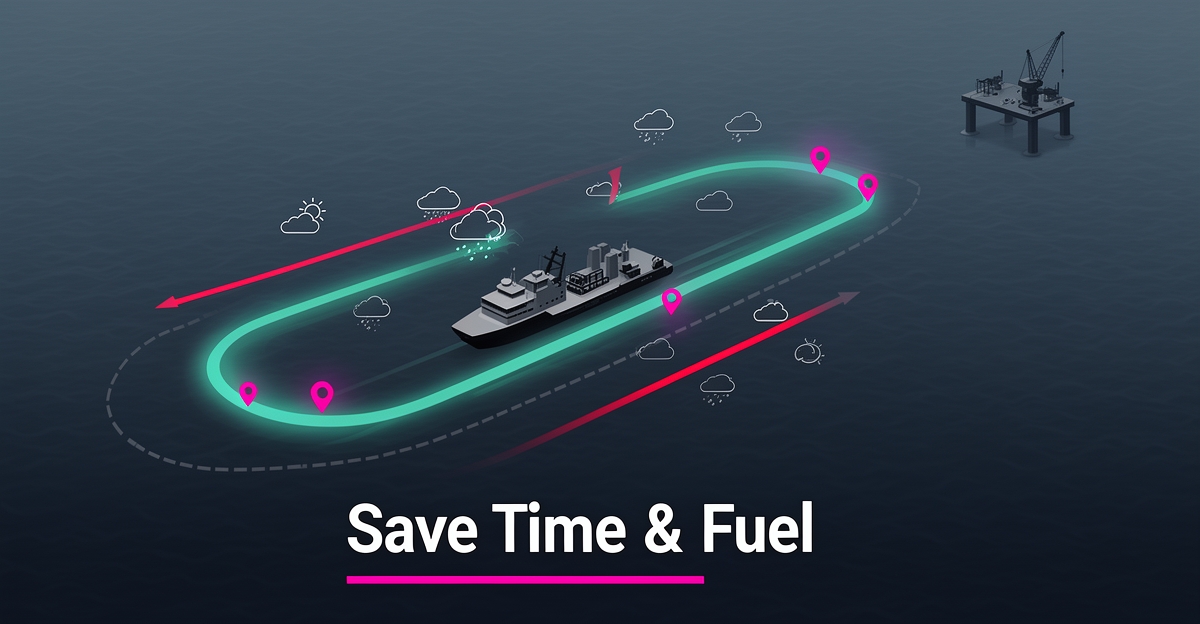
AI-Powered Route Optimization for Marine Construction Vessels: Save Time and Fuel
Key Facts
- ABB's Optimal Speed Routing reports total voyage cost reductions of up to 32% according to ABB routing services
- The large majority of world trade moves by sea, which is why voyage efficiency compounds across a fleet as reported by Manco Rentals
- AI-powered route optimization reduces fuel consumption and improves delivery predictability based on MarineTraffic's integration with Google Maps Platform
- Real-time integration with GPS and fleet management enables dynamic route adjustments as demonstrated by ABB's Optimal Speed Routing
- AI routing analyzes sea state, wind, and wave height to avoid energy-intensive maneuvers per MarineTraffic's use of Google Maps Platform
- Optimized speed profiles balance time sensitivity with fuel efficiency through ABB's routing services
- AI-powered routing provides real-time rerouting during unexpected events as noted in AI-powered cargo ships research
Hire a team member that works 24/7 — for less than a part-time wage.
AI receptionists, SDRs, dispatchers and 99+ roles. Trained on your business, fully managed.
Not sure where to start? Ask our AI planner
Why Marine Construction Vessels Are Bleeding Fuel and Time
Marine construction fleets face mounting pressure as global trade relies heavily on maritime transport, with the large majority of world trade moving by sea. This dependence amplifies the impact of fuel consumption and delivery delays, particularly on long-haul projects where inefficiencies compound over vast distances. Static routing approaches fail to account for the dynamic nature of sea conditions, turning predictable voyages into costly ordeals.
Vessels operating on fixed routes often encounter avoidable headwinds, adverse currents, and unexpected port congestion, all of which increase fuel burn and extend transit times. Weather patterns shift rapidly across open waters, and without real-time adaptation, crews must react to deteriorating conditions after they've already impacted performance. These reactive adjustments lead to suboptimal speeds, prolonged exposure to rough seas, and unnecessary detours that erode both schedules and budgets.
Port congestion further exacerbates delays, especially at major hubs where vessel queuing can add hours or even days to a journey. When combined with unpredictable weather and sea state variability, the result is a cascade of inefficiencies that inflate operational costs. AI-powered route optimization addresses this by continuously analyzing live data streams, including wave height, wind direction, tide schedules, and port traffic, to recalculate the most efficient path forward.
By integrating with GPS and fleet management systems, AI enables vessels to proactively adjust course and speed based on forecasted and observed conditions. This dynamic approach minimizes resistance from environmental factors, reduces engine strain, and ensures vessels arrive at construction sites or transfer points with minimal delay. The outcome is not just fuel savings, but improved predictability in project timelines, a critical advantage in marine construction where downstream activities depend on timely material and equipment delivery.
How AI-Powered Route Optimization Cuts Voyage Cost and Risk
AI-powered route optimization is transforming marine construction operations by cutting voyage costs and reducing risk through intelligent analysis of dynamic sea conditions. Advanced algorithms process real-time data on weather patterns, port congestion, and ocean currents to determine the most efficient paths for vessels, minimizing unnecessary detours and idle time. This approach enables marine construction fleets to maintain schedules while significantly lowering fuel consumption, a critical factor given how much of global trade relies on shipping.
ABB's Optimal Speed Routing demonstrates measurable impact, reporting total voyage cost reductions of up to 32% through dynamic speed and route adjustments based on environmental and operational variables. These savings stem not only from lower fuel burn but also from improved delivery predictability and reduced wear on vessel systems. When integrated with GPS and fleet management platforms, AI-driven routing creates a closed-loop system where route recommendations continuously adapt to evolving conditions, enhancing both efficiency and responsiveness.
- Analyzes sea state, wind, and wave height to avoid energy-intensive maneuvers
- Monitors port congestion to delay arrivals and reduce idle fuel burn
- Incorporates weather forecasts to circumvent storms and adverse conditions
- Optimizes speed profiles to balance time sensitivity with fuel efficiency
- Provides real-time rerouting capabilities during unexpected events
Beyond cost reduction, AI-powered routing strengthens safety and situational awareness by identifying hazardous zones before vessels enter them, allowing proactive course corrections. MarineTraffic's integration with Google Maps Platform exemplifies how real-time vessel tracking, when combined with AI analytics, delivers actionable intelligence that supports safer navigation in high-traffic or environmentally sensitive areas. For marine construction projects operating under tight schedules and strict environmental constraints, this capability helps maintain compliance while keeping operations moving.
AIQ Labs supports marine construction firms in deploying such intelligent routing solutions through AI Workflow Builds, which rebuild the one workflow that costs the most, at a fixed price and in phases. By embedding AI-powered route optimization into core workflows, companies gain a scalable, owned technology asset that delivers ongoing savings without dependency on third-party platforms. The result is a smarter, safer, and more cost-effective approach to moving heavy-lift vessels and equipment across global waterways.
Integration That Makes AI Routing Real-Time and Actionable
An AI route planner is only as smart as the data flowing into it. Without a live connection to your vessel's actual position and operational status, even the most sophisticated algorithm is just making educated guesses based on outdated information.
This is why integration with GPS and fleet management systems forms the backbone of effective route optimization. When AI can access real-time data on location, speed, and fuel consumption, it moves from theoretical planning to dynamic, moment-by-moment decision support.
The difference between static and dynamic routing is stark. A static plan might look efficient on paper, but it can't account for a sudden storm, unexpected port congestion, or a mechanical issue that changes your vessel's optimal speed. Real-time integration allows the AI to recalculate continuously, turning a fixed itinerary into a responsive strategy.
Consider how MarineTraffic leverages Google Maps Platform to transform raw position data into actionable intelligence. By layering vessel tracking over a familiar mapping interface, they deliver what they describe as "pinpoint accuracy and highly relevant data on global marine traffic." This approach makes complex maritime data immediately useful for operators who need to make quick decisions.
In contrast, ABB's Optimal Speed Routing takes a more vessel-centric approach, focusing on the direct relationship between speed, route, and fuel consumption. Their system demonstrates the potential for deep integration, with reported voyage cost reductions of up to 32%. This highlights how the right integration strategy depends on your specific operational goals, whether that's broad situational awareness or granular fuel optimization.
For marine construction firms, the integration challenge is even more complex. You're not just tracking a vessel; you're coordinating a floating worksite with dynamic positioning needs, equipment deployment windows, and strict project timelines. This requires a level of data synchronization that goes beyond standard shipping logistics.
Effective integration in this context means your AI system should be:
- Pulling real-time GPS and telemetry data from every vessel in your fleet
- Cross-referencing position with weather, sea state, and port congestion data
- Feeding optimized routes directly to bridge systems and fleet managers
- Maintaining a complete audit trail for compliance and performance analysis
However, this level of connectivity introduces significant risks. Every data link between vessel and shore is a potential vulnerability. As you integrate AI routing with your fleet's operational technology, robust cybersecurity protocols become non-negotiable. A compromised navigation system or a ransomware attack on your fleet management platform can have consequences far beyond a simple data breach.
Equally important is regulatory compliance. The maritime industry operates under a complex web of international and local regulations, from emissions standards to safety protocols. An AI route planner must be configured to respect these constraints, ensuring that its optimizations don't inadvertently lead you into non-compliant operations.
At AIQ Labs, we build custom AI route planners designed for the unique demands of marine construction. Our approach focuses on creating secure, compliant systems that integrate directly with your existing GPS and fleet management infrastructure. We ensure that the AI's recommendations are not just efficient, but also safe, compliant, and actionable within your specific operational framework. Where routing decisions need to sit alongside dispatch, scheduling, and reporting, we connect them through an AI Operating System built in phases and owned outright.
From Pilot to Production: Implementing AI Routing with AIQ Labs
Marine construction operators can move beyond pilot projects to full-scale AI routing implementation by following a structured path that builds on proven industry practices. The first step involves integrating AI route optimization with existing GPS and fleet management systems to enable real-time data exchange and dynamic route adjustments based on current sea conditions, weather, and port congestion. This integration is critical for achieving measurable fuel savings and improved delivery times, as demonstrated by ABB's Optimal Speed Routing, which reports total voyage cost reductions of up to 32% ABB's routing services.
Next, operators should train AI models using historical and real-time marine data specific to their operational regions, including tidal patterns, storm forecasts, and port activity logs, ensuring the system learns from local variables that generic solutions might overlook. This data-driven approach allows the AI to continuously refine route recommendations, adapting to changing conditions while maintaining safety margins and regulatory adherence, key considerations highlighted in industry analyses of AI-powered cargo ship implementations. AI-powered cargo ships
To sustain long-term success, marine operators should prioritize cybersecurity and compliance from the outset, implementing encrypted data channels, access controls, and audit trails that align with maritime cybersecurity guidelines and data protection regulations. Equally important is establishing ongoing user training programs that help captains and fleet managers interpret AI-generated routing suggestions, override when necessary based on situational awareness, and provide feedback to improve model accuracy, addressing a common gap noted in route optimization deployments where user adoption lags behind technical capability. MarineTraffic's use of Google Maps Platform
AIQ Labs supports this transition in phases, from assessing current GPS and workflow integrations to deploying production-ready routing systems with embedded governance, training, and continuous optimization, so the technology delivers sustained operational value without creating dependency on external vendors. If routing is one of several connected workflows, an AI Operating System ties them into a single layer you own outright; if you need a person in the loop for dispatch and coordination, AI Employees cover roles like dispatchers and schedulers at a fraction of the cost of a human hire. Start with a 2-minute Fit Check, then book a free 30-minute strategy call.
Still paying for 10+ subscriptions that don’t talk to each other?
We build custom AI systems you own outright. No vendor lock-in. Full control.
Not sure where to start? Ask our AI planner
Frequently Asked Questions
How much fuel and cost can AI route optimization actually save?
What data does an AI route planner use to optimize a vessel's path?
How is AI routing different from the static route plans we already use?
Do we need to replace our existing GPS and fleet management systems to use AI routing?
What are the biggest risks or challenges with implementing AI route optimization?
How do we move from a pilot project to full production deployment?
Charting a Smarter Course Forward
Marine construction vessels lose time and fuel not from lack of effort, but from static planning in a dynamic world. AI-powered route optimization changes that by continuously analyzing real-time sea conditions, port congestion, and weather to adjust course and speed proactively, with reported voyage cost reductions of up to 32% alongside improved delivery predictability and safety. When integrated with GPS and fleet management, this becomes a closed-loop system that adapts moment by moment, turning inefficiencies into measurable savings. For marine construction firms operating on tight schedules and slim margins, the value isn't just in lower fuel burn, it's in reliable timelines, reduced risk, and greater operational control. The path forward starts with assessing your current workflows and data flows. Take the 2-minute Fit Check, then book a free 30-minute strategy call to see where AI routing can deliver the highest ROI for your fleet, no obligation, just clarity on your opportunity.
Make AI your competitive advantage — not just another tool.
Strategy, implementation and ongoing optimization. One partner, end to end.
Not sure where to start? Ask our AI planner