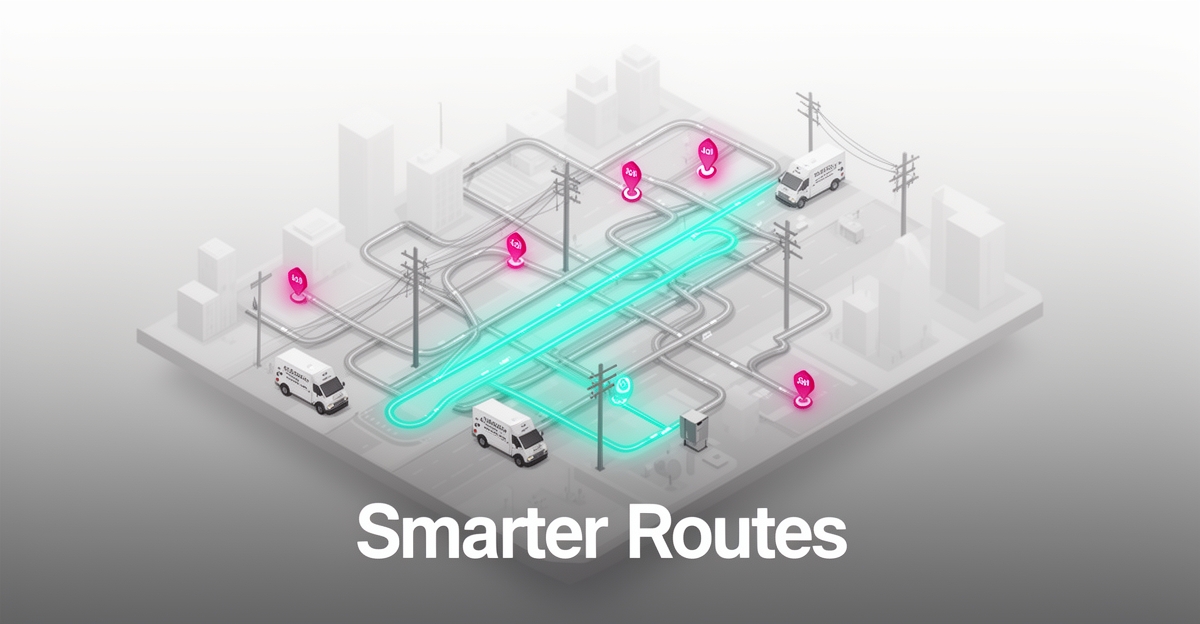
AI-Powered Route Optimization for Utility Contractors: Save Fuel, Time, and Money
Key Facts
- Industry research on AI-powered route optimization commonly reports fuel cost savings in the mid-double digits for field service fleets, with figures around 17% cited in routing vendor case studies
- Optimized job sequencing typically improves labor utilization by reducing idle time between service calls
- Combined labor and fleet expense reductions of roughly 28% have been reported in industry case studies after routing optimization
- Modern route optimization APIs handle complex constraints such as time windows, vehicle capacities, and driver schedules alongside real-time traffic data
- AI-powered routing increases daily job completion by minimizing detours and idle time between utility service calls
- Real-time AI routing adapts to traffic, weather, and urgent jobs to maintain optimal field crew efficiency
- Phased AI routing deployment starts with pilot crews to measure fuel, labor, and on-time performance before scaling
Hire a team member that works 24/7 — for less than a part-time wage.
AI receptionists, SDRs, dispatchers and 99+ roles. Trained on your business, fully managed.
Not sure where to start? Ask our AI planner
The Hidden Cost of Inefficient Field Routes
Utility contractors operating without intelligent route planning often face hidden financial drains that quietly erode profitability. Manual scheduling fails to account for real-time traffic, road closures, or clustered job locations, leading to unnecessary mileage and wasted crew hours. These inefficiencies compound daily, turning small oversights into significant operational costs over time.
Industry research on routing optimization commonly reports fuel cost savings in the mid-double digits, figures around 17% appear in vendor case studies, driven by minimizing redundant travel and idling. Beyond fuel, inefficient routes accelerate vehicle wear through frequent stops, starts, and suboptimal driving patterns, increasing maintenance expenses and shortening asset lifespans. Crews also spend valuable time stuck in traffic or waiting between jobs, reducing billable hours and delaying project timelines.
- Excessive fuel consumption from detours and backtracking
- Increased vehicle maintenance from irregular driving patterns
- Crew idle time due to poor job sequencing
- Delayed job completion affecting customer satisfaction
- Higher emissions impacting sustainability goals
AIQ Labs addresses these challenges through AI Workflow Builds that rebuild the routing workflow that costs you the most, fixed price, delivered in phases. These systems analyze live traffic, road conditions, and job densities to generate the most efficient sequences, and integrate directly with your existing GPS and dispatch platforms so adoption doesn't disrupt current workflows. The result is not just cost reduction, but a smarter, more responsive field operation that adapts dynamically to real-world conditions.
How AI Creates Optimal Routes in Real Time
AI-powered route optimization transforms how utility contractors manage field operations by processing real-time data to generate the most efficient paths. This approach considers traffic congestion, road closures, weather impacts, and specific job site requirements to minimize unnecessary mileage and delays. By continuously adapting to changing conditions, AI ensures crews spend less time in transit and more time completing critical work.
The technology leverages advanced algorithms to solve complex routing challenges that traditional methods cannot handle efficiently. Modern route optimization engines address classic traveling salesman problems while incorporating real-world constraints such as time windows, vehicle capacities, and driver schedules. This capability allows utility companies to plan routes that respect appointment windows, load limits, and regulatory requirements without manual intervention.
Commercial routing platforms typically focus on practical field efficiency, helping contractors plan routes based on time, cost, distance, traffic patterns, tolls, and geographic factors. Vendor case studies in this space commonly report fuel savings around 17% and similar improvements in labor utilization after implementation. Your actual results will depend on your fleet size, territory density, and starting inefficiency, which is why a pilot with measured baselines matters.
AIQ Labs builds custom routing solutions that integrate these capabilities with existing GPS and dispatch platforms, creating a seamless workflow from job assignment to route execution. The system dynamically recalculates optimal paths when new urgent jobs arise or unexpected road conditions occur, ensuring field teams always follow the most efficient route. This real-time adaptability prevents crews from getting stuck in traffic or taking detours that waste fuel and time.
Key benefits include reduced vehicle wear from fewer miles driven, lower idle time as crews arrive closer to scheduled windows, and decreased overtime costs from more predictable job completion times. Contractors using AI-powered routing also report improved customer satisfaction due to more reliable arrival windows and faster response times for emergency repairs. The technology scales effectively whether managing a small fleet or coordinating hundreds of vehicles across multiple service territories.
By combining traffic prediction, road condition analytics, and job location intelligence, AI creates routing solutions that balance multiple competing priorities. This holistic approach ensures optimization isn't just about the shortest distance, but the most efficient use of time, resources, and equipment, delivering sustainable cost savings while maintaining service quality.
From Manual Dispatch to AI-Driven Operations
Manual dispatch keeps crews waiting on the road while fuel burns and windows slip. Utility contractors are moving from phone-based scheduling to systems that analyze traffic, road conditions, and job locations in real time to create optimal field routes.
The shift starts with visibility. AI analyzes live traffic, weather, site access constraints, and crew skill sets to sequence stops dynamically rather than in a static order. Modern route optimization APIs handle classic traveling salesman problems and real-world last-mile routing with custom constraints such as time windows, vehicle capacities, and driver schedules. That capability replaces guesswork with measurable routing decisions.
Integration is the practical bridge. AI routing systems connect with existing GPS and dispatch platforms so field data flows both ways. Job locations, work order status, and vehicle telemetry feed the model, and optimized routes push back to drivers without changing their daily tools. This reduces fuel costs, vehicle wear, and crew idle time while keeping dispatchers in control.
Phased deployment lowers risk for busy operations. A focused pilot on one crew or territory proves value before scaling company-wide. Typical implementation steps include:
- Map current dispatch workflows, data sources, and integration points with GPS and work order systems
- Connect routing engine to live traffic, road conditions, and job location data for dynamic optimization
- Pilot with a single crew or region, measure fuel, labor utilization, and on-time completion
- Expand territory by territory with dispatcher oversight and feedback loops for continuous tuning
Outcomes are tracked in operational terms contractors care about. Industry case studies commonly report fuel savings around 17% from optimized routing, with similar improvements in labor utilization and combined labor and fleet expense reductions of roughly 28%. Your mileage will vary, which is why we measure against your own baseline during the pilot rather than promising a number up front. Those gains come from fewer miles driven, less idle time between jobs, and crews finishing more work per day.
AIQ Labs builds custom AI routing systems that integrate with GPS and dispatch platforms, delivering measurable savings through owned, production-ready workflows. Whether that starts as a single Workflow Build for dispatch or grows into a full AI Operating System connecting your entire field operation, you own what gets built, no per-seat rental, no lock-in.
With the right data foundation and phased rollout, manual dispatch evolves into AI-driven operations that protect margins while improving service reliability.
Still paying for 10+ subscriptions that don’t talk to each other?
We build custom AI systems you own outright. No vendor lock-in. Full control.
Not sure where to start? Ask our AI planner
Frequently Asked Questions
How much can utility contractors save on fuel costs with AI-powered route optimization?
What specific improvements do utility contractors see in labor utilization after implementing AI routing?
How does AI route optimization handle real-time changes like traffic jams or urgent new jobs?
Can AI routing systems work with our existing GPS and dispatch software?
What's the best way to start using AI route optimization without disrupting our current operations?
Does AI route optimization help reduce vehicle maintenance costs?
Turn Field Inefficiency Into Your Competitive Edge
Utility contractors lose real money every day to inefficient routes, wasted fuel, idle crews, and delayed jobs that erode margins and frustrate customers. AI-powered route optimization cuts through this noise by using live traffic, road conditions, and job data to generate the most efficient sequences, with industry case studies reporting fuel savings around 17% and meaningful gains in labor utilization. The shift from manual dispatch to intelligent, adaptive routing isn't just about saving on gas, it's about building a more responsive, profitable field operation that scales with your business. If you're ready to see where your biggest routing inefficiencies lie, start with the free two-minute Fit Check to map your current workflow and uncover high-ROI automation opportunities. From there, a free 30-minute strategy call with our team will show you exactly what's possible, no pitch, just clarity on your path forward.
Make AI your competitive advantage — not just another tool.
Strategy, implementation and ongoing optimization. One partner, end to end.
Not sure where to start? Ask our AI planner