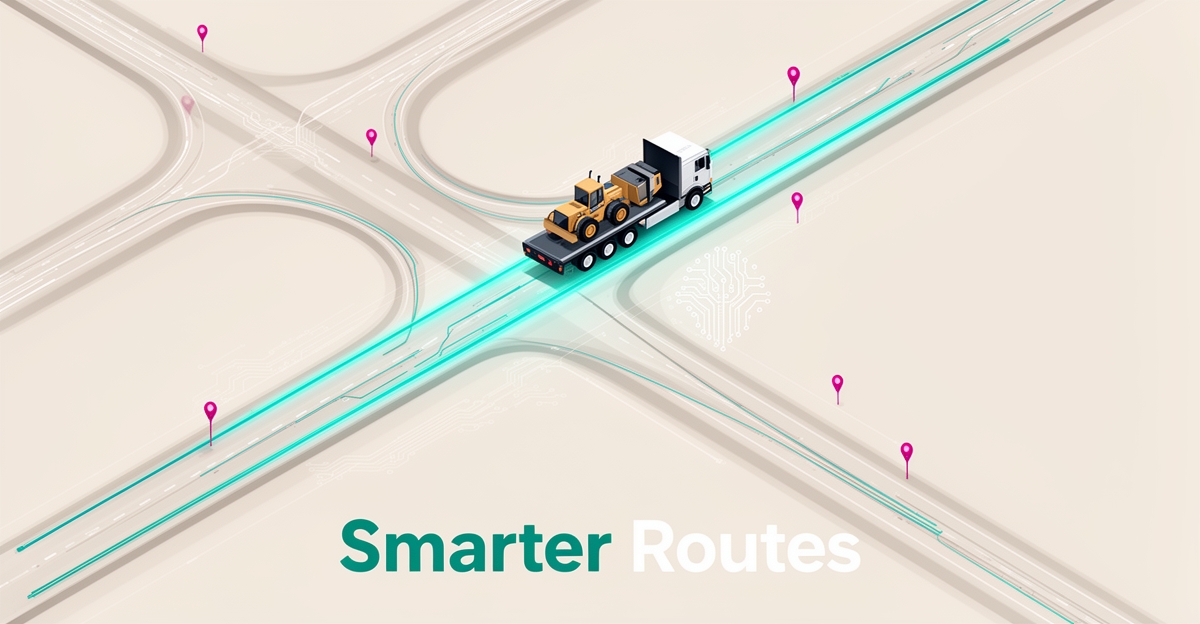
AI-Powered Route Optimization: How Road Contractors Can Save Fuel and Time on Equipment Moves
Key Facts
- Industry fleet research suggests AI route optimization can cut fleet operating costs by up to 20% according to fleet fuel research
- Route optimization studies report fuel consumption reductions of up to 15% with AI-driven planning per route optimization studies
- Telematics providers such as Geotab have cited overall cost reductions of as much as 55% from AI-powered routing in some deployments
- Optimized routing has been associated with greenhouse gas emission reductions of roughly 10% according to related fleet studies
- Savings vary by fleet, region and route mix, contractors should validate figures against their own fuel and maintenance data before projecting ROI
Hire a team member that works 24/7 — for less than a part-time wage.
AI receptionists, SDRs, dispatchers and 99+ roles. Trained on your business, fully managed.
Not sure where to start? Ask our AI planner
The Hidden Costs of Inefficient Equipment Routing
Every day a road contractor's equipment sits in traffic or takes the wrong route, money burns, literally. Fuel is one of the largest controllable expenses in any fleet operation, yet many construction companies still plan equipment moves with dispatcher intuition or basic GPS that ignores the realities of hauling heavy machinery.
The numbers behind this inefficiency add up. Fleet fuel research suggests AI route optimization technology can cut fleet operating costs by up to 20% by improving fuel efficiency, minimizing idle time, and reducing wear and tear. Route optimization studies similarly report fuel consumption reductions of up to 15% and maintenance cost reductions of up to 10%. For a contractor running multiple pieces of heavy equipment across several job sites, even the low end of those ranges can translate into tens of thousands of dollars annually. Treat these figures as directional benchmarks, not guarantees, your actual savings depend on your routes, fleet mix and baseline efficiency.
The costs of poor routing show up in four places:
- Excess fuel consumption from suboptimal routes, traffic congestion, and unnecessary idling
- Accelerated equipment wear from stop-and-go driving and longer hauls than necessary
- Wasted driver hours that could be spent on productive work at the job site
- Missed project deadlines when equipment arrives late and crews sit idle waiting
What makes traditional planning so costly is what it cannot see. Manual route planning doesn't account for real-time traffic data, weather conditions, or road closures, factors that change hourly and matter enormously when you're moving an excavator or a paver down a highway. The contrast is stark: while traditional route planning offers low initial costs and easy implementation, its benefits are limited, whereas AI-powered systems continuously recalculate the most efficient path for every equipment move.
The financial upside of getting this right is substantial. Telematics provider Geotab has cited overall cost reductions of as much as 55% from AI-powered route optimization in some deployments, while related fleet studies note roughly a 10% reduction in greenhouse gas emissions from optimized routing, an increasingly relevant factor as contractors face sustainability requirements on public projects.
This is where purpose-built automation matters. AIQ Labs builds route-optimization systems that analyze traffic, road closures, and terrain to find the most efficient paths for construction equipment, reducing fuel costs and equipment wear across multiple job sites. Whether that starts as a single AI Workflow Build around your dispatch process or grows into a broader AI Operating System for your whole operation, the system is owned outright rather than rented, so contractors can tailor it to their specific fleet, regions, and project schedules.
The question isn't whether inefficient routing costs your operation, it's how much, and for how much longer you're willing to absorb it.
How AI Analyzes Traffic, Terrain, and Closures in Real Time
AI-powered route optimization transforms how construction teams move equipment by processing live data streams that static planning methods simply cannot match. Unlike traditional approaches that rely on fixed schedules and historical assumptions, AI systems continuously analyze traffic patterns, weather shifts, and unexpected road closures to recalculate the most efficient paths in real time. This dynamic adjustment helps heavy machinery avoid delays caused by congestion or hazardous conditions, directly translating to fuel savings and reduced equipment wear.
The technology integrates multiple data layers, including terrain gradients, load restrictions, and real-time incident reports, into a unified decision engine. Machine learning models trained on historical and current conditions predict how factors like steep inclines or adverse weather will impact transit times and fuel consumption for specific equipment types. Industry research suggests AI route optimization can cut fleet operating costs by up to 20% by improving fuel efficiency, minimizing idle time, and reducing wear and tear, while also lowering maintenance costs through smarter path selection.
AIQ Labs applies this same technical rigor to custom route optimization systems for construction clients, embedding real-time analytics into workflow automation that connects with existing fleet management tools. By processing live inputs from sources like traffic feeds and weather APIs, these systems generate adaptive routes that account for variables manual planners often overlook. The result is a measurable improvement in daily productivity, achieved not through guesswork, but through continuous, data-driven recalibration of every equipment move across job sites.
The Measurable Impact: Fuel Savings, Maintenance Cuts, and Productivity Gains
AI-powered route optimization delivers tangible, quantifiable benefits that directly impact the bottom line for road contractors managing equipment moves. Industry research consistently points to meaningful reductions in fuel consumption and associated costs, with multiple studies documenting fuel savings in the 15% to 20% range through optimized routing that avoids congestion and unnecessary idling industry research and fleet fuel research. These savings compound over time, especially for fleets making frequent daily moves between job sites.
Beyond fuel, AI optimization has been credited with much larger overall operating cost reductions, as much as 55% in some analyses, when factoring in decreased vehicle wear, lower maintenance requirements, and improved asset utilization industry research. That comprehensive cost reduction stems from smarter routing that minimizes harsh acceleration, excessive braking, and exposure to rough terrain, key contributors to mechanical strain on heavy equipment. Contractors have also reported roughly 10% reductions in greenhouse gas emissions as a result of more efficient travel patterns, supporting both operational efficiency and sustainability goals related fleet studies. Your mileage will vary, literally, so benchmark against your own fuel and maintenance records.
Productivity gains further amplify these benefits, as drivers spend less time in transit and more time on productive work. AI systems continuously analyze traffic patterns, road closures, and terrain data to dynamically adjust routes, helping equipment arrive faster and with fewer delays. This real-time adaptability contrasts sharply with traditional static planning, which often fails to account for changing conditions and results in longer, less efficient journeys. For road contractors operating across multiple sites, these improvements translate into more completed tasks per day, better schedule adherence, and reduced overtime costs, all while extending the lifespan of valuable equipment through smarter, less stressful operation.
Implementation Roadmap: From Selection to Integration
Implementing AI route optimization requires a structured approach to ensure seamless integration and maximum return on investment. Contractors should begin by selecting a platform that supports machine learning algorithms capable of analyzing real-time traffic, weather, and road closure data, key factors in determining efficient equipment routes. Historical data from past equipment moves is essential for training the AI model to recognize patterns and predict optimal paths under varying conditions. Integration with existing fleet management and GPS systems enables automated route dispatch and real-time adjustments, minimizing manual intervention. Establishing continuous monitoring protocols allows teams to track performance metrics such as fuel savings and delivery times, making iterative improvements based on actual operational feedback.
Addressing challenges like upfront costs and data requirements is critical; starting with a pilot phase on a single route or equipment type can demonstrate value before scaling. This is exactly how AIQ Labs structures its work: a Workflow Build rebuilds the one workflow that costs you the most, dispatch and equipment routing is a common candidate, at a fixed price and in phases, so you see results before committing further. For contractors ready to connect routing with scheduling, dispatch, and reporting across the business, a phased AI Operating System ties everything into one owned operational layer. By following these steps, road contractors can achieve measurable efficiency gains, with industry research pointing to potential fuel cost reductions of up to 20% and broader operational savings through optimized routing. Continuous refinement ensures the system adapts to changing job site demands, delivering sustained improvements in productivity and resource utilization over time.
Custom AI Route Optimization: Ownership vs. Off-the-Shelf Solutions
Most road contractors face a quiet but costly dilemma: they can rent generic route software that treats every fleet the same, or they can invest in custom-built AI that learns the specific weight, terrain, and traffic patterns of their heavy equipment. While off-the-shelf tools offer quick setup, they often force crews into rigid workflows that ignore the unique constraints of moving excavators, pavers, and low-boys across active job sites.
Subscription-based route planners typically operate on one-size-fits-all algorithms. They might shave a few miles off a highway haul, but they rarely integrate deeply with your existing dispatch software, telematics, or project management systems. According to industry analysis, AI-powered route optimization has been credited with cost reductions of up to 55% in some deployments, but realizing savings like that requires seamless data flow between your routing engine and your daily operations, something generic subscriptions often struggle to deliver without expensive middleware or manual workarounds.
Custom AI route optimization, by contrast, is engineered around your specific equipment types and business logic. Rather than adapting your processes to fit a vendor's template, a tailored system analyzes your historical moves, driver behavior, and site access restrictions to generate routes that account for bridge weight limits, low-clearance hazards, and time-sensitive delivery windows. This level of specificity is what turns the up-to-20% fuel cost reductions cited in industry research from a best case into a realistic target for specialized construction fleets.
The long-term economics favor ownership over rental. While subscription software requires perpetual monthly fees that scale with your fleet size, a custom-built system is an asset you own outright. Over three to five years, subscription costs can exceed the price of a bespoke solution, especially when you factor in the additional productivity gains from deeper integration. Many enterprises are also shifting toward owned and hybrid AI deployments to maintain control over their proprietary data and operational intelligence, a trend forward-thinking contractors are beginning to mirror in their own technology stacks.
When evaluating whether to build or buy, consider these critical factors:
- Integration depth: Custom systems connect directly to your existing fleet management and GPS tracking tools without API limitations
- Equipment specificity: Algorithms trained on your exact mix of heavy machinery handle weight and dimension constraints that generic software ignores
- Data ownership: You retain full control over route histories, driver performance metrics, and operational insights
- Scalability: The system grows with your business without per-user or per-vehicle licensing fees
AIQ Labs specializes in building these owned, custom route-optimization systems for contractors who need more than a cookie-cutter solution. Our approach involves analyzing your specific workflows, from dispatch to delivery, and engineering AI that integrates directly with your current tech stack. With 200+ multi-agent systems deployed and four live SaaS products we run ourselves, we know what holds up in daily operations. Because you own the code and the data, the system becomes a permanent competitive asset rather than an ongoing operational expense.
If you are ready to move beyond generic routing software and explore a solution built specifically for your equipment and routes, the next step is straightforward. Start with the two-minute Fit Check at AIQ Labs, followed by a free 30-minute strategy call to map your specific automation opportunities. We will assess your current systems and identify exactly where custom AI can deliver the highest ROI for your fleet, no obligation, just clarity on your path forward.
Still paying for 10+ subscriptions that don’t talk to each other?
We build custom AI systems you own outright. No vendor lock-in. Full control.
Not sure where to start? Ask our AI planner
Frequently Asked Questions
How much fuel can AI route optimization actually save for road contractors?
Does AI routing help with more than just fuel savings?
Can AI route optimization reduce emissions on public projects?
What makes AI better than traditional paper maps or basic GPS?
Is custom-built AI worth it versus an off-the-shelf subscription?
How do I get started with AI route optimization for my fleet?
Turn Equipment Moves into Profit Opportunities
Inefficient equipment routing silently drains your bottom line through wasted fuel, accelerated wear, and idle crews, costs that AI-powered optimization directly targets by analyzing real-time traffic, terrain, and closures. Industry research points to meaningful gains: fuel cost reductions of up to 20%, maintenance savings of up to 10%, and, in some analyses, much larger cuts in total operating expenses when routing is fully integrated with the rest of your operation. For road contractors juggling multiple job sites, these aren’t just efficiencies, they’re reclaimed hours, extended equipment lifespans, and tighter project schedules. The shift from generic subscriptions to custom-owned AI systems ensures your solution evolves with your fleet’s unique demands, turning route planning from a cost center into a competitive advantage. Ready to see where your operation stands? Start with the two-minute Fit Check at AIQ Labs, followed by a free 30-minute strategy call to map your specific automation opportunities, no obligation, just clarity on your path forward.
Make AI your competitive advantage — not just another tool.
Strategy, implementation and ongoing optimization. One partner, end to end.
Not sure where to start? Ask our AI planner