AI-Powered Safety and Health Logging: How Daycare Centers Can Track and Report Child Wellness
Key Facts
- Connected monitoring systems are becoming the norm across sectors as of late 2026, with sensor and check-in data increasingly feeding central wellness platforms.
- AI can automate daily health check-ins, generate incident reports, and flag anomalies in a child's health pattern.
- Anomaly detection can surface unusual wellness patterns early, turning buried paperwork into visible trends.
- Responsible AI deployment requires transparent, explainable, and fair systems with human oversight.
- Privacy-by-design controls, audit trails, and human-in-the-loop review are baseline requirements for childcare settings.
Hire a team member that works 24/7 — for less than a part-time wage.
AI receptionists, SDRs, dispatchers and 99+ roles. Trained on your business, fully managed.
Not sure where to start? Ask our AI planner
The Growing Need for Automated Child Wellness Tracking in Daycare
Every day, daycare staff juggle dozens of paper logs, clipboards, and spreadsheets just to document a single child’s sniffle or scraped knee, and every missed entry creates a gap in care that regulators and parents will eventually find. As enrollment grows and compliance demands tighten, manual wellness tracking is becoming an operational liability rather than a safeguard.
The core challenge is scale. As of late 2026, connected monitoring systems are rapidly becoming the norm across regulated sectors, with sensors, kiosks, and check-in tools feeding data into central platforms. Daycare centers still relying on handwritten logs are effectively competing with one hand tied behind their backs.
Manual processes break down in predictable ways. Staff members document incidents inconsistently, often hours after they occur, and critical details get lost between shift changes. When a parent asks why their child has a bruise, or a licensing inspector requests last quarter’s incident reports, directors scramble to reconstruct timelines from fragmented notes.
The human cost compounds the operational one. Repetitive logging tasks pull caregivers away from actual caregiving, fueling burnout in an industry already struggling with retention. Common pain points include:
- Inconsistent documentation formats across staff members and classrooms
- Delayed incident reporting that undermines parent trust and regulatory compliance
- No systematic way to spot recurring health patterns in individual children
- Hours of administrative work that could be spent on direct child engagement
This is where AI-powered anomaly detection changes the equation. The same pattern-recognition technology used to flag irregularities in operational data can surface irregularities in a child’s health patterns before they escalate. A child logging three stomach complaints in a week, or a sudden change in nap behavior, becomes a visible trend rather than buried paperwork.
For daycare operators, those benefits translate directly into faster incident response, cleaner audit trails, and staff who spend their time with children instead of clipboards. Managed AI staff, like the AI Employees AIQ Labs deploys across 99+ roles, can handle intake, reminders, and documentation at a fraction of the cost of adding administrative headcount.
The question is no longer whether automation belongs in childcare settings, it is whether centers can afford to keep absorbing the hidden costs of doing everything by hand. Solutions built with compliance and transparency at their core, like the systems AIQ Labs develops for regulated environments, are making that transition practical for centers of any size.
How AI Automates and Enhances Child Health Monitoring
Daily health checks in daycare centers can shift from paper logs and memory to continuous, intelligent monitoring without adding staff burden.
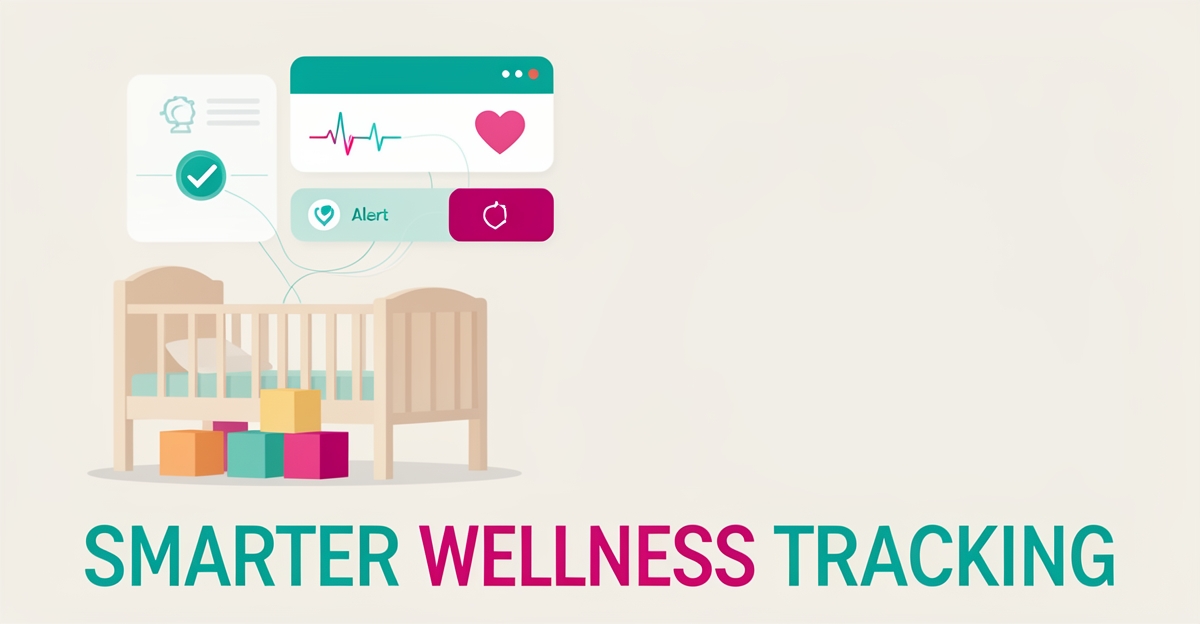
AI-powered systems automate daily health check-ins, generate incident reports, and flag anomalies in a child's health pattern. This automation helps daycare centers identify potential health risks and take proactive measures to prevent them. The approach supports real-time incident reporting and pattern detection across attendance, temperature, mood, and activity data.
The infrastructure behind this is maturing quickly. As of 2026, sensors, wearables, and check-in kiosks can feed wellness data into a central system securely and continuously, with connected monitoring increasingly standard in care environments.
Anomaly detection is central to the value. AI can surface deviations from baseline patterns quickly, and the same principle applies to child wellness signals. Unusual sleep patterns, repeated absences, or deviations from baseline vitals can be flagged before they become incidents.
Multi-agent frameworks make the workflow practical. One agent handles daily check-in intake, another generates structured incident reports, and a third monitors longitudinal trends for each child. This mirrors how AIQ Labs builds secure, compliant multi-agent systems, 200+ deployed to date, that support regulatory reporting and parent transparency in childcare settings.
Automation does not replace caregivers. It reduces manual logging and gives staff clearer, actionable summaries. Benefits daycare teams typically see include:
- Automated daily health check-ins with timestamped records
- Real-time incident reports generated from observed events
- Anomaly alerts for changes in wellness patterns over time
- Consistent documentation that supports privacy laws and parent communication
Security and compliance remain critical as data flows increase. Secure AI design therefore includes privacy-by-design controls, human oversight, and audit trails, especially when health data about minors is involved.
Responsible deployment means transparent, explainable systems with human-in-the-loop review for alerts and reports. When AI automates logging and flagging, staff retain accountability for decisions and parent conversations.
For daycare centers, the result is improved child safety and health with enhanced incident reporting and response. Efficiency gains free caregivers to focus on care rather than paperwork, while parents gain timely, documented visibility into wellness trends.
Ensuring Privacy, Compliance, and Human Oversight in AI Deployment
Deploying AI for child wellness in daycare centers raises expectations as well as responsibilities. Privacy, compliance, and human oversight must be designed in from the start, not added later.
Data privacy and security sit at the core of responsible deployment. As connected monitoring expands across care settings, the attack surface for health data collected in childcare environments grows with it. Proactive protection of daily check-ins and incident logs, encryption, access controls, and continuous monitoring, is now a baseline expectation, not a differentiator.
Regulatory alignment requires transparent, explainable, and fair systems. The development and deployment of AI in daycare centers must be done responsibly, ensuring systems are transparent, explainable, and fair. This includes implementing measures to prevent bias, ensuring data privacy, and providing human oversight. Regulators continue to tighten guidelines for AI in care settings, and centers that build to a higher standard now avoid costly retrofits later.
Human-in-the-loop controls preserve accountability where it matters most. AI brings real, tangible benefits once risks are mitigated, but in childcare, the risks include children's data, so mitigation has to be structural, not aspirational.
Practical safeguards for daycare AI include:
- Data minimization and encryption for health check-ins, incident reports, and anomaly flags with role-based access
- Bias testing and fairness audits on health pattern models to avoid disparate outcomes across children
- Human review of all flagged anomalies and auto-generated reports before parent notification
- Audit trails and explainable outputs that document why an alert was raised and who reviewed it
AIQ Labs builds secure, compliant AI systems that support regulatory reporting and parent transparency in childcare settings. The approach mirrors responsible AI principles and practices for safety enhancements, with human oversight and accountability embedded in workflows rather than bolted on.
Maintaining trust means pairing automation with clear governance. Centers benefit from increased efficiency and productivity while keeping data privacy and security and fairness as non-negotiable design constraints.
Practical Steps to Implement AI-Powered Wellness Logging in Your Daycare
Adopting AI-powered wellness logging starts with operational clarity, not technology. Daycare administrators who map current health check-ins, incident reporting, and parent communication first avoid costly missteps and build systems staff will actually use.
Assess current workflows and risk points before selecting any tool. Evaluate how daily health check-ins are documented, how incident reports are generated, and where anomalies in a child’s health pattern are missed. This assessment identifies where AI can improve efficiency and effectiveness while keeping human oversight central.
Select a compliant AI system built for regulated childcare environments. The system should be transparent, explainable, and fair, with built-in measures to prevent bias and protect data privacy. Securing connected health devices is a core design requirement, not an afterthought.
Integration must respect existing tools and privacy laws. Install and configure the AI-powered system so it integrates with existing systems and processes for attendance, communications, and reporting. AIQ Labs architects custom systems that support regulatory reporting and parent transparency in childcare settings, with enterprise-grade frameworks for data security and audit trails. For centers that want to start smaller, a Workflow Build can rebuild the single most expensive logging workflow first, at a fixed price, in phases.
Training and governance ensure safe adoption. Train staff on the use of the AI-powered system, ensuring that they understand its capabilities and limitations. Provide clear protocols for human-in-the-loop review of flagged anomalies, incident report approval, and parent notifications.
Continuous monitoring protects children and trust. Continuously monitor and evaluate the performance of the AI-powered system, making adjustments as needed to ensure its effectiveness and safety. The same anomaly detection that flags early health pattern changes should also watch the system itself for drift or errors.
A practical rollout roadmap aligns with responsible AI development and deployment:
- Map current safety and health logging steps and pain points with teachers and administrators
- Define data privacy, consent, and retention policies aligned with local regulations
- Pilot AI check-ins and automated incident reporting in one classroom before center-wide launch
- Establish weekly review cycles for flagged anomalies and staff feedback
Responsible deployment requires transparency, explainability, and fairness. Human oversight remains essential for accountability, especially when AI flags a potential health risk. Security and compliance must be designed in from day one.
When implemented thoughtfully, AI automates daily health check-ins, generates incident reports, and flags anomalies in a child’s health pattern while freeing caregivers to focus on care, not paperwork.
Still paying for 10+ subscriptions that don’t talk to each other?
We build custom AI systems you own outright. No vendor lock-in. Full control.
Not sure where to start? Ask our AI planner
Frequently Asked Questions
How can AI-powered systems actually help daycare staff spend more time with children instead of paperwork?
What specific health patterns can AI detect in children before they become serious issues?
Is it safe to use AI for tracking children's health data in daycare settings?
Will using AI in daycare lead to job losses or reduce the need for human caregivers?
What steps should a daycare take to implement AI wellness logging without disrupting current operations?
How does AI improve compliance and transparency with parents and regulators in daycare centers?
From Paper Logs to Proactive Care: How AI Transforms Daycare Wellness
AI-powered wellness logging isn’t just about replacing clipboards, it’s about giving daycare staff the clarity and time to focus on what matters most: the children in their care. By automating health check-ins, surfacing patterns before they become concerns, and generating audit-ready reports, centers gain operational efficiency while strengthening trust with parents and regulators. The technology works best when designed with privacy, transparency, and human oversight at its core, ensuring safety without sacrificing accountability. For centers ready to move beyond reactive logging, the next step is simple: assess your current workflows, identify where AI can reduce burden without compromising care, and explore solutions built for regulated environments like those AIQ Labs develops. Take the first step toward smarter, safer wellness tracking, complete the 2-minute Fit Check and book a free 30-minute strategy call to see where AI can make the biggest impact in your center.
Make AI your competitive advantage — not just another tool.
Strategy, implementation and ongoing optimization. One partner, end to end.
Not sure where to start? Ask our AI planner