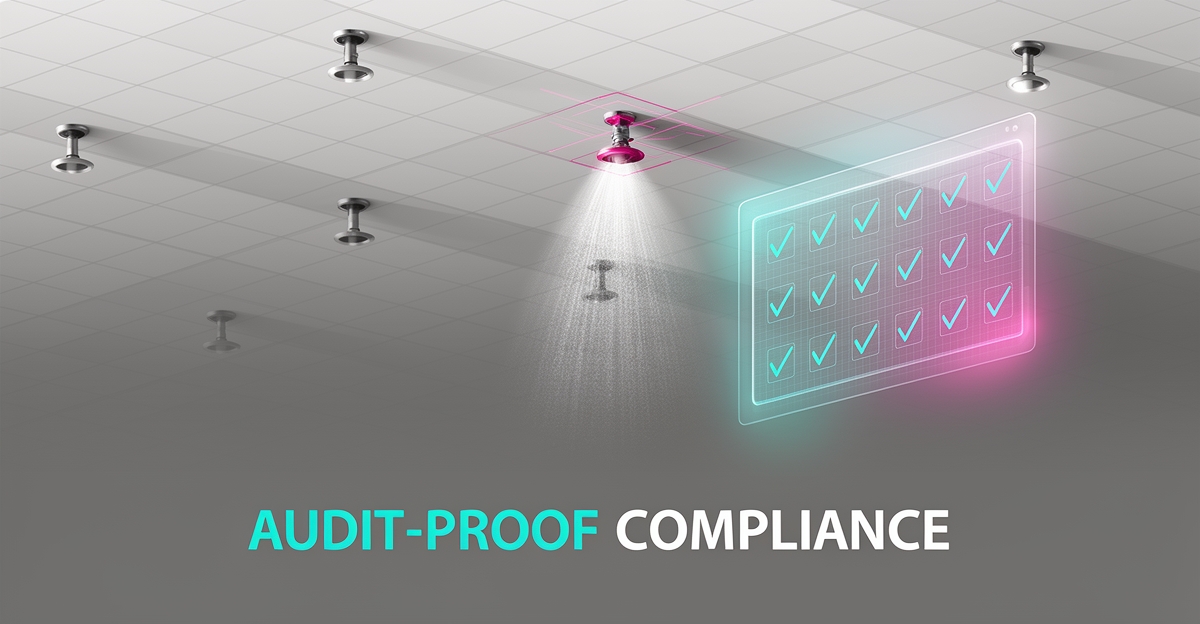
AI-Powered Safety Compliance in Fire Sprinkler Installations: How to Stay Audited & Approved
Key Facts
- Manual compliance logs introduce risk at every handoff, missed signatures and outdated specs typically surface only during audit preparation.
- AI-enhanced fire detection systems typically outperform legacy models by fusing heat, light, and gas signals and distinguishing nuisance smoke from real fire.
- In some jurisdictions, non-compliance carries direct financial penalties, for example, Queensland smoke alarm legislation can trigger a penalty of up to 15% of contract price at settlement, with final compliance deadlines in 2027.
- AI compliance platforms can automate report generation, check for missing fields, and format audit-ready documents, typically cutting documentation effort significantly.
- Continuous, AI-assisted compliance monitoring turns audits into a formality rather than a fire drill.
Hire a team member that works 24/7 — for less than a part-time wage.
AI receptionists, SDRs, dispatchers and 99+ roles. Trained on your business, fully managed.
Not sure where to start? Ask our AI planner
The Compliance Gap in Fire Sprinkler Installations
Fire sprinkler installations carry zero margin for documentation error, yet most contractors still rely on manual logs that introduce risk at every handoff. A missed signature, an outdated spec sheet, or a deviation caught days after the fact can derail an entire project timeline and trigger costly rework.
The latency principle is simple: every hour a deviation sits undetected in a paper trail multiplies remediation cost. In some jurisdictions the stakes are codified, in Queensland, non-compliance with smoke alarm legislation can trigger a penalty of up to 15% of contract price at settlement, with the final phase of compliance deadlines falling in 2027.
The compliance gap typically manifests in three ways:
- Manual documentation errors that only surface during audit preparation
- Delayed deviation detection when field conditions diverge from approved plans
- Audit risks from incomplete chains of custody across inspection, installation, and sign-off
Modern inspection platforms now embed AI assistants that turn plain-language requests into bulk actions and instant lookups across portfolios, but the underlying challenge remains structural: disconnected data between the field, the office, and the authority having jurisdiction. The same pattern recognition that powers AI fire detection can flag a missing hydrostatic test record or an unapproved pipe material substitution before an inspector does.
AIQ Labs builds AI systems that align with industry-specific safety standards and documentation needs, helping fire protection contractors close the loop between installation logs and code requirements. The goal isn't just passing the next audit, it's creating a continuous compliance posture that makes audits a formality rather than a fire drill. For contractors who want to start small, a focused AI Workflow Build can rebuild the single compliance workflow that costs the most, at a fixed price.
How AI Transforms Fire Safety Compliance Monitoring
Fire sprinkler compliance used to mean paper logs, manual walk-throughs, and hoping an auditor finds nothing missing. AI changes the equation by watching, reading, and reporting continuously so deviations are caught before they become violations.
Speed improves first. AI-enabled detection systems typically identify smoke or flame in seconds rather than the minutes it can take for human reporting to escalate, an advantage that compounds in both emergency response and compliance workflows, where early flagging means cheaper fixes.
Accuracy improves alongside speed. AI-enhanced fire detection systems typically outperform legacy models by fusing heat, light, and gas signals and distinguishing cooking smoke from real fire. That multi-sensor fusion cuts false alarms while raising confidence in alerts.
Compliance becomes a continuous workflow, not a point-in-time scramble. Modern inspection platforms embed AI to supercharge workflows by turning plain-language requests into bulk actions, instant lookups, and on-demand answers across a portfolio, streamlining scheduling, inspections, proposals, work orders, and invoicing with AI-assisted data capture and professional report generation.
For fire sprinkler installations, AI systems monitor installation logs, generate compliance reports, and flag deviations from NFPA, ULC, and local codes in real time. This approach reduces audit risk and supports regulatory adherence across jurisdictions.
Key capabilities now common in AI compliance monitoring include:
- Real-time detection of smoke and flames with automated alerting
- Automated compliance reporting that checks for missing fields and formats audit-ready documents
- Instant flagging of deviations from NFPA, ULC, and local code requirements
- Plain-language queries converted into bulk actions and portfolio-wide lookups
Real-time detection and automated documentation mean teams spend less time chasing records and more time closing gaps. AIQ Labs builds AI systems that align with industry-specific safety standards and documentation needs, helping SMBs monitor installation logs and maintain audit trails without vendor lock-in. Where the workload is recurring, inspection scheduling, certification checks, report assembly, managed AI Employees can handle it around the clock at a fraction of a human hire's cost.
The shift is from reactive audits to proactive assurance. With AI continuously watching cameras, sensors, and documentation, fire safety compliance stays current, auditable, and approved.
Implementing AI Compliance Systems for Audit Readiness
Fire protection businesses can achieve audit readiness by deploying AI systems that continuously monitor installation workflows and automatically generate compliant documentation. AI-powered sensors installed during sprinkler setup detect deviations from safety codes in real time, flagging issues like incorrect pipe pressure or missing components before they become audit findings. Modern inspection platforms use AI to transform raw inspection data into professional reports that automatically check for missing fields and support regulatory alignment, typically reducing manual documentation effort substantially. This proactive approach ensures that every installation step creates an auditable trail tied directly to NFPA and local jurisdictional requirements.
To maintain continuous compliance, businesses should integrate AI inspection software that processes data from multiple sources, including pressure sensors, flow tests, and visual checks, into centralized dashboards. These systems enable real-time tracking of compliance status across all active projects, instantly highlighting any work that falls short of ULC or California Title 19 AES standards. AIQ Labs supports this workflow by building custom AI agents that ingest installation logs, cross-reference them against current safety codes, and generate audit-ready reports with zero manual data entry. The result is a living compliance record that updates with every inspection, eliminating last-minute scrambles before auditor visits.
For sustained audit readiness, fire protection companies need ongoing optimization loops where AI systems learn from past inspections to improve future accuracy. This includes tuning systems to site-specific variables like building occupancy types or water supply pressures, which directly impact sprinkler performance requirements. AI Employees can be deployed to handle routine compliance tasks such as scheduling annual inspections, verifying technician certifications against NFPA standards, and maintaining digital logs of all maintenance activities, freeing human teams to focus on complex code interpretations. And for contractors who want one connected layer across estimating, field operations, and compliance rather than a patchwork of point tools, an AI Operating System built in phases, and owned outright, keeps every record in one auditable place. By embedding AI into the compliance lifecycle, businesses transform audit preparation from a periodic burden into a continuous, automated process that consistently meets regulatory expectations.
Still paying for 10+ subscriptions that don’t talk to each other?
We build custom AI systems you own outright. No vendor lock-in. Full control.
Not sure where to start? Ask our AI planner
Frequently Asked Questions
How much faster can AI catch problems in fire sprinkler installations compared to manual checks?
Will AI help me avoid documentation errors that cause audit failures?
Does AI compliance monitoring cover NFPA and local codes for sprinklers?
Is AI detection actually more accurate than traditional methods?
What happens if we're non-compliant with smoke alarm legislation in Queensland?
Can AI flag a missing hydrostatic test or wrong pipe material before an inspector finds it?
From Audit Fire Drill to Continuous Assurance
Fire sprinkler compliance is no longer a point-in-time scramble before an auditor arrives. The gap created by manual logs, delayed deviation detection, and broken chains of custody is now closable with continuous, AI-powered monitoring that watches installation logs, reads field data, and flags NFPA, ULC, and local code deviations in real time. Teams spend less time chasing records and more time closing gaps before they become violations. For contractors facing tightening deadlines like Queensland's 2027 smoke alarm requirements, that shift turns audits into a formality rather than a fire drill. AIQ Labs builds AI systems that align with industry-specific safety standards and documentation needs, helping fire protection teams maintain audit-ready trails without vendor lock-in. Start with a focused workflow assessment, map your highest-risk handoffs, and pilot automated reporting on one active project. Ready for a no-obligation working session? Start the 2-minute Fit Check at https://aiqlabs.ai/apply for a free 30-minute strategy call to map your biggest bottleneck and identify high-ROI automation opportunities.
Make AI your competitive advantage — not just another tool.
Strategy, implementation and ongoing optimization. One partner, end to end.
Not sure where to start? Ask our AI planner