AI-Powered Sales Forecasting for Commercial Bakeries: A Data-Driven Approach
Key Facts
- Bakeries using AI forecasting typically reduce waste meaningfully, often cutting waste ratios roughly in half from the industry's typical 15–25% range.
- Calendar data can reveal patterns invisible to intuition, for example, one bakery reportedly saw a large jump in muffin sales on teacher work days.
- Weather shifts demand in both directions: rain on a holiday may reduce walk-in pastry sales while boosting pre-orders.
- Large bakery operations have built AI models using hundreds of predictive indicators, far beyond what any manager can track manually.
- Realistic daily revenue forecast accuracy is typically ±8–12% MAPE, with weekly totals tightening to ±5–8%.
- Useful AI predictions typically appear within 2–4 weeks of consistent data entry, with bakery-focused forecasting tools commonly costing $50–$200 monthly.
Hire a team member that works 24/7 — for less than a part-time wage.
AI receptionists, SDRs, dispatchers and 99+ roles. Trained on your business, fully managed.
Not sure where to start? Ask our AI planner
Why Traditional Bakery Forecasting Fails in Today’s Market
A croissant has hours, not weeks, to sell. That short window turns small forecasting errors into immediate spoilage or lost customers, and intuition alone cannot keep up with the variables that drive bakery demand.
Traditional forecasting relies on memory and gut feeling. Owners recall “busy Saturdays” or “slow Tuesdays” and apply a flat percentage to last year, such as “Last Year + 10%”. That approach ignores external signals and creates a two-sided cost: unsold product and empty shelves. The cost of being wrong is not just financial, it is emotional for staff and reputational for the brand.
Human brains are good at stories, not simultaneous pattern detection. Intuition struggles to weigh item-level sales history, hyperlocal weather, and community events at the same time. Large bakery operations have built AI models using hundreds of predictive indicators, a complexity no manager can hold in memory. That gap is a core reason perishable forecasting fails.
Perishability amplifies every miss. The typical industry waste ratio sits at 15–25%, while bakeries applying AI forecasting thoughtfully can often reduce waste to the 8–12% range. Reported results vary, but the pattern is consistent: forecasting-driven production adjustments reliably cut waste in the first months of use.
Cognitive bias also hides predictable spikes. Traditional methods miss signals like teacher work days, which one bakery reportedly linked to a 40% jump in muffin sales, and long weekends that can lift Saturday and Sunday sales meaningfully. Field reports also suggest weather trade-offs intuition rarely captures, such as rain on a holiday reducing walk-ins while lifting pre-orders.
The limits of manual planning show up in accuracy. Realistic Mean Absolute Percentage Error for daily total sales revenue is typically ±8–12%, with staple items like bagels at ±10–15% and artisan items at ±15–25%. Volatile products will always be noisy, but stable items should be tighter.
Traditional forecasting also fails on holidays and seasonality. Instead of contextual analysis of day of week, weather, and proximity to weekends, manual plans use flat uplifts. AI treats holidays as clusters of conditions, learning that demand shifts when Thanksgiving falls on a Thursday versus a Friday.
AI addresses these blind spots by analyzing complex data patterns humans miss. It integrates granular sales timestamps, forecasted and lagged weather, and local calendars to correct for bias rather than replace judgment. AI corrects for cognitive bias by focusing on community events, weather, and patterns, not memories.
In practice, this means forecasting can move from guesswork to cost-based decisions. The model balances spoilage cost versus stockout cost and suggests dynamic safety stock, baking more on high-confidence days and less on low-confidence days.
Why intuition breaks down in commercial bakeries:
- Perishable shelf life turns small errors into immediate waste or lost sales
- Human memory cannot process hundreds of indicators like weather, events, and item-level timing simultaneously
- Flat percentage holiday rules miss contextual shifts in demand
- Bias toward recent busy days leads to overproduction and chronic waste
AIQ Labs builds custom forecasting models that help bakeries plan production, manage supply, and maximize profits by analyzing past sales, seasonal trends, and event calendars. The result is not perfect prediction, but consistent, data-informed adjustments that reduce waste and protect revenue. If forecasting is the workflow costing you the most, it is exactly the kind of system our AI Workflow Builds are designed to replace.
How AI Forecasting Works: Data Layers That Drive Accuracy
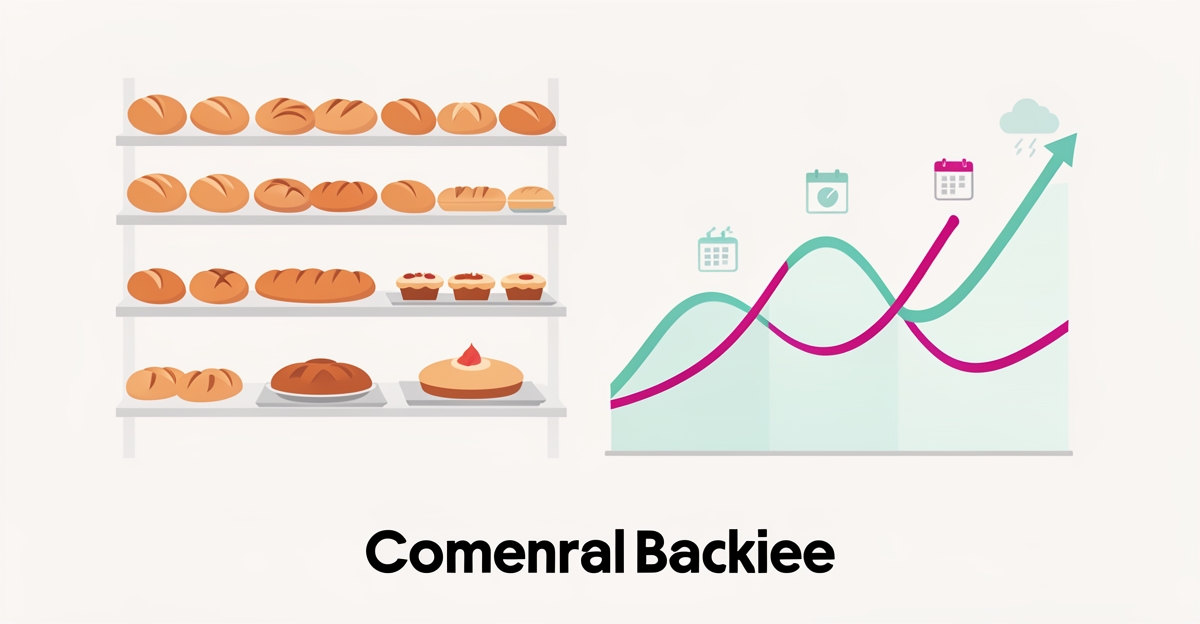
AI-powered forecasting transforms bakery operations by analyzing three critical data layers that traditional methods overlook. The foundation is item-level sales history, where timestamped data reveals how specific products like chocolate croissants sell at 7:30 AM versus 9:00 AM, enabling precise production timing. This granular approach is essential because knowing "pastries sold" is insufficient for optimizing perishable goods inventory.
The second layer incorporates hyperlocal weather patterns, which directly influence customer behavior, cold mornings increase bread and soup demand while sunny afternoons boost iced coffee and cookie sales. Advanced models use both forecasted and lagged weather data, recognizing that rain yesterday can affect today's mood-based purchases. This environmental context helps bakeries anticipate shifts that intuition alone misses, particularly for weather-sensitive items.
The third layer integrates community event calendars, capturing predictable demand spikes from school holidays, paydays, farmers markets, and local parades. A teacher work day, for example, can shift morning muffin demand in ways that are invisible without specific calendar data. Similarly, weather on a holiday can reduce walk-in pastry sales while increasing pre-orders, demonstrating how AI contextualizes holidays beyond simple year-over-year comparisons. Together, these layers enable AI systems to move beyond intuition, balancing spoilage and stockout costs through data-driven production decisions. AIQ Labs develops custom forecasting models that synthesize these data streams to help bakeries optimize production, reduce waste, and capture missed sales opportunities.
From Prediction to Profit: Implementing AI Forecasting in Your Bakery
Moving from insight to action requires a structured approach that respects the operational reality of a commercial kitchen. The goal isn't perfect prediction, it's consistently better decisions that compound into profit. Bakeries applying AI forecasting thoughtfully can often reduce waste ratios from the typical 15–25% range toward 8–12%, a margin shift that directly funds growth.
- Audit your data foundation before selecting a tool. You need daily, item-level sales history from your POS, a log of promotions and local events, and notes on anomalies like equipment failures. If you aren't tracking sales by SKU today, start now, two weeks of clean data beats two years of aggregates.
- Start with your top five products. Staple items like bagels or core breads typically achieve a MAPE of ±10% to ±15%, giving you reliable signals to build confidence. High-volatility artisan items may see ±15% to ±25% MAPE and are better tackled once the workflow is proven.
- Choose a system that integrates natively with your existing POS (Square, Toast, Shopify) or a bakery-specific platform. Forecasting features commonly cost $50–$200 monthly, and useful predictions typically appear within 2–4 weeks of consistent data entry.
- Adopt a cost-optimal production rule. Calculate your critical ratio using spoilage cost (ingredients + labor) versus stockout cost (lost margin + customer lifetime value). Produce until the AI indicates the probability of selling the next unit drops below that threshold.
- Build a daily execution habit: check the forecast range, adjust for known hyperlocal events (school calendars, weather alerts), start production at the lower bound, and keep partial batches ready to finish if demand surges.
The biggest gains come not from perfect predictions, but from consistent, data-informed adjustments. AIQ Labs helps bakeries architect this feedback loop, embedding predictive analytics directly into production planning so the model learns from every close-out sheet. Over 3–6 months, weekly aggregate forecasts can tighten to ±5–8% MAPE, turning forecasting from a guessing game into a reliable operational lever. You can start monthly, build in milestones, or own the system outright, whatever fits how you want to run your bakery.
Still paying for 10+ subscriptions that don’t talk to each other?
We build custom AI systems you own outright. No vendor lock-in. Full control.
Not sure where to start? Ask our AI planner
Frequently Asked Questions
How accurate is AI forecasting actually for a bakery?
Can AI really cut down on waste and spoilage?
What kind of data does AI need to forecast bakery demand?
How fast will I see results after setting up AI forecasting?
Will AI replace my staff or managers?
Does AI actually handle holidays and unpredictable spikes better than intuition?
Bake Smarter, Not Harder: Your Next Batch Awaits
The window between profit and waste in a bakery is measured in hours, not days. As we've explored, intuition alone cannot process the hundreds of variables, from hyperlocal weather shifts to community event calendars, that determine whether your croissants sell out or spoil. By layering item-level sales history with external signals, AI forecasting transforms production from a guessing game into a strategic advantage, tightening waste ratios from the industry's typical 15–25% range toward a more profitable 8–12% while capturing revenue previously lost to empty shelves. The path forward doesn't require a complete operational overhaul overnight. Start by auditing your POS data, select your top five sellers, and implement a system that learns from your specific rhythm. Whether you begin with off-the-shelf tools or partner with AIQ Labs to build a custom forecasting model tailored to your unique footprint, the goal remains the same: consistent, data-informed adjustments that compound into growth. Ready to stop guessing and start baking with precision? Take the two-minute Fit Check to identify your highest-ROI opportunity, or book a free strategy call to map your data-driven future.
Make AI your competitive advantage — not just another tool.
Strategy, implementation and ongoing optimization. One partner, end to end.
Not sure where to start? Ask our AI planner