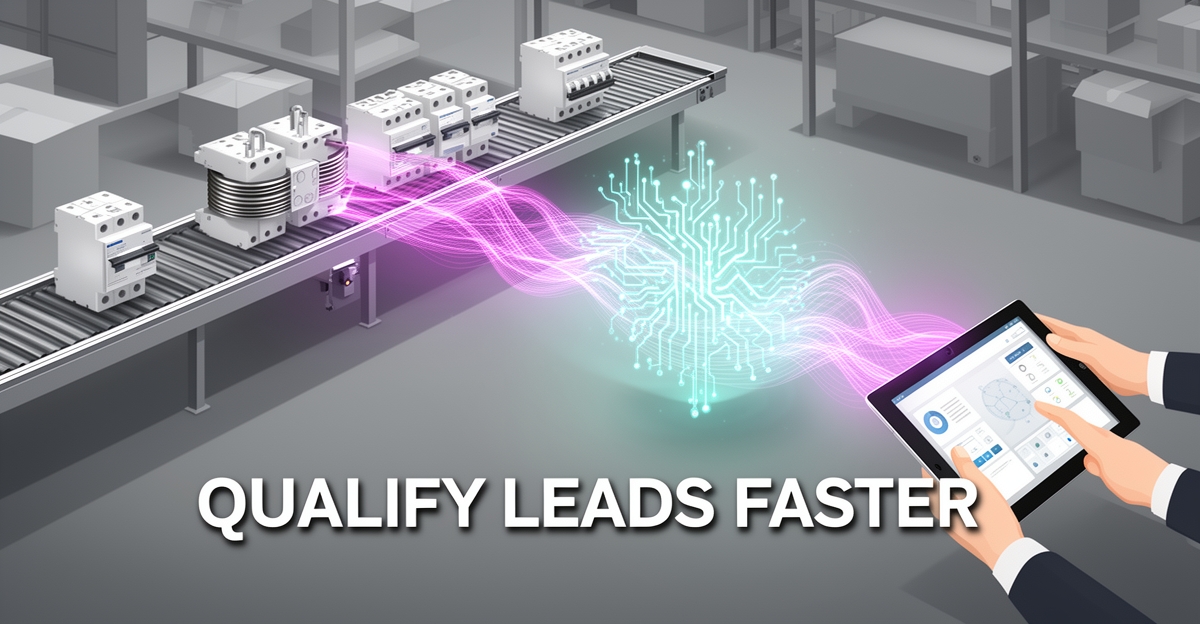
AI-Powered Sales Outreach: How Electrical Distributors Can Qualify Leads Faster
Key Facts
- A growing share of sales professionals now use AI for prospecting, per industry research.
- Most sales professionals who use AI report it helps them focus on their most critical tasks, per recent findings.
- Many sales teams report AI improves their response rates, according to industry research.
- A majority of sales professionals agree AI helps optimize the sales process with data, per HubSpot findings.
- Most organizations have automated processes in at least one business function, as noted in technology trend analysis.
- AI enrichment tools can access hundreds of millions of verified contacts, via HubSpot data.
Hire a team member that works 24/7 — for less than a part-time wage.
AI receptionists, SDRs, dispatchers and 99+ roles. Trained on your business, fully managed.
Not sure where to start? Ask our AI planner
Why Electrical Distributors Lose Time on Lead Qualification
Electrical distributors spend countless hours manually chasing leads, sifting through website visits, past orders, and social signals to determine which prospects are worth pursuing. This process is not only tedious but also inefficient, often leaving sales teams overwhelmed by low-value tasks instead of focusing on closing deals. Research shows a growing share of sales professionals are using AI for prospecting, highlighting a shift toward automation to reduce manual effort according to industry research. Without intelligent systems, distributors risk delayed responses and missed opportunities as leads grow cold while waiting for manual qualification.
The cost of slow lead qualification extends beyond lost time—it directly impacts revenue potential. Sales teams bogged down by repetitive tasks struggle to engage high-intent prospects quickly, reducing conversion rates and increasing customer acquisition costs. Studies indicate most sales professionals believe AI can help them spend more time on the most critical aspects of their role, such as building relationships and closing deals per recent findings. When qualification relies on manual analysis, teams lose the agility needed to act on real-time signals like product page views or repeat visits, which are strong indicators of buying intent.
Manual lead chasing also creates inconsistency in how prospects are evaluated, leading to uneven follow-up and wasted effort on low-potential leads. Without standardized scoring based on behavior, firmographics, or engagement history, sales teams often prioritize leads based on gut feeling rather than data. This inefficiency is compounded by the fact that most organizations have already automated processes in at least one business function, putting pressure on distributors to modernize or fall behind as noted in technology trend analysis. AIQ Labs helps electrical distributors close this gap with custom AI workflow builds that analyze website activity, purchase history, and social engagement to surface high-intent prospects automatically—freeing sales teams to focus on what they do best: selling.
How AI Identifies and Prioritizes Qualified Leads Faster
Electrical distributors often spend hours chasing leads that never convert, draining sales team bandwidth and delaying revenue. AI changes this by automatically scoring, enriching, and prioritizing prospects based on real behavioral signals—so teams focus only on the opportunities most likely to close.
AI-powered lead scoring analyzes historical sales data, website engagement, past order patterns, and social activity to predict which prospects are ready to buy. According to industry research, many sales professionals say AI increases their response rates, and a growing number are already using AI for prospecting to identify high-intent buyers faster. These models continuously learn from won and lost deals, refining their accuracy over time without manual rule updates.
Beyond scoring, AI enriches lead profiles by pulling verified contact details, firmographics, and technographic data from public and proprietary sources. With hundreds of millions of verified contacts accessible through AI enrichment tools, distributors can instantly fill gaps in CRM records—turning anonymous website visitors into actionable prospects with complete profiles for personalized outreach.
Behavioral analysis further sharpens qualification by tracking how leads interact with digital touchpoints: which product pages they visit, how long they linger on pricing sheets, or whether they engage with technical content like wiring guides or compliance docs. AI connects these behaviors to CRM activity and past purchase history to surface buying signals humans might miss. This enables sales teams to prioritize leads showing active research patterns—such as repeated visits to transformer specifications or emergency lighting categories—indicating imminent project planning.
- Scores leads using predictive models trained on historical sales and behavioral data
- Enriches profiles with verified contact, firmographic, and technographic details
- Analyzes web, CRM, and social activity to identify real-time buying intent
- Prioritizes prospects showing high engagement with product-specific content
- Updates scores dynamically as new interactions occur
By automating lead qualification at scale, AI helps electrical distributors reduce time spent on low-value prospects and increase focus on those demonstrating genuine purchase intent. This shift not only improves close rates but also aligns sales efforts with actual market demand—turning data into a competitive advantage in a crowded marketplace. AIQ Labs builds custom lead scoring systems that integrate directly with CRM platforms, enabling distributors to own their qualification logic while leveraging AI to work smarter, not harder.
From Signal to Outreach: Personalized Engagement That Converts
Electrical distributors often struggle to convert qualified leads into timely outreach, losing opportunities while manually researching prospects. AI transforms this bottleneck by automatically moving scored leads into personalized engagement sequences that align with individual behavior and intent. This shift from signal to outreach ensures no lead cools before contact.
Once AI identifies a high-potential lead—based on website visits, past order patterns, or social activity—it triggers tailored messaging sequences optimized for timing and channel. These sequences adapt in real time, adjusting follow-ups based on engagement signals like email opens or link clicks. As a result, sales teams spend less time on research and more on conversations that matter. Many sales professionals say AI increases their response rates, according to industry research, showing how intelligent automation drives faster, more effective outreach.
Personalization goes beyond inserting a name into a template. AI analyzes firmographic data, product interests, and engagement history to craft messages that reference specific pain points or recent interactions. For example, a lead who viewed lighting fixtures multiple times might receive outreach highlighting new LED inventory or energy-saving rebates relevant to their region. This level of relevance builds trust quickly and positions the distributor as a knowledgeable partner rather than just a vendor. A majority of sales professionals agree that AI helps them use data to optimize the sales process, per HubSpot findings, confirming that data-driven messaging improves engagement quality.
AI also integrates directly with CRM platforms to log every touchpoint, update lead scores, and notify reps when a prospect shows buying intent. This creates a closed-loop system where outreach informs qualification and vice versa. Sales managers gain visibility into sequence performance, identifying which messages resonate most with electrical contractor segments or industrial buyers.
- Automated follow-ups triggered by behavioral signals
- Dynamic messaging based on lead profile and engagement history
- Real-time CRM sync for accurate lead tracking
- Performance analytics to refine outreach effectiveness
The result is a streamlined path from lead identification to meaningful conversation. Electrical distributors using AI-powered outreach typically see shorter response times, higher engagement, and clearer insights into what drives conversions. By letting AI handle the mechanics of personalization and timing, sales teams can focus on building relationships that close deals. This approach doesn't just save time—it makes every outreach effort more likely to succeed. AIQ Labs supports this transformation by building custom outreach systems that integrate with existing CRM tools, ensuring owned, scalable solutions that grow with the business.
Implementation Roadmap for Distributors Without Shadow AI Risk
Electrical distributors can deploy AI-powered sales outreach safely by starting with a clear assessment of their data foundation. Before introducing any new technology, it's critical to evaluate the quality, completeness, and governance of existing customer data—including website interactions, order history, and social engagement signals. Poor data quality directly undermines AI effectiveness, and most businesses have already implemented automation in at least one workflow, making clean, governed data a prerequisite for success.
Next, integration with existing CRM systems must be planned carefully to avoid complexity and security gaps. Seamless connection between AI tools and platforms like HubSpot or Salesforce ensures data flows securely and actions are logged appropriately. This step addresses the growing concern around "shadow AI," where employees adopt tools without IT oversight. Establishing clear governance protocols—such as defining data access rules, approval workflows, and human-in-the-loop checkpoints—helps maintain compliance and trust.
Team training and change management are essential to preserve the human touch in sales outreach. Sales professionals should be equipped to interpret AI-generated insights, refine outreach messages, and intervene when personal judgment is needed. Monitoring performance metrics—like response rates and lead conversion—allows for continuous optimization. Tracking these outcomes ensures the system delivers value without eroding customer relationships. By following these steps, electrical distributors can harness AI's potential while minimizing risk and maximizing control.
To explore how AIQ Labs can help implement a secure, governed AI outreach system tailored to your distribution business, start with the free two-minute Fit Check at https://aiqlabs.ai/apply, then schedule a free 30-minute strategy call at https://aiqlabs.ai/book to map your highest-impact opportunities.
Still paying for 10+ subscriptions that don’t talk to each other?
We build custom AI systems you own outright. No vendor lock-in. Full control.
Not sure where to start? Ask our AI planner
Frequently Asked Questions
How does AI actually qualify leads faster for electrical distributors?
Will AI outreach feel personal or just like generic automation?
What kind of response rate improvement can we expect with AI-powered outreach?
Isn't using AI for sales risky from a governance and data security standpoint?
How much time does AI really free up for sales teams?
How do we start AI lead qualification without losing control of our data?
Stop Chasing Cold Leads — Start Closing the Hot Ones
The math is simple: every hour your sales team spends manually qualifying leads is an hour not spent closing deals. As we've seen, AI can score leads based on real buying signals, enrich profiles automatically, and trigger personalized outreach the moment intent appears—all while integrating cleanly with your existing CRM and avoiding the shadow AI risks that come from ungoverned tool adoption. The question isn't whether to modernize your qualification process—it's how quickly you can do it right. AIQ Labs builds custom lead qualification and outreach systems that electrical distributors own outright, tailored to their data, their CRM, and their sales motion. The fastest way to find your highest-impact opportunity is to see it mapped out for your business. Start the two-minute Fit Check at https://aiqlabs.ai/apply, then book a free 30-minute strategy call at https://aiqlabs.ai/book—a working session with an AI engineer, not a sales pitch. If there's no clear win, we'll tell you that too.
Make AI your competitive advantage — not just another tool.
Strategy, implementation and ongoing optimization. One partner, end to end.
Not sure where to start? Ask our AI planner