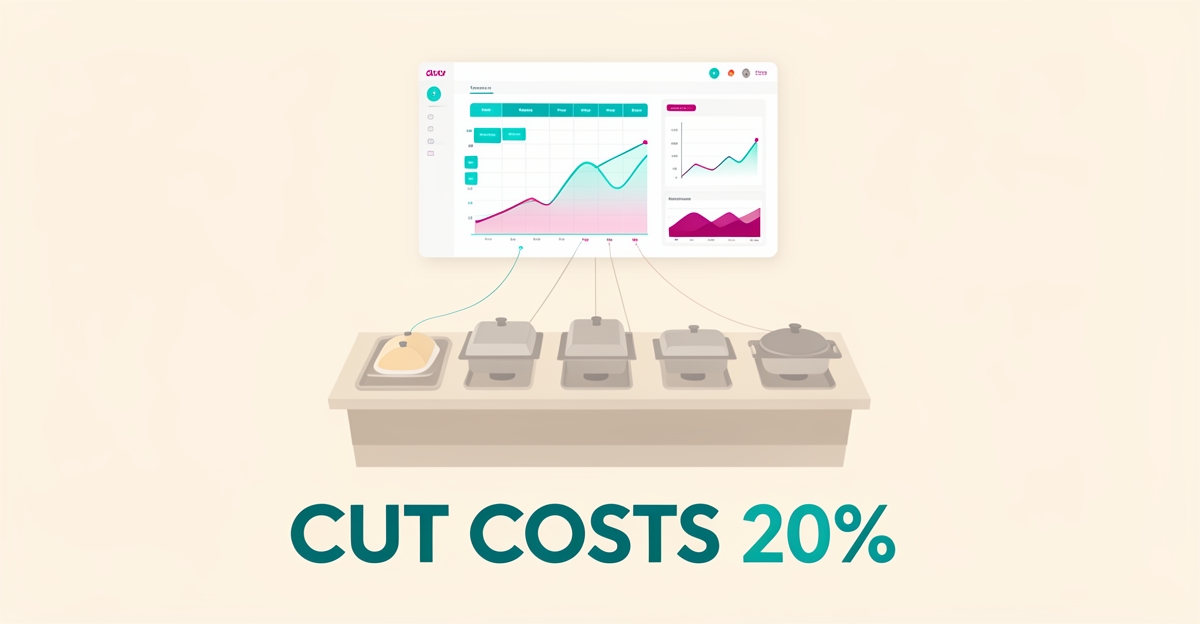
AI-Powered Scheduling for Buffet Staff: How to Cut Labor Costs
Key Facts
- Well-tuned AI scheduling can reduce labor costs meaningfully, often cited in the 10-20% range, by aligning shifts with actual demand rather than historical averages
- For a restaurant with 30 employees and $1.5M revenue, even a 3-5% labor cost reduction can translate to roughly $11,000-$26,000 in yearly savings
- AI scheduling systems typically reach high forecast accuracy after several weeks of learning your traffic patterns from POS data
- Manual scheduling commonly produces overstaffing during slow periods and understaffing during peak times, industry analyses often put each in the 8-15% range
- Managers frequently spend 2-4 hours per week building schedules manually, time AI scheduling can free up for floor leadership
- Better staffing alignment tends to improve service quality during rushes, which can support sales growth over time
Hire a team member that works 24/7 — for less than a part-time wage.
AI receptionists, SDRs, dispatchers and 99+ roles. Trained on your business, fully managed.
Not sure where to start? Ask our AI planner
The Hidden Labor Cost Drain in Buffet Operations
Buffet restaurants face a persistent labor cost challenge that quietly erodes profitability: traditional scheduling methods consistently misalign staff levels with actual demand. Manual approaches struggle to adapt to the complex rhythms of buffet operations, where customer traffic fluctuates unpredictably and menu turnover directly impacts service needs. The result is a familiar pattern, overstaffing during slow periods and understaffing during peaks. This imbalance not only inflates payroll expenses but also compromises service quality when staff are stretched thin during rushes.
The financial impact of this misalignment is substantial. Overstaffing wastes labor dollars on idle time, while understaffing leads to longer wait times, diminished guest satisfaction, and lost revenue opportunities. These inefficiencies are compounded by the time-intensive nature of manual scheduling, which often consumes 2-4 hours per week that managers could otherwise spend on floor leadership or guest engagement. Without real-time visibility into traffic patterns and menu consumption trends, schedulers rely on historical averages or intuition, methods that lack the precision needed for today's dynamic dining environment.
AI-powered scheduling transforms this reactive process into a proactive, data-driven system. By analyzing point-of-sale data, historical foot traffic, and menu popularity cycles, AI algorithms forecast demand with increasing accuracy as they learn your specific patterns, typically reaching strong predictive performance within the first several weeks. This enables dynamic staff assignment that matches labor levels to actual service needs, eliminating the guesswork that drives both overstaffing and understaffing. For buffet operations, where staffing needs shift not just by time of day but by dish popularity and replenishment cycles, this level of responsiveness is critical to maintaining efficiency and service standards. The result is a leaner, more agile workforce that reduces labor costs while enhancing the guest experience.
How AI-Powered Scheduling Delivers Measurable Savings
AI-powered scheduling transforms labor management by turning historical POS data into precise staffing forecasts. Machine learning algorithms analyze patterns in customer traffic, peak dining hours, and menu turnover to predict demand. This approach moves beyond static schedules to create dynamic assignments that align workforce levels with real-time operational needs. As these systems learn your traffic patterns over the first several weeks, forecast accuracy improves steadily, forming the foundation for measurable cost savings.
The financial impact becomes clear when applying these efficiencies to typical buffet operations. For a restaurant with 30 employees and $1.5 million in annual revenue, even a 3-5% labor cost reduction translates to roughly $11,000-$26,000 in yearly savings. That range reflects the direct correlation between improved scheduling precision and reduced waste from overstaffing during slow periods or understaffing during rushes. Well-built systems continuously refine predictions, so savings compound as the model adapts to seasonal trends and shifting customer behaviors.
Beyond cost reduction, AI scheduling delivers operational improvements that enhance both service quality and team satisfaction. Manual scheduling often produces overstaffing during lulls and understaffing during peaks, creating avoidable expenses and service gaps. These gains allow managers to redirect time from schedule creation toward guest engagement and staff development.
- Analyzes historical POS data to identify demand patterns
- Predicts staffing needs with improving accuracy as it learns your operation
- Dynamically assigns staff based on real-time traffic and turnover
- Reduces overstaffing during slow periods
- Minimizes understaffing during peak hours
For buffet operators seeking sustainable efficiency, AI-powered scheduling provides a data-driven path to optimize labor without compromising service. The technology eliminates guesswork by grounding every shift in empirical demand signals, creating schedules that are both cost-effective and responsive to customer flow. As the system learns from ongoing operations, its ability to balance labor costs with service quality strengthens, delivering ongoing value that scales with business growth. AIQ Labs builds these capabilities through AI Workflow Builds, rebuilding the one workflow that costs you the most, at a fixed price and in phases, so you own the system outright.
Implementing AI Scheduling: From Pilot to Profit
Transitioning from manual to AI-driven scheduling is a structured journey that replaces guesswork with precision. By following a proven deployment methodology, buffet operators can move from pilot testing to full profitability without disrupting daily service.
The foundation involves integrating your POS system to feed historical sales data into the algorithm. Next, import your staff roster with certifications and availability, then configure labor targets including maximum hours per employee and minimum staffing levels for food safety compliance.
- Connect your POS system to import historical sales data and traffic patterns
- Import staff availability, certifications, and role preferences into the platform
- Set labor targets including maximum hours, overtime rules, and minimum staffing per station
- Run parallel schedules for two weeks to validate AI recommendations against manual methods
Before going live, run the AI schedule alongside your traditional approach for two weeks. This parallel testing period builds trust and allows the system to calibrate to your specific traffic patterns, buffet demand shifts not just by hour but by dish popularity and replenishment cycles, so the learning period matters.
Once live, the system continuously optimizes based on real-time data. AIQ Labs structures these implementations in phases, discovery, integration, and optimization, so your scheduling workflow delivers measurable ROI early while staying flexible as your buffet operations evolve. If scheduling is just one of several workflows bleeding money, an AI Operating System can connect scheduling with inventory, dispatching, and front-of-house into one operating layer you own outright. Payment is straightforward: start monthly, build in milestones, or own it outright, no inflated promises, just a system that has to earn its keep.
Still paying for 10+ subscriptions that don’t talk to each other?
We build custom AI systems you own outright. No vendor lock-in. Full control.
Not sure where to start? Ask our AI planner
Frequently Asked Questions
How much can buffet restaurants actually save on labor costs with AI-powered scheduling?
How accurate are AI scheduling forecasts, and how long does it take to reach that accuracy?
What problems does AI scheduling solve that traditional methods don't?
What data does AI-powered scheduling use to make staffing decisions?
Is AI scheduling difficult to implement, and how long does it take to see results?
Can AI scheduling improve sales or customer satisfaction beyond just cutting costs?
From Guesswork to Growth: Your Path to Smarter Scheduling
AI-powered scheduling transforms buffet operations from reactive guesswork into proactive precision. By analyzing POS data, traffic patterns, and menu turnover, these systems learn your demand rhythms within weeks, eliminating the overstaffing and understaffing that plague manual methods. The financial impact is real: even a 3-5% labor cost reduction can mean roughly $11,000-$26,000 in annual savings for a mid-sized operation, with well-tuned systems often achieving more. For buffet operators ready to move beyond spreadsheets and intuition, the path forward starts with a pilot: integrate your POS data, run parallel schedules for two weeks, and validate the results before going live. AIQ Labs builds these systems through AI Workflow Builds, fixed price, phased delivery, owned outright, so the scheduling system works for you, not the other way around. Ready to see what AI scheduling could save your operation? Take the 2-minute Fit Check, then book a free 30-minute strategy call to map your specific labor challenges and identify your highest-ROI automation opportunities.
Make AI your competitive advantage — not just another tool.
Strategy, implementation and ongoing optimization. One partner, end to end.
Not sure where to start? Ask our AI planner