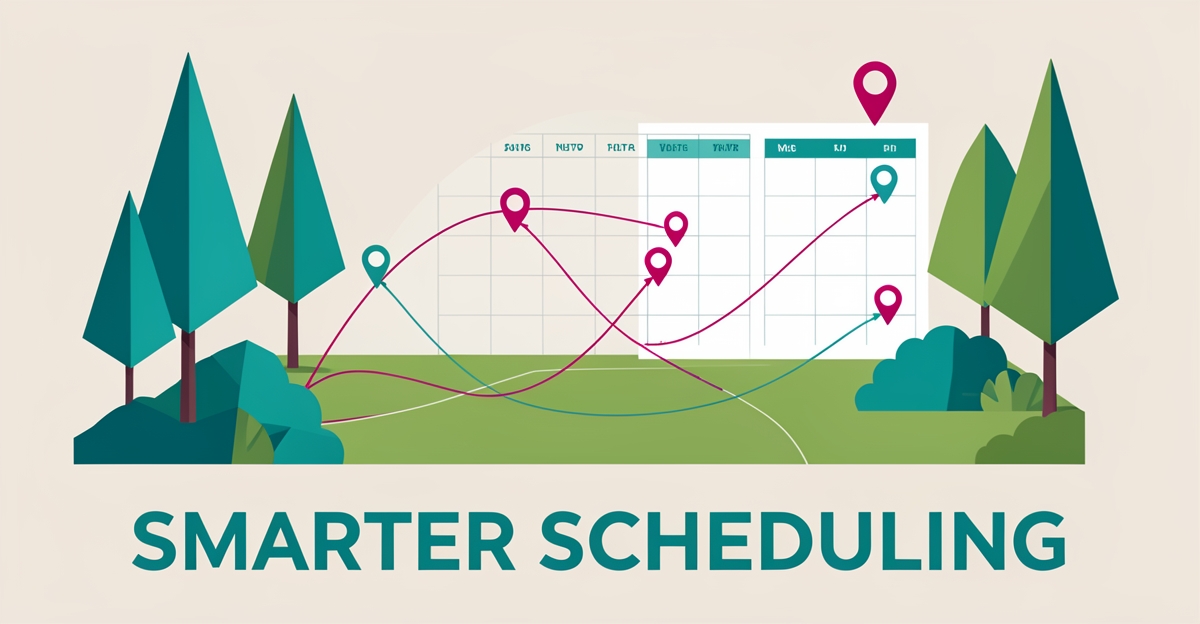
AI-Powered Scheduling: How Landscape Installers Can Automate Job Assignments
Key Facts
- AI-powered scheduling typically reduces administrative time substantially by automating dispatch, conflict detection, and rescheduling
- AI route optimization can often cut fuel costs meaningfully by clustering nearby jobs and minimizing backtracking
- Payback periods vary, but field service teams commonly see positive ROI within the first 12-18 months
- Real-time availability sync with Google Calendar or job management apps enables dynamic job assignment
- Weather-triggered rescheduling based on precipitation and soil moisture forecasts minimizes crew idle time
- Location intelligence clusters geographically proximate jobs to reduce drive time between sites
- Growth and seasonality modeling predicts ideal service intervals so crews arrive when conditions are optimal
Hire a team member that works 24/7 — for less than a part-time wage.
AI receptionists, SDRs, dispatchers and 99+ roles. Trained on your business, fully managed.
Not sure where to start? Ask our AI planner
Why Manual Scheduling Is Costing Landscape Installers Time and Money
Manual scheduling feels manageable until the crew count grows and the calendar fills up. What starts as a quick phone call turns into a daily bottleneck that eats margin.
As operations scale, manual job assignment becomes increasingly complex. Manual scheduling creates opportunities for conflicts, missed appointments, and inefficient resource allocation. The mental load shifts from growing the business to constantly fixing the schedule.
Limited data analysis is a core weakness. Teams rely on human judgment and intuition rather than data to place crews. That approach misses patterns in travel time, job duration, and seasonal demand that drive real efficiency.
Administrative time drains profit directly. In manual environments, scheduling work never disappears; it compounds as dispatchers chase confirmations, reschedule, and re-route. AI-powered scheduling typically reduces that administrative burden substantially by automating the repetitive parts of dispatch.
Idle time and fuel waste follow. Without optimized routing, crews drive farther between sites and wait on-site for late starts. Route optimization can often reduce fuel costs meaningfully, but manual planning rarely captures those savings because it cannot recalculate in real time.
Customer experience suffers in parallel. Late arrivals and last-minute changes erode trust. Manual systems offer limited ability to ensure timely and accurate appointment information, while customers expect proactive updates.
The operational bottleneck shows up as:
- Scaling complexity that creates scheduling conflicts and missed appointments
- Idle crews and excess drive time from non-optimized routes
- Admin overload from constant rescheduling and client communication
- Limited data analysis that relies on intuition instead of patterns
These pain points are exactly why AI workflow automation is moving from optional to essential for field services. AIQ Labs rebuilds the one workflow that costs you the most through AI Workflow Builds, integrating with existing tools like Google Calendar or job management apps to enable dynamic assignment based on technician availability, weather, project complexity, and location.
The result is fewer fire drills, tighter routes, and more billable hours without adding headcount. Manual scheduling costs time and money every day, and the cost grows with every new client added to the board.
How AI Dynamically Assigns Jobs Based on Availability, Weather and Location
Landscape installers face constant pressure to balance technician availability, unpredictable weather, and tight project timelines while keeping crews productive and customers satisfied. Manual scheduling struggles to adapt when a sudden rainstorm delays one job or a technician calls in sick, often leading to idle time, missed appointments, and inefficient routing.
An AI operating system transforms this challenge by continuously analyzing real-time data to make dynamic job assignments. It cross-references technician availability from integrated calendars, hyperlocal weather forecasts, project complexity ratings, and GPS locations to instantly reallocate work when conditions change. For example, if a mowing job is postponed due to wet grass, the system automatically assigns that technician to a nearby hardscaping task with flexible timing, minimizing downtime.
This intelligent dispatching drives measurable efficiency gains. Optimized routing that minimizes backtracking and clusters geographically proximate jobs can often reduce fuel costs meaningfully. The system also predicts optimal service windows by analyzing growth rates, seasonal patterns, and historical maintenance cycles, ensuring crews arrive when conditions are ideal for work.
Key capabilities include automatic conflict detection that flags overlapping assignments or unrealistic travel times, prompting the AI to suggest alternatives before issues escalate. Route optimization further cuts administrative overhead by eliminating manual planning, while predictive timing reduces unnecessary revisits, such as returning to a lawn that hasn't grown enough to require mowing.
- Real-time availability sync with Google Calendar or job management apps
- Weather-triggered rescheduling based on precipitation and soil moisture forecasts
- Location intelligence that clusters jobs to reduce drive time between sites
- Project complexity scoring to match technician skills with job demands
- Growth and seasonality modeling that predicts ideal service intervals
By automating these decisions, landscape companies free dispatchers from constant rescheduling and enable crews to spend more time on billable work. AIQ Labs builds these capabilities as a connected AI Operating System that integrates directly into existing tools, a scheduling layer that adapts to reality, not the other way around. This approach doesn't just save time and fuel; it builds resilience into daily operations, ensuring jobs get done efficiently even when variables shift unexpectedly.
From Manual to Automated: Efficiency, ROI and Customer Impact
Landscape installers still relying on spreadsheets and whiteboards for job assignments are leaving efficiency, and profit, on the table. Manual scheduling consumes valuable administrative hours that could be spent on client work or business growth, creating bottlenecks as operations scale.
AI-powered scheduling transforms this process by dynamically assigning jobs based on technician availability, weather forecasts, project complexity, and location. These systems typically reduce administrative time substantially, freeing up dispatchers and managers to focus on higher-value tasks. Route optimization alone can often cut fuel costs through smarter sequencing of daily jobs.
The operational impact extends beyond cost savings. AI systems improve on-time performance by predicting optimal service timing using growth rates, seasonal conditions, and historical maintenance cycles. This leads to fewer missed appointments and tighter adherence to service windows, directly boosting customer satisfaction.
- Automated conflict detection reduces rescheduling efforts
- Real-time adjustments accommodate weather delays or emergency requests
- Idle time between jobs decreases through geographic clustering
- Technician utilization improves with balanced workload distribution
- Customer communication automates appointment confirmations and updates
Financially, the shift delivers measurable returns. Field service teams commonly see positive ROI within 12-18 months through combined savings from reduced fuel consumption, lower administrative labor, and increased job completion rates, though exact timelines depend on fleet size and job volume. For landscape installers, this means transforming a cost center into a competitive advantage, where every scheduled job contributes to both operational excellence and customer loyalty.
Implementation Roadmap for Landscape Teams
Landscape installers looking to automate job assignments can follow a clear implementation roadmap. Start by assessing current scheduling processes to identify pain points like manual dispatch delays or route inefficiencies. AI-powered scheduling can substantially reduce administrative time and automatically detect scheduling conflicts, freeing up operations managers for higher-value tasks. This evaluation ensures the AI solution targets actual workflow gaps rather than adding complexity.
Next, prioritize data quality and system integration to enable seamless automation. AI systems rely on accurate, up-to-date information about technician availability, job locations, and weather forecasts to optimize assignments. Integrating with existing tools like Google Calendar or job management apps allows real-time data exchange without disrupting current operations. AIQ Labs builds custom workflow automation that connects these systems while you own the solution outright, no vendor lock-in, no rented intelligence, full long-term control.
Finally, train staff on the new system and establish performance monitoring to sustain gains. Hands-on training helps crews trust AI-generated schedules, while tracking metrics like on-time performance and fuel savings validates ROI. Continuous feedback loops allow adjustments for seasonal changes or crew skill variations, turning AI scheduling into a self-improving operational asset. By following these steps, landscape teams transform scheduling from a reactive chore into a proactive efficiency driver.
Still paying for 10+ subscriptions that don’t talk to each other?
We build custom AI systems you own outright. No vendor lock-in. Full control.
Not sure where to start? Ask our AI planner
Frequently Asked Questions
Will AI scheduling actually save my landscape crew time or just add another system to manage?
How much can I realistically cut fuel costs with AI route optimization?
Can AI handle weather delays and sick technicians without me having to reassign everything manually?
What's the typical payback period for switching from manual to AI scheduling?
Do I need perfect data to start, or can we integrate with the tools we already use?
Will my crews actually trust and use an AI-generated schedule?
Turn Scheduling Chaos into Your Competitive Edge
AI-powered scheduling transforms daily operations for landscape installers by replacing guesswork with real-time, data-driven job assignments that adapt to weather, technician availability, and location. The result is less administrative burden, reduced fuel waste, and more billable hours, without adding headcount. For teams ready to move beyond spreadsheets and whiteboards, the path forward starts with assessing current bottlenecks and exploring how AI workflow automation integrates with existing tools like Google Calendar or job management apps. To see where your biggest scheduling gains lie, complete the 2-minute Fit Check and book a free 30-minute strategy call, we'll map your operations and identify high-ROI automation opportunities tailored to your business. Questions first? Reach us at [email protected].
Make AI your competitive advantage — not just another tool.
Strategy, implementation and ongoing optimization. One partner, end to end.
Not sure where to start? Ask our AI planner