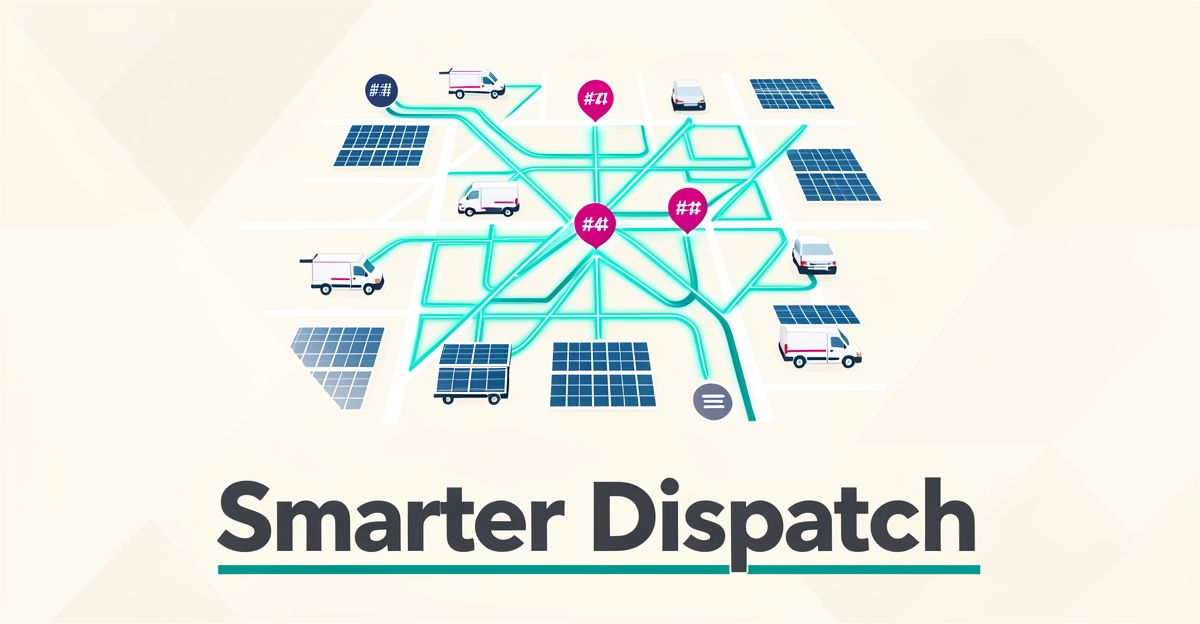
AI-Powered Service Dispatch: How Solar Cleaning Companies Can Optimize Technician Allocation
Key Facts
- AI dispatch systems typically deliver meaningful gains in daily operational efficiency for field service companies, including solar cleaning operations
- AI-powered dispatch typically reduces scheduling and routing time substantially compared to manual systems
- AI dispatch eliminates idle technician time by automatically reassigning jobs during cancellations or emergencies
- Dynamic route optimization in AI dispatch accounts for real-time traffic, job duration, and technician skills
- Solar cleaning companies can typically complete more jobs per day after implementing AI dispatch, without adding headcount
Hire a team member that works 24/7 — for less than a part-time wage.
AI receptionists, SDRs, dispatchers and 99+ roles. Trained on your business, fully managed.
Not sure where to start? Ask our AI planner
The Hidden Cost of Manual Dispatch in Solar Cleaning Operations
Solar cleaning companies still relying on manual dispatch are losing significant operational value through preventable inefficiencies. Traditional scheduling methods consume excessive time while delivering suboptimal results, directly impacting service capacity and profitability. In most manual systems, a large share of scheduling and routing effort is spent on coordination rather than on serving customers, creating a substantial drag on daily operations. This inefficiency translates to technicians spending valuable hours idle between jobs or navigating inefficient routes that increase fuel costs and reduce service completion rates.
The hidden costs manifest in three critical areas that compound over time. First, idle time between jobs represents pure revenue loss, technicians are paid but not generating value while waiting for manually assigned next appointments. Second, suboptimal routing increases travel time and fuel consumption, directly raising operational costs while reducing the number of jobs that can be completed in a day. Third, missed service opportunities occur when dispatchers cannot quickly reassign jobs due to cancellations or emergency requests, leaving potential revenue on the table. These inefficiencies are particularly problematic for solar cleaning operations where weather-dependent scheduling and geographic dispersion of installations create complex allocation challenges that manual systems struggle to handle effectively.
AIQ Labs addresses these dispatch challenges through intelligent workflow automation that transforms how solar cleaning companies allocate technician resources. By analyzing real-time location data, job priorities, and technician availability, AI-powered systems eliminate the guesswork inherent in manual dispatch. This approach not only reduces the administrative burden on dispatch teams but also ensures technicians spend more time performing valuable service work and less time in transit or waiting. The result is a measurable increase in daily operational efficiency. For solar cleaning businesses operating on tight margins, recovering this lost efficiency represents a direct path to improved profitability without increasing headcount or service prices. If dispatch is just one of several workflows draining your team, a targeted AI Workflow Build can rebuild the one that costs you the most.
How AI Dispatch Systems Transform Technician Allocation Through Real-Time Optimization
Manual dispatching forces solar cleaning companies to choose between idle technicians and missed appointments, but AI largely eliminates this trade-off by processing large numbers of variables in seconds. Modern AI dispatch software analyzes technician location, skill sets, traffic conditions, and job priority simultaneously to automate allocation decisions that once required hours of human coordination.
The performance gains are substantial. Field service operators using AI-assisted dispatch typically report significant daily operational efficiency improvements alongside major reductions in scheduling and routing time, because the system removes the manual back-and-forth that slows traditional dispatch down.
The technology operates through several core capabilities that transform how field teams move through their day:
- Dynamic route optimization that calculates the most efficient multi-stop paths while accounting for real-time traffic and job duration
- Automatic job reassignment when cancellations occur or emergency requests arrive, ensuring no technician sits idle
- Live fleet visibility that tracks technician locations and proactively adjusts schedules based on changing conditions
- Precise ETA calculations that update automatically as variables shift throughout the day
The scale of data processing behind these systems mirrors innovations in adjacent energy sectors, where AI-driven grid management platforms monitor millions of data points simultaneously to optimize distribution. This same architectural approach allows solar cleaning companies to process complex variables instantaneously rather than relying on dispatcher intuition.
For solar operations specifically, this means algorithms can weigh panel soiling levels against weather forecasts, technician certifications, and geographic clustering to assign the right specialist to each site. AIQ Labs builds custom dispatch systems that integrate these capabilities directly into existing workflows, creating end-to-end automation that connects scheduling, routing, and customer communication without manual intervention. The result is a self-optimizing operation where routes adjust dynamically, technicians complete more jobs per day, and customers receive accurate arrival windows automatically.
Implementing AI Dispatch: A Practical Roadmap for Solar Cleaning Companies
Solar cleaning companies looking to implement AI dispatch can follow a structured roadmap that turns operational challenges into measurable efficiency gains. The process begins with auditing existing data sources, technician GPS locations, job site addresses, traffic patterns, and weather forecasts, to ensure the AI system has accurate inputs for decision-making. AIQ Labs' implementation framework emphasizes starting with a clear assessment phase to map these data flows and identify integration points with current scheduling tools.
Next, companies should define specific KPIs aligned with business outcomes, such as increasing daily jobs completed or reducing fuel costs per vehicle. AI-assisted dispatch typically drives meaningful improvements in daily operational efficiency and scheduling time, providing clear benchmarks for success. Piloting the system with human-in-the-loop controls allows dispatchers to review AI-generated route suggestions before execution, building trust while maintaining oversight during early adoption.
- Audit data sources including technician locations, job requirements, and traffic feeds
- Set measurable KPIs like jobs per day and fuel savings
- Pilot with human-in-the-loop controls for safe, iterative adoption
- Scale gradually based on performance metrics and team feedback
- Establish governance for model monitoring and continuous improvement
The final phase involves expanding the AI dispatch system across all service zones while establishing monitoring practices to track model drift and retrain algorithms as seasonal patterns shift. By aligning with proven field service use cases and maintaining operator engagement through explainable AI recommendations, solar cleaning companies can achieve sustainable optimization without disrupting existing workflows. This approach ensures the technology adapts to real-world conditions while delivering consistent improvements in technician utilization and service responsiveness. For teams that want dispatch handled end-to-end, a managed AI Employee can run scheduling and customer follow-up as part of your daily operation.
Still paying for 10+ subscriptions that don’t talk to each other?
We build custom AI systems you own outright. No vendor lock-in. Full control.
Not sure where to start? Ask our AI planner
Frequently Asked Questions
How much time can AI-powered dispatch actually save solar cleaning companies on scheduling and routing?
Will implementing AI dispatch really improve our daily operational efficiency, and by how much?
Is AI dispatch only for large solar cleaning fleets, or can small companies benefit too?
How does AI handle unexpected changes like job cancellations or emergency requests during the day?
What kind of data do I need to have ready before implementing an AI dispatch system?
Can AI dispatch integrate with the tools we already use, like our CRM or scheduling software?
Turning Dispatch Data into Daily Wins for Solar Cleaning Teams
Solar cleaning companies stuck with manual dispatch are leaving real money on the table, through idle technicians, wasted fuel, and missed service opportunities. AI-powered dispatch changes that by processing location, traffic, and job data in seconds to optimize routes and reassign work dynamically. For businesses operating on tight margins, this isn't just about saving time, it's about unlocking capacity without adding headcount or raising prices. The path forward starts with understanding where your current process leaks value and seeing how AI can plug those gaps. Take the first step with a free, no-obligation strategy call to map your biggest bottleneck and explore a clear ROI path, book your session today to see if AI dispatch is the right fit for your operation.
Make AI your competitive advantage — not just another tool.
Strategy, implementation and ongoing optimization. One partner, end to end.
Not sure where to start? Ask our AI planner