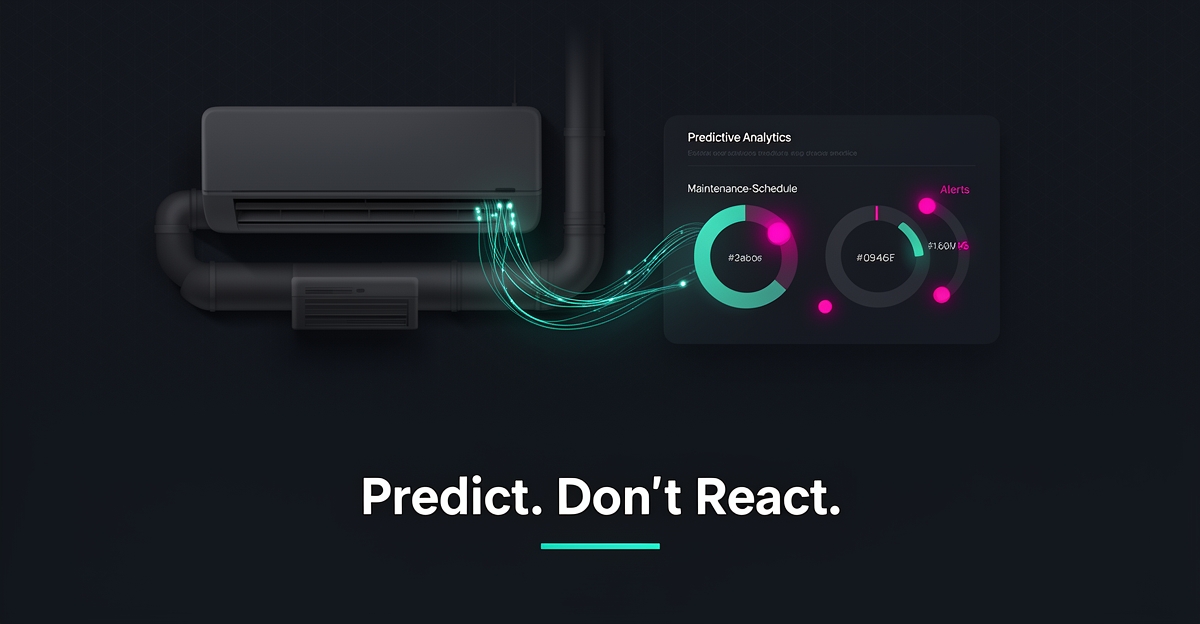
AI-Powered Service History Management for HVAC Businesses
Key Facts
- A majority of consumers report they will stop doing business with a company if wait times are too long on any channel, according to customer experience research
- Roughly 3 in 4 consumers spend more at businesses that provide good experiences, per customer experience studies
- AI tools can typically automate a large share of tier-1 customer queries, often cited in the 40-80% range, based on support automation research
- Companies most exposed to AI show materially higher productivity growth than least-exposed peers, per PwC's AI Jobs Barometer
- AI can cut average response times from hours to seconds when connected to complete customer context
- Fast responses are a top factor for consumers when choosing a brand, according to consumer preference data
- AI in ITSM reduces manual work across service desks by automating ticket routing per IT service management research
Hire a team member that works 24/7 — for less than a part-time wage.
AI receptionists, SDRs, dispatchers and 99+ roles. Trained on your business, fully managed.
Not sure where to start? Ask our AI planner
The Hidden Cost of Reactive HVAC Service: Why Your Current Approach Is Losing Money
The true cost of reactive HVAC service isn't just in emergency repairs, it's in the opportunities lost when customers walk away due to slow responses. Manual service history tracking creates delays that frustrate clients and drain revenue, turning routine maintenance into reactive fire drills. When technicians lack instant access to equipment history, they waste time diagnosing issues that could have been prevented, increasing labor costs and reducing daily job capacity. This inefficiency compounds as missed maintenance opportunities lead to preventable breakdowns, damaging customer trust and triggering costly emergency dispatches.
Customer experience research consistently shows that a majority of consumers will stop doing business with a company if wait times are too long on any channel, directly linking slow service to customer churn. For HVAC businesses, this means every delayed response risks losing a customer to a competitor who can schedule faster or predict needs proactively. Meanwhile, roughly 3 in 4 consumers spend more at businesses that provide good experiences, proving service quality directly impacts revenue growth. Reactive approaches not only fail to meet these expectations, they actively undermine the very relationships that drive repeat business and referrals.
The hidden costs extend further through operational drag: technicians spend hours piecing together service histories from scattered notes or outdated logs, delaying resolutions and increasing the chance of errors. Without centralized, intelligent data, patterns like recurring compressor failures or seasonal inefficiencies go unnoticed, preventing proactive interventions that could extend equipment life and reduce emergency calls. AI-powered service history management eliminates this guesswork by compiling and analyzing customer data to predict maintenance needs before issues escalate, transforming service from a cost center into a strategic advantage. AIQ Labs builds AI systems that create this centralized intelligence, through managed AI Employees or a focused Workflow Build, enabling HVAC businesses to shift from reactive scrambles to planned, profitable service delivery.
How AI Turns Service History Into a Proactive Growth Engine for HVAC Businesses
Most HVAC businesses treat service history as a digital filing cabinet, a place to store records after the work is done. AI-powered service history management flips this dynamic, transforming static data into a proactive growth engine that anticipates needs before customers even pick up the phone.
By compiling and analyzing service history across your entire customer base, AI creates a centralized, intelligent database that detects recurring issues and predicts maintenance needs. According to PwC's AI Jobs Barometer, companies most exposed to AI show significantly higher productivity growth than their least-exposed peers, demonstrating the measurable impact of these systems when they're actually wired into daily operations.
Predictive maintenance represents the most immediate win for HVAC operations. Instead of waiting for equipment failures during peak summer heat or winter cold snaps, AI analyzes patterns across your service history to flag systems likely to fail soon. This shift from reactive to proactive service planning allows you to schedule maintenance during off-peak times, optimize technician routes, and dramatically reduce emergency call volumes.
The customer experience improvements are equally compelling. Support automation research indicates that AI tools can automate a large share of tier-1 queries, often cited in the 40-80% range while cutting average response times from hours to seconds. For HVAC businesses, this means AI can instantly access a customer's complete service history to provide accurate troubleshooting, schedule callbacks, or dispatch technicians with full context, no more customers repeating their equipment model numbers or past issues to every new agent.
AI-powered service history management delivers specific operational advantages:
- Automated ticket routing based on equipment type, issue complexity, and technician expertise
- Pattern detection that identifies recurring failures across similar equipment models or installation dates
- Intelligent self-service portals where customers access their own service history and receive instant maintenance recommendations
- Predictive inventory management that ensures parts availability for anticipated seasonal failures
This approach mirrors proven frameworks in IT service management, where AI reduces manual work across service desks by automating classification and predicting recurring issues. The technology doesn't replace your technicians, it amplifies their expertise by surfacing relevant historical data exactly when needed.
AIQ Labs builds custom AI systems that create these centralized, intelligent customer databases specifically for proactive service planning. Whether that's an AI receptionist or dispatcher handling inbound calls with full service context, or a deeper rebuild of your scheduling and follow-up workflow, the systems integrate with your existing CRM and field service management tools, turning years of accumulated service records into actionable intelligence that drives revenue through better retention and more efficient operations.
When your service history works for you instead of just sitting in storage, every customer interaction becomes an opportunity to demonstrate value, prevent problems, and build the kind of loyalty that keeps HVAC businesses thriving through seasonal fluctuations.
Implementation Roadmap: Deploying AI Service History Management in Your HVAC Business
Deploying AI service history management works best as a phased rollout that protects customer experience while building a centralized, intelligent customer database for proactive service planning.
Start with tier-1 customer queries to prove value quickly. Repetitive questions consume the majority of support bandwidth, and industry research shows AI tools can typically automate 40-80% of them. Handling these first frees technicians for complex diagnostics while customers get faster answers.
Define clear escalation rules before go-live. AI should hand off when frustration signals appear, technical complexity exceeds thresholds, or emotional situations require human judgment. Smart routing and escalation ensure the customers who prioritize fast responses get speed without sacrificing quality, while those who would walk away over long wait times stay engaged.
Integrate with existing CRM and scheduling tools early. AI service history management relies on compiling and analyzing service data across customers to predict maintenance needs and detect recurring issues. Connection to CRM, ticketing systems, and dispatch platforms provides the context for informed decision-making and prevents data silos.
Roll out gradually by channel and complexity. Begin with one channel such as email or chat, automate simple queries, measure impact, and iterate before expanding. This milestone approach mirrors how AIQ Labs structures Workflow Builds, fixed price, delivered in phases, with approval and payment per milestone and everything built so far stays yours.
Establish analytics for continuous optimization from day one. Visibility into AI coverage, resolution rates, and escalation patterns supports faster decision-making and proactive planning.
A practical implementation roadmap includes:
- Map service history data sources and cleanse records for equipment performance, call patterns, and maintenance history
- Configure tier-1 automation for common HVAC inquiries with clear escalation triggers for complex issues
- Connect AI to CRM, scheduling, and dispatch systems for unified customer view
- Launch pilot on one channel, measure response time reduction and ticket deflection
- Expand to predictive maintenance alerts and recurring issue detection
Maintain knowledge base currency so AI retrieves accurate answers quickly. As AI in ITSM demonstrates, automating ticket routing and improving self-service reduces manual work across the service desk. When implemented well, AI can cut average response time from hours to seconds.
According to PwC's AI Jobs Barometer, companies most exposed to AI achieve materially higher productivity growth than their least-exposed peers. For HVAC businesses, that productivity translates to faster triage, better self-service, and more strategic service planning without proportional headcount increases.
Start the two-minute Fit Check at https://aiqlabs.ai/apply for a free 30-minute strategy call to map your biggest bottleneck and identify high-ROI automation opportunities.
Still paying for 10+ subscriptions that don’t talk to each other?
We build custom AI systems you own outright. No vendor lock-in. Full control.
Not sure where to start? Ask our AI planner
Frequently Asked Questions
How does AI-powered service history management actually reduce emergency HVAC calls?
Will implementing AI for service history require replacing our current CRM or scheduling tools?
How much faster can AI actually respond to customer inquiries compared to manual processes?
Is there proof that AI adoption in service management leads to real productivity gains for businesses like ours?
What's the best way to start using AI for service history without disrupting our current operations?
Can AI really help us retain more HVAC customers by improving service quality?
Your Service History Is Talking. It's Time to Start Listening.
The takeaway is clear: reactive service quietly drains HVAC businesses through lost customers, wasted technician hours, and preventable emergency calls, while a majority of consumers will walk away over slow response times alone. AI-powered service history management flips that equation, turning years of accumulated service records into a centralized intelligence engine that predicts maintenance needs, detects recurring equipment failures, and automates the routine queries consuming your team's bandwidth. The businesses capturing these gains aren't guessing their way through implementation, they're following a phased roadmap: automate tier-1 queries first, integrate with existing CRM and scheduling tools, pilot on one channel, then expand into predictive maintenance. That's exactly how AIQ Labs works, whether you start with a managed AI Employee, a single high-cost Workflow Build, or a full AI Operating System built in phases you own outright. The next step is simple: take the two-minute Fit Check at https://aiqlabs.ai/apply and book your free 30-minute strategy call. You'll map your biggest bottleneck with an AI engineer and get a clear, honest read on your highest-ROI opportunity. If there isn't a clear win, we'll tell you that too, no obligation, just clarity.
Make AI your competitive advantage — not just another tool.
Strategy, implementation and ongoing optimization. One partner, end to end.
Not sure where to start? Ask our AI planner