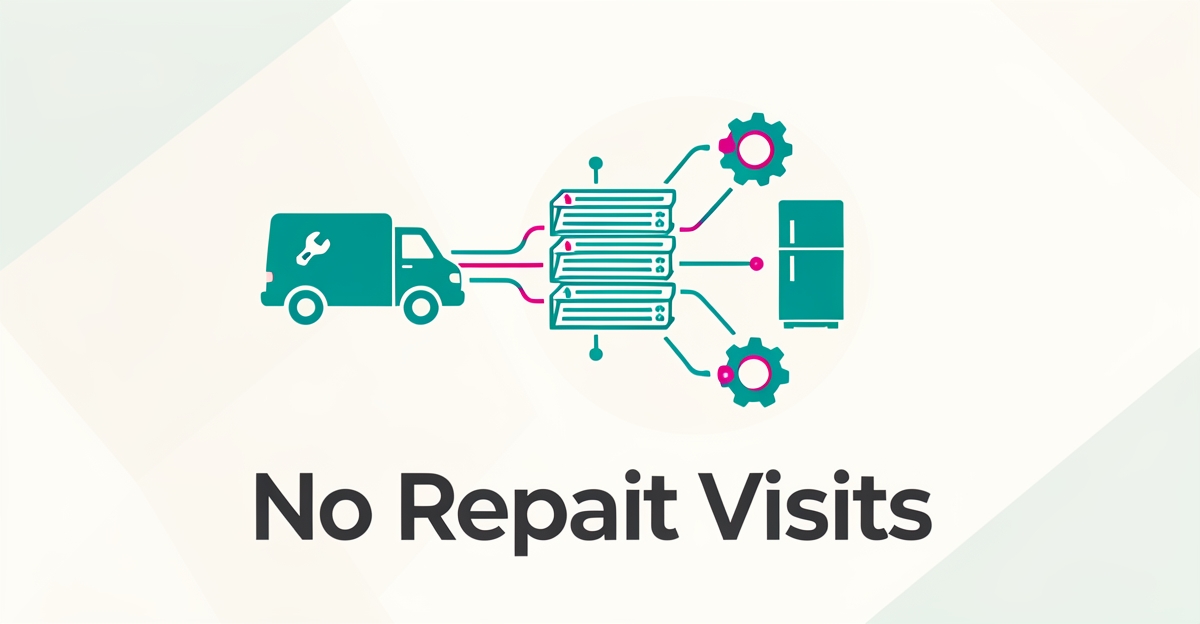
AI-Powered Service History Management: How Repair Businesses Can Prevent Duplicates
Key Facts
- Missing even a single high-value commercial refrigeration call each week can add up to tens of thousands of dollars in lost annual revenue for a repair business.
- Service companies typically lose a meaningful share of inbound calls during peak periods and after hours, often estimated at a quarter or more.
- Technicians consistently resolve more jobs on the same visit when they arrive with detailed pre-arrival information about the appliance's history.
- AI systems can automate a large share of routine tier-1 customer queries, freeing staff for complex repairs.
- Most consumers prioritize fast responses when choosing a service provider, and many will stop doing business with companies that keep them waiting.
- A single receptionist handling dozens of daily calls creates bottlenecks that lead to duplicate service visits and lost revenue.
Hire a team member that works 24/7 — for less than a part-time wage.
AI receptionists, SDRs, dispatchers and 99+ roles. Trained on your business, fully managed.
Not sure where to start? Ask our AI planner
The Hidden Cost of Poor Service Records: Why Duplicate Calls Drain Repair Businesses
The hidden cost of poor service records extends far beyond inconvenience, it directly erodes revenue and damages customer trust. When repair businesses lack centralized systems to track service history, they risk sending technicians on duplicate calls for issues already addressed, wasting time and frustrating customers who expect efficient solutions. This problem intensifies during peak hours or after-hours emergencies, when missed calls create gaps in communication that lead to redundant visits. Industry analyses consistently estimate that service companies lose a substantial share of inbound calls, often around a quarter, during peak periods or after hours, creating blind spots where critical service requests fall through the cracks. For high-value repairs like commercial refrigeration, missing just one such call each week can compound into tens of thousands of dollars in lost annual revenue. These losses compound when receptionists juggle dozens of calls daily, creating bottlenecks that prevent timely logging of service details and increase the likelihood of repeat visits for the same underlying issue.
Duplicate calls aren't just inefficient, they undermine first-call resolution, which improves markedly when technicians arrive with detailed pre-arrival information. Without access to a unified repair history, technicians may re-diagnose problems already solved, order unnecessary parts, or miss recurring patterns that signal a deeper fault. This not only increases labor and parts costs but also diminishes customer confidence, especially when clients perceive a lack of continuity in service. AI-powered knowledge management solves this by creating a single source of truth for every appliance's service journey, logging past repairs, part usage, error codes, and customer preferences in a searchable system. When integrated with scheduling and dispatch, this ensures technicians are fully briefed before arrival, reducing redundant visits and improving operational accuracy. For repair businesses aiming to scale sustainably, closing these gaps in service history isn't optional, it's essential to protecting revenue and delivering the reliable, informed service customers expect.
The Centralized Knowledge Base: How AI Tracks Repair History, Parts, and Customer Preferences
When a customer calls about a recurring refrigerator leak, the technician often arrives without knowing the unit was repaired for the same issue just three weeks ago. This blind spot drives duplicate visits, wasted parts, and frustrated customers who feel their history isn't being tracked. AI-powered service history management eliminates this gap by creating a centralized, searchable record that follows every appliance from first service to latest repair.
The system logs every detail: repair history, part usage, error code patterns, and even customer communication preferences. When a new call comes in, AI instantly cross-references the appliance's service record, flagging recurring issues before a technician is dispatched. This prevents redundant diagnostic visits and ensures the right parts and information arrive with the first visit. Service industry experience consistently shows that same-visit resolution rates rise significantly when technicians receive detailed pre-arrival information.
Beyond preventing duplicates, the knowledge base enables smarter scheduling and parts preparation. AI identifies patterns, like a specific error code appearing across multiple visits, and recommends proactive part stocking or technician skill matching. For example, if a washing machine repeatedly shows an F21 drain error, the system flags it for a senior technician experienced with pump replacements. This level of insight transforms reactive repairs into informed, efficient service.
AIQ Labs builds these centralized knowledge systems as part of its AI Workflow Builds, integrating them with dispatch, CRM, and inventory tools to create a single source of truth. The result is fewer repeat calls, lower operational costs, and a service experience that feels personal because it's informed by every past interaction. When technicians arrive already knowing what failed before, what was replaced, and what the customer prefers, duplicate visits become the exception, not the rule.
Beyond the Record: Intelligent Scheduling, Dispatch, and 24/7 Call Capture
A centralized service history is only valuable when it drives the work happening right now. The knowledge base becomes operational when AI connects repair records to scheduling, dispatch, and after-hours call capture so every request is qualified, routed, and scheduled with full context.
Service companies typically lose a meaningful share of inbound calls during peak periods or after hours, often estimated at around a quarter of all calls. For emergency repairs like commercial refrigeration, missing even one call a week compounds into significant lost annual revenue. An AI receptionist answers every call instantly, captures equipment type, symptoms, and business impact at 2 AM, and prioritizes commercial emergencies threatening spoilage over residential convenience issues.
Intelligent qualifying questions are tailored by appliance type before a technician is dispatched. For refrigeration calls the system inquires about current temperature, food storage, and duration of the problem. Washing machine calls trigger questions about water leakage, load size, and error messages. This targeted intake mirrors the decision trees technicians use and ensures the service history is enriched with the details needed for first-visit resolution.
When the knowledge base is live, scheduling stops treating all jobs the same. The system allocates realistic time blocks for a compressor replacement versus a routine maintenance check, preventing the delay cascades that frustrate customers. Geographic routing optimization assigns work to the closest available technician, reducing drive time and improving response speed, while skill matching routes complex repairs to experienced team members and distributes routine calls across the team.
The result is fewer repeat visits and higher first-call resolution. Same-visit resolution rates improve substantially when technicians receive detailed pre-arrival information, because they arrive with the correct parts, the prior repair history, and an understanding of part usage patterns and customer preferences.
Operational platforms also manage the entire service loop: appointment confirmations, technician arrival notifications, and post-service follow-up. That consistent communication reduces no-shows and builds trust that generates referrals. AIQ Labs builds and manages these integrated systems for appliance repair companies so the knowledge base is not a static archive but an active dispatch brain.
Key operational gains from connecting history to operations include:
- 24/7 call capture that qualifies and prioritizes emergencies without a live dispatcher
- Appliance-specific intake that feeds the service history and preps technicians
- Realistic time-block scheduling and geographic routing that prevents delay cascades
- Skill-based dispatch that improves first-visit resolution and reduces repeat visits
With AI handling tier-1 interactions while teams focus on high-value work, businesses maintain responsiveness without proportional headcount growth. Most consumers prioritize fast responses when choosing a brand, and many say they will stop doing business if wait times are too long, so always-on capture and intelligent routing protect both revenue and reputation.
Implementation Roadmap: Rolling Out AI Service History Management Without Disruption
Start by focusing on tier-1 customer queries such as appointment confirmations or basic troubleshooting questions, which can consume significant staff time. AI systems can typically automate a large share of these routine interactions, freeing technicians to handle more complex repairs. This approach allows businesses to validate the technology's effectiveness before expanding its scope, some companies report automating the equivalent of multiple full-time support agents' worth of routine inquiries.
Establish clear escalation protocols so the AI knows when to transfer a call or chat to a human agent. Triggers should include signs of customer frustration, complex technical problems, or emotionally charged situations where empathy is critical. Defining these rules upfront ensures smooth handoffs and maintains service quality during challenging interactions. AI excels at repetitive tasks while humans remain essential for nuanced problem-solving and relationship building.
Integrate the AI system with your existing CRM and dispatch platforms to eliminate data silos that hinder efficiency. When appointment scheduling, technician availability, and service history live in connected systems, the AI can make informed decisions about routing and parts preparation. This connectivity ensures that every customer interaction is informed by the full context of past repairs, reducing the likelihood of duplicate visits due to incomplete information. AI is only as effective as the information it can access, making integration a foundational step, something AIQ Labs specializes in through its AI Workflow Builds.
Develop and continuously refine a knowledge base that captures repair history, part usage patterns, and customer preferences. The AI relies on this structured, up-to-date repository to deliver accurate responses and predictive insights. Regular updates ensure the system adapts to new appliance models, recurring issues, and evolving service protocols. Treat the knowledge base as a living asset that requires ongoing attention to remain effective.
Monitor performance metrics such as first-call resolution rates, repeat visit frequency, and customer satisfaction scores to gauge impact. Analytics reveal where the AI excels and where it needs refinement, enabling data-driven adjustments to scripts, routing logic, or escalation thresholds. Without this visibility, businesses operate blindly, missing opportunities to optimize both AI and human workflows. Use these insights to scale the system confidently across additional channels and use cases.
What Ownership Looks Like: Choosing a Build Partner and Measuring ROI
Owning your service history is the difference between repeat visits and repeat revenue. Repair businesses that rent point solutions stay locked into subscriptions and data silos, while those that build custom systems control the knowledge that prevents duplicate calls.
The build-versus-buy decision starts with ownership. Custom-built, owned systems replace costly subscription chaos with unified digital assets that track repair history, part usage, and customer preferences in one searchable base. And when every inbound call is captured and every technician arrives briefed, the revenue that used to leak out through missed calls and duplicate visits stays in your business.
AIQ Labs structures ownership around three payment models that fit different stages of maturity. Start Monthly delivers a managed AI employee, such as a receptionist or dispatcher, with setup plus a flat monthly plan that typically costs far less than a human hire, including build, training, integrations, monitoring, and improvements, with the ability to pause or adjust anytime. Build in Milestones rebuilds the one workflow that costs you the most, split into phases you approve and pay for per phase, keeping everything built so far. Own It Outright delivers a full AI operating system with complete ownership of code, agents, and data when complete. You can compare the models on the pricing page.
Measuring ROI requires metrics that connect knowledge to field performance. Track the indicators that show duplicate work is disappearing:
- First-visit resolution rate, the share of jobs completed without a return trip
- Repeat-visit rate, frequency of callbacks for the same appliance or issue
- Captured-call percentage, calls answered and qualified versus lost to voicemail
These metrics improve when a centralized knowledge base is live. True ownership means no vendor lock-in and complete control over customization and future development. Systems can integrate directly with calendars and dispatch, enabling geographic routing and technician skill matching so complex repairs route to experienced team members.
Customer expectations reinforce the need. Most consumers prioritize fast responses when choosing a brand, and many say they'll stop doing business if wait times are too long. An owned AI system answers every call instantly, captures equipment details, and surfaces prior repairs before dispatch.
The result is fewer redundant visits, better parts readiness, and technicians arriving prepared. That operational efficiency compounds over time as the knowledge base grows richer and more accurate.
Start with the two-minute Fit Check, then book a free 30-minute strategy call to map your biggest bottleneck and identify high-ROI automation opportunities.
Turning Service History into Your Competitive Edge
When repair businesses eliminate duplicate calls through AI-powered service history management, they reclaim more than just efficiency, they protect revenue, build trust, and create space for growth. By centralizing repair history, part usage, and customer preferences, technicians arrive informed and more jobs get resolved on the first visit. With a meaningful share of inbound calls typically lost during peak or after-hours periods, AI ensures every request is captured, qualified, and routed with context, turning missed opportunities into reliable service. The path forward starts with assessing your biggest bottleneck: take the free Fit Check to map where AI can deliver the highest ROI, then schedule a no-obligation 30-minute strategy call to see how AIQ Labs can help you build a system you own, one that scales with your business and keeps your team focused on high-value work.
Make AI your competitive advantage — not just another tool.
Strategy, implementation and ongoing optimization. One partner, end to end.
Not sure where to start? Ask our AI planner