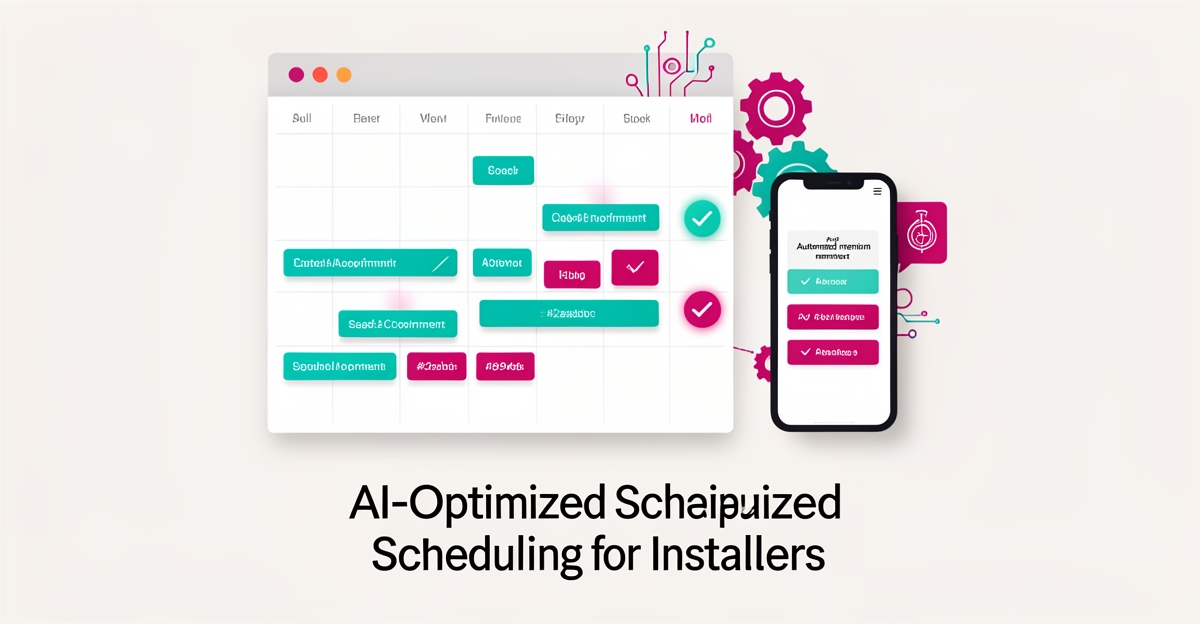
AI-Powered Service Scheduling: How Installers Can Reduce No-Shows and Overbooked Appointments
Key Facts
- AI-powered scheduling reduces no-shows by automating reminders and balancing technician load in real time
- AI-driven systems schedule using multiple live signals, availability, travel time, job duration and customer preferences, instead of manual entry
- Automated confirmations and channel-specific reminders cut avoidable absences and free dispatcher hours
- AI scheduling systems reduce operational waste by preventing empty truck rolls and technician overbooking
- Custom-owned AI scheduling provides scalable accuracy and true ownership that off-the-shelf tools cannot provide
- AIQ Labs has deployed 200+ multi-agent systems and runs 4 live SaaS products daily
Hire a team member that works 24/7 — for less than a part-time wage.
AI receptionists, SDRs, dispatchers and 99+ roles. Trained on your business, fully managed.
Not sure where to start? Ask our AI planner
The No-Show and Overbooking Cost for Installers
Manual scheduling quietly drains installer margins every week. No-shows leave trucks rolling empty, overbooked technicians create cascading delays, and last-minute changes force expensive dispatch rework.
Installers relying on spreadsheets and phone calls face high error rates and limited scheduling criteria. Traditional systems schedule manually with limited inputs, while AI-driven systems automate decisions using multiple real-time signals. The comparison shows AI-driven scheduling delivers high scalability and high accuracy versus manual, error-prone processes.
No-shows are not just an inconvenience; they are a direct revenue leak. When a technician arrives and no customer is present, the labor cost is lost, the slot cannot be backfilled, and customer trust erodes. Overbooking attempts to compensate, but it increases travel time, overtime, and missed service windows across the day.
AI-powered scheduling systems change the equation by using real-time availability, technician load, and customer preferences to optimize appointment slots. These tools automate reminders and notifications, reducing missed appointments and improving operational efficiency across the board.
The cost pressure is measurable in your own numbers: every empty truck roll is unpaid labor and fuel, every overbooked afternoon is overtime, and every unconfirmed appointment is a gamble. Faster, automated scheduling translates to quicker confirmations, same-day rescheduling, and fewer idle crews.
Operational pain points compound without automation:
- Empty truck rolls from no-shows and late cancellations
- Technician overbooking that increases drive time and overtime
- Manual reminder calls that consume dispatcher hours
- Lost revenue from slots that cannot be filled in real time
Adoption is accelerating across field service trades as AI agents move from reading and drafting to acting on live operational data, booking, confirming, and rescheduling without waiting on a dispatcher.
AIQ Labs helps installers deploy intelligent scheduling systems that automatically block unavailable times and send automated confirmations, using real-time availability and technician load to protect margins. The shift from reactive dispatch to predictive slot management is what turns scheduling from a cost center into a competitive advantage. For teams that want scheduling handled end to end, managed AI Employees such as an AI Dispatcher or AI Service Scheduler can run confirmations and rescheduling 24/7 alongside your office staff.
How AI Scheduling Optimizes Availability, Load, and Preferences
Installers face constant pressure to balance technician availability, job complexity, and customer expectations when scheduling service appointments. Manual systems often lead to overbooking, idle time, or missed slots due to last-minute cancellations, each inefficiency eroding profitability and trust. AI-powered scheduling transforms this reactive process into a proactive, data-driven workflow that aligns resources with real-time conditions.
By analyzing live calendar data, current workloads, and historical service patterns, AI systems dynamically adjust availability to prevent conflicts and maximize technician utilization. For example, when a job is delayed or a technician finishes early, the system instantly recalculates open slots and offers them to waiting customers, reducing gaps without manual intervention. This adaptive approach ensures schedules remain fluid and responsive to daily operational shifts.
Customer preferences are equally critical to optimization. AI tools learn from past interactions, such as preferred time windows, communication channels, and technician ratings, to prioritize slots that increase acceptance and attendance. When a customer consistently books morning appointments or confirms via text, the AI surfaces those options first, improving booking completion rates. This personalization not only boosts satisfaction but also decreases the likelihood of no-shows by aligning service times with customer routines.
Automated reminders further reinforce commitment. AI-driven systems send timely, channel-specific notifications, via SMS, email, or voice, based on individual response patterns. The goal is augmentation, not replacement: automated workflows handle the repetitive follow-up while your team retains oversight of exceptions and judgment calls. These reminders reduce forgetfulness and give customers easy rescheduling options, cutting avoidable absences.
The cumulative effect is a smarter allocation of time and labor. Installers using AI scheduling typically see fewer double-bookings, better route efficiency, and higher first-time fix rates, all contributing to lower operational waste and a scheduling layer that stays affordable as call volume grows.
Ultimately, AI scheduling doesn't just fill calendars, it optimizes them. By harmonizing availability, load, and preference in real time, installers gain a scheduling system that works as hard as their teams: minimizing waste, maximizing output, and delivering service when and how customers expect it. For businesses looking to implement such capabilities, AIQ Labs offers end-to-end development and integration of intelligent scheduling tools tailored to field service workflows.
From Manual to Automated: Implementation Steps for Installers
The shift from manual scheduling to AI-powered automation doesn't require a complete overhaul, it starts with understanding where your current process breaks down. Many installers still rely on spreadsheets, paper logs, or basic calendar tools that can't adapt to real-time changes in technician availability or customer preferences. This leads to double-booked slots, missed appointments, and wasted fuel as crews drive between jobs inefficiently. By auditing your existing workflow, tracking no-show rates, average response time to booking requests, and technician idle time, you can pinpoint exactly where AI scheduling delivers the biggest impact. AIQ Labs helps installers begin this assessment phase with a clear view of operational gaps before building a solution tailored to their workflow.
Choosing the right AI scheduling tool means looking beyond basic automation to systems that learn from your business patterns. The best platforms don't just block out busy times, they analyze historical job duration, travel time between locations, and even weather forecasts to suggest optimal slots. They also send automated confirmations and reminders via SMS or email, reducing no-shows by keeping customers engaged. The right tools augment, not replace, human judgment. AIQ Labs' custom build approach ensures the scheduling engine reflects your specific service types, crew skills, and customer communication preferences, avoiding the rigidity of off-the-shelf software. If scheduling is the single workflow costing you the most, a fixed-price Workflow Build rebuilds it in phases so you approve each step before it ships.
Integration is where many AI projects stall, but it doesn't have to be complex. A well-designed AI scheduling system connects seamlessly with your existing CRM, invoicing software, and dispatch tools using secure APIs, eliminating manual data entry and ensuring appointment details flow automatically into work orders. For example, when a customer books a slot through your website, the AI checks technician availability, updates your calendar, triggers a confirmation message, and logs the job in your job management system, all without human intervention. This level of synchronization reduces operational errors and scales with your business, and because the system is architected to be owned rather than rented, it delivers savings long after the initial setup.
Finally, successful adoption hinges on training your team to trust and use the new system. Dispatchers and office staff need to understand how the AI makes scheduling decisions, when to override it, and how to interpret its recommendations. Start with a pilot group, gather feedback, and refine the interface before rolling it out company-wide. AIQ Labs includes role-based training and ongoing support as part of its implementation process, ensuring your team feels confident using the tool from day one. When staff see fewer scheduling conflicts and more predictable daily routes, adoption becomes self-reinforcing, turning AI from a new tool into a core part of how your installer business operates.
Why Custom-Owned AI Beats Off-the-Shelf Scheduling Tools
Manual calendars and phone tag cost installers more than missed appointments, they cost trust, crew hours, and repeat revenue. Off-the-shelf scheduling tools patch the surface while custom-owned AI rewires how work gets booked, dispatched, and confirmed.
Traditional scheduling systems rely on manual entry and limited criteria, making them prone to human error and limited in scalability. AI-driven scheduling systems automate slot selection using multiple real-time inputs for high accuracy and high scalability. The comparison shows why installers hit a ceiling with generic software.
The accuracy gap is immediate. Traditional methods struggle with changing technician load, travel time, and last-minute cancellations. AI systems continuously optimize appointment slots using real-time availability, technician load, and customer preferences to reduce no-shows, and they keep optimizing as conditions change, something static software cannot do.
Scalability and cost diverge quickly. Off-the-shelf tools charge per seat and per feature, with rigid workflows that break when a crew expands or a new service line launches. Custom-owned systems scale with the business without vendor lock-in, and intelligent optimization of resources translates to quicker confirmations and fewer open slots going to waste.
Ownership changes the economics long term. With a build-to-own approach, installers receive full ownership of custom-built systems, complete control over customization, and no platform dependencies. AIQ Labs helps installers deploy intelligent scheduling systems that automatically block unavailable times and send automated confirmations, built to their exact dispatch rules.
Payment flexibility removes the upfront risk that keeps SMBs on generic tools:
- Start Monthly, setup plus a flat monthly plan less than a part-time hire, with build, training, integrations, monitoring and improvements included, and the ability to pause or adjust anytime.
- Build in Milestones, one workflow or department system split into phases; approve and pay per phase, stop anytime and keep everything built so far.
- Own It Outright, for installers who want the system on their books permanently, with no ongoing platform dependency.
- Managed AI Employees for trades and field services, such as an AI Dispatcher, AI Service Scheduler, and AI Field Manager, that work 24/7 alongside human teams, typically at a fraction of the cost of an equivalent human hire.
The market is moving toward owned, agentic operations: AI agents are shifting from reading and recommending to acting on live operational data, signaling a shift from rented software to embedded workforce capabilities.
With custom AI, installers gain true ownership and scalable accuracy that off-the-shelf apps cannot provide, turning scheduling from an administrative burden into a competitive advantage. For installers who want scheduling connected to quoting, invoicing and dispatch in one layer, an AI Operating System ties the whole operation together, built in phases and owned outright.
Still paying for 10+ subscriptions that don’t talk to each other?
We build custom AI systems you own outright. No vendor lock-in. Full control.
Not sure where to start? Ask our AI planner
Frequently Asked Questions
How does AI scheduling actually reduce no-shows for installers?
Is AI scheduling only for big companies or can small installers afford it?
What's the real cost of no-shows and overbooking right now?
How fast can AI scheduling improve response and confirmations?
Will AI replace my dispatchers or just help them?
Is custom-owned AI really better than off-the-shelf scheduling tools?
Turn Your Schedule into a Strategic Asset
AI-powered scheduling transforms a daily operational headache into a competitive advantage by aligning technician availability, workload, and customer preferences in real time. Installers using these systems see fewer no-shows, reduced overbooking, and less manual coordination, freeing up crews to focus on installations rather than dispatch chaos. The result is higher utilization, lower idle time, and improved customer trust through reliable, personalized scheduling. For installers ready to move beyond spreadsheets and reactive fixes, the next step is identifying where AI can deliver the fastest impact. Start with the 2-minute Fit Check, then book a free 30-minute strategy call to map your biggest scheduling bottleneck and explore how a custom-owned system can protect margins without vendor lock-in or ongoing subscription sprawl. Questions first? Reach the team at [email protected].
Make AI your competitive advantage — not just another tool.
Strategy, implementation and ongoing optimization. One partner, end to end.
Not sure where to start? Ask our AI planner