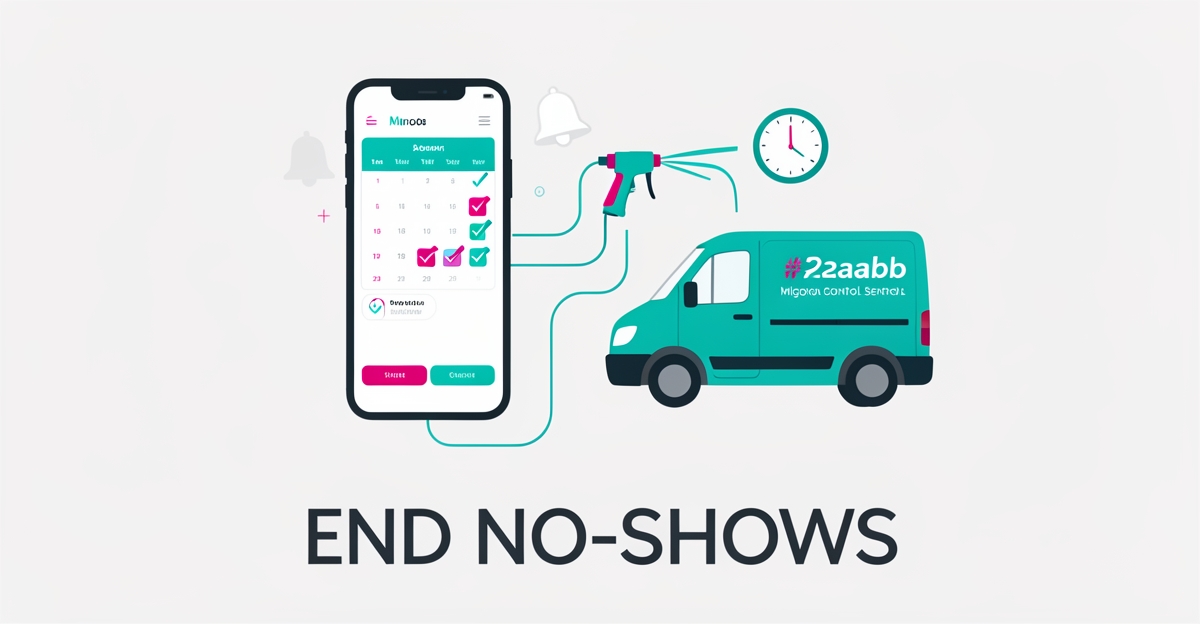
AI-Powered Service Scheduling: How Mosquito Control Businesses Can Reduce No-Shows
Key Facts
- Industry research consistently estimates that the large majority of pest control revenue, often cited around 85%, is recurring.
- A significant share of homeowners choose a provider within hours of searching, making fast response times critical.
- Most inbound calls to service businesses are repetitive queries about appointments and scheduling, exactly what AI handles best.
- A substantial portion of routine calls can typically be resolved without human touch using AI agents.
- Route optimization AI commonly enables meaningfully more jobs per technician per day by cutting drive time.
- Automating appointment confirmations and reminders reliably reduces no-shows across field service industries.
Hire a team member that works 24/7 — for less than a part-time wage.
AI receptionists, SDRs, dispatchers and 99+ roles. Trained on your business, fully managed.
Not sure where to start? Ask our AI planner
The Hidden Cost of No-Shows in Mosquito Control
For a mosquito control business, a missed appointment is never just a missed appointment. It is a crack in the recurring revenue foundation that the entire business model is built on.
Industry research on pest control operations consistently estimates that the large majority of pest control revenue, often cited around 85%, is recurring. That figure changes the math on every no-show. When a homeowner misses a scheduled mosquito treatment, the loss extends beyond a single service fee. It disrupts the treatment cycle, weakens the results the customer sees, and quietly erodes the long-term contract that keeps cash flow predictable.
The financial damage compounds quickly. Missed appointments force technicians into unplanned downtime, throw carefully mapped routes into disarray, and leave gaps in the schedule that are nearly impossible to fill on short notice. Over a full season, even a modest no-show rate translates into thousands of dollars in lost revenue and wasted labor.
The stakes are even higher at the moment of first contact. Industry data suggests a large share of homeowners, often cited at over half, choose a provider within just a few hours of searching. A mosquito control business that relies on manual callbacks and paper-based scheduling is effectively invisible during that critical decision window. Slow responses do not just cost one job; they hand the customer to a faster competitor.
Manual scheduling creates a predictable chain of operational problems:
- Confirmations fall through the cracks when office staff juggle phone lines, texts, and emails simultaneously
- Reminders go out late or not at all, leaving customers unprepared or unaware of their appointment
- Rescheduling requests sit unanswered, turning a simple conflict into a full cancellation
- Technicians arrive at empty properties, burning fuel and labor hours with zero revenue to show for it
There is also a communication volume problem. Research on AI implementation in field service indicates that the majority of inbound calls are repetitive queries, most of them about appointment times, confirmations, and basic service questions. When office staff spend their day fielding these routine calls, they have less time to focus on the scheduling exceptions and customer relationships that actually require human judgment.
The broader pattern is clear. Manual appointment management cannot keep pace with the speed at which modern homeowners make decisions and the consistency that recurring service models demand. Every missed confirmation, every late reminder, and every unanswered rescheduling request chips away at both revenue and reputation.
This is precisely the gap that custom-built AI scheduling systems are designed to close. AIQ Labs builds AI Employees, managed AI staff like receptionists and dispatchers that handle confirmations, reminders, and rescheduling around the clock, typically at a fraction of the cost of a human hire. The goal is not to replace the human side of the business but to remove the manual bottlenecks that cause no-shows in the first place.
How AI-Powered Scheduling Eliminates No-Shows
Most no-shows aren't acts of defiance, they're the result of a forgotten appointment and a customer who never got a reminder at the right moment. AI-powered scheduling attacks that problem directly, and it does so without adding a single task to your office staff's workload.
The core mechanics are simple. AI automatically confirms every appointment the moment it's booked, sends intelligent reminders as the service date approaches, and proactively reaches out to reschedule when a customer can't make it. Industry research consistently shows that automating confirmations and reminders significantly reduces no-shows and improves customer satisfaction, two outcomes that matter enormously in a business where most revenue is recurring and every missed visit risks a canceled contract.
What separates AI scheduling from a basic reminder app is its ability to learn. The system studies patterns in customer behavior, when people respond, which channels they prefer, how far in advance they actually engage, and adjusts its communication timing accordingly. A customer who always answers texts but ignores voicemails gets texts. Someone who confirms the night before gets a reminder then, not three days early. This adaptive approach ensures messages arrive when customers are most likely to respond, not just whenever the system feels like sending them.
The technology also absorbs the routine phone traffic that eats up your dispatcher's day. Research on AI agents in field service shows that the majority of inbound calls are repetitive queries, the same questions about appointment times, service windows, and scheduling changes, asked over and over. AI handles these instantly, and studies suggest a substantial share of calls can be resolved entirely without human touch.
That last point deserves attention. When AI manages the majority of routine scheduling interactions, your team stops drowning in administrative ping-pong and focuses on higher-value work: resolving complex customer issues, managing technician routes, and growing the business. The result is a scheduling operation that runs continuously, confirmations sent, reminders delivered, reschedules handled, whether your office is open or not.
For mosquito control businesses evaluating this approach, the implementation path matters as much as the technology. Systems need to integrate with existing calendar tools and field team apps to be genuinely useful, which is why custom builds tend to outperform off-the-shelf point solutions. AIQ Labs' Workflow Builds service rebuilds the one workflow that costs you the most, like scheduling and dispatch, at a fixed price, in phases. When the AI is trained on your specific scheduling process and connected directly to your operational tools, confirmations, reminders, and rescheduling all happen within one coordinated system rather than a patchwork of disconnected apps.
The payoff compounds over a season: fewer missed appointments, fuller technician routes, and customers who stay informed and engaged without your staff lifting a finger.
Beyond Reminders: Route Optimization and Operational Gains
Beyond simple reminders, AI-powered scheduling delivers meaningful operational gains by optimizing technician routes and unifying workflows across scheduling, dispatching, and customer communication. Route optimization AI enables pest control businesses to cluster appointments geographically, reducing drive time and typically allowing technicians to complete meaningfully more jobs per day. This efficiency gain directly increases revenue per field team without adding headcount, turning existing resources into higher-capacity service units.
Integrated AI systems go beyond calendar management by dynamically adjusting routes in real time based on traffic, job duration, and technician location, ensuring seamless coordination between office dispatch and field operations. When a customer reschedules or a job finishes early, the AI recalculates optimal paths and updates technician assignments instantly, minimizing idle time and maximizing daily output. This real-time adaptability creates a responsive operational workflow where scheduling decisions align with field realities.
The unification of scheduling, dispatching, and customer communication through AI eliminates silos that typically cause delays and miscommunication. Appointment confirmations, route updates, and service completion notifications flow automatically between systems, keeping customers informed while reducing manual follow-up for office staff. This end-to-end automation improves both operational efficiency and customer satisfaction by ensuring technicians arrive on time with optimized routes and clients receive proactive, accurate updates throughout the service cycle. For mosquito control businesses facing seasonal demand spikes, this capability ensures consistent service quality even during peak periods. For businesses ready to connect scheduling, dispatch, billing, and communication into one layer, AIQ Labs builds AI Operating Systems, a connected operating layer built in phases that you own outright.
Implementing AI Scheduling in Your Mosquito Control Business
Ready to reduce no-shows and streamline your mosquito control operations? Implementing AI-powered service scheduling is a practical, step-by-step process that builds on your existing systems while unlocking measurable gains in efficiency and customer reliability.
Start by selecting and implementing AI scheduling software that aligns with your field service workflows. This foundational step ensures the technology supports your specific operational needs, from appointment booking to technician dispatch. AIQ Labs builds custom scheduling AI that integrates with your current tools, avoiding disruption while setting the stage for automation.
Next, integrate the AI scheduling system with your existing CRM and calendar platforms. This connection creates a unified view of customer data and technician availability, eliminating manual data entry and reducing scheduling conflicts. With real-time synchronization, your team gains accurate, up-to-date information across all touchpoints.
Configure automated confirmations and reminders to engage customers proactively. AI learns from customer behavior patterns to optimize the timing and frequency of communications, significantly reducing missed appointments. Research consistently shows that automated confirmations and reminders can substantially reduce no-shows and improve customer satisfaction.
Enable route optimization to maximize technician productivity. By analyzing service locations, traffic patterns, and job durations, AI generates the most efficient daily routes for your team. This capability can increase the number of jobs completed per technician per day, directly boosting operational efficiency and revenue potential.
Finally, monitor key performance metrics such as show-up rates, average response time, and route efficiency. Continuous analysis allows you to refine AI parameters, address bottlenecks, and demonstrate ROI over time. Tracking these metrics ensures your AI scheduling system evolves with your business needs.
Common challenges include ensuring data quality during integration, managing system compatibility, and encouraging customer adoption of automated communications. Addressing these early, through clean data migration, API-based integrations, and clear customer messaging, sets the foundation for smooth implementation and long-term success.
Still paying for 10+ subscriptions that don’t talk to each other?
We build custom AI systems you own outright. No vendor lock-in. Full control.
Not sure where to start? Ask our AI planner
Frequently Asked Questions
How much of a pest control business's revenue comes from recurring services?
How quickly do homeowners typically choose a mosquito control provider after searching?
What percentage of inbound calls to pest control companies are repetitive questions about scheduling?
Can AI really handle customer service calls without human involvement?
How much more work can technicians complete in a day with AI-powered route optimization?
Will implementing AI scheduling require replacing my current calendar or CRM tools?
Turn Missed Visits Into Predictable Revenue
No-shows don't just cost a single service fee in mosquito control, they disrupt treatment cycles, waste technician time, and threaten the recurring contracts that make up the bulk of pest control revenue. Manual confirmations, late reminders, and unanswered reschedules create the gaps that AI-powered scheduling is built to close. By automating confirmations, learning when customers actually respond, and handling routine scheduling calls, businesses keep routes full and customers informed without adding headcount. The operational gains compound when route optimization and integrated dispatch are added, turning existing teams into higher-capacity service units. If you're evaluating this path, start with a clear workflow audit, choose a system that integrates with your current calendar and field apps, and measure show-up rates and route efficiency from day one. AIQ Labs has deployed 200+ multi-agent systems and runs four live SaaS products daily, and can map a practical implementation plan to your stack. Start the 2-minute Fit Check at aiqlabs.ai/apply for a free 30-minute strategy call to identify high-ROI automation opportunities for your business.
Make AI your competitive advantage — not just another tool.
Strategy, implementation and ongoing optimization. One partner, end to end.
Not sure where to start? Ask our AI planner