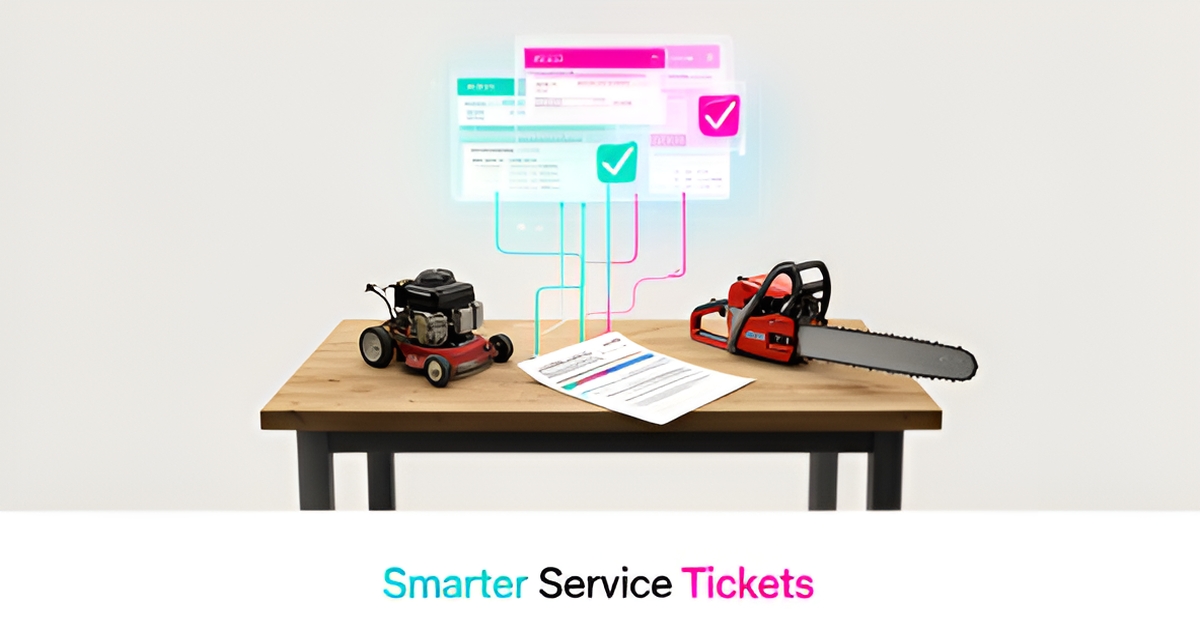
AI-Powered Service Tickets: How Small Engine Shops Can Automate Repair Requests
Key Facts
- Industry benchmarks suggest AI-assisted ticketing can cut resolution times by roughly half compared to fully manual processes according to AI ticketing research
- Helpdesk performance data shows AI agents resolving tickets in minutes versus substantially longer for human agents per helpdesk performance data
- AI-assisted support typically reduces SLA breaches dramatically compared to manual workflows based on helpdesk data
- A large majority of companies worldwide now use AI to enhance customer experience per industry research
- A significant share of AI ticketing escalations stem from low confidence in the system, making confidence-based routing essential per helpdesk industry data
- AI extracts engine type, symptoms, and urgency from customer inquiries to auto-fill service tickets as demonstrated in AI-powered support analysis
- Shops using AI ticket automation see technicians spend less time chasing incomplete info and more time repairing per operational pain point analysis
Hire a team member that works 24/7 — for less than a part-time wage.
AI receptionists, SDRs, dispatchers and 99+ roles. Trained on your business, fully managed.
Not sure where to start? Ask our AI planner
The Hidden Cost of Manual Service Tickets in Small Engine Shops
Manual service tickets in small engine shops quietly drain margin every day. A missed detail on a phone note, a technician waiting on clarification, and a customer left chasing status add up to lost revenue and reputation.
Paper forms and fragmented messages create a bottleneck at the intake point. Technicians spend time chasing incomplete info instead of repairing. According to helpdesk benchmarks, human agents take substantially longer per resolution and breach SLAs far more often than AI-assisted workflows. That delay compounds when shops rely on memory and manual entry.
Lost details are the most expensive error. Customers describe symptoms in different words, engine type gets omitted, and urgency is misunderstood. Without structured capture, tickets bounce back for clarification, technicians overload, and first-time fix rates drop. The result is longer turnaround and frustrated owners waiting on equipment they need.
Response lag also damages trust. Industry research shows a large majority of companies worldwide are now using AI to enhance the customer experience, making speed and consistency an expected baseline. Shops still using manual tickets struggle to match that expectation.
Operational pain shows up in predictable ways:
- Incomplete intake forms that require technician callbacks
- Tickets routed to the wrong bay or skill set
- Delayed responses that increase SLA breaches
- Duplicate requests from customers seeking updates
AI-powered intake changes the pattern by converting conversation into structured work orders. An intelligent system can parse a customer inquiry and auto-fill engine type, symptoms, and urgency into a service ticket, then route it to the right technician. This is the core of AI Customer Relationship Management in the support and chatbot layer.
The impact is measurable. AI-powered support analysis finds resolution times cut roughly in half with automation, while helpdesk data shows AI-assisted workflows breach SLAs at a fraction of the rate of manual ones. That gap translates directly into fewer missed deadlines and less technician overload.
AIQ Labs builds intelligent systems that streamline support and reduce technician load by turning unstructured inquiries into clean, actionable tickets. The approach aligns with how small engine shops actually work: capture once, route correctly, and keep the repair moving without adding headcount. For shops that want a managed option, [AI Employees](/ai-employees) can handle intake calls and messages around the clock at a fraction of the cost of a front-desk hire.
How AI Converts Service Inquiries into Actionable Tickets with Auto-Filled Details
When a customer types "my Honda GX160 won't start after sitting all winter" into a shop's website chat, that single sentence contains everything a technician needs to begin work. The challenge for most small engine shops is capturing those details consistently—and that's exactly where AI-powered ticket automation changes the game.
Modern AI systems use natural language processing to read customer messages and phone transcripts the way a seasoned service writer would. Instead of a vague inquiry sitting in an inbox, the AI extracts structured data points automatically: the engine type and model, the symptoms described, and the urgency implied by phrases like "needed for a job tomorrow." This information then auto-populates a structured service ticket, ready for triage before a human even touches it.
The efficiency gains are significant. Shops using AI-powered support typically see resolution times cut by roughly half compared to manual processes, according to AI ticketing research. At the individual ticket level, the speed difference is even more striking: helpdesk performance data shows AI agents resolving tickets in a couple of minutes on average, while human agents take substantially longer.
For a small engine shop, that speed translates directly into capacity. Every minute a front-desk employee spends re-typing customer details into a work order is a minute not spent helping someone at the counter. By automating the intake layer, AI reduces technician load and keeps the service pipeline moving.
What AI extracts from a typical inquiry includes:
- Engine type, brand, and model number mentioned in the customer's own words
- Symptoms and failure descriptions, categorized for the right technician
- Urgency signals, such as seasonal deadlines or equipment downtime
- Customer contact details and preferred communication channel
Accuracy matters as much as speed. AI-tagged tickets also tend to hit deadlines more reliably: one analysis found AI-assisted workflows breach SLAs at a small fraction of the rate of manual ones. And when the AI isn't sure, well-designed systems route the ticket to a human with full context—important, since industry data shows a meaningful share of escalations stem from low confidence in AI systems, making configurable confidence-based routing a must-have feature.
This is the approach AIQ Labs takes when building intelligent support systems: AI handles the structured extraction and ticket creation it does well, while technicians receive clean, complete handoffs for the work that requires human judgment. The result is a support workflow where no inquiry arrives as a blank ticket, and no technician starts a diagnosis from scratch.
For small engine shops competing on turnaround time, auto-filled, AI-generated tickets aren't a luxury—they're the difference between a backlog of unclear requests and a queue of jobs ready to wrench.
Implementing AI Ticket Automation: A Scoped, Integration-First Approach for SMBs
Small engine shops drown in repetitive repair requests that pull technicians off the floor. AI-powered ticket automation converts those inquiries into structured service tickets with auto-filled engine type, symptoms, and urgency, letting the team focus on wrench time instead of triage.
A scoped, integration-first rollout protects service quality while proving value fast. Research shows a large majority of companies worldwide now use AI to enhance the customer experience, and AI-powered support can cut resolution times roughly in half. For SMBs, speed must be paired with control.
Start with a ticket audit to map how requests arrive today. Document channels, common symptoms, parts referenced, and where handoffs stall. This baseline reveals the data needed for auto-fill fields and the workflows worth automating first.
Clean the knowledge base before training any model. Accurate service manuals, prior repair notes, and parts catalogs become the source for multi-source knowledge access. Data quality is crucial for AI-powered ticket automation to function properly, and a tidy repository reduces errors and escalation risk.
Launch a scoped pilot with a limited user group and confidence-based routing. Configure the system to handle only tickets it is confident about and route the rest to humans with full context. A meaningful share of escalations come from low confidence in AI ticketing systems, so explicit thresholds protect CSAT and technician trust.
A practical first-phase rollout looks like this:
- Conduct a ticket audit to understand current process and improvement areas
- Clean up the knowledge base for accuracy and up-to-date repair data
- Scoped launch to a small group to test and refine auto-fill and routing
- Expand integrations to connect tickets with CRM, scheduling, and inventory
- Multichannel rollout across phone, web, and SMS once confidence metrics hold
Integration depth matters more than model choice. Connect the ticket system to existing shop tools so engine type, symptoms, and urgency flow directly into work orders and technician queues. AIQ Labs builds intelligent systems that streamline support and reduce technician load through integration-first [Workflow Builds](/workflow-builds) and managed AI employees that work alongside human teams.
Once the pilot proves stable, expand via multi-channel integration. Shops can capture requests from phone, email, chat, and SMS into one structured queue, with automated prioritization and clean human handoff when needed. For shops ready to connect intake, scheduling, and parts into one system, a phased [AI Operating System](/ai-operating-systems) approach keeps each build owned outright. This milestone-based approach aligns with a Build in Milestones delivery model, letting owners approve and pay per phase while keeping everything built so far.
Still paying for 10+ subscriptions that don’t talk to each other?
We build custom AI systems you own outright. No vendor lock-in. Full control.
Not sure where to start? Ask our AI planner
Frequently Asked Questions
How much faster can AI-powered ticket automation resolve service requests compared to manual processes?
What is the average resolution time for tickets handled by AI agents versus human agents?
How does AI ticket automation reduce SLA breaches in small engine shops?
What percentage of AI ticketing system escalations are due to low confidence in the AI's accuracy?
Why is cleaning the knowledge base important before implementing AI ticket automation?
How should small engine shops start implementing AI ticket automation without disrupting service?
Turn Repair Requests into Ready-to-Wrench Workflows
Manual service tickets cost small engine shops more than just time—they erode customer trust, clog technician schedules, and let revenue slip through the cracks. By automating intake with AI that captures engine type, symptoms, and urgency from natural conversations, shops can cut resolution times dramatically and keep SLA breaches to a fraction of current levels, as industry benchmarks show. The real win isn't just faster tickets—it's freeing your team to focus on what they do best: repairing equipment and keeping customers running. Start by auditing how requests flow into your shop today, then take the next step with a free strategy session to see where AI can remove friction without adding headcount. Book your free 30-minute strategy call to map your biggest bottleneck and explore a scoped, integration-first approach that proves value fast.
Make AI your competitive advantage — not just another tool.
Strategy, implementation and ongoing optimization. One partner, end to end.
Not sure where to start? Ask our AI planner