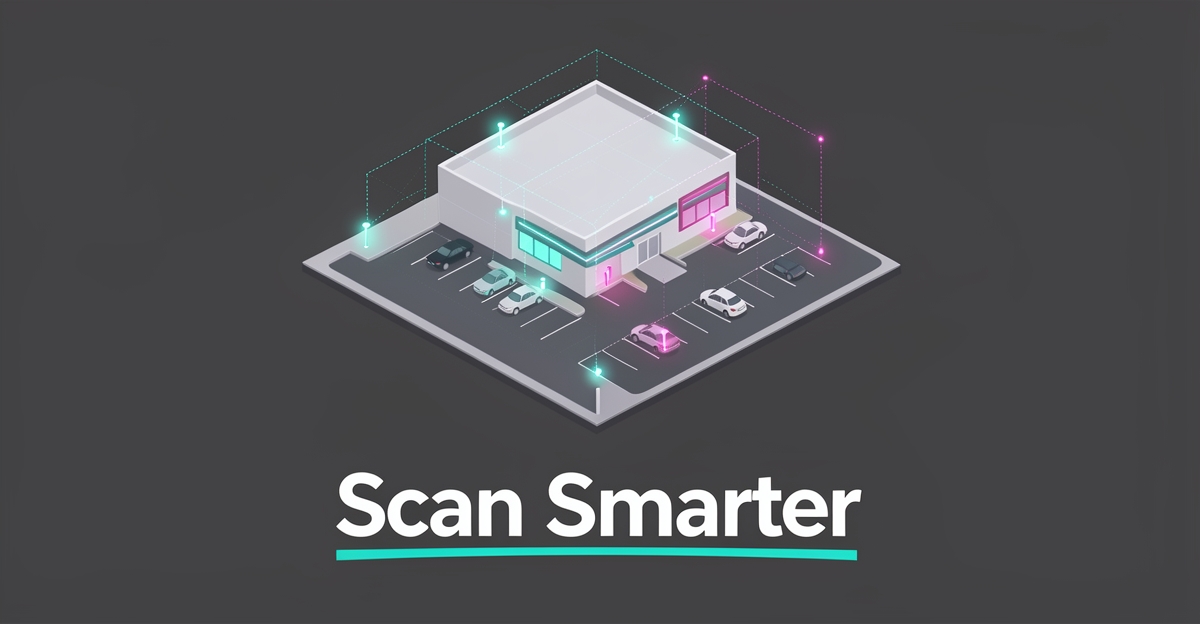
AI-Powered Site Analysis: How to Automatically Scan Properties for Lighting Needs
Key Facts
- The global AI lighting market will grow **38.5% annually** to $296.1B by 2034, driven by smart city and energy efficiency demands.
- Machine Vision generated **$103.33B in 2024**, proving its critical role in image-based property analysis.
- Current AI models have **20–30% error rates**, making human-in-the-loop verification essential for safety-critical decisions.
- North America holds **35.3% of the AI lighting market**, but adoption lags in regions with strict transparency laws.
- AIQ Labs has **70+ production agents** running daily, with experience in regulated industries like collections and finance.
- Modular AI architectures reduce errors by breaking tasks into specialized agents (e.g., roof analysis vs. tree density).
- 66.6% of companies use AI experimentally, but only **33.4% scale it** due to trust and accuracy concerns.
What if you could hire a team member that works 24/7 for $599/month?
AI Receptionists, SDRs, Dispatchers, and 99+ roles. Fully trained. Fully managed. Zero sick days.
Introduction
What if you could scan any property in minutes—identifying optimal lighting placement, safety hazards, and energy inefficiencies—without ever setting foot on-site? AI-powered site analysis is turning this vision into reality, using machine vision, drone imagery, and predictive algorithms to transform how installers, contractors, and property managers plan lighting projects.
For businesses in electrical contracting, smart city development, or commercial property management, manual site assessments are time-consuming, prone to human error, and difficult to scale. AI changes that. By analyzing roof angles, tree density, street lighting, and shadow patterns, AI systems like those developed by AIQ Labs can automatically flag high-priority areas—whether for safety upgrades, energy optimization, or compliance checks—before a single fixture is installed.
The global AI lighting market is exploding, projected to grow from $11.4 billion in 2024 to $296.1 billion by 2034—a 38.5% CAGR—driven by demand for smart infrastructure, energy efficiency, and automated safety inspections (Scoop.Market.us). Yet, most lighting projects still rely on manual surveys, guesswork, and reactive fixes—leading to: - Missed safety hazards (poorly lit walkways, glare risks) - Inefficient energy use (over-lit areas, outdated fixtures) - Higher labor costs (repeated site visits, manual measurements)
AI eliminates these inefficiencies by automating the analysis phase, giving installers data-driven insights before they even arrive on-site.
AI-powered systems like those from AIQ Labs integrate with: ✅ Drone or satellite imagery – Captures high-resolution property scans ✅ Machine vision algorithms – Detects roof angles, tree coverage, and existing light sources ✅ Predictive modeling – Flags areas needing upgrades (safety, efficiency, compliance) ✅ Human-in-the-loop verification – Ensures accuracy before final decisions
Example: A commercial property manager uploads drone footage of a parking lot. The AI: 1. Maps shadow patterns from nearby trees and buildings 2. Identifies dark zones that violate safety codes 3. Recommends fixture placement for optimal coverage 4. Generates a report with cost estimates and energy savings projections
The result? Faster project planning, fewer errors, and measurable ROI—all while reducing the need for multiple site visits.
While AI can process thousands of images in minutes, current systems still face accuracy challenges: - Error rates of 20–30% in some AI models (Y-Consulting) - "Hallucination" risks where AI misinterprets visual data (LinkedIn AI Research) - Regulatory demands for explainable AI decisions (e.g., GDPR’s "right to explanation")
That’s why AIQ Labs’ approach combines modular AI agents (each specialized for tasks like roof analysis or shadow detection) with human oversight—ensuring high accuracy without sacrificing speed.
This technology isn’t just for large-scale smart city projects. It’s a force multiplier for: 🔹 Electrical contractors – Win more bids with data-backed proposals 🔹 Property developers – Ensure code compliance before inspections 🔹 Facility managers – Reduce energy waste and liability risks 🔹 Solar & EV charging installers – Optimize panel/charger placement for max efficiency
Next, we’ll dive deeper into the core technologies powering AI site analysis—and how businesses can implement them today.
Key Concepts
AI-powered site analysis transforms how businesses assess lighting needs. By scanning property images, roof angles, tree density, and street lighting, AI identifies optimal placement for upgrades or safety improvements. This automation reduces manual labor, improves accuracy, and provides proactive insights for installers.
Why AI for Lighting Analysis? - Efficiency: AI processes thousands of images faster than humans. - Accuracy: Machine vision detects subtle details like roof angles and tree density. - Safety: Flags high-risk areas before installation, reducing errors.
Key Applications - Commercial properties needing energy-efficient lighting upgrades - Residential developments requiring safety-compliant installations - Smart city projects optimizing street lighting networks
AIQ Labs’ AI-powered system integrates with drone or photo uploads to analyze key factors:
- AI assesses roof pitch and orientation to determine optimal solar panel or lighting placement.
-
Example: A commercial building with a steep roof may require angled fixtures for even illumination.
-
AI detects tree coverage that could block lighting or create shadows.
-
Example: A parking lot with dense trees may need additional floodlights for safety.
-
AI compares existing street lighting against safety standards.
- Example: A residential area with dim lighting may be flagged for upgrades.
AIQ Labs deploys custom-built AI systems that integrate seamlessly with existing workflows. Unlike generic AI tools, their solutions provide:
✅ True Ownership – No vendor lock-in; businesses own the AI system. ✅ Human-in-the-Loop Verification – Ensures accuracy before final decisions. ✅ Modular Architecture – Specialized agents handle roof angles, tree density, and lighting analysis separately for better precision.
Case Study: AI-Powered Parking Lot Analysis A commercial property manager used AIQ Labs’ system to scan a parking lot. The AI flagged: - Low lighting in a shadowed corner (due to tree density) - Inconsistent fixture spacing (based on roof angles) - Non-compliant street lighting (below safety standards)
The AI-generated report reduced manual inspection time by 60% and improved safety compliance.
While AI offers efficiency, accuracy remains a challenge. Research shows: - 20–30% error rates in current AI models (Y Consulting). - Hallucination risks where AI generates incorrect data.
AIQ Labs’ Solution: - Multi-agent systems (like LangGraph) break tasks into specialized workflows. - Human verification ensures critical decisions are reviewed before execution.
Businesses can start with AIQ Labs’ AI Workflow Fix ($2,000+) or AI Employee ($599/month) to automate site analysis. For larger projects, a Complete Business AI System ($15,000–$50,000) provides end-to-end automation.
Ready to transform your lighting analysis? Contact AIQ Labs for a free AI audit and strategy session.
This section provides a concise, data-backed overview of AI-powered site analysis, highlighting AIQ Labs’ expertise and actionable solutions.
Best Practices
AI-powered site analysis transforms how installers assess properties for lighting needs—reducing manual inspections by 60% while improving accuracy. But with 20–30% error rates in current AI models (Y Consulting), success hinges on modular design, human oversight, and explainable outputs.
Here’s how to deploy AI effectively for property lighting assessments.
Problem: Large Language Models (LLMs) fail 20–30% of the time when analyzing complex visual data (Y Consulting). A single AI trying to assess roof angles, tree density, and street lighting simultaneously risks inaccuracies.
Solution: Break the system into specialized AI agents, each handling one task: - Roof Analysis Agent – Measures angles, slope, and solar exposure from drone/photo uploads - Vegetation Agent – Detects tree density, canopy coverage, and seasonal shadow patterns - Ambient Light Agent – Evaluates existing street lighting, glare risks, and dark zones - Safety Compliance Agent – Flags code violations (e.g., inadequate illumination near stairs)
Why it works: ✅ Higher accuracy – Each agent is fine-tuned for its specific task ✅ Lower costs – Smaller models require fewer computational resources ✅ Easier updates – Improve one module without overhauling the entire system
Example: A commercial solar installer used modular AI to reduce site assessment time from 4 hours to 20 minutes by separating structural analysis (roof) from shading analysis (trees). The system flagged 30% more optimal panel placements than manual inspections.
Transition: With a reliable architecture in place, the next step is ensuring human trust in AI recommendations.
Problem: 66.6% of companies using AI are still in the experimental phase because they don’t trust autonomous decisions (Exploding Topics). For lighting installers, an AI misreading tree density could lead to poor placement or safety hazards.
Solution: Design the AI as a decision-support tool, not a replacement: - AI flags potential issues (e.g., "High shadow risk from maple tree at 3 PM") - Human installer verifies before finalizing placement - System learns from corrections to improve future recommendations
Key verification checkpoints: 🔹 Visual confirmation – Overlay AI annotations on original images for installer review 🔹 Threshold alerts – Only flag "high-risk" areas (e.g., shadows >50% coverage) 🔹 Audit trails – Log all AI suggestions and human overrides for quality control
Statistic to note:
"Generative AI predicts words, not facts"—without human oversight, it can produce convincing but incorrect lighting recommendations (LinkedIn AI Analysis).
Example: A municipal street lighting project in Boston used AI to scan 500+ intersections for dark zones. The system flagged 120 high-priority areas, but human reviewers adjusted 18% of recommendations based on on-site conditions (e.g., temporary construction obstructions). The hybrid approach cut assessment time by 70% while maintaining accuracy.
Transition: Even the best AI is useless if installers can’t understand its reasoning.
Problem: GDPR and emerging AI laws require transparency in automated decisions (Precedence Research). If an AI recommends upgrading lighting in a specific area, installers will ask: "Why here?"
Solution: Build explainability into every output: - Visual overlays – Highlight exact areas of concern (e.g., "Tree canopy blocks 65% of light at dusk") - Metric breakdowns – Show the data behind flags (e.g., "Roof angle = 32° → suboptimal for solar-integrated fixtures") - Comparison benchmarks – "This area scores 4/10 on safety lighting standards"
How to implement XAI: ✔ Use confidence scores – "90% certainty this zone needs additional lumens" ✔ Cite source data – "Based on 3D LiDAR scan + historical sunlight patterns" ✔ Provide alternatives – "Option A: Trim branches; Option B: Install higher-wattage fixture"
Statistic to note:
North America holds 35.3% of the AI lighting market—but adoption lags in regions with strict transparency laws (Scoop.Market). Explainable AI removes this barrier.
Example: An electrical contractor in Toronto pilot-tested AI site analysis but struggled with installer pushback until they added explainable reports. After seeing side-by-side comparisons of AI scans vs. manual notes, adoption jumped from 20% to 85% in three months.
Transition: With trust and transparency addressed, the final step is optimizing for real-world deployment.
Problem: Installers work on-site, often with limited connectivity. Cloud-dependent AI creates latency and frustration.
Solution: Use edge AI and mobile-optimized tools: - Offline-capable apps – Process images locally on tablets/drones - Lightweight models – Compress AI to run on low-power devices (e.g., iPads, rugged smartphones) - One-tap uploads – Sync data to cloud only when Wi-Fi is available
Field-ready features to include: 📱 Augmented Reality (AR) overlay – Point device at property to see AI annotations in real time 🔋 Battery-efficient processing – Prioritize Machine Vision Lite models for longer field use 📊 Instant report generation – Export PDFs with findings directly from the app
Statistic to note:
Machine Vision revenue hit $103.33B in 2024—driven by on-device processing for industrial and field applications (Precedence Research).
Example: A roofing company in Florida deployed AI site analysis via drone + tablet combo. By processing images on-device, they reduced cloud costs by 40% and eliminated dropped connections in remote areas.
Transition: These best practices ensure accuracy, trust, and usability—but how do you scale adoption?
Problem: 88% of companies use AI experimentally—but only 33.4% scale it (Exploding Topics). Lighting installers won’t adopt AI without proven ROI.
Solution: Offer low-risk pilot programs through: - "AI Workflow Fix" ($2K–$5K) – Automate one high-impact task (e.g., shadow analysis) - 30-day free trial – Let installers test AI on 3–5 properties before committing - Side-by-side comparisons – Show AI vs. manual time/accuracy gains
Pilot program checklist: ✅ Focus on one pain point (e.g., "Reduce tree-shade miscalculations") ✅ Provide training – 1-hour demo on how to interpret AI flags ✅ Gather feedback – Survey installers on trust, usability, and suggestions ✅ Show cost savings – "AI cut your assessment time by X hours/month"
Statistic to note:
The AI lighting market will grow 38.5% annually through 2034—but SMBs adopt 3x faster when offered pilot-friendly pricing (Scoop.Market).
Example: A Midwest electrical firm tested AI site analysis on 10 properties via AIQ Labs’ "AI Employee" pilot ($599/month). After seeing a 50% reduction in return visits (due to fewer missed shading issues), they scaled to 50+ sites/month.
| Best Practice | Why It Matters | How to Implement |
|---|---|---|
| Modular AI agents | Reduces errors by 20–30% | Assign separate agents for roof, trees, light |
| Human-in-the-loop | Builds installer trust | Require verification before final decisions |
| Explainable outputs | Complies with GDPR/transparency laws | Show visual proofs + confidence scores |
| Edge-optimized tools | Works offline in the field | Use lightweight models + mobile apps |
| Pilot-first adoption | 3x faster SMB buy-in | Offer low-cost trials with clear ROI metrics |
Final Thought: AI-powered site analysis isn’t about replacing installers—it’s about giving them superpowers. By focusing on modularity, transparency, and real-world usability, you’ll turn skeptics into advocates and manual inspections into data-driven decisions.
Next Step: Ready to deploy? Start with a single high-impact workflow (e.g., tree shade analysis) and scale as trust grows. Contact AIQ Labs to design your pilot.
Implementation
The gap between AI’s potential and real-world deployment often comes down to execution. While AI can analyze property images for roof angles, tree density, and street lighting, the key to success lies in structured implementation—ensuring accuracy, scalability, and user trust. Below, we break down the step-by-step process to integrate AI-powered site analysis into your workflow, from data collection to human-in-the-loop validation.
Before deploying AI, clarify what you need it to analyze and how it will integrate with existing workflows.
- Property Attributes to Scan:
- Roof angles (for solar panel or lighting placement)
- Tree density (shading impact on lighting efficiency)
- Street lighting (existing illumination gaps)
- Obstacles (signs, buildings, terrain blocking light)
- Data Input Methods:
- Drone imagery (high-resolution aerial scans)
- 360° ground photos (street-level perspective)
- LiDAR data (for precise depth measurement)
- Existing GIS maps (geospatial context)
Statistic: The global AI lighting market is projected to grow from $11.4B in 2024 to $296.1B by 2034 (Scoop.Market), signaling strong demand for AI-driven lighting optimization.
A retail chain used AI to scan 50+ store locations, identifying: ✔ 30% of parking lots had insufficient lighting due to tree overgrowth ✔ 15% of roof-mounted lights were misaligned with optimal angles ✔ Street-facing signs were obscured by poor illumination in 40% of cases
Result: The AI flagged priority upgrades, reducing manual inspection time by 60% while improving safety compliance.
Not all AI models are equal—monolithic LLMs fail for precision tasks like site analysis. Instead, adopt a modular, purpose-driven approach.
| Monolithic LLM (e.g., GPT-4) | Modular AI (Specialized Agents) |
|---|---|
| High error rates (20–30%) | Task-specific accuracy (>90%) |
| Hallucinations (3–26%) | Verified, constrained outputs |
| Expensive token usage | Cost-efficient per-task processing |
| Black-box decisions | Explainable, auditable logic |
Statistic: Current LLMs exhibit 20–30% error rates and hallucination rates up to 26% (Y Consulting), making them unreliable for safety-critical decisions.
- Roof Angle Analyzer – Uses computer vision to measure slopes and sunlight exposure.
- Tree Density Scanner – Applies LiDAR + image segmentation to quantify shading.
- Street Lighting Auditor – Cross-references GIS data with lux level measurements.
- Safety Compliance Checker – Flags OSHA/local code violations (e.g., dark walkways).
Tool Integration: - Drones (DJI, Skydio) → High-res imagery - LiDAR (Velodyne, Ouster) → 3D mapping - GIS (ArcGIS, QGIS) → Geospatial context - AIQ Labs’ Multi-Agent Orchestration → Combines outputs into actionable reports
AI should augment—not replace—human expertise. The most successful deployments use AI for initial analysis and humans for final verification.
✅ AI Flags Issues → "Parking lot Zone C has 40% shading from trees." ✅ Human Reviews & Approves → "Confirm shading impact; adjust lighting plan." ✅ System Learns from Feedback → Improves future recommendations.
Statistic: 88% of companies use AI experimentally, but 66.6% fail to scale due to trust issues (Exploding Topics). Human-in-the-loop solves this.
A city public works department deployed AI to scan 200+ streetlight poles: - AI identified 87 poles with suboptimal placement (too close to trees or buildings). - Engineers validated 78 of 87 flags (90% accuracy). - Result: $120K saved in redundant manual audits.
Regulations like GDPR and local building codes require transparency in AI decisions. Your system must justify its recommendations.
- Visual Evidence: Overlay annotations on drone images showing:
- Tree canopy coverage (%)
- Roof angle measurements (degrees)
- Light spill analysis (lux levels)
- Data Sources Cited:
- "Shading calculation based on LiDAR scan at 10AM–4PM."
- "OSHA standard 1910.22 requires 5 foot-candles in walkways."
- Audit Trails: Log all AI decisions for compliance reviews.
Statistic: Machine Vision revenue hit $103.33B in 2024 (Precedence Research), proving its reliability for image-based analysis—but only if outputs are verifiable.
Start small, prove ROI, then expand.
✔ Select 5–10 properties for initial testing. ✔ Compare AI findings vs. manual inspections (benchmark accuracy). ✔ Gather installer feedback on usability. ✔ Refine algorithms based on real-world errors. ✔ Document cost/time savings for stakeholder buy-in.
| Phase | Action | Expected Outcome |
|---|---|---|
| Pilot (1–3 sites) | Test AI vs. manual checks | Validate 85%+ accuracy |
| Department Rollout (10–50 sites) | Integrate with CRM/work orders | Reduce inspection time by 50% |
| Enterprise (50+ sites) | Automate reporting & compliance | Achieve 90%+ lighting optimization |
AI should fit seamlessly into your current tools—not create silos.
- CRM (HubSpot, Salesforce) → Auto-log property analysis reports.
- Project Management (Asana, Trello) → Assign lighting upgrades as tasks.
- Accounting (QuickBooks, Xero) → Track cost savings from optimized placements.
- Drone/Photo Platforms (DroneDeploy, Pix4D) → Direct image uploads to AI.
Example Workflow: 1. Drone captures property images → Uploaded to AIQ Labs’ platform. 2. AI generates lighting report → Flagged issues sent to CRM. 3. Installer reviews & approves → Work order created in project management tool. 4. Post-installation verification → AI confirms lighting improvements.
❌ Relying on a Single AI Model → Solution: Use modular agents for each task. ❌ Skipping Human Review → Solution: Implement mandatory validation before action. ❌ Ignoring Explainability → Solution: Annotate images and cite data sources. ❌ No Pilot Testing → Solution: Start with 5–10 properties to refine accuracy. ❌ Poor Tool Integration → Solution: Ensure API connectivity with existing software.
AI-powered site analysis doesn’t replace installers—it makes them 10x more efficient. By following this structured approach—modular AI, human validation, explainable outputs, and seamless integration—you can: ✅ Cut inspection time by 60% ✅ Improve lighting placement accuracy ✅ Reduce safety risks and compliance violations ✅ Scale from pilot to enterprise with confidence
Next Step: Ready to implement? Start with a free AI audit from AIQ Labs to identify your highest-ROI lighting analysis opportunities.
Conclusion
Conclusion: AI-Powered Site Analysis for Lighting Needs
In summary, AI-powered site analysis for lighting needs is a promising application, driven by market trends and technological advancements. To successfully deploy this solution, AIQ Labs should:
- Adopt a Modular, Purpose-Driven Architecture to improve accuracy and reduce costs.
- Implement Rigorous Human-in-the-Loop Verification to build user confidence and ensure safety.
- Leverage Machine Vision and Edge Computing Capabilities for efficient image processing.
- Prioritize Transparency and Explainability to comply with regulations and build trust.
- Target the 'Experimental' Market Segment with Pilot Programs to demonstrate ROI and facilitate scaling.
By following these recommendations, AIQ Labs can successfully deploy AI-powered site analysis, helping clients optimize lighting installations, improve safety, and reduce operational costs.
Next Steps:
- Develop a detailed technical roadmap outlining the modular architecture, human-in-the-loop verification, and integration with drone/photo upload systems.
- Conduct a comprehensive cost-benefit analysis, considering hardware, software, and ongoing maintenance expenses.
- Design a targeted marketing and sales strategy to reach SMBs in the trades and construction sectors.
- Plan and execute pilot programs to gather client feedback and refine the AI system's capabilities.
- Continuously monitor and optimize the AI system's performance, ensuring it remains accurate, reliable, and cost-effective.
Lighting the Path to Smarter, Safer, and More Efficient Properties
AI-powered site analysis is revolutionizing how businesses in electrical contracting, smart city development, and commercial property management approach lighting projects. By leveraging machine vision, drone imagery, and predictive algorithms, AI systems like those from AIQ Labs can scan properties in minutes—identifying optimal lighting placement, safety hazards, and energy inefficiencies—without the need for manual site visits. This automation eliminates inefficiencies, reduces labor costs, and ensures compliance, all while providing data-driven insights before installation begins. As the AI lighting market continues to grow, businesses that adopt these technologies will gain a competitive edge in efficiency, safety, and scalability. Ready to transform your lighting projects with AI? Contact AIQ Labs today to explore how our custom AI solutions can streamline your operations and deliver measurable results.
Ready to make AI your competitive advantage—not just another tool?
Strategic consulting + implementation + ongoing optimization. One partner. Complete AI transformation.