AI-Powered Site Assessment: How EV Installers Can Predict Installation Success
Key Facts
- Inaccurate demand forecasting can leave EV charger utilization far below break-even thresholds.
- Sites selected without traffic pattern analysis tend to see more user complaints tied to accessibility issues.
- Electrical infrastructure mismatches discovered post-installation typically raise project costs significantly.
- AI works best as a decision-support layer: AI recommends, humans decide, oversight stays on every delegated task.
- The gap between a promising demo and a reliable production tool is real; closing it requires ongoing optimization, not a one-time install.
Hire a team member that works 24/7 — for less than a part-time wage.
AI receptionists, SDRs, dispatchers and 99+ roles. Trained on your business, fully managed.
Not sure where to start? Ask our AI planner
The Costly Guesswork in EV Charger Site Selection
The current approach to EV charger site selection is riddled with uncertainty, often relying on manual walkthroughs, outdated utility maps, and installer intuition rather than data-driven forecasting. This guesswork leads to installations in locations with insufficient demand, poor accessibility, or inadequate electrical infrastructure, factors that directly undermine utilization rates and project profitability. When sites underperform, installers face not only sunk costs but also reputational damage and strained client relationships, turning what should be a growth opportunity into a financial liability.
Poor site decisions are a leading cause of failed EV charging projects, with utilization frequently falling below break-even thresholds due to mismatched location analytics. Without predictive insight into parking behavior, peak usage times, or local EV adoption trends, installers cannot accurately forecast return on investment. This lack of foresight results in overbuilt sites in low-demand areas and critical gaps in high-potential zones, wasting capital and slowing broader EV adoption. The financial toll is compounded by opportunity costs, funds tied up in underperforming installations could instead support scalable, high-impact deployments.
- Inaccurate demand forecasting can leave utilization far below the levels needed for viability
- Sites selected without traffic pattern analysis tend to draw more user complaints tied to accessibility issues
- Electrical infrastructure mismatches discovered post-installation typically add significant cost to projects
These challenges highlight why traditional site assessment methods are no longer sufficient in a rapidly scaling EV market. Installers need a way to move beyond reactive fixes and toward proactive, predictive planning, one that evaluates not just whether a site can support a charger, but whether it will be used consistently and profitably over time. By grounding decisions in behavioral data, usage patterns, and predictive modeling, businesses can shift from costly trial-and-error to strategic, high-confidence installations. AIQ Labs supports this shift by building predictive analytics into your operations, transforming site selection from a guessing game into a repeatable, ROI-driven process.
How AI Predicts EV Installation Success Through Site Intelligence
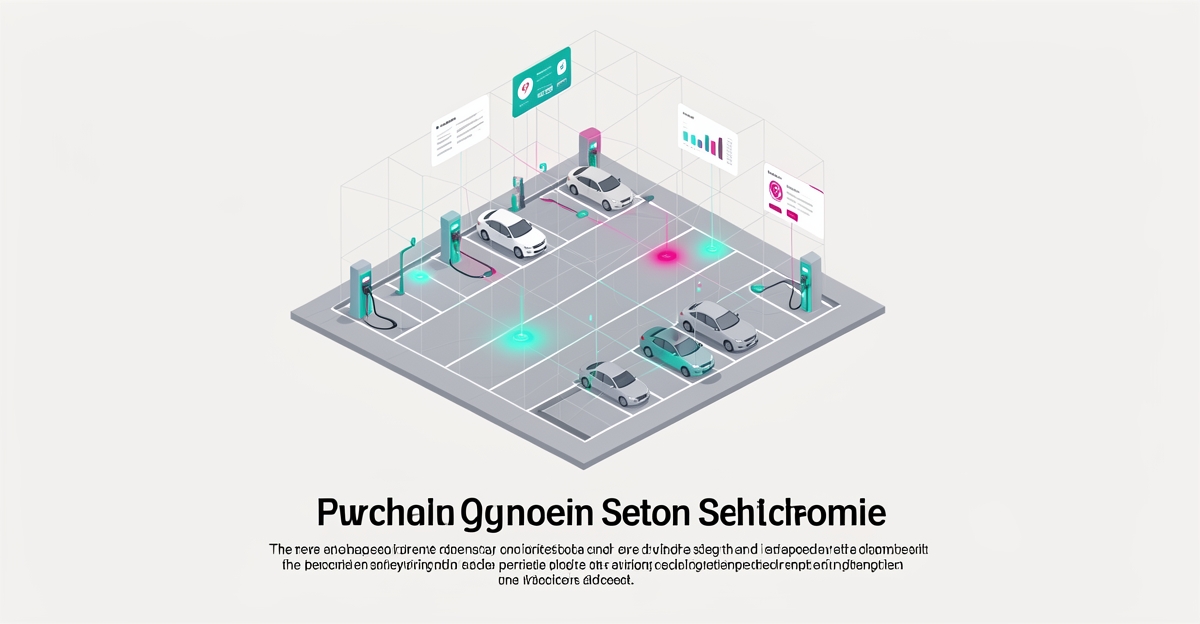
AI-powered site assessment transforms how EV installers evaluate potential locations by turning raw data into actionable forecasts. By analyzing site features like electrical capacity and grid readiness, parking patterns such as duration and turnover rates, and local demand indicators including demographics and competitor density, AI models can predict installation success with measurable accuracy. This predictive capability helps businesses avoid costly missteps and focus resources on sites most likely to deliver strong utilization and ROI. Integrating these data streams enables installers to anticipate challenges before breaking ground, reducing the risk of underperforming or failed projects.
The strength of AI in this context lies in its ability to process complex, interconnected variables that traditional assessments often overlook. For example, AI can correlate peak parking turnover with nearby EV adoption rates to forecast usage patterns, while simultaneously evaluating permitting timelines and utility interconnection complexity. The same principle that guides modern AI-assisted work applies here: teams increasingly rely on AI tools while keeping human oversight on delegated decisions. Applied to site assessment, this allows installers to leverage AI for continuous learning, each completed project refines the model's ability to predict future outcomes.
- Electrical infrastructure readiness, including panel capacity and distance to transformers
- Parking behavior metrics such as average dwell time and hourly turnover during peak hours
- Local demand signals like household income, EV ownership growth, and proximity to existing chargers
- Regulatory factors including permitting speed, inspection history, and utility interconnection queues
- Competitive landscape analysis covering charger density, pricing, and network reliability within a 5-mile radius
By synthesizing these inputs, AI doesn't just flag risks, it recommends optimal configurations, such as ideal charger power levels or phased deployment strategies. AIQ Labs applies this approach through predictive models that continuously learn from real-world installation and usage data, helping clients maximize uptime and revenue potential. As cloud computing investment continues to grow, the scalability of these AI systems becomes increasingly accessible, allowing even mid-sized installers to deploy sophisticated site intelligence without prohibitive infrastructure costs. Workflow integration ensures these insights feed directly into planning, permitting, and installation workflows, creating a closed loop of prediction, execution, and optimization.
From Prediction to Action: Implementing AI Site Assessment in Your Workflow
A prediction is only as valuable as the workflow it changes. For EV installers, the real question isn't whether AI can forecast installation success, it's how to embed that forecasting into daily operations so every site visit, quote, and bid reflects data-backed confidence.
The first step is data collection. AI-powered site assessment analyzes three core inputs: site features, parking patterns, and local demand. Installers should start by standardizing how they capture this information, photos, panel capacity notes, parking turnover observations, and local EV adoption indicators, so every assessment feeds a consistent, structured dataset.
Next comes model integration. Rather than treating prediction as a standalone report, connect it to existing systems. Modern AI agents can be integrated into enterprise workflows to automate, coordinate, and manage tasks across business systems, streamlining operations, improving consistency, and scaling automation. For an installer, that means the AI's success score should flow directly into quoting, scheduling, and dispatch decisions, not sit in a separate dashboard nobody opens.
Then comes decision-making. Use the model's risk assessment to triage your pipeline: pursue high-probability sites aggressively, price marginal sites with appropriate contingency, and walk away from projects the data flags as likely failures. The operating principle is simple: AI recommends, humans decide. Your estimators and project leads stay in the loop, using predictions to sharpen judgment rather than replace it.
A practical rollout looks like this:
- Standardize data capture for every site assessment, features, parking patterns, and demand signals.
- Integrate the predictive model into quoting and dispatch systems so scores trigger action, not just reports.
- Keep human oversight on every AI-recommended decision before a bid goes out.
- Build reusable assessment workflows so consistency improves as volume grows.
- Track predicted versus actual outcomes to refine the model over time.
That last point matters most. The gap between a promising demo and a reliable production tool is real, closing that gap requires ongoing optimization, not a one-time install.
This is where the build approach matters. AIQ Labs builds predictive site-assessment systems in phases through AI Workflow Builds, you start with the one workflow that costs the most, at a fixed price, and prove the value before expanding. When you're ready to connect everything, assessment, quoting, dispatch, and follow-up, into one operating layer you own outright, AI Operating Systems is the path. No vendor lock-in, no platform dependencies. Installers can start with a single workflow, measure the results, and build from there.
The companies that pull ahead aren't the ones with the best AI strategy on paper. They're the ones running fast, practical experiments, because that's the only way the knowledge actually transfers. Start with one workflow, measure the results, and build from there.
Still paying for 10+ subscriptions that don’t talk to each other?
We build custom AI systems you own outright. No vendor lock-in. Full control.
Not sure where to start? Ask our AI planner
Frequently Asked Questions
How does AI actually predict whether an EV charger installation will succeed?
Why do so many EV charging projects fail or underperform?
Won't AI just replace my estimators and project managers?
How do I integrate AI site assessment into my existing workflow?
Is this technology only affordable for large installers?
What's the biggest mistake installers make when adopting AI site assessment?
Your Next Site Visit Should Come With a Prediction
The math of EV installation is unforgiving: utilization below break-even, surprise infrastructure costs, and complaints from poorly placed chargers all trace back to one decision made too early, site selection. As this article has shown, AI-powered site assessment replaces that guesswork with predictions built on site features, parking patterns, and local demand, then turns those predictions into action through integrated quoting, dispatch, and decision workflows. The installers winning this market aren't the ones with the best strategy on paper, they're the ones running fast, practical experiments, because that's how the knowledge actually transfers. Start small: standardize how you capture assessment data, embed a predictive score into one workflow, and track predicted versus actual outcomes. When you're ready to build a system you own outright, no vendor lock-in, no platform dependencies, AIQ Labs builds in phases with fixed pricing, starting with the workflow that costs you the most. Take the two-minute Fit Check at aiqlabs.ai/apply, then book a free 30-minute strategy call to map your highest-ROI opportunity. If there isn't a clear win, we'll tell you that too.
Make AI your competitive advantage — not just another tool.
Strategy, implementation and ongoing optimization. One partner, end to end.
Not sure where to start? Ask our AI planner