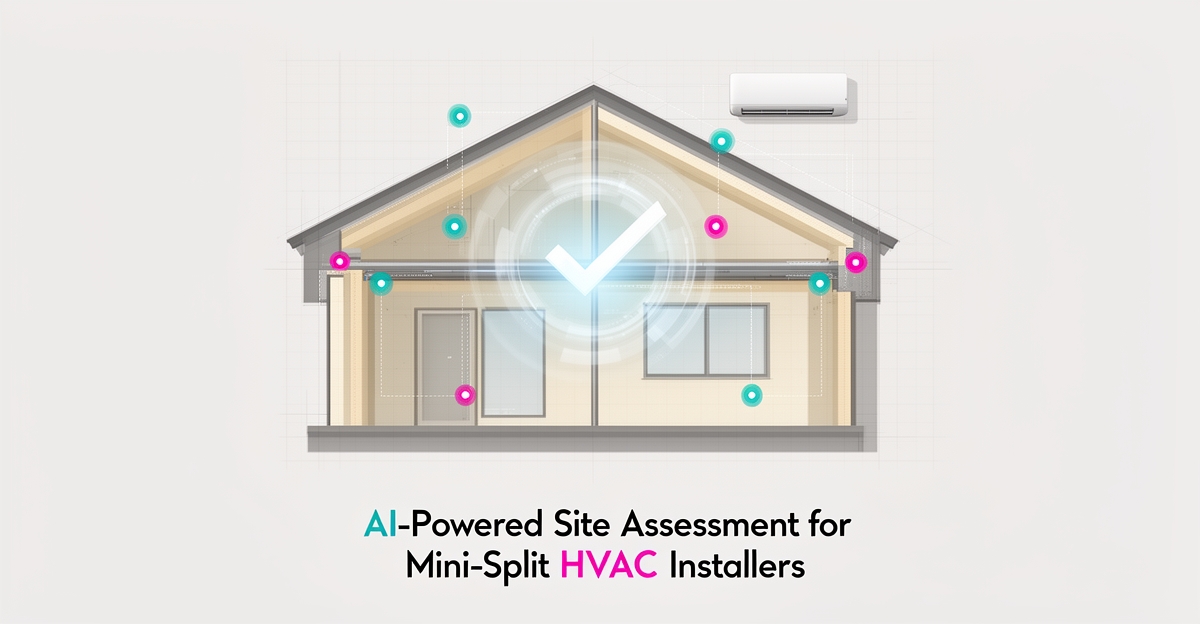
AI-Powered Site Assessment: How Mini-Split Installers Can Predict Installation Feasibility
Key Facts
- AI handles repetitive data gathering so installers arrive confident the job is viable
- AI reshuffles work rather than replaces it, allowing technicians to focus on nuanced decision-making
- AIQ Labs has deployed 200+ multi-agent systems in production, powering its feasibility reports
- AIQ Labs runs 4 live SaaS products daily, so its automation approach is tested in real operations
- Task automation is where AI excels; complex decision-making remains a human strength
Hire a team member that works 24/7 — for less than a part-time wage.
AI receptionists, SDRs, dispatchers and 99+ roles. Trained on your business, fully managed.
Not sure where to start? Ask our AI planner
Why Mini-Split Installers Waste Time on Unfeasible Jobs
Every installer knows the cost of a bad first visit. You drive out, measure, then walk away because the panel can’t handle the load or the layout won’t work. That wasted trip erodes margin fast.
Mini-split crews lose time on the same repetitive assessment loops. Checking electrical capacity, insulation gaps, and layout constraints is manual, slow, and error-prone. AI is taking over repetitive tasks, and humans are focusing on more complex decision-making and accountability. As IBM explains, AI enables machines to simulate human learning, comprehension, problem solving, and decision-making, which makes it well suited to the data-gathering half of a site assessment.
The pattern shows up in how site feasibility is missed. Installers rely on homeowner descriptions and quick visual checks, which overlook constraints that only show up in property records or system data. That leads to rejected quotes, rework, and crews tied up on jobs that were never viable.
AI adoption in field trades is increasing, but it's not without limits. AI automates tasks well, but it doesn't replace the need for human oversight and judgment. For field trades, that means pre-screening, not replacing, the installer.
Where time bleeds out most often:
- Electrical capacity mismatches discovered after arrival
- Insulation and load calculations done from memory
- Layout constraints missed until equipment is on site
- Rework from incomplete pre-install data
These are repetitive checks that fit the automation profile AI handles well. Task automation is excellent for AI, while complex decision-making remains excellent for humans. The future isn't AI vs humans. The future is AI with humans.
The business case is about reducing unfeasible jobs before dispatch. AIQ Labs integrates with property databases to deliver pre-installation feasibility reports, using AI to analyze home layout, insulation levels, and electrical systems to predict whether a mini-split installation will succeed. The approach mirrors how AI reshuffles work, not eliminates it.
Installers keep the final call. AI handles the repetitive data gathering and flagging, so crews arrive confident the job is viable. That is where margin is protected and wasted site visits disappear.
How AI Analyzes Property Data to Predict Installation Success
AIQ Labs leverages multi-agent AI systems to analyze property data from integrated databases, assessing home layout, insulation quality, and electrical capacity to predict mini-split installation success. This approach draws on AI's proven strength in task automation and pattern recognition, enabling installers to identify potential issues before site visits. As Google Cloud notes, AI is a set of technologies that empowers computers to learn, reason, and perform advanced tasks in ways that used to require human intelligence, exactly the profile needed for data-rich property analysis at scale.
The system evaluates structural factors such as room dimensions, wall materials, and window placement to determine optimal unit positioning and airflow efficiency. Insulation levels are assessed through thermal property data, identifying heat loss risks that could compromise system performance. Electrical analysis includes panel capacity, circuit availability, and wiring compatibility to ensure safe, code-compliant installation. These automated checks reduce the likelihood of costly rework or job rejections due to unforeseen site limitations. AI excels at automating repetitive, data-driven tasks while humans retain strengths in complex judgment, making this hybrid approach ideal for pre-installation feasibility. The balance is straightforward: AI reshuffles work rather than replaces it, allowing technicians to focus on nuanced, on-site decision-making.
By generating detailed pre-installation reports, AIQ Labs empowers mini-split contractors to quote with confidence and schedule jobs only when feasibility is high. This proactive assessment minimizes wasted technician time and improves first-time fix rates. The multi-agent architecture enables parallel processing of diverse data points, layout, insulation, electrical, drawing on the 200+ multi-agent systems AIQ Labs has deployed in production. Such orchestration ensures comprehensive, accurate feasibility scoring without requiring manual data synthesis. Ultimately, this AI-driven preparation shifts the installer’s role from reactive problem-solving to proactive planning, increasing job success rates and customer satisfaction while reducing operational friction.
From Feasibility Report to Faster, More Profitable Installs
AIQ Labs helps mini-split installers turn feasibility reports into faster, more profitable installs by identifying potential issues before crews arrive on site. Using AI to analyze home layout, insulation, and electrical data, installers can qualify leads with confidence and avoid costly rework from incompatible setups. This proactive approach reduces on-site surprises and keeps schedules tight, especially during peak seasons when every hour counts.
By integrating AI-generated feasibility insights into their workflow, installers can prioritize high-probability jobs and decline marginal ones early, saving time and protecting margins. AIQ’s AI Employees can automate the delivery of these reports, pulling from property databases and sending summaries directly to sales or dispatch teams. This eliminates manual data gathering and ensures consistent, timely lead qualification without adding administrative burden.
Installers using this system typically see fewer job cancellations and smoother crew deployment, as teams arrive knowing the site has been pre-vetted for technical feasibility. With AI handling the upfront analysis, human staff can focus on complex customer consultations and installation quality, tasks where expertise and judgment matter most. The result is a more predictable pipeline, higher first-time fix rates, and stronger customer trust from the start.
Stop Wasting Trips, Start Booking Confidently
Mini-split installers lose margin on the same preventable mistakes: electrical mismatches found on site, load calculations done from memory, and layout constraints missed until equipment arrives. AI-powered site assessment changes that loop by pre-screening property data for layout, insulation, and electrical capacity before a truck rolls, so crews arrive with confidence and quotes hold up. The goal isn’t to replace installers, it’s to handle repetitive data gathering and flagging so humans can focus on complex judgment, customer consultation, and installation quality. With feasibility reports integrated into dispatch and sales, teams can prioritize high-probability jobs, decline marginal ones early, and protect first-time fix rates during peak season. If you’re ready to see where pre-installation feasibility fits your workflow, start the 2-minute Fit Check at https://aiqlabs.ai/apply for a free 30-minute strategy call at https://aiqlabs.ai/book. We’ll map your biggest bottleneck and identify high-ROI automation opportunities, and if there isn’t a clear win, we’ll tell you. You can also explore how AI Workflow Builds rebuild the one workflow that costs you the most, or reach the team at [email protected].
Make AI your competitive advantage — not just another tool.
Strategy, implementation and ongoing optimization. One partner, end to end.
Not sure where to start? Ask our AI planner