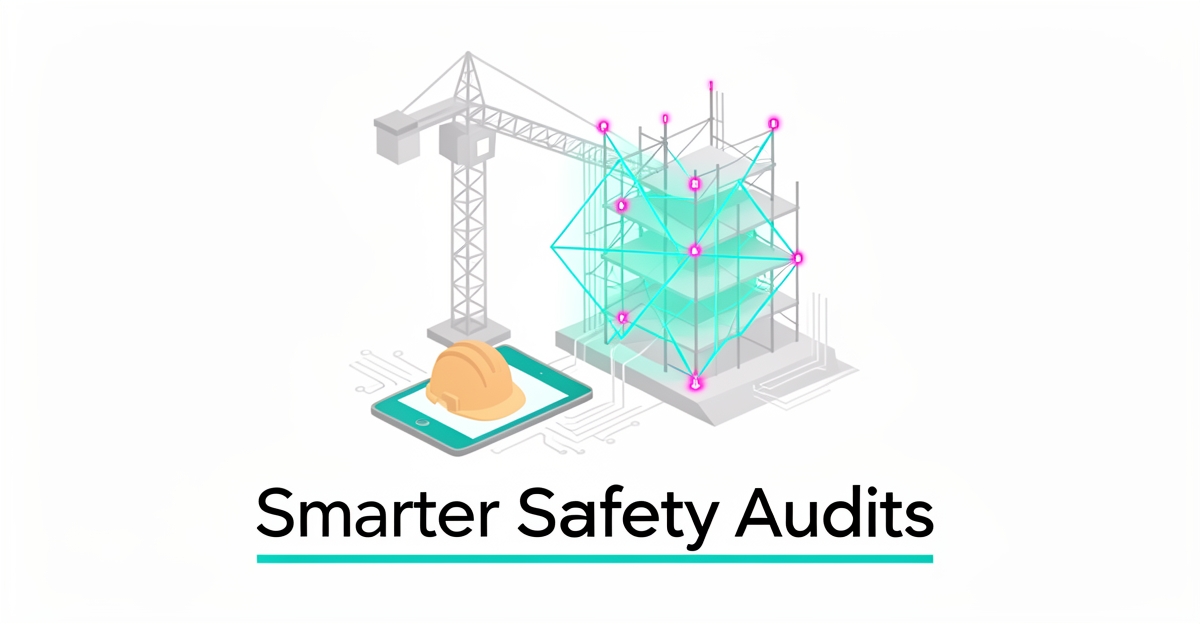
AI-Powered Site Safety Audits: How Construction Firms Can Improve Compliance Without Hiring More Staff
Key Facts
- As of late 2026, AI agents are no longer just answering questions, they are planning, calling tools, storing memory, and taking actions
- AI agents can analyze site photos, GPS data, and safety logs to conduct automated audits and flag risks in real time
- AIQ Labs has deployed 200+ multi-agent systems and runs 4 live SaaS products daily, applying that production experience to safety and compliance workflows
- AIQ Labs deploys custom AI agents that work alongside human supervisors as digital safety teammates, not replacements
- Human approval is required before AI agents take high-risk actions like flagging structural hazards or recommending work stoppage
Hire a team member that works 24/7 — for less than a part-time wage.
AI receptionists, SDRs, dispatchers and 99+ roles. Trained on your business, fully managed.
Not sure where to start? Ask our AI planner
The Hidden Cost of Manual Site Safety Audits in Construction
Every walk-through, checklist, and clipboard report on a construction site represents hours of skilled supervision diverted from the work that actually keeps projects moving. As compliance expectations tighten and skilled labor remains scarce, the manual safety audit has quietly become one of the most expensive recurring processes on the job site.
The core problem is arithmetic. A human supervisor can only be in one place at a time, and every audit pulls that person away from hazard prevention, crew coaching, and schedule-critical decisions. When firms can't hire more staff to absorb the load, safety reviews get compressed, rushed, or skipped, and each of those shortcuts compounds risk across the site.
Manual audits also create documentation gaps that become liabilities. Paper checklists and scattered photos rarely connect to GPS context or a unified safety log, which makes it difficult to prove compliance after the fact or spot recurring hazard patterns before they cause incidents. The tools to close that gap exist, the frameworks are proven, and the liability keeps growing, and construction firms feel that liability most acutely where their documentation is weakest.
The inefficiency shows up in several predictable ways:
- Supervisors spend hours on repetitive walk-throughs and paperwork instead of active hazard mitigation
- Audit findings live in disconnected formats, making trend analysis and post-incident review nearly impossible
- Compliance evidence is assembled manually after the fact, slowing response to regulators and insurers
- Rushed audits under staffing pressure lead to inconsistent hazard identification across sites
The technology shift is now well established: as of late 2026, AI agents are no longer just answering questions, they are planning, calling tools, storing memory, and taking actions. Applied to site safety, that means AI can analyze site photos, GPS data, and safety logs to conduct automated audits and flag risks in real time, continuously rather than on a weekly checklist cycle.
This is where firms like AIQ Labs focus their work, deploying custom AI agents that function as digital safety teammates working alongside human supervisors, not replacements for them. The AI handles the continuous monitoring, photo analysis, and log review that manual audits require, while supervisors retain judgment over consequential decisions. That human oversight matters: because safety decisions affect workers' health and fundamental rights, responsible AI practice calls for evaluating use case risks and implementing appropriate human review and safeguards.
The hidden cost of manual audits isn't just the hours, they're the incidents that rushed reviews miss and the compliance gaps that surface only after something goes wrong. AI-powered audits close that gap without adding headcount, which is precisely why construction firms are adopting them now.
How AI Agents Automate Site Safety Audits Using Photos, GPS, and Logs
Construction sites generate vast amounts of visual and operational data daily, yet much of it goes unused for proactive safety management. AI agents now transform this raw information, photos, GPS coordinates, and safety logs, into real-time hazard detection without adding headcount.
By analyzing site imagery, AI agents identify unsafe conditions such as missing guardrails, improper PPE use, or equipment positioned too close to edges. Geolocation data tags each finding to a precise zone, enabling supervisors to respond faster to risks in high-traffic or elevated areas. Simultaneously, safety logs are cross-referenced with observed conditions to uncover patterns, like recurring near-misses near specific machinery, that might otherwise go unnoticed.
This multi-agent approach mirrors proven systems in production environments where specialized agents collaborate: one processes visual input, another correlates location data, and a third evaluates compliance history. These systems reduce manual inspection time while increasing the frequency and consistency of safety checks.
- Process site photos to detect visual hazards like exposed wiring or unstable scaffolding
- Use GPS data to map risks to exact site zones for targeted intervention
- Analyze safety logs to identify trends and predict potential incident hotspots
- Flag deviations from safety protocols in real time for immediate supervisor review
- Generate audit-ready reports with timestamps, locations, and recommended actions
AIQ Labs deploys custom AI agents that work alongside human supervisors to enhance safety without requiring additional personnel. With 200+ multi-agent systems deployed and 4 live SaaS products the company runs daily, these are production-grade systems, not experiments. The capability allows construction firms to maintain rigorous safety oversight across multiple shifts and locations, turning passive data into active protection.
By automating the analysis of photos, GPS, and logs, AI-powered audits ensure compliance is continuous, not periodic, helping firms meet regulatory demands while focusing skilled staff on intervention, not inspection.
Deploying Guardrails and Human-in-the-Loop Oversight for Safe AI Audits
As AI agents evolve from passive responders to active decision-makers capable of planning, calling tools, and storing memory, construction firms face growing risks if safeguards aren't built into automated safety audit systems. Without proper controls, the very technology designed to improve compliance could introduce new liabilities. AIQ Labs addresses this by embedding responsible AI practices directly into site safety audit workflows, ensuring automation enhances, not compromises, safety outcomes.
Critical guardrails begin with strict input validation to prevent malicious or erroneous data from triggering unsafe AI actions, combined with tool permission controls that limit what systems can access or modify on a construction site. Policy and topic checks further ensure AI agents only engage with authorized safety protocols, while sensitive data protection safeguards worker privacy during photo and log analysis. Output validation and continuous monitoring create feedback loops that catch anomalies before they escalate, with detailed audit trails supporting compliance reviews.
For high-risk decisions, such as flagging a structural hazard or recommending work stoppage, human approval is required before any action is taken. This human-in-the-loop approach ensures AI remains a supportive tool rather than an autonomous authority, aligning with responsible AI requirements for consequential decisions impacting health and safety. By implementing these layered safeguards, construction firms can confidently scale AI-powered audits knowing they've mitigated the risks of unchecked automation, all while maintaining the efficiency gains that reduce reliance on additional staff.
Implementation Steps: From Pilot to Full-Scale AI Safety Automation
Construction firms can successfully transition from pilot projects to full-scale AI safety automation by following a structured, phased approach that aligns with their operational realities. The journey begins with a clear assessment of site-specific safety challenges and data availability, ensuring the solution targets actual pain points rather than assumed ones. This discovery phase involves reviewing incident reports, safety log patterns, and photo documentation to identify where automated analysis would yield the greatest compliance improvements, such as high-risk zones or repetitive inspection tasks that consume supervisor time.
AIQ Labs supports this transition through proven implementation phases: discovery, development, deployment, and optimization, each designed to minimize disruption while building internal confidence in the technology. Depending on scope, firms can start with a single managed AI Employee handling audit documentation and log review, commission an AI Workflow Build to rebuild the one safety workflow that costs the most, or move toward a full AI Operating System that connects safety, compliance, and operations in one layer the firm owns outright. During development, custom AI agents are trained on the firm's historical site photos, GPS logs, and safety checklists to recognize site-specific hazards, like missing guardrails, improper PPE use, or equipment proximity risks, using multimodal analysis that mimics how experienced supervisors visually assess sites. These agents are not deployed as replacements but as force multipliers, working alongside human teams to continuously monitor site conditions and flag anomalies in real time.
Deployment follows a controlled rollout, typically starting with a single high-traffic site or project phase to validate accuracy and refine alert thresholds before broader implementation. Throughout this process, guardrails are embedded to ensure responsible AI use, including input validation for image quality, tool permission controls limiting data access, and mandatory human review for high-risk recommendations, such as work stoppage orders. By prioritizing safety testing and human oversight from the outset, firms mitigate deployment risks while building trust in the system.
Optimization then focuses on scaling insights across multiple sites, refining agent performance based on supervisor feedback, and expanding the range of detectable hazards, such as environmental risks or workflow bottlenecks identified through longitudinal data analysis. As the system matures, firms often observe reduced time spent on manual audits, faster hazard identification, and improved consistency in safety reporting, all without increasing headcount. The result is a sustainable safety automation capability that evolves with the firm's needs, turning compliance from a periodic burden into a continuous, intelligent process. To begin, construction firms can complete the 2-minute Fit Check at https://aiqlabs.ai/apply and then book a free 30-minute strategy call with an AIQ Labs engineer to assess readiness and identify high-impact automation opportunities.
Still paying for 10+ subscriptions that don’t talk to each other?
We build custom AI systems you own outright. No vendor lock-in. Full control.
Not sure where to start? Ask our AI planner
Frequently Asked Questions
How does AI-powered site safety audit technology actually work on construction sites?
Will using AI for safety audits replace human supervisors on construction sites?
What safeguards prevent AI from making unsafe or incorrect safety recommendations?
Is there proof that AI-powered safety audits are being used successfully in the construction industry?
What are the risks of deploying AI safety tools without proper testing and oversight?
How can a construction firm start implementing AI-powered safety audits without disrupting current operations?
Turn Compliance from a Liability into a Competitive Edge
The era of relying solely on clipboards and manual walkthroughs is fading. As we've explored, AI-powered safety audits offer a proven path to continuous compliance by analyzing site photos, GPS data, and logs to catch hazards that human supervisors, pulled in too many directions, might miss. By deploying custom AI agents as digital teammates rather than replacements, construction firms can maintain rigorous oversight across multiple sites without adding headcount, provided they implement proper guardrails and human-in-the-loop oversight for high-stakes decisions. The technology is mature, the liability of inaction is growing, and the firms thriving today are those treating safety automation as a strategic asset rather than an administrative burden. If you're ready to transform your safety protocols from reactive paperwork into proactive protection, complete the Fit Check at https://aiqlabs.ai/apply to explore how custom AI agents can strengthen your compliance posture while keeping your skilled supervisors focused on the work that matters most.
Make AI your competitive advantage — not just another tool.
Strategy, implementation and ongoing optimization. One partner, end to end.
Not sure where to start? Ask our AI planner