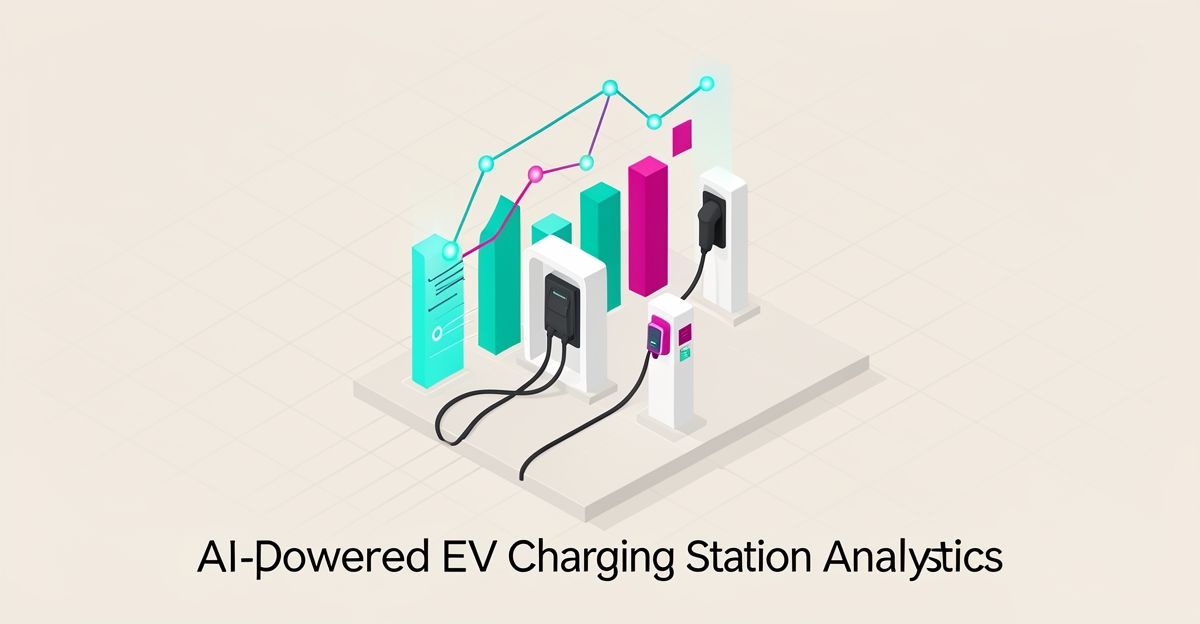
AI-Powered Station Utilization Analytics: How EV Networks Can Maximize Revenue
Key Facts
- AI adoption in the energy sector has been growing steadily, with many operators already using AI for real-time decision-making as of late 2026
- AI systems can process large datasets in real time to enable predictive maintenance and reduce downtime
- Growing electricity demand from AI infrastructure is putting more pressure on networks to extract value from every kilowatt delivered
- AI is increasingly automating complex decision-making and coordinating distributed energy sources in modern grids
- AI implementations carry real upfront costs, which modular, milestone-based builds help manage
- Efficient model design and renewable energy sourcing can reduce the environmental impact of AI systems
Hire a team member that works 24/7 — for less than a part-time wage.
AI receptionists, SDRs, dispatchers and 99+ roles. Trained on your business, fully managed.
Not sure where to start? Ask our AI planner
The Hidden Revenue Leak: Why EV Networks Struggle with Station Utilization
Idle chargers are a quiet profit drain. EV networks build capacity for peak demand, then watch utilization collapse during off-peak hours while queues form at the worst possible moments.
That imbalance is the hidden revenue leak. Stations sit empty when demand is low and become bottlenecks when demand spikes, creating lost sessions, frustrated drivers, and pricing that cannot react fast enough. Without real-time visibility, operators are forced to overbuild infrastructure instead of optimizing what they already own.
The competitive gap is widening. A growing share of energy companies, industry surveys in recent years have pointed to roughly 40 percent, already use AI in their operations, while others remain reliant on manual reporting and static schedules. That split creates a real-time decision-making advantage for early adopters in pricing, staffing, and asset placement.
AI changes the utilization curve by turning raw charging data into actionable patterns. AI systems can process large datasets in real time, supporting predictive maintenance that minimizes downtime and operational expense. Applied to EV networks, the same capability reveals peak usage times, location-based demand shifts, and dwell-time trends that drive smarter decisions.
Operators can use these insights to smooth demand without adding stalls. Revenue intelligence focuses on maximizing revenue per station, not just adding stations.
Common utilization pressures include:
- Peak-hour congestion that increases wait times and churn
- Off-peak idle time that leaves energy capacity unused
- Static pricing that fails to reflect local demand or grid conditions
- Staffing and maintenance scheduled on assumptions, not usage data
The result is a system that feels both overbuilt and underserved. Drivers encounter full sites at commute times and empty sites late at night, while operators absorb the cost of underused assets.
Infrastructure constraints make efficiency critical. Growing electricity demand from AI and data infrastructure is expected to add significant load to grids through the end of the decade, with some projections suggesting data center consumption on the scale of an entire country by 2030. For EV networks, that underscores the need to extract more value from every kilowatt delivered.
AIQ Labs approaches this as a revenue intelligence problem. By analyzing charging patterns, peak usage times, and location-based demand, AI analytics can optimize pricing, staffing, and station placement to increase revenue per station without increasing infrastructure costs. The focus is on actionable insights that close the gap between idle capacity and peak pressure.
Networks that act now can shift from reactive expansion to predictive optimization, turning utilization data into a durable competitive advantage.
How AI Analytics Transform Charging Patterns Into Revenue Intelligence
EV networks are sitting on a goldmine of usage data that most operators still read manually. AI-powered analytics turns that raw stream into revenue intelligence by spotting patterns humans miss and acting on them in real time.
AI systems can process large datasets in real time, supporting predictive maintenance that minimizes downtime and operational expense. For charging networks, that means continuous ingestion of session duration, power draw, dwell time, payment behavior, weather, local events and grid load to build a live picture of demand.
With that picture, operators move from fixed pricing to dynamic pricing strategies. Models identify peak usage times, location-based demand spikes and underutilized assets, then recommend price adjustments that balance utilization and revenue per station. Predictive demand forecasting also informs staffing decisions, so support teams are positioned where queues form, not where history says they should be.
Revenue intelligence also covers station placement and portfolio planning. By correlating charging patterns with traffic flows, commercial activity and renewable availability, analytics highlight high-ROI expansion sites without increasing infrastructure costs.
AIQ Labs deploys AI analytics that provide actionable insights to increase revenue per station without increasing infrastructure costs, helping operators translate usage signals into pricing, staffing and placement decisions. This kind of focused build is exactly what AI Workflow Builds are designed for: rebuild the one workflow that costs the most, at a fixed price, in phases.
The shift is already underway across energy. A meaningful share of energy companies, recent industry surveys have pointed to around 40 percent, already use AI in their operations, with adoption driven by the need to streamline operations and enhance decision-making. The same automation logic applies directly to EV networks.
Real-time analytics enables:
- Demand sensing and dynamic pricing that lifts utilization during off-peak windows
- Predictive maintenance alerts that reduce downtime and service costs
- Location intelligence for optimal station placement and capacity planning
- Staffing optimization aligned to predicted peak usage times
These capabilities rely on real-time data and advanced modeling to manage flows and reduce waste, a pattern already transforming energy grids. AI is increasingly automating complex decision-making and coordinating distributed sources for greater reliability.
Operators who treat charging data as a revenue signal, not just operational telemetry, gain a sustainable edge. AI turns patterns into pricing, maintenance into uptime, and location data into smarter growth.
Smart Grid Integration: The Infrastructure Advantage for EV Networks
Smart grid integration is transforming how EV networks manage energy flow and operational efficiency. By connecting AI-powered charging systems with intelligent grid infrastructure, operators can dynamically balance load, reduce waste, and make data-driven decisions about station placement and usage. This synergy allows for real-time adjustments based on grid capacity, renewable availability, and demand patterns, turning passive charging points into active participants in energy management.
Utilities are increasingly building "digital twins" of their systems, AI models that simulate grid behavior in real time, to improve resilience and responsiveness. These virtual replicas enable EV networks to anticipate congestion, optimize charging schedules, and avoid overloading local transformers. Updating utility incentives to reward flexibility over mere asset expansion can lower costs and accelerate grid modernization. AI-driven analytics support this shift by turning charging data into actionable insights for grid-aware operations.
Smart grid integration delivers measurable advantages for EV networks seeking to maximize uptime and minimize expenses. AI systems process large datasets in real time, enabling predictive maintenance that reduces downtime and operational costs. By aligning charging activity with grid conditions, operators can avoid peak pricing penalties and leverage off-peak renewable generation. This approach not only cuts energy waste but also extends the lifespan of both charging infrastructure and grid components.
- Real-time grid simulation through digital twins allows EV networks to preemptively adjust charging loads during periods of high stress.
- AI-enabled predictive maintenance minimizes unplanned station downtime by identifying potential failures before they occur.
- Dynamic load balancing ensures charging stations operate within local grid capacity, reducing the need for costly infrastructure upgrades.
The integration of AI with smart grid technology represents a foundational advantage for forward-thinking EV networks. Rather than treating charging stations as isolated assets, operators can now embed them within a responsive energy ecosystem, optimizing not just for utilization, but for grid health, cost efficiency, and long-term scalability. This infrastructure intelligence is becoming essential as EV adoption accelerates and energy systems evolve to support distributed, flexible demand.
From Data to Dollars: Implementing AI Analytics Without Infrastructure Overhaul
EV operators are sitting on a goldmine of utilization data they're not fully monetizing. AI-powered station analytics turn charging patterns, dwell times, and location demand into revenue actions without pouring concrete for new sites.
The energy sector is already moving. A growing share of energy companies already use AI in their operations, with a clear focus on automation that reduces manual overhead. For EV networks, that shift means moving from static pricing and fixed staffing to dynamic, data-driven decisions.
Implementation does not require a rip-and-replace infrastructure overhaul. AI systems can process large datasets in real time, supporting predictive maintenance that minimizes downtime and operational expense. That same real-time processing applies to demand forecasting, enabling operators to adjust pricing by hour, day, and location based on actual usage rather than assumptions.
A practical roadmap starts with data consolidation, not new hardware. Operators connect existing station telemetry, payment systems, and grid signals into a unified analytics layer. AI models then identify peak usage windows, underutilized assets, and pricing elasticity by site. Insights feed directly into pricing engines, workforce scheduling, and capital planning.
Key deployment steps include:
- Audit current data sources and station telemetry for completeness and quality
- Deploy lightweight analytics that run on existing cloud infrastructure to avoid capital spend
- Model charging patterns and peak usage times to optimize dynamic pricing and staffing
- Use demand heatmaps to guide placement of future expansion where utilization will be highest
Costs and complexity remain real considerations. AI-enabled automation requires meaningful upfront investment in technology implementation, and often benefits from specialized skills for effective management. These challenges are mitigated with modular, milestone-based builds that deliver value early and scale with maturity, see how AIQ Labs structures payments at https://aiqlabs.ai/pricing.
Environmental responsibility also matters. Growing electricity demand from AI infrastructure is expected to add significant grid load through the end of the decade, underscoring the need for efficient models and renewable energy sourcing. Techniques like model pruning and distillation help make AI models more efficient while still delivering actionable insights.
AIQ Labs approaches this as revenue intelligence and optimization, deploying AI analytics that provide actionable insights to increase revenue per station without increasing infrastructure costs. By leveraging existing assets more intelligently, operators can optimize pricing, staffing, and station placement through pattern recognition rather than expansion.
The result is higher revenue per station, lower idle time, and a clear data foundation for future growth, all built on the network you already own.
Building Your Revenue Intelligence System: Custom AI vs. Off-the-Shelf Solutions
When it comes to leveraging AI for station utilization analytics, EV network operators face a critical decision: invest in custom-built systems tailored to their unique network topology or adopt generic off-the-shelf platforms that promise quick deployment. While off-the-shelf solutions may seem appealing for their lower initial complexity, they often fail to account for the specific charging patterns, geographic distribution, and business models that define individual networks, limiting their ability to deliver truly actionable insights. Many operators who adopt generic tools report challenges aligning them with specific operational needs, resulting in underutilized analytics capabilities and missed revenue opportunities.
Custom AI development, by contrast, enables operators to build analytics infrastructure that reflects the nuances of their charging ecosystem, whether managing urban fast-charging hubs, rural destination stations, or mixed-use fleets. These systems can be designed to ingest data from existing charging management platforms, weather APIs, local event calendars, and even grid load forecasts to predict demand with precision. This level of integration allows for dynamic pricing adjustments, predictive staffing allocations, and strategic station expansion based on real utilization trends rather than assumptions. Crucially, custom-built systems provide true ownership: operators retain full control over their data, models, and code, eliminating vendor lock-in and the ongoing subscription dependencies that erode long-term ROI. AI systems that process large datasets in real time facilitate predictive maintenance that minimizes downtime and operational expense, capabilities that are only fully realizable when the analytics engine is architected specifically for the operator's infrastructure.
For EV networks aiming to scale insights across hundreds or thousands of stations, a custom approach ensures that the analytics platform evolves alongside the business. New station types, pricing strategies, or regional regulations can be incorporated without waiting for vendor roadmap updates or paying premium fees for feature access. This adaptability is particularly valuable in a market where utilization patterns shift rapidly due to EV adoption rates, incentive programs, and charging technology advancements. By owning their analytics stack, operators transform data from a cost center into a strategic asset, one that continuously optimizes revenue per station without requiring additional hardware investments. For networks ready to go beyond a single workflow and connect pricing, staffing, maintenance and planning in one layer, AIQ Labs' AI Operating Systems offer a phased path to a system you own outright. The result is not just better forecasting, but a resilient, self-sustaining intelligence system that grows in value as the network expands.
Still paying for 10+ subscriptions that don’t talk to each other?
We build custom AI systems you own outright. No vendor lock-in. Full control.
Not sure where to start? Ask our AI planner
Frequently Asked Questions
How does AI actually help EV charging stations make more money without building more stalls?
Is AI adoption already common in energy and EV networks, or is it still early?
Can we implement AI analytics without ripping out our existing chargers and hardware?
What's the biggest cost concern with AI for EV networks, and is it worth it?
How does smart grid integration change station utilization?
Should we buy an off-the-shelf analytics platform or build custom AI for our network?
Turning Idle Chargers Into Revenue Engines
EV networks already hold the data they need to boost revenue, idle time, peak surges, and pricing gaps are all visible in charging patterns. AI-powered analytics transforms this raw information into real-time decisions: dynamic pricing that fills off-peak lulls, staffing that matches actual demand, and placement strategies that target high-utilization sites without new concrete. As more energy companies adopt AI for smarter operations, the gap widens between those reacting to queues and those preventing them. The path forward starts with consolidating existing telemetry into a unified analytics layer, then modeling patterns to optimize what's already built. For operators ready to shift from overbuilding to optimizing, AIQ Labs offers a clear entry point: a free, no-obligation strategy call to map your biggest utilization bottleneck and identify where AI can drive revenue per station, without infrastructure overhaul. Start with the 2-minute Fit Check at https://aiqlabs.ai/apply.
Make AI your competitive advantage — not just another tool.
Strategy, implementation and ongoing optimization. One partner, end to end.
Not sure where to start? Ask our AI planner