AI-Powered Supplier Communication: How Distributors Can Stay Ahead of Delivery Delays
Key Facts
- AI supplier platforms analyze historical delivery patterns, real-time tracking, and external factors like weather or port congestion to forecast disruptions before they hit operations
- Vendor case studies in supplier collaboration report meaningful reductions in out-of-stock issues and revenue gains within the first months of implementation, though figures vary by operation
- A food distributor using Logiwa analytics reported a 14% reduction in warehouse fulfillment time per case study
- AI-powered supplier communication enables proactive inventory planning and reduced downtime by predicting delivery risks
- Distributors using AI tools for supplier collaboration typically report stronger supplier relationships and improved supply chain resilience
- AIQ Labs has deployed 200+ multi-agent systems, including supplier monitoring and alerting workflows for distribution businesses
Hire a team member that works 24/7 — for less than a part-time wage.
AI receptionists, SDRs, dispatchers and 99+ roles. Trained on your business, fully managed.
Not sure where to start? Ask our AI planner
The Delivery Delay Problem Distributors Can't Ignore
Late shipments don't just push back a PO — they stop trucks, empty shelves, and erode customer trust that distributors spend years building. When supplier updates arrive by email or phone, the delay is already in motion.
Distributors lose revenue every time a promised delivery misses its window. Out-of-stock situations force emergency buys, expedited freight, and lost sales to competitors. Vendor-reported results from AI supplier communication platforms suggest meaningful reductions in out-of-stock incidents and revenue gains within the first months of adoption, though exact figures vary by operation and should be validated against your own baseline.
Reactive communication magnifies the damage. Teams spend hours chasing status updates, reconciling spreadsheets, and manually flagging at-risk SKUs. That manual tracking is no longer scalable as supplier networks grow and order volumes fluctuate. Fulfillment slows, inventory buffers swell, and cash gets tied up in safety stock.
The cost shows up across operations:
- Downtime at warehouses and branches when inbound material is late
- Stockouts that trigger lost orders and customer churn
- Expedited shipping and overtime to recover missed commitments
- Manual follow-up that pulls staff away from proactive planning
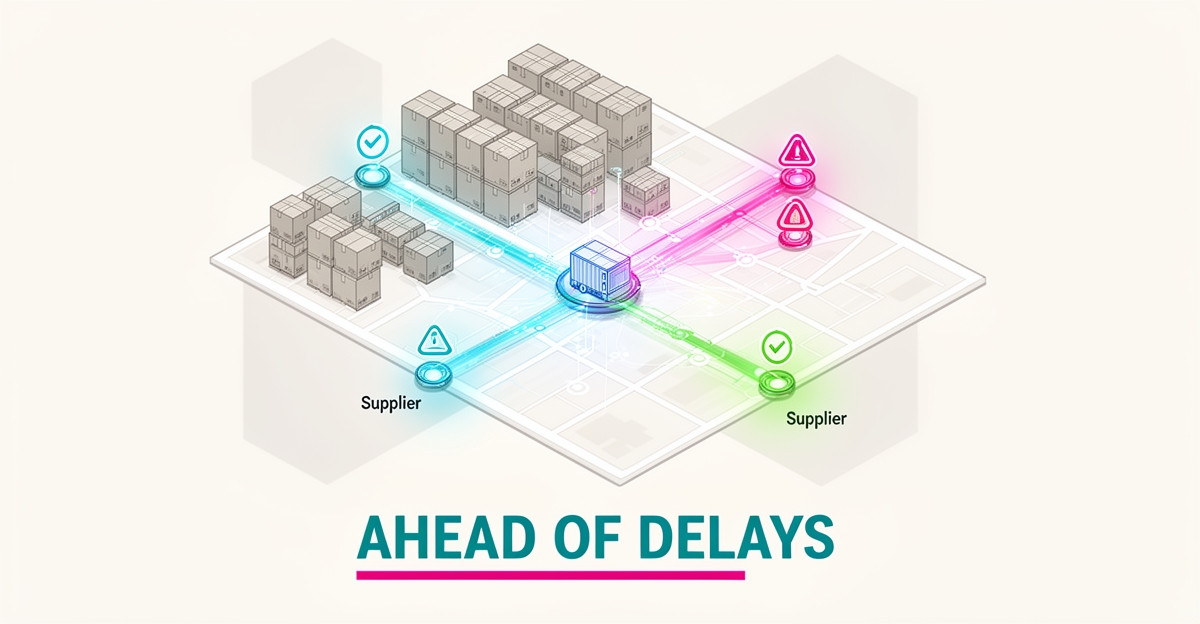
AI-powered supplier communication changes the dynamic from chase to prevention. By monitoring supplier performance and predicting delivery risks, distributors can alert teams before a delay becomes a stockout. This enables proactive inventory planning and reduced downtime.
The impact can be measurable. A food distributor using Logiwa analytics achieved a 14% reduction in warehouse fulfillment time, freeing capacity and improving service. Broader supplier collaboration platforms report strong returns in vendor case studies, though the numbers that matter are the ones you can verify against your own cost of stockouts and expedites.
Manual tracking also limits visibility. Without automated alerts, risk signals hide in fragmented emails, EDI files, and portal updates. Proactive alerts replace that lag with real-time risk scores and recommended actions.
AIQ Labs builds these systems through AI Workflow Builds — a fixed-price engagement that rebuilds the one workflow costing you the most, such as supplier status chasing and delay alerting, delivered in phases you approve along the way.
When distributors shift from reactive updates to predictive visibility, they protect revenue, reduce expedite costs, and give sales teams confidence to promise delivery dates they can keep.
How AI Monitors Performance and Predicts Delivery Risk
AI-powered supplier communication transforms how distributors anticipate and respond to delivery risks by continuously analyzing performance data and triggering early warnings. Advanced platforms use historical delivery patterns, real-time tracking, and external factors like weather or port congestion to forecast potential disruptions before they impact operations. This shift from reactive to proactive management allows distributors to adjust inventory levels, reroute shipments, or engage alternate suppliers in time to prevent stockouts and maintain service levels. AIQ Labs builds systems that analyze past delivery data and send automated alerts, enabling proactive inventory planning and reduced downtime.
Leading tools demonstrate real impact when applied to supplier collaboration. Vendor case studies from platforms like Leverage AI and Ivalua report revenue gains within the first months of implementation, significant reductions in out-of-stock issues, and strong multi-year ROI — figures worth reviewing, but always against your own baseline. The consistent theme across these reports is the direct link between predictive monitoring and financial performance: when you see a delay coming, you can act before it costs you a customer.
Predictive capabilities extend beyond simple delay forecasting to include risk scoring, automated alerts, and integrated workflows that trigger contingency plans. Systems like Blue Yonder and SAP IBP combine predictive ETAs with demand sensing to align supply with real-time market needs, while FourKites provides end-to-end visibility that feeds into AI models for more accurate risk assessments. When integrated with distributor operations, these tools support dynamic safety stock adjustments, automated purchase order revisions, and synchronized communication with logistics partners. The result is a supply chain that anticipates disruption, responds in real time, and maintains continuity even amid volatile conditions. For distributors seeking to stay ahead of delivery delays, AI-powered monitoring isn't just an upgrade — it's becoming essential for competitive operations.
From Alerts to Action: Proactive Inventory Planning
Predictive alerts only create value when they trigger immediate inventory decisions. For distributors, the gap between a risk signal and a replenishment action is where downtime and lost sales accumulate.
When AI monitors supplier performance and flags delivery risks, the signal can automatically flow into demand planning and fulfillment workflows. This shifts operations from reactive firefighting to proactive positioning of stock before disruptions hit.
Wholesale distributors can benefit from AI tools that streamline inventory, tighten routes, and make demand planning easier. NetSuite with NetSuite AI, Zebra Prescriptive Analytics, Inventory Planner by Sage, Route4Me, ChatGPT Code Interpreter, Aera Technology, Microsoft Power BI with AI Insights, Logiwa WMS + AI Module, and Lily AI are some of the top AI tools for wholesale distributors.
NetSuite AI connects supplier risk signals to financial and inventory modules, enabling safety stock adjustments in real time. Logiwa WMS + AI Module applies analytics to warehouse execution, with a food distributor achieving a 14% reduction in warehouse fulfillment time using Logiwa analytics. Route4Me tightens last-mile routes as inventory availability changes, reducing delivery windows when stock is constrained.
Proactive inventory planning driven by supplier alerts typically includes:
- Dynamic safety stock increases for SKUs tied to at-risk suppliers
- Alternate supplier activation and expedited PO generation
- Warehouse pick path and labor reallocation based on revised fulfillment forecasts
- Customer promise date updates pushed automatically to sales and support teams
The impact compounds when alerts are continuous rather than periodic. Rather than relying on vendor-reported averages, the strongest signal comes from your own numbers: track on-time delivery rates, stockout frequency, and expedite spend before and after automation. Most distributors see the first wins in the workflows that were bleeding the most hours — and that's exactly where AIQ Labs starts.
AIQ Labs develops systems that analyze past delivery data and send automated alerts, enabling distributors to stay ahead of delivery delays. For distributors who want supplier monitoring connected to purchasing, warehouse, and customer communication in one layer, AI Operating Systems builds that connected foundation in phases — and you own it outright.
With predictive signals embedded in planning, distributors reduce stockouts, protect service levels, and avoid costly emergency freight. The result is steadier cash flow, happier customers, and fewer manual interventions across procurement and warehouse teams.
Implementing AI Supplier Communication Without Disruption
Implementing AI supplier communication doesn't have to disrupt operations to deliver results. Distributors can adopt AI tools strategically by first assessing pain points like frequent stockouts or manual tracking efforts. Vendor case studies report revenue gains within the first months of implementing AI supplier platforms, which suggests early wins are possible — but the honest way to know is to measure your own baseline first. Choosing the right approach means prioritizing capabilities like predictive analytics and ERP integration, and being clear about which workflow costs you the most today.
Integration with existing systems like ERP or WMS requires clean data and compatible APIs, but challenges like poor data quality or supplier resistance can slow progress. A phased rollout — starting with one workflow or department — helps teams adapt without overwhelm. That's exactly how AIQ Labs works: the Build in Milestones model lets you approve and pay per phase while retaining everything built so far. No open-ended retainers, no surprise invoices.
Supplier adoption hinges on clear communication and training; modern platforms that prioritize usability typically onboard suppliers far faster than legacy systems. Change management succeeds when teams see tangible benefits, like the 14% reduction in warehouse fulfillment time a food distributor achieved using Logiwa analytics. Finally, cybersecurity must be addressed through access controls and audit trails, especially when AI tools handle sensitive supplier and inventory data. By addressing these factors step by step, distributors can implement AI supplier communication smoothly — turning potential delays into opportunities for proactive planning and stronger supplier relationships.
Still paying for 10+ subscriptions that don’t talk to each other?
We build custom AI systems you own outright. No vendor lock-in. Full control.
Not sure where to start? Ask our AI planner
Frequently Asked Questions
How does AI-powered supplier communication actually prevent delivery delays?
What kind of ROI can distributors expect from AI supplier tools?
Will implementing AI supplier communication disrupt our current operations?
How do we get our suppliers to actually adopt these AI tools?
Can AI really help us reduce inventory costs and improve warehouse efficiency?
What are the biggest challenges when switching from manual tracking to AI-powered supplier communication?
Turn Delivery Delays into Competitive Advantage
AI-powered supplier communication shifts distributors from reacting to delays to preventing them — protecting revenue, reducing expedited costs, and maintaining service levels through predictive alerts and proactive inventory planning. Every week of manual chasing is a week your competitors spend getting ahead of the same disruptions. For distributors ready to move beyond manual tracking, the next step is simple: take the 2-minute Fit Check to see if AIQ Labs' approach fits your operation, then book a free 30-minute strategy call to map your biggest bottlenecks. No obligation, no pressure — just clarity on where AI can deliver your fastest wins before the next delay does damage.
Make AI your competitive advantage — not just another tool.
Strategy, implementation and ongoing optimization. One partner, end to end.
Not sure where to start? Ask our AI planner