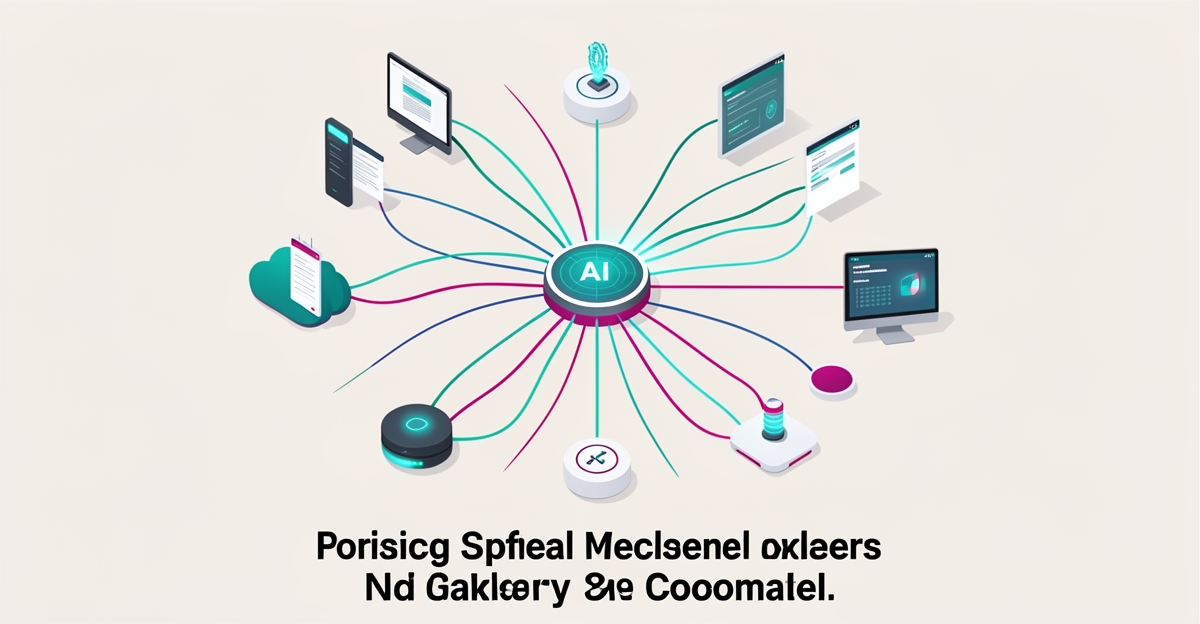
AI-Powered System Integration: How to Connect Smart Devices Without Wasting Time
Key Facts
- Most organizations still struggle to integrate AI with legacy systems, compatibility, not capability, is the usual blocker
- AI can handle repetitive coordination tasks in seconds, multiplying team capacity without adding headcount
- AI solutions are only as good as the data they use according to Microsoft Power Apps
- As of late 2026, AI agents are widely deployed across enterprises, making integration quality a competitive differentiator
- Owned integration infrastructure avoids vendor lock-in and subscription creep
Hire a team member that works 24/7 — for less than a part-time wage.
AI receptionists, SDRs, dispatchers and 99+ roles. Trained on your business, fully managed.
Not sure where to start? Ask our AI planner
The Hidden Cost of Disconnected Smart Devices
Smart devices promise convenience, but when they can't communicate, they create more work than they save. Instead of seamless automation, users face fragmented systems that require constant manual intervention, turning lights on via one app while adjusting the thermostat through another, or checking security cameras separately from door locks. This disconnect isn't just annoying; it actively undermines the core value proposition of smart technology.
The same pattern shows up in businesses: integrating AI with legacy systems remains one of the most common sticking points organizations report, and it mirrors the frustration of connecting devices from different brands or ecosystems. Without a unified integration layer, each device operates in isolation, forcing users to become the middleware, remembering which app controls what, creating custom routines that often fail, and spending valuable time troubleshooting compatibility issues that should be handled automatically.
These disconnected systems generate hidden costs that extend far beyond inconvenience. Manual workarounds eat up time that could be spent on meaningful work, while missed automation opportunities mean devices never reach their full potential. A motion sensor might trigger a light, but without integration with the security system, it can't automatically lock doors or alert monitoring services. Similarly, a smart thermostat might adjust temperature based on occupancy, but without connecting to window sensors or weather forecasts, it wastes energy heating or cooling empty rooms.
The inefficiency compounds as more devices enter the picture. Each new gadget adds another layer of complexity, requiring users to learn new interfaces, manage additional accounts, and debug yet another point of failure. What begins as a quest for simplicity often ends with a cabinet full of remotes, a phone crowded with apps, and a growing sense that the technology is working against, not for, its users. To start solving these integration challenges, businesses can begin with a free Fit Check to map their specific bottlenecks and identify high-ROI automation opportunities.
How AI Acts as a Universal Translator Between Systems
Smart devices speak different languages, Zigbee, Z-Wave, Wi-Fi, Bluetooth, and proprietary protocols, creating silos that frustrate users and drain productivity. AI-powered integration layers solve this by automatically mapping device types, translating communication protocols in real time, and enabling seamless interaction across platforms. This eliminates the manual configuration and custom scripting that traditionally consumed hours of engineering time. As a result, businesses can connect heterogeneous systems faster and with fewer errors, turning fragmented ecosystems into cohesive, responsive networks.
These AI-driven translators go beyond simple protocol conversion by understanding device semantics, recognizing that a "motion sensor" from one brand functions identically to another, regardless of underlying technology. By abstracting away low-level differences, AI enables consistent control logic and data interpretation across diverse hardware. This capability is especially valuable in environments where legacy systems must coexist with modern IoT devices, reducing integration complexity without requiring costly rip-and-replace strategies. The outcome is a unified operational view where decisions are based on accurate, real-time data from all connected sources.
AI integration also reduces the burden of repetitive coordination tasks, handling them in seconds and multiplying team capacity without adding headcount. AI tools analyze large volumes of integrated data faster than humans, surfacing insights that enable faster, smarter decision-making. For organizations leveraging AIQ Labs' custom integration layers, this means deploying intelligent bridges between systems that not only communicate but collaborate, turning connectivity into a strategic advantage. To explore how AI can unify your device ecosystem, start with the free Fit Check to assess your integration opportunities.
Three Approaches to AI Integration (And When to Use Each)
Choosing the right AI integration approach can mean the difference between a seamless connected ecosystem and a costly patchwork of incompatible devices. With AI agents now widely deployed or in testing across enterprises as of late 2026, understanding your options isn't just helpful, it's essential for staying competitive.
Pre-built AI services from cloud platforms like Microsoft Azure offer the fastest path to implementation. These ready-made solutions require minimal development effort, making them ideal when you need to connect standard devices quickly. However, their limited customization options mean they may not address specific business needs or unique device protocols.
Custom AI models deliver greater precision and competitive differentiation by training on your proprietary data. This approach excels when you're dealing with specialized equipment or need to maintain strict control over device behavior. The tradeoff? Custom models require more time and expertise, which may not be feasible for smaller operations or rapid deployment scenarios.
Third-party AI APIs strike a balance between customization and development speed. By connecting to specialized AI tools through standardized APIs, you gain flexibility without building everything from scratch. Keep in mind that this approach may involve subscription-based pricing and potential scalability constraints as your device network grows.
Your choice depends on four critical factors:
- Timeline: Pre-built services deploy fastest, custom models take longest
- Budget: Third-party APIs often use subscription pricing, while custom builds require upfront investment
- Complexity: Standard devices work well with pre-built options; unique systems may need custom models
- Scale: Consider whether the solution can grow with your device ecosystem
Data quality matters regardless of which approach you choose. As Microsoft Power Apps research emphasizes, AI solutions are only as good as the data they use. Poor device data will undermine even the most sophisticated integration strategy.
The technical challenges are real: compatibility issues, security requirements, and performance expectations all demand careful consideration. AIQ Labs specializes in building custom AI integration layers that ensure smooth communication between devices, sensors, and software, particularly valuable when off-the-shelf solutions fall short. For a single high-cost workflow, a fixed-price workflow build is often the fastest way to prove value.
The right approach aligns with your specific integration needs, technical resources, and growth trajectory. Start by honestly assessing your device ecosystem's complexity and your team's capabilities.
The 5-Step Implementation Framework for Seamless Integration
Most teams don't struggle with AI because the technology fails, they struggle because integration lacks a repeatable process. A practical framework turns scattered experiments into a connected system that actually scales.
Start by identifying the specific business problems you want to solve rather than chasing capabilities. Many organizations deploying AI agents skip this diagnostic step and end up automating the wrong workflows. Map each candidate process to measurable friction: hours lost, error rates, or customer complaints.
Next, choose tools that match your architecture instead of forcing your architecture to match the tools. The Microsoft Power Apps team emphasizes that data quality and accessibility determine whether any AI solution delivers value, garbage in, garbage out still applies. Evaluate pre-built services, custom models, and third-party APIs against your customization needs and legacy constraints.
Integration is where most projects stall. AIQ Labs approaches this by building a custom integration layer that maps device types and protocols automatically, eliminating the manual translation work that holds teams back. Connect AI models to your CRM, accounting, and operations tools through standardized APIs with proper error handling and fallback paths.
Monitor performance against the metrics you defined in step one, not vanity metrics like model accuracy, but business outcomes like processing time reduction or first-contact resolution. Set up automated alerts for drift, latency spikes, or data quality degradation before they impact users.
- Quarterly review cycles with stakeholder feedback loops
- A/B testing framework for prompt and workflow variations
- Documented rollback procedures for every production change
- Continuous data pipeline validation and enrichment
Continuous improvement means treating integration as a product, not a project. The organizations pulling ahead aren't the ones with the fanciest models, they're the ones with the discipline to iterate systematically. When multiple workflows need to connect into one coherent system, an AI operating system built in phases, and owned outright, keeps everything on a single operating layer.
Why Custom AI Integration Beats Off-the-Shelf Solutions
Businesses often turn to off-the-shelf connectors when trying to unify their smart devices and software systems, only to find these generic solutions fall short in real-world operations. Pre-built AI services promise quick deployment but frequently lack the flexibility to handle unique device ecosystems or complex workflow requirements, leading to fragmented control and ongoing maintenance headaches. Integrating AI with legacy systems remains a persistent struggle across enterprises, highlighting the limitations of one-size-fits-all approaches that force businesses to adapt their processes to the technology rather than the other way around.
Custom AI integration solves this by building a tailored bridge between disparate platforms, designed specifically for a business's existing tools, data flows, and operational goals. Unlike third-party APIs that may require costly subscriptions or offer limited scalability, a custom layer ensures seamless communication without vendor lock-in or dependency on external roadmaps. This approach delivers true ownership, clients retain full control over their AI assets, allowing them to modify, expand, or optimize the system as their needs evolve. AIQ Labs has deployed 200+ multi-agent systems and runs four live SaaS products daily, so these integrations are built and proven in production, not just in demos.
The advantages of a bespoke integration layer extend beyond technical compatibility to measurable operational gains. By automating data synchronization and workflow orchestration across devices, businesses eliminate manual intervention and reduce errors that slow down teams. AI can handle repetitive tasks in seconds, multiplying team capacity without adding headcount, while also improving consistency and quality in customer interactions. For organizations managing diverse smart devices, from sensors and actuators to HVAC and lighting systems, this means creating a unified control environment where actions trigger reliably across platforms, responding in real time to changing conditions without human oversight.
Ultimately, choosing custom integration isn't just about avoiding the pitfalls of generic connectors; it's about building a foundation for long-term agility and innovation. Businesses that own their AI infrastructure can adapt quickly to new devices, scale integrations as they grow, and innovate without waiting for vendor updates or facing unexpected cost increases. As noted in industry guidance, embedding AI into workflows in a way that scales with business needs is critical for sustained value, a principle AIQ Labs applies in every custom build, ensuring the system grows alongside the organization it serves.
Still paying for 10+ subscriptions that don’t talk to each other?
We build custom AI systems you own outright. No vendor lock-in. Full control.
Not sure where to start? Ask our AI planner
Frequently Asked Questions
Why do my smart devices keep working against me instead of together?
Can AI really act as a universal translator for different smart device protocols?
What's the fastest way to connect my devices, and what am I giving up?
Is custom AI integration worth it compared to off-the-shelf connectors?
How do I know if my data is good enough for AI integration?
What's the first step to stop wasting time on manual workarounds?
From Fragmented Devices to a Unified Operating System
Connecting smart devices without a unified layer creates more work than it saves, turning promised automation into manual troubleshooting and missed opportunities. AI acts as a universal translator that maps device types, converts protocols in real time, and creates consistent control logic across legacy and modern systems, freeing teams from custom scripting and compatibility firefighting. The right integration approach depends on timeline, budget, complexity and scale, but success always starts with diagnosing the real business friction first, choosing tools that fit your architecture, and treating integration as a product with monitoring and continuous improvement. For businesses ready to move beyond patchwork connectors, a custom AI integration layer delivers owned infrastructure that communicates and collaborates intelligently across devices, sensors and software. Start the 2-minute Fit Check for a free 30-minute strategy call to map your bottlenecks and identify high-ROI automation opportunities. If there isn't a clear win, we'll tell you. A structured approach now prevents costly fragmentation later.
Make AI your competitive advantage — not just another tool.
Strategy, implementation and ongoing optimization. One partner, end to end.
Not sure where to start? Ask our AI planner