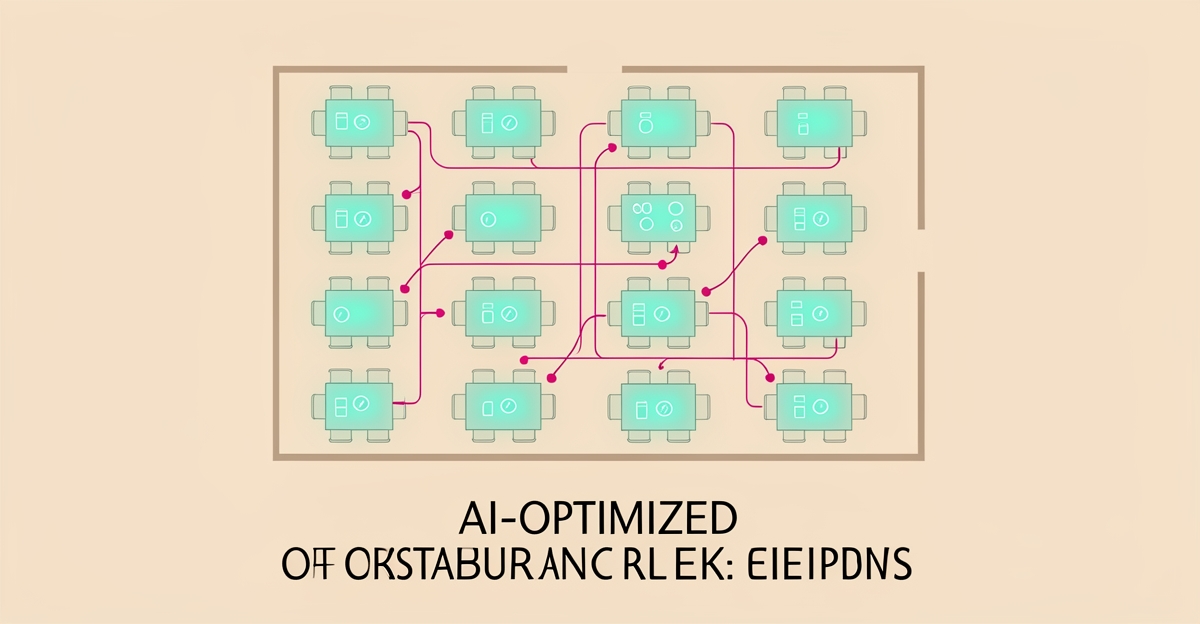
AI-Powered Table Management: How Indian Restaurants Can Optimize Seating and Service Flow
Key Facts
- Industry analyses consistently find that a large share of diners, often cited around 40% or more, won't visit if they expect to wait over 30 minutes.
- AI-powered table management is typically reported to cut customer wait times by roughly 20-30%.
- Table turnover rates commonly rise 15-25% with AI-assisted seating and waitlist management.
- Restaurants deploying AI table optimization often report a 10-20% boost in overall revenue.
- AI forecasting can predict customer volume within a small margin of error by analyzing sales history, weather, and local events.
- AI-driven scheduling measurably reduces over-scheduling and improves roster accuracy.
- AI-powered POS integration can save Indian restaurants tens of thousands of rupees annually in transaction fees, depending on volume.
Hire a team member that works 24/7 — for less than a part-time wage.
AI receptionists, SDRs, dispatchers and 99+ roles. Trained on your business, fully managed.
Not sure where to start? Ask our AI planner
The Hidden Cost of Poor Table Management in Indian Restaurants
Every empty chair during peak hours represents revenue walking out the door. Indian restaurants lose significant ground when wait times stretch beyond diner tolerance, and industry analyses consistently show how costly that threshold is.
Research across the hospitality sector suggests that a large share of diners, often cited around 40% or more, won't visit if they expect to wait over 30 minutes for a table. That reframes empty tables not as a scheduling quirk but as a direct hit to the top line. When guests abandon the waitlist, they take their lifetime value with them, often to competitors who manage flow more precisely.
- Walkouts during peak hours can erase a meaningful slice of potential revenue
- Inaccurate wait quotes drive guest abandonment before seating
- Staff burnout accelerates when floor teams compensate for poor planning
- Repeat visit probability drops without systematic loyalty integration
The operational drag compounds quickly. Industry findings on AI-powered table management typically report a 15–25% increase in table turnover rates and a 20–30% reduction in customer wait times. Those gains translate directly into more covers per service without adding seats or staff. AI-driven scheduling also measurably reduces over-scheduling and improves roster accuracy, freeing payroll budget for revenue-generating hours.
AIQ Labs works with hospitality operators through AI Workflow Builds that monitor real-time floor data, predict party duration by group size and occasion, and dynamically adjust seating plans, turning the host stand from a bottleneck into a revenue lever. The same infrastructure that powers predictive staffing and automated waitlist quotes also feeds loyalty signals back into the CRM, closing the loop between first visit and repeat business.
How AI Predicts and Optimizes Table Turnover in Real Time
Indian restaurants face constant pressure to seat guests efficiently while maintaining service quality during peak hours. AI-powered table management systems predict customer volume with high accuracy by analyzing historical data, weather patterns, and local events, enabling precise staffing and seating decisions. This level of forecasting precision allows restaurants to anticipate demand surges before they happen, reducing the guesswork that often leads to over- or under-staffing.
These systems continuously monitor table status in real time, recalculating wait times as parties are seated, served, and checked out. By tracking each table's lifecycle, from reservation to departure, AI ensures accurate wait-time quotes and minimizes guest abandonment, especially critical given how many diners walk away when quoted a long wait. The result is a smoother flow of guests through the dining room, directly impacting revenue and satisfaction.
AIQ Labs integrates intelligent table management into broader restaurant automation workflows, aligning seating predictions with kitchen prep and staff scheduling for end-to-end operational harmony. Deployed well, these systems typically deliver a 15-25% increase in table turnover rates and a 20-30% reduction in customer wait times, translating to measurable revenue growth without expanding physical space. The technology doesn't just react to demand, it anticipates and shapes it.
- Analyzes historical sales, weather, and local events for demand forecasting
- Updates wait times dynamically as table status changes
- Reduces over-scheduling through accurate staffing predictions
- Improves scheduling accuracy using real-time data
- Syncs with POS and reservation systems for seamless operations
By turning table turnover into a predictable, optimizable process, AI empowers Indian restaurants to serve more guests with the same resources, transforming seating from a bottleneck into a competitive advantage. This shift not only boosts immediate throughput but also builds long-term loyalty through consistently smooth dining experiences.
Integrating AI with Existing Restaurant Systems for Seamless Operations
The true power of AI in table management is unlocked when it communicates flawlessly with your existing technology. Successful integration with Point of Sale (POS) and reservation platforms creates a unified system, eliminating data silos and automating workflows.
This connectivity directly combats manual errors. When an AI system syncs with your POS, orders flow directly to the kitchen display, and payments are processed automatically. This removes transcription mistakes and speeds up service. Comparisons of restaurant POS systems in the Indian market suggest AI-powered integration can save restaurants tens of thousands of rupees annually in transaction fees, depending on transaction volume.
Integration also improves staff scheduling. AI forecasting tools analyze historical data and external factors to predict demand with high precision. This allows managers to create optimal staff rosters, reducing both over-scheduling and under-staffing. Industry research on AI in restaurants shows this leads to measurably better scheduling accuracy and a significant reduction in over-scheduling.
For a truly seamless operation, AI must connect with several core systems. This ensures data flows freely, providing a single source of truth for your entire front-of-house operation.
- POS Systems: Automates order-taking and payment processing, reducing errors and speeding up table turnover.
- Reservation Platforms: Syncs with booking tools to manage reservations and provide accurate wait-time quotes.
- Kitchen Display Systems (KDS): Sends orders directly to the kitchen, eliminating manual ticket entry and improving order accuracy.
- Staff Scheduling Software: Uses AI-driven demand forecasts to optimize staff allocation and reduce labor costs.
However, implementation is not without its challenges. A primary pitfall is overlooking the complexity of integrating with legacy systems. Ensuring all systems communicate effectively is crucial for success. Staff training is equally vital to ensure your team can leverage the new tools effectively.
This is where a strategic partner becomes invaluable. AIQ Labs builds custom AI solutions that integrate deeply with your existing infrastructure, whether as a single workflow rebuild or a full AI Operating System that connects your entire front-of-house into one owned, connected layer.
Actionable Steps for Indian Restaurants to Deploy AI Table Management
Indian restaurants lose revenue every time a party walks away from the door. AI-powered table management changes that by turning seating and service flow into a predictable, data-driven operation.
Start with a workflow audit before any technology is added. Map reservation intake, walk-in handling, table assignment, kitchen tickets, and payment close. Identify where wait-time quotes drift, where tables sit empty, and where staff are over-scheduled. This baseline makes ROI measurable from day one.
Demand forecasting sets the foundation for staffing and prep. AI forecasting tools analyze past sales data alongside weather, local events, and seasonal patterns to predict when guests will arrive. Recent restaurant research shows AI models can predict customer volume within a small margin of error, enabling precise crew planning and food prep.
Phase one is a low-risk pilot focused on waitlist and table turnover. Deploy an AI agent to monitor real-time table status, recalculate quoted waits as parties are seated and checks close, and suggest optimal table combinations for different party sizes. Industry analyses typically report 20-30% reductions in customer wait times and 15-25% increases in table turnover rates from this approach.
Integration comes next. AI solutions must connect with existing POS and reservation platforms to provide seamless service and accurate wait-time quotes. When order-taking and payment are automated, tickets flow directly to kitchen displays and secure over-the-phone payments close transactions immediately. Indian market comparisons point to meaningful annual savings in transaction fees with AI-powered POS integration.
A phased rollout aligned with AIQ Labs' Start Monthly and Build in Milestones payment models minimizes risk and maximizes ROI:
- Assess current workflows and data sources for reservations, POS, and table status
- Pilot AI waitlist and table management for one service period or outlet
- Integrate automated order-taking and payment automation with existing systems
- Expand to demand forecasting and dynamic staffing recommendations
- Optimize with loyalty and repeat-visit triggers based on turnover data
Staff training and change management run in parallel with each phase. Teams learn to trust AI-suggested wait times and table assignments, while the system learns restaurant-specific edge cases. AIQ Labs deploys intelligent agents that monitor real-time data and suggest service adjustments to reduce wait times and increase table turnover.
The business impact compounds quickly. Published industry findings link these improvements to a 10-20% boost in overall revenue, and long waits remain one of the top reasons diners walk. With measurable gains early, restaurants can scale the system across locations with confidence.
Start with one workflow, prove the win, then scale. Take the 2-minute Fit Check to see where table management AI fits your operation.
Still paying for 10+ subscriptions that don’t talk to each other?
We build custom AI systems you own outright. No vendor lock-in. Full control.
Not sure where to start? Ask our AI planner
Frequently Asked Questions
Will AI table management actually cut wait times in a busy Indian restaurant?
How accurate is AI demand forecasting for staffing and prep?
Can AI help us avoid over-staffing during slow periods?
Will integrating AI with our POS and reservation system save money?
What if we already have legacy POS or a reservation platform set up?
How do we start without committing to a full rollout?
Turn Empty Tables into Your Next Revenue Stream
AI-powered table management isn't just about reducing wait times, it's about reclaiming lost revenue, improving guest satisfaction, and turning operational chaos into a predictable, scalable advantage. Indian restaurants using these systems typically see 15-25% higher table turnover, 20-30% shorter waits, and better scheduling accuracy, all without adding seats or staff. By syncing AI with POS, reservation platforms, and kitchen displays, restaurants eliminate manual errors, cut transaction costs, and build loyalty through consistently smooth experiences. The path forward starts with auditing your current workflow, piloting AI-driven waitlist and table management for one service period, then expanding based on measurable results. When you're ready to see how this applies to your restaurant, take AIQ Labs' 2-minute Fit Check and then book a free 30-minute strategy call to map your biggest bottlenecks and identify high-ROI automation opportunities, no sales pitch, just clarity on your AI opportunity.
Make AI your competitive advantage — not just another tool.
Strategy, implementation and ongoing optimization. One partner, end to end.
Not sure where to start? Ask our AI planner