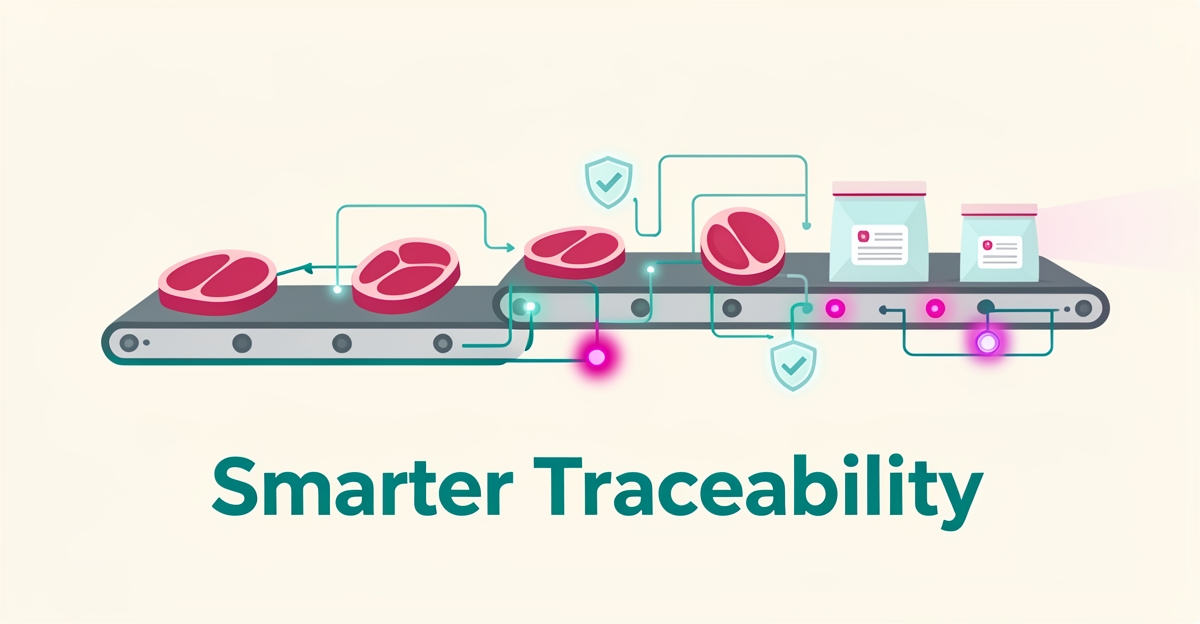
AI-Powered Traceability: How Meat Processors Can Meet FDA and Global Standards
Key Facts
- FSMA 204 requires traceability records to be provided to the FDA within 24 hours of a request, a timeline manual systems typically struggle to meet.
- AI-based traceability can reduce food safety incidents through earlier detection of contamination and fraud risks, according to industry analysis of vision-based inspection systems.
- Computer vision systems typically classify meat cuts with accuracy rates exceeding 90% in reported trials, supporting correct labeling and inventory tracking.
- AI detects fraud or adulteration by cross-checking lab results against supply chain metadata.
- AIQ Labs has deployed 200+ multi-agent systems and runs four live SaaS products daily, building traceability engines processors own outright.
Hire a team member that works 24/7 — for less than a part-time wage.
AI receptionists, SDRs, dispatchers and 99+ roles. Trained on your business, fully managed.
Not sure where to start? Ask our AI planner
The Traceability Gap Meat Processors Can't Afford
The meat processing industry faces mounting pressure to prove the origin, handling, and safety of every product batch. Regulatory frameworks like the FDA's Food Safety Modernization Act (FSMA) 204 now demand detailed traceability records linking food to its source, processing date, and equipment used, requirements that traditional paper logs and siloed ERP systems struggle to meet. Manual data entry creates delays and errors, while fragmented supplier information prevents real-time visibility into the supply chain. When contamination is suspected, processors often lack the ability to quickly trace affected batches back to specific suppliers, production lines, or equipment, increasing the risk of widespread recalls and reputational damage. This gap isn't just inconvenient, it's a compliance liability that can result in fines, shipment detentions, and loss of market access.
AI-powered traceability closes this gap by enriching raw operational data with contextual intelligence. By connecting sensor readings, supplier documentation, and processing timestamps, AI systems can automatically reconcile discrepancies, such as when a supplier's claim about feed origin doesn't match temperature or weight records from the production line. These systems flag inconsistencies in real time, enabling inspectors and quality teams to investigate mismatches before products leave the facility. Industry analysis of vision-based inspection systems suggests AI-based traceability can meaningfully reduce food safety incidents through earlier detection of contamination or fraud risks. This capability is especially critical under FSMA 204, which requires traceability records to be provided to the FDA within 24 hours of a request, a timeline nearly impossible to meet with manual processes.
Operational inefficiencies further compound the challenge. Processors still relying on spreadsheets or disconnected databases spend excessive time correlating data across systems, slowing down investigations and increasing labor costs. In contrast, AI-driven enrichment automates the linkage of batches to suppliers, processing dates, and specific equipment, turning reactive traceability into a proactive compliance function. AI can also detect potential fraud or adulteration by cross-checking lab results with supply chain metadata, adding a layer of verification that manual checks simply cannot match. For meat processors aiming to meet both FDA and global standards, this shift from reactive documentation to intelligent, real-time traceability isn't optional, it's essential for survival in a regulated, quality-driven market. AIQ Labs supports this transformation through [AI Workflow Builds](/workflow-builds) that rebuild the one traceability workflow that costs the most, turning compliance from a burden into a competitive advantage.
How AI Enriches Traceability From Sensor to Audit Report
AI-powered traceability transforms raw sensor data into a continuous, auditable record from farm to fork. By linking product batches to suppliers, processing dates, and specific equipment through integrated cameras, temperature and weight sensors, and supply chain metadata, AI creates a dynamic digital twin of each meat product's journey. This enrichment enables processors to meet stringent FDA and global standards with verifiable, real-time evidence.
Computer vision systems typically classify meat cuts with accuracy rates exceeding 90% in reported trials, ensuring correct labeling and inventory tracking at every stage. These visual inputs are cross-checked with lab results and supply chain records to detect potential fraud or adulteration, such as species substitution or undeclared additives, by identifying inconsistencies that might otherwise go unnoticed. When supplier claims about origin, handling, or processing conditions don't align with sensor-recorded data, AI-based traceability automatically flags mismatches for inspector review.
This proactive reconciliation reduces food safety incidents through earlier detection of contamination risks or process deviations. By continuously validating data streams against expected norms, AI shifts traceability from a reactive audit task to a preventive control point. Processors gain not only compliance confidence but also operational clarity, turning sensor feeds, batch logs, and supplier documentation into a unified, trustworthy narrative that supports faster investigations, fewer recalls, and stronger brand integrity.
- Real-time batch linking to supplier, equipment, and timestamp data
- Computer vision for cut classification with high reported accuracy
- Fraud detection via cross-checking lab results and supply chain metadata
- Automated reconciliation of sensor records with supplier claims
- Earlier detection of contamination and fraud risks
AIQ Labs builds AI-driven traceability engines that enrich raw production data into audit-ready reports, helping meat processors turn compliance into a competitive advantage.
Building an Audit-Ready Traceability Engine With AIQ Labs
Meat processors face mounting pressure to prove every cut's journey from farm to fork, and AI-powered traceability turns raw line data into a living audit trail. By linking batch records to supplier certifications, processing timestamps, and equipment logs, AI systems create the end-to-end visibility regulators demand while flagging discrepancies before they become recalls. AIQ Labs builds owned traceability engines that enrich sensor feeds with contextual intelligence, delivering reports that satisfy FDA 21 CFR Part 11 and global standards like BRCGS and SQF without ongoing vendor dependency.
AI-enabled traceability reduces food safety incidents through earlier detection of contamination or fraud risks, according to industry analysis of vision-based inspection systems. These gains come from AI's ability to reconcile supplier claims with real-time sensor records, such as temperature, weight, and cut classification, and automatically alert inspectors to mismatches that might otherwise slip through manual checks. For processors, this means fewer hold times, less wasted product, and faster responses to potential issues.
Our implementation approach starts with deep integration into existing line equipment, scales, vision systems, and PLCs, using the Model Context Protocol to pull raw data streams into a unified traceability backbone. From there, specialized AI agents enrich the data: one agent cross-references incoming livestock with supplier documentation, another validates processing dates against sanitation logs, and a third flags anomalies in yield or moisture content that could indicate adulteration. This multi-agent orchestration ensures every data point carries regulatory context, not just a timestamp. Where processors need broader coverage across receiving, cutting, packaging, and shipping, an [AI Operating System](/ai-operating-systems) connects the entire operation in one owned layer, built in phases.
- Connects directly to line sensors and enterprise systems via secure APIs
- Deploys specialized agents for supplier validation, process verification, and anomaly detection
- Generates immutable audit trails with role-based access and encryption
- Supports rapid batch-level recalls with full genealogy
- Adapts to new regulations through agent retraining, not system replacement
Processors can begin with a Start Monthly engagement to pilot traceability on a single line, scale via Build in Milestones as confidence grows, or Own It Outright for full control of the code, agents, and data, eliminating vendor lock-in while ensuring the system evolves with their operation. AIQ Labs handles training, monitoring, and continuous improvement so teams focus on production, not platform maintenance. The result is a traceability engine that doesn't just check compliance boxes, it becomes a competitive advantage in markets where provenance drives premium pricing. Ready to map your traceability gaps? Start the Fit Check → https://aiqlabs.ai/apply then book your Free 30-Minute Strategy Call → https://aiqlabs.ai/book
Still paying for 10+ subscriptions that don’t talk to each other?
We build custom AI systems you own outright. No vendor lock-in. Full control.
Not sure where to start? Ask our AI planner
Frequently Asked Questions
How does AI-powered traceability help meat processors meet FDA FSMA 204 requirements?
Can AI traceability systems detect food fraud like species substitution or undeclared additives?
What accuracy rate can computer vision achieve in classifying meat cuts for traceability purposes?
How does AI traceability improve operational efficiency beyond compliance?
Is AI traceability technology difficult to integrate with existing meat processing equipment?
How quickly can AI traceability systems initiate a batch-level recall if needed?
From Compliance Burden to Competitive Edge
FSMA 204 and global standards are turning traceability from paperwork into a real-time operational requirement. Meat processors can no longer afford manual logs and siloed systems when regulators demand source-to-sale records within 24 hours and contamination risks demand immediate answers. AI-powered traceability closes that gap by linking batches to suppliers, processing dates and equipment, reconciling sensor data with supplier claims, and flagging mismatches before products leave the facility. The result is faster investigations, fewer recalls, and audit-ready evidence that protects brand integrity and market access. AIQ Labs builds AI-driven traceability engines that enrich raw production data into audit-ready reports, helping processors move from reactive documentation to proactive compliance. If you're mapping where your current traceability falls short, start with a focused assessment of your line data and integration points. Start the Fit Check at https://aiqlabs.ai/apply for a free 30-minute strategy call to identify high-ROI automation opportunities, or explore managed [AI Employees](/ai-employees) for compliance and documentation roles that run at a fraction of the cost of a human hire.
Make AI your competitive advantage — not just another tool.
Strategy, implementation and ongoing optimization. One partner, end to end.
Not sure where to start? Ask our AI planner