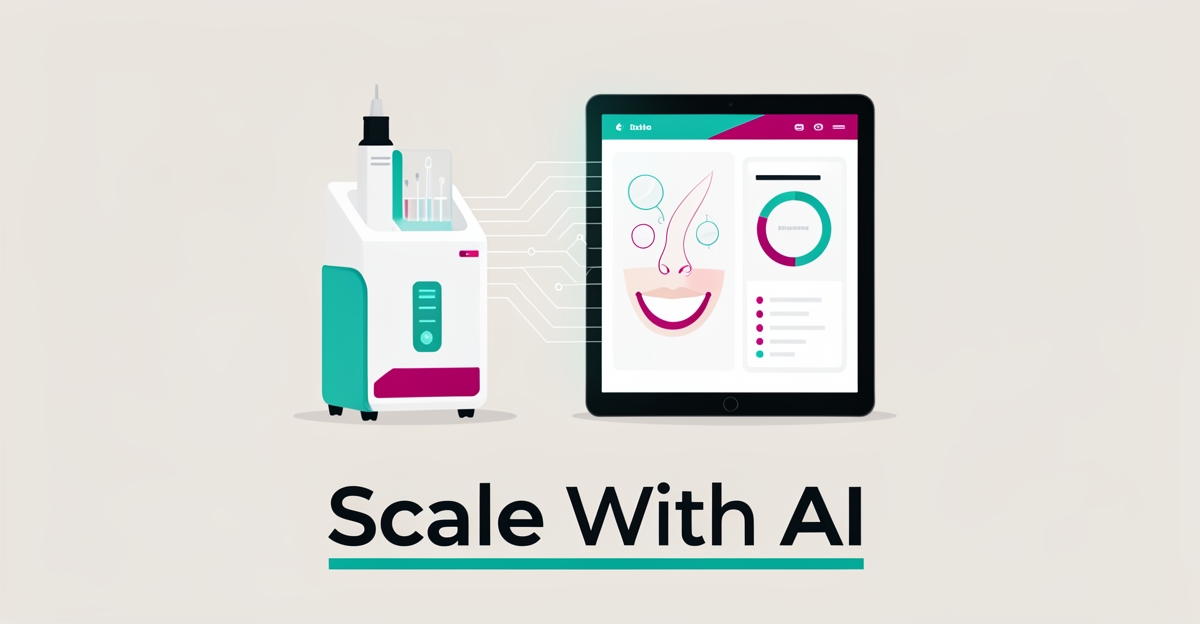
AI-Powered Treatment Planning: How Microneedling Studios Can Scale Without Hiring More Staff
Key Facts
- AI-powered consultations can reduce initial assessment time from 15+ minutes to under 2 minutes, according to industry reports as of late 2026
- Clinics using multi-area treatment plans have reported materially higher patient retention rates compared with single-area treatments, per industry data
- Industry surveys suggest roughly 9 in 10 people are interested in holistic plans targeting multiple facial areas
- Modern AI skin analysis tools can identify a wide range of skin concerns, often a dozen or more, in seconds
- Consumer research indicates a strong majority of consumers prefer natural, subtle treatment outcomes
- A significant share of consumers actively fear looking fake or overdone from aesthetic treatments, per consumer expectation research
- AI Patient Coordinators that respond to leads in under 2 minutes can meaningfully increase appointment bookings, based on spa industry data
Hire a team member that works 24/7 — for less than a part-time wage.
AI receptionists, SDRs, dispatchers and 99+ roles. Trained on your business, fully managed.
Not sure where to start? Ask our AI planner
The Bottleneck: Why Traditional Consultations Cap Your Growth
Traditional consultations in microneedling studios often consume 15+ minutes per client, creating a significant operational bottleneck that directly limits daily capacity. This time-intensive process involves manual skin assessments, subjective treatment recommendations, and repetitive client education, which not only strains therapist bandwidth but also introduces variability in care quality across providers. As demand grows, studios face a difficult trade-off: either extend staff hours at increased cost or turn away potential clients, both of which hinder sustainable scaling.
The inconsistency in treatment planning further compounds these challenges, as recommendations can vary widely depending on the individual provider's experience, interpretation of skin concerns, or even the time of day. This lack of standardization undermines client trust and makes it difficult to replicate successful outcomes at scale. Without a reliable, data-driven foundation for treatment protocols, studios struggle to maintain consistency, a critical factor in building long-term client relationships and brand reputation.
These operational constraints prevent microneedling studios from growing beyond the limits of their current staffing levels. Each additional client requires proportional increases in consultation time, effectively capping revenue growth unless more therapists are hired. For studios aiming to scale efficiently, this model creates a ceiling where expansion directly correlates with rising labor costs, eroding profit margins and limiting reinvestment in growth initiatives. Breaking free from this cycle requires shifting from manual, provider-dependent consultations to automated, consistent systems that preserve clinical expertise while eliminating repetitive administrative burden. AIQ Labs helps studios implement such transformations through custom workflow builds that integrate with existing practice management tools to deliver scalable, repeatable treatment planning.
The AI-Powered Consultation: From 15 Minutes to Under 2
For most microneedling studios, the initial consultation is the biggest bottleneck in the client journey, a 15-minute intake that eats into a therapist's schedule before a single treatment begins. AI-powered treatment planning systems are compressing that process dramatically, with assessments that once took over 15 minutes now typically completed in under 2 minutes.
The technology works in three stages. First, facial analysis software examines photos or 3D scans of a client's face, mapping aging patterns and structural features. Modern AI skin analysis platforms can identify a dozen or more skin concerns in seconds, assessing texture, pigmentation, and hydration levels through high-resolution imaging and machine-learning algorithms. Second, the system generates personalized treatment suggestions based on that analysis, combined with the client's skin type, goals, and medical history. Third, predictive outcome simulation renders a visual projection of likely results before any treatment is performed.
That visual element matters more than many studio owners expect. Industry reporting on AI treatment planning in med spas shows clients can see potential outcomes before committing, which addresses the two biggest booking barriers: fear of unnatural results and fear of the unknown. Consumer research supports this, surveys such as Allergan's Layered Beauty study found that a large majority of consumers prefer natural, subtle outcomes, many want results that are undetectable, and a substantial share actively fear looking fake or overdone. When a client sees a conservative, realistic simulation on screen, confidence replaces hesitation, and booking conversion follows.
The shift also aligns with where client demand is heading. Rather than single-area treatments, industry surveys suggest roughly 9 in 10 people are interested in holistic plans targeting multiple facial areas, and clinics using these multi-area plans have reported materially higher retention rates. AI makes holistic planning practical, analyzing the full face and generating a layered protocol in seconds rather than requiring the therapist to build one manually for every consultation.
Critically, the technology does not replace clinical judgment. As Dr. Anna M. Melamed, MD, has explained, the value of AI in a consultation is not that it makes the decision, it's that the patient and provider look at the same map and the same simulation, so expectations are set honestly before anything is done. The clinical judgment still belongs to the provider. AI serves as decision support, with licensed clinicians verifying recommendations and maintaining final responsibility.
For studios evaluating this technology, the operational math is straightforward: automating the analysis and protocol-generation stages frees therapists to focus on treatment delivery and client relationships. Practices that integrate these AI workflows directly with their practice management software, ensuring client data, treatment histories, and scheduling stay connected, get the most consistent results. This is the model behind custom AI workflow systems like those AIQ Labs builds, where the consultation, recommendation, and booking process runs as one repeatable pipeline rather than a patchwork of manual steps.
The result is a consultation experience that feels faster and more personal to the client, while quietly removing hours of repetitive assessment work from the therapist's week.
The Retention Advantage: Why Holistic AI Plans Keep Clients Coming Back
Retention isn't about a single perfect appointment, it's about clients seeing progress across their whole face and coming back for the next step.
AI-driven treatment planning shifts microneedling studios from reactive single-area visits to proactive, holistic facial rejuvenation strategies. By analyzing skin type, goals, and medical history, AI generates personalized multi-area protocols that match how clients actually want to age. That alignment drives loyalty and repeat revenue without adding therapists.
Clinics using multi-area treatment plans have reported substantially higher patient retention rates compared with single-area treatments, according to industry data. The demand is clear: roughly 9 in 10 people are interested in holistic plans targeting multiple facial areas, with strong interest in chin, jawline, and side profile improvement. When plans reflect that preference, clients stay engaged longer.
Consumer expectations also shape retention. A large majority of consumers prefer natural, subtle outcomes, with many wanting results that are undetectable and a significant share actively fearing looking fake or overdone. AI treatment planning supports this by mapping the whole face conservatively and visualizing outcomes before treatment, so expectations are set honestly and confidence grows.
Automation makes holistic care scalable. AI Patient Coordinators can meaningfully increase appointment bookings by scheduling 24/7 and responding to leads in under 2 minutes, while skin analysis tools identify a wide range of concerns in seconds. Studios can deliver comprehensive plans without lengthening consultations or increasing staff hours.
AIQ Labs builds custom AI workflows that integrate with practice management software to deliver repeatable, personalized treatment planning. The result is consistency across providers and a clear pathway for clients to progress from one area to the next.
The retention advantage compounds when studios can:
- Generate data-driven multi-area recommendations from skin analysis and history
- Show predictive simulations that align expectations with natural, subtle results
- Automate initial consultations and follow-ups so therapists focus on delivery
- Maintain consistent protocols that scale with demand
Holistic AI plans keep clients coming back because they feel seen, safe, and guided. That experience turns one-time microneedling visits into ongoing facial rejuvenation journeys.
Implementation Roadmap: Deploying AI Without Disrupting Your Studio
Most AI implementations fail not because the technology doesn't work, but because studios bolt it onto broken workflows. Technology without a deployment strategy is just expensive software. A phased rollout protects both your clients and your revenue.
Start with a workflow map, not a shopping list. Before evaluating any platform, document how consultations, treatment planning, and follow-ups actually happen today, including where data lives and which steps create bottlenecks. This assessment reveals whether AI will reduce work or simply add another system your therapists must maintain.
Platform selection should weigh clinical relevance, technical compatibility with your existing practice management software, scalability, vendor support, and potential for biased outcomes. Integration matters more than features: a treatment planning tool that can't sync with your scheduling and client records creates double data entry, which defeats the purpose of automation.
When you're ready to deploy, structure the rollout in stages:
- Pilot one capability first, automated appointment reminders or AI skin analysis, before touching treatment planning itself.
- Run the AI recommendation alongside the therapist's own plan for a defined period, comparing outputs to build trust and catch errors.
- Gather client feedback on AI-generated plans and simulations, then refine workflows before expanding functionality.
- Track metrics continuously, consultation time, booking rates, retention, and update models with new data to prevent drift or bias.
Clinical oversight is non-negotiable throughout every phase. AI treatment planning is a decision-support tool, not a diagnosis. As Dr. Anna M. Melamed, MD, explains, the clinical judgment still belongs to the provider. Licensed clinicians must verify every AI suggestion, and predictive simulations should always carry clear disclaimers that they are projections, not guaranteed outcomes. Facial images and medical histories also demand strict data storage protocols, access controls, and compliance with healthcare privacy regulations.
Staff training determines whether the technology sticks. Position AI as augmentation, not replacement, AI isn't replacing clinicians but augmenting their capability. Train each role on what the system does, where it falls short, and when to escalate to human judgment.
The payoff justifies the discipline. Clinics that implement AI-driven treatment planning have reported substantially higher patient retention, and AI skin analysis can identify a wide range of skin concerns in seconds, compressing consultations from 15+ minutes to under two. Studios that take a phased approach capture these gains without disrupting daily operations. For studios that want custom workflows built around their existing practice management software rather than another subscription to manage, partners like AIQ Labs specialize in integrating AI treatment planning directly into the systems you already run.
The AIQ Labs Approach: Custom AI Workflows Built for Aesthetic Practices
For microneedling studios ready to scale, generic AI tools often fall short, offering superficial automation without true integration or ownership. AIQ Labs takes a different approach, building custom AI workflows designed specifically for aesthetic practices that connect directly with existing practice management systems to streamline treatment planning from consultation to follow-up. With 200+ multi-agent systems deployed and four live SaaS products the company runs daily, AIQ Labs brings proven operational experience to every build.
Unlike subscription-based platforms that lock studios into recurring fees and limited customization, AIQ Labs delivers owned AI assets, meaning studios retain full control over their systems, data, and future development. This ownership model eliminates vendor dependency while ensuring the AI evolves with the business, not the other way around.
To make enterprise-grade AI accessible, AIQ Labs offers three flexible payment models: Start Monthly for ongoing support and iterative development, Build in Milestones for phased workflow implementation with pay-as-you-go flexibility, or Own It Outright for full ownership of a complete AI operating system. Each engagement includes setup, training on your specific protocols, tool integrations, monitoring, and continuous improvements, structured to align with SMB budgets and growth trajectories. No fake prices, no invented numbers, just a clear scope and a fixed price agreed up front.
By replacing manual treatment planning with AI-driven consistency, studios can reduce initial consultation times from 15+ minutes to under 2 minutes while enhancing client confidence through data-backed recommendations. This operational efficiency directly supports scaling, without adding headcount, by freeing therapists to focus on hands-on care and client relationships. Studios interested in seeing how a custom AI workflow could transform their treatment planning process can take the 2-minute Fit Check and book a free 30-minute strategy call to assess their current systems and identify high-ROI automation opportunities.
Still paying for 10+ subscriptions that don’t talk to each other?
We build custom AI systems you own outright. No vendor lock-in. Full control.
Not sure where to start? Ask our AI planner
Frequently Asked Questions
How much time can AI actually save on microneedling consultations?
Will AI replace my therapists or change the client experience?
Does AI treatment planning help with client retention?
Do clients really want visual simulations before treatment?
Can AI help us book more appointments without adding staff?
Is AI treatment planning safe and compliant for a studio?
Scale Your Studio Without Adding Staff
Microneedling studios are hitting a growth ceiling because 15-minute manual consultations cap how many clients therapists can see, while inconsistent recommendations erode trust and retention. AI-powered treatment planning breaks that cycle by compressing skin analysis to under two minutes, generating data-driven multi-area protocols, and using predictive simulations to set realistic expectations. The result is faster intake, standardized care, and a holistic client journey that keeps people coming back. Industry data shows clinics using multi-area treatment plans achieve substantially higher patient retention rates compared with single-area treatments, consistency and personalization scale revenue without adding headcount. If you want to test this without disrupting your current practice management system, start by mapping your consultation workflow, piloting one automated analysis step, and keeping clinical oversight at the center. AIQ Labs builds custom AI workflows that integrate directly with the software you already run to deliver repeatable, owned treatment planning. Start the Fit Check at aiqlabs.ai/apply for a free 30-minute strategy call to map your biggest bottleneck and identify high-ROI automation opportunities.
Make AI your competitive advantage — not just another tool.
Strategy, implementation and ongoing optimization. One partner, end to end.
Not sure where to start? Ask our AI planner