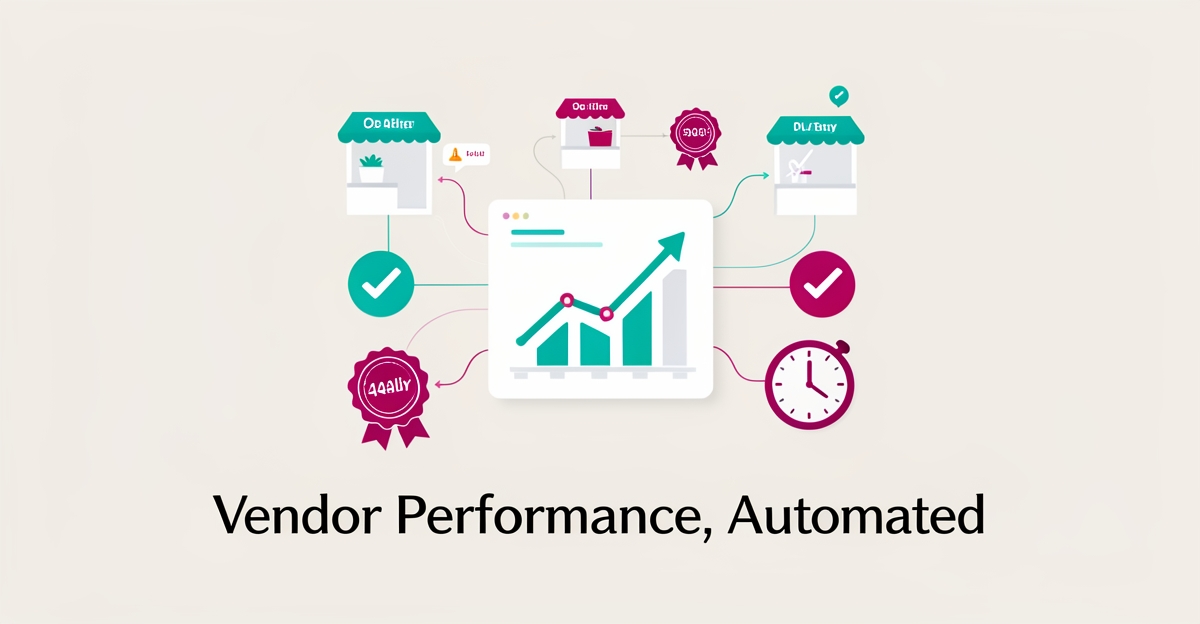
AI-Powered Vendor Performance Tracking: How to Monitor Quality and On-Time Delivery
Key Facts
- Organizations with structured vendor performance management programs typically report meaningful cost savings, often cited in the 15-25% range per industry analyses
- Most food service and logistics operations have been slow to adopt AI-powered tracking, which means early adopters gain a measurable edge
- AI-powered forecasting and inventory tools are commonly associated with fewer stockouts and better on-time delivery performance
- Manual vendor tracking is time-consuming, prone to errors, and limited in scalability according to vendor management specialists
- AI works best as a smarter way to manage supplier performance, augmenting human judgment, not replacing it
Hire a team member that works 24/7 — for less than a part-time wage.
AI receptionists, SDRs, dispatchers and 99+ roles. Trained on your business, fully managed.
Not sure where to start? Ask our AI planner
The Hidden Cost of Manual Vendor Tracking in Food Halls
Running a food hall means juggling dozens of vendor relationships at once, and when performance tracking happens in spreadsheets and scattered email threads, critical warning signs slip through the cracks until customers notice first.
The fundamental problem with manual tracking isn't effort; it's architecture. Industry research on vendor performance management consistently finds that organizations with structured programs achieve meaningful cost savings, savings that remain out of reach when tracking relies on sporadic spreadsheet updates and gut feelings. Food halls operating without systematic vendor monitoring essentially leave this money on the table while absorbing preventable losses.
The operational pain points compound quickly. Manual processes create three distinct vulnerabilities:
- Inconsistent quality documentation that makes it impossible to spot declining trends before they affect customer experience
- Reactive problem-solving where issues surface only after complaints pile up or deliveries fail
- Relationship strain from feedback that arrives too late to be actionable or constructive
- Time-consuming administrative work that pulls managers away from strategic vendor development
Research from vendor management specialists confirms that manual tracking is time-consuming, prone to errors, and limited in scalability, three characteristics that directly undermine food hall operations where vendor consistency determines daily success.
The financial risks extend beyond immediate operational hiccups. When tracking happens sporadically, food halls lose negotiating leverage during contract renewals, miss opportunities to consolidate orders with top performers, and struggle to justify decisions about vendor replacement. Because most food service operations still hesitate to adopt AI-powered tracking, the majority continue absorbing these hidden costs.
Perhaps most damaging is the relational toll. Vendors receive feedback that's either too vague to act on or delivered so late that the context has evaporated. This creates defensiveness rather than collaboration. Without real-time data collection and analysis, the kind AIQ Labs builds into custom vendor monitoring systems, food hall managers spend their days putting out fires instead of preventing them.
The alternative isn't just automation for its own sake. It's about transforming vendor relationships from transactional scorekeeping into strategic partnerships where both parties work from the same real-time performance data.
How AI Transforms Vendor Performance Tracking: From Reactive to Proactive
For most food hall operators, vendor performance reviews happen after the damage is done, a complaint is logged, a delivery arrives late, and the problem is already in front of customers. AI-powered tracking flips that dynamic entirely. Instead of reacting to failures, operators can see them forming weeks in advance.
The core shift comes from automation. Traditional vendor evaluation relies on manual scorecards and periodic check-ins, an approach that is time-consuming, prone to errors, and difficult to scale across a dozen or more vendors. AI systems, by contrast, collect feedback automatically, customer reviews, delivery timestamps, quality scores, and analyze trends in real time. As one industry analysis puts it, "AI is no longer just a tool - it's a smarter way to manage supplier performance" (TryLeverage).
That real-time analysis is where predictive value emerges. When quality and delivery data flow continuously, patterns surface early: a vendor whose on-time rate is slipping, a supplier whose consistency drifts before anyone complains. Operators using AI-powered forecasting and modern inventory tools typically report fewer stockouts and measurably better on-time delivery, outcomes that depend more on fixing how work flows than on any single technology.
For food halls specifically, these capabilities translate into three practical functions:
- Automated feedback collection that aggregates customer reviews and complaint data into live quality scores per vendor
- Real-time delivery tracking that flags late or short shipments the moment they occur, not at month-end
- Predictive alerts that identify vendors trending toward performance problems before they affect service
- Consistent, data-driven performance reviews that remove subjectivity from renewal and corrective conversations
The payoff extends beyond operations. Structured vendor performance management programs are associated with significant average cost savings, and proactive, transparent feedback strengthens supplier relationships rather than straining them.
One caution matters, though. AI should augment human judgment, not replace it. The research is clear that data accuracy, system integration, and change management determine whether AI adoption succeeds, and that automated evaluation works best when operators retain final say on vendor decisions. A dashboard can flag a declining vendor; a human decides how to respond.
That's the model behind systems AIQ Labs builds for food hall operators: intelligent feedback collection and real-time analysis that surface the insights, while operators stay firmly in control of the decisions. The biggest gains come from fixing how work flows, not from removing people from the loop.
Implementing AI Vendor Tracking: A Practical Roadmap for Food Halls
Food halls live and die by vendor consistency, and manual scorecards can't keep up with daily deliveries, quality variance, and shifting demand. An AI-powered roadmap turns fragmented feedback into real-time performance visibility without adding headcount.
Start with data readiness before any model is built. Assess what quality, delivery, and compliance data already exists in POS, ordering, and receiving systems, and where gaps create blind spots. Data accuracy and integration are crucial for successful AI adoption, and aligning sources early prevents rework later. This assessment maps the KPIs that matter for food hall operations.
Define clear, actionable KPIs that the team will review weekly. Quality scores from customer feedback and kitchen checks, on-time delivery %, and issue resolution time create a balanced view of vendor reliability. Dashboards should surface trends, not just snapshots, so managers can act before a problem escalates. Structured vendor performance management is where the documented cost savings come from, see this overview of structured vendor performance programs.
Integrate AI tracking with existing tools to avoid duplicate entry. Connecting ordering platforms, inventory, and communication channels lets AI agents automate data collection and generate actionable insights. Automation improves accuracy and reduces errors while freeing staff for relationship work. Operators pairing AI-powered forecasting with connected inventory systems typically see fewer stockouts and stronger on-time delivery performance.
Establish human-in-the-loop review cycles to keep judgment in the process. AI should be used to augment human judgment, not replace it, especially for supplier negotiations and exceptions. Weekly reviews validate alerts, refine thresholds, and ensure continuous monitoring and evaluation.
A practical rollout follows four steps:
- Audit data sources and integration points for delivery, quality, and compliance
- Define KPIs and build real-time dashboards for quality scores, on-time delivery %, and issue resolution time
- Deploy AI agents for automated collection, predictive risk alerts, and performance summaries
- Run human-in-the-loop reviews to validate insights and coach vendors
AIQ Labs aligns this approach with its implementation phases, moving from discovery and architecture through development, deployment, and optimization. You can tackle this as a single high-impact project through AI Workflow Builds, rebuild the one workflow that costs you the most at a fixed price, or as part of a broader connected layer via AI Operating Systems. With most food service operations still on manual tracking, early adoption creates a measurable edge in supplier relationships and customer experience.
Still paying for 10+ subscriptions that don’t talk to each other?
We build custom AI systems you own outright. No vendor lock-in. Full control.
Not sure where to start? Ask our AI planner
Frequently Asked Questions
How does AI-powered vendor tracking actually help food halls save money?
Will implementing AI vendor tracking require hiring more staff or changing our current team structure?
What specific data do I need to start using AI for vendor performance tracking in my food hall?
Is AI vendor tracking just for large chains, or can small food halls benefit too?
How quickly can we expect to see improvements in on-time delivery or quality after implementing AI tracking?
What if our vendors push back on being monitored more closely with AI?
From Firefighting to Forecasting: Your Next Move in Vendor Management
Manual vendor tracking leaves food halls reacting to complaints instead of preventing them, absorbing hidden costs while relationships strain under late, vague feedback. AI-powered performance tracking changes that dynamic by automating feedback collection, surfacing real-time quality and delivery trends, and delivering predictive alerts before problems reach customers. With structured programs consistently associated with meaningful cost savings, the business case is clear when data is accurate, integrated, and reviewed by people who stay in control of decisions. Start by auditing your existing POS, ordering and receiving data, defining weekly KPIs for quality scores, on-time delivery and issue resolution, then connect those sources so insights flow without duplicate entry. AIQ Labs has deployed 200+ multi-agent systems and runs four live SaaS products daily, so the vendor monitoring systems we build are proven in production, not theoretical. Ready to map your biggest bottleneck? Start the 2-minute Fit Check at https://aiqlabs.ai/apply and book a free 30-minute strategy call at https://aiqlabs.ai/book, or reach us anytime at [email protected].
Make AI your competitive advantage — not just another tool.
Strategy, implementation and ongoing optimization. One partner, end to end.
Not sure where to start? Ask our AI planner