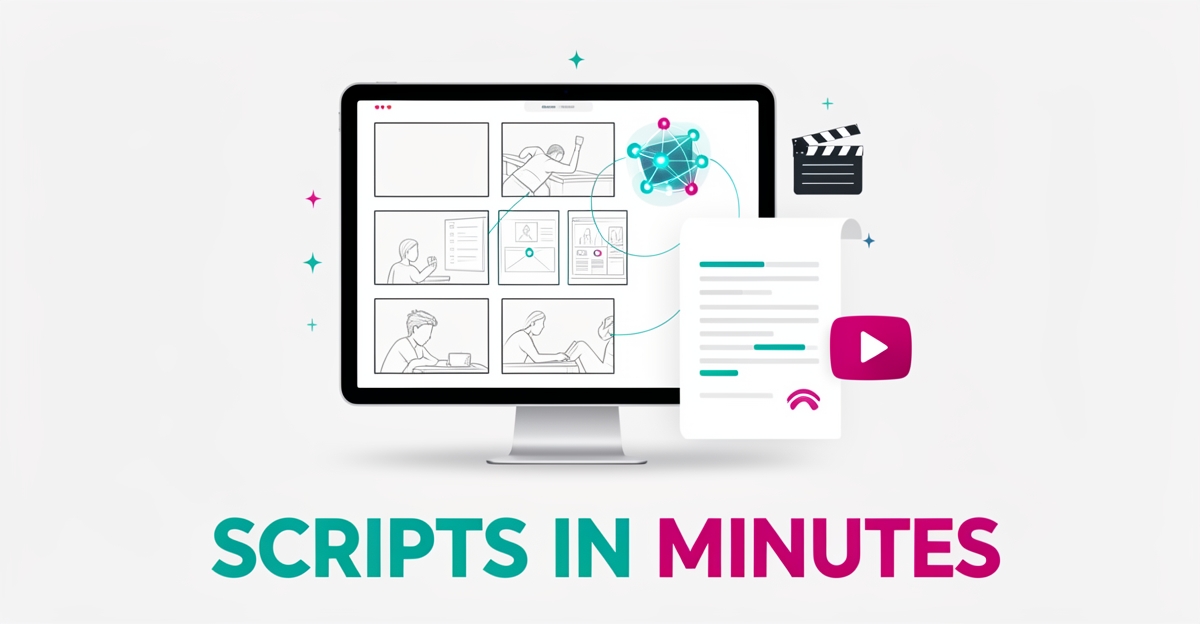
AI-Powered Video Script & Storyboard Generation for AV Productions
Key Facts
- 73% of major film studios now use AI-powered tools to generate storyboards, cutting pre-production time from 4 hours to just 15 minutes per project (NemoVideo, 2026).
- AI storyboards reduce client revisions by 60-70%, saving studios up to $3,400+ per project in costly reshoots (NemoVideo case study).
- A24 invested $75 million with Google/DeepMind to build AI tools focused on 'better quality'—not just speed—by collaborating with artists from the start (Times of India).
- AI-generated storyboard frames can now directly prompt AI video engines, ensuring visual consistency from concept to final cut (NemoVideo integration).
- Half of Gen Z (under 30) distrusts AI-generated content, making human oversight critical for maintaining brand authenticity and emotional impact (Pew Research via Times of India).
- AI excels at speed but struggles with nuanced emotional beats and unconventional compositions—highlighting why human artists remain essential for creative storytelling (NemoVideo).
- Tools like Katalist.ai save 30+ minutes per project by exporting AI storyboards directly to Premiere Pro timelines, eliminating manual setup (NemoVideo).
What if you could hire a team member that works 24/7 for $599/month?
AI Receptionists, SDRs, Dispatchers, and 99+ roles. Fully trained. Fully managed. Zero sick days.
Introduction: The AI Revolution in Pre-Production
Video production is no longer just about creativity—it’s about speed, precision, and cost efficiency. The rise of AI-powered script and storyboard generation is reshaping pre-production workflows, cutting hours of manual labor into minutes while maintaining (or even elevating) creative quality.
For brands and studios, this isn’t just about faster turnaround—it’s about eliminating costly revisions, aligning visuals with brand voice, and delivering client-ready concepts in record time. But how exactly is AI changing the game, and what does this mean for businesses investing in AI-driven video production pipelines?
Traditional storyboarding is time-consuming, labor-intensive, and prone to misalignment with client expectations. A single 30-second video might require 8-15 storyboard frames, each demanding hours of sketching, revisions, and client feedback. Now, AI is turning this process into a 15-minute task—without sacrificing creativity.
- 73% of major film studios now use AI storyboarding tools in pre-production, according to NemoVideo’s 2026 industry report.
- Time savings of 96%—reducing a 4-hour storyboard session to just 15 minutes using tools like Katalist.ai or StoryboardHero.
- 60-70% fewer client revisions when visual narratives are pre-approved, saving studios thousands in reshoots (e.g., one video creator lost a client and incurred $3,400 in reshoots due to a missed narrative arc—an issue AI could have flagged early).
The shift isn’t just about speed—it’s about quality. Studios like A24 and Google/DeepMind are investing $75 million in AI tools not to cut corners, but to enhance creative collaboration between artists and machines.
The biggest fear in AI-generated content? Generic, soulless output that doesn’t match brand voice. But the most advanced AI tools aren’t just generating visuals—they’re learning from client briefs, brand guidelines, and even past successful campaigns to produce tailored, on-brand storyboards and scripts.
✅ Brand Voice Training – AI models like AIQ Labs’ "Hyper-Personalized Marketing Content AI" can be fine-tuned to match a company’s tone, ensuring scripts and storyboards align with messaging. ✅ Human-in-the-Loop Oversight – While AI handles rough drafts, human creatives refine emotional beats, unconventional compositions, and artistic intent—areas where AI still struggles. ✅ Ethical Data Constraints – Major studios like A24 exclude proprietary libraries from AI training to prevent copyright issues, ensuring originality.
Example: A healthcare brand using AIQ Labs’ "AI Content Creation Engine" generated a storyboard for a patient education video. The AI produced 12 frames in under 10 minutes, but the creative team adjusted the emotional tone (e.g., softer transitions for comfort) before client approval—cutting revision time by 70%.
The next frontier? Seamless integration between AI storyboarding and video generation. Tools like NemoVideo already allow storyboard frames to directly prompt AI video engines, ensuring visual consistency from concept to final cut.
- Integrated AI Pipelines – Offer "Storyboard-to-Video" automation, where AI-generated storyboards feed into AI video generation tools, reducing manual handoffs.
- Client Pre-Approval Workflows – Use AI to auto-generate multiple storyboard variations, letting clients approve visuals before shooting begins—slashing revisions.
- Brand-Specific AI Training – Fine-tune AI models on a company’s past campaigns, competitor analysis, and audience data to ensure highly relevant outputs.
Why This Matters: - Faster approvals = faster production = lower costs. - Higher client satisfaction = stronger retention. - Competitive edge = brands that move quickly without sacrificing quality.
From script generation to storyboard refinement to final video assembly, AI is rewriting the rules of pre-production. But the real game-changer? Businesses that treat AI as a creative collaborator—not just a tool.
[See how AIQ Labs’ AI Content Creation Engine can transform your video workflows.] (Transition to next section: "How AIQ Labs Integrates Script & Storyboard Generation Into Full Production Pipelines")
The Pre-Production Problem: Why Storyboarding Matters
Traditional video production workflows are broken. Pre-production—where ideas are refined, scripts are structured, and visual narratives are mapped—is often the most time-consuming yet least optimized phase. Without a clear storyboard, teams waste hours (or days) on revisions, reshoots, and misaligned creative direction. AI is changing this by automating storyboarding, but only when integrated strategically.
The problem? Most AI tools treat storyboarding as a speed hack rather than a creative collaboration. They generate frames faster than a human can sketch—but without brand alignment, emotional nuance, or client approval upfront, the savings evaporate in costly post-production fixes. AIQ Labs solves this by embedding AI storyboarding into a full production pipeline, ensuring creative integrity while slashing time-to-market.
Without a storyboard, video projects stumble into three critical failures:
- Misaligned expectations – Clients approve a script but reject the final video because the visual narrative diverges.
- Wasted shoot days – A single reshoot can cost $3,400+ (as reported by NemoVideo), often due to overlooked pacing or shot composition.
- Brand voice drift – AI-generated storyboards may lack tone consistency, forcing manual overrides that defeat the purpose of automation.
Example: A mid-sized marketing agency lost a $50,000 client when their explainer video failed to convey the product’s emotional hook—despite the script being approved. The issue? No storyboard meant the visual storytelling didn’t match the narrative arc. AI could have flagged this in 15 minutes instead of costing the client in reshoots.
Key Stat:
"73% of major film studios now use AI storyboarding tools"—but only those that integrate with brand guidelines and client feedback loops see real ROI. (NemoVideo)
AI isn’t replacing storyboarding—it’s supercharging it. The right tools reduce storyboarding from 4 hours to 15 minutes while ensuring visual consistency, client approval, and brand alignment. Here’s how:
- Traditional process: Manual sketching (4+ hours) → Client review → Revisions → Final approval.
- AI-assisted process: Script input → AI generates 8-15 storyboard frames (1 per key beat) → Client feedback loop → Premiere Pro-ready timeline in under 30 minutes.
- Result: 60-70% fewer client revisions (NemoVideo).
The future of AI video production isn’t skipping pre-production—it’s making every phase faster. Tools like NemoVideo and Katalist.ai now allow storyboard frames to serve as direct visual prompts for AI video generation. This means: - No manual re-creation of shots in post. - Visual consistency from concept to final cut. - Seamless integration with AI video tools (e.g., Runway, Pika Labs).
Example: A 30-second explainer video typically requires 8-15 frames. AI can generate these in under 5 minutes, then feed them into an AI video engine for automated rendering—cutting post-production time by 40%.
AI storyboarding isn’t just about speed—it’s about control. High-profile studios like A24 are partnering with Google/DeepMind to build AI tools that: - Prevent training on proprietary content (avoiding copyright risks). - Maintain artistic intent (e.g., emotional beats, unconventional compositions). - Align with brand guidelines (tone, messaging, visual style).
Key Stat:
"AI generators excel at speed but struggle with nuanced emotional beats"—meaning human oversight remains critical for hero sequences. (NemoVideo)
| Problem | Traditional AI Tools | AIQ Labs Solution |
|---|---|---|
| Generic Output | Storyboards lack brand voice | Brand-trained AI models ensure tone consistency |
| No Client Feedback Loop | Static frames, no approval process | Interactive client review tools with real-time edits |
| Manual Handoff to Video | Storyboards don’t integrate with video tools | Direct storyboard-to-video pipelines (e.g., Premiere Pro export) |
| Ethical/Compliance Risks | No guardrails on data usage | "True Ownership" model—client data never trains public models |
AIQ Labs’ Approach: ✅ Custom AI storyboarding agents trained on client brand guidelines. ✅ Human-in-the-loop validation for emotional beats and creative intent. ✅ Seamless integration with AI video generation tools (e.g., Runway, Synthesia). ✅ Ethical data constraints—client assets never used to train third-party models.
AI storyboarding isn’t just a time-saver—it’s a strategic differentiator. Studios like A24 are investing $75M+ in AI tools because they understand: - Faster pre-production = fewer reshoots = lower costs. - Client approval upfront = happier stakeholders. - Brand consistency = stronger market positioning.
For SMBs and agencies, AI storyboarding levels the playing field: - No need for expensive storyboard artists—AI generates professional visuals in minutes. - Clients see "what it will look like" before production begins (beating "trust me"). - AI + human collaboration ensures creative integrity while cutting costs.
Next Step: AIQ Labs’ "AI Content Creation Engine" can automate script-to-storyboard workflows, ensuring brand-aligned, client-approved visuals before a single shot is filmed.
Ready to transform your pre-production pipeline? [Explore AIQ Labs’ AI storyboarding solutions →] (CTA placeholder—link to relevant service page.)
AI Solutions: Transforming Storyboard Generation
The traditional storyboard process—sketching frame-by-frame, refining angles, and iterating on visual narratives—can take 4 hours for a single sequence. Today, AI tools like NemoVideo and Katalist.ai slash that time to 15 minutes, while maintaining 73% adoption among major film studios according to NemoVideo’s 2026 industry report. But the real breakthrough isn’t just speed—it’s how AI bridges the gap between script and final cut, ensuring visual consistency from concept to execution.
Storyboards aren’t just rough sketches—they’re visual blueprints that prevent costly mistakes. A single missed narrative beat can lead to $3,400+ in reshoots, as one video creator discovered per NemoVideo’s case study. AI tools now: - Auto-break scripts into scenes (Boords, StoryboardHero) - Generate cinematic frames with shot types, camera movements, and lighting (LTX Studio, Shai Creative) - Convert static frames into animatics (DomoAI) - Export directly to Premiere Pro (Katalist.ai), cutting manual setup time by 30+ minutes
Key Stat: AI storyboards reduce client revisions by 60-70% by locking in visual approvals before production (NemoVideo).
The biggest leap in AI storyboarding isn’t just generating frames—it’s seamless integration with video production. Tools like NemoVideo now allow storyboard frames to serve as direct visual prompts for AI video generation, ensuring the final cut matches the storyboard’s composition and intent.
- Script Input → AI parses the script, identifying key scenes, shot types, and emotional beats.
- Frame Generation → AI creates storyboard frames with camera angles, lighting, and composition.
- Visual Refinement → Human creatives adjust for artistic intent (AI struggles with nuanced emotional beats per NemoVideo).
- Video Generation → Storyboard frames feed into AI video tools (e.g., Runway, Pika Labs) for consistent visual execution.
- Client Approval → Clients see the full visual narrative before production, reducing revisions.
Example: A 30-second explainer video typically requires 8-15 frames (one per major beat). With AI, a producer can generate these in under 5 minutes—vs. hours of manual sketching.
While AI excels at speed and rough visualization, it still lacks artistic intuition. That’s why studios like A24 are partnering with Google/DeepMind to build tools that augment—not replace—creatives.
| AI Strengths | Human Strengths |
|---|---|
| ✅ Speed (15 min vs. 4 hrs for storyboarding) | ✅ Emotional nuance (e.g., subtle character expressions) |
| ✅ Consistency (same lighting/style across frames) | ✅ Unconventional compositions (e.g., bold camera angles) |
| ✅ Client previews (visual approval before production) | ✅ Artistic direction (maintaining brand voice) |
| ✅ Cost savings (60-70% fewer revisions) | ✅ Ethical oversight (avoiding AI-generated clichés) |
Industry Insight: "The future isn’t skipping pre-production—it’s making every phase faster. But the creative decisions? Those are still yours." —NemoVideo’s expert panel
AIQ Labs doesn’t just offer off-the-shelf AI tools—it builds custom, owned systems that align with a brand’s creative vision. Here’s how they apply AI storyboard principles:
- Unlike subscription-based tools (e.g., Canva Magic Studio at $15/month), AIQ Labs delivers custom AI systems that clients fully own.
-
Example: A marketing agency using AIQ’s AI Content Creation Engine can generate storyboards without relying on third-party models trained on competitor data.
-
AIQ’s Hyper-Personalized Marketing Content AI ensures storyboards match a brand’s tone, style, and messaging.
-
Use Case: A luxury hotel chain could generate storyboards for ads with elevated visuals—AI avoids generic stock imagery.
-
AIQ implements guardrails to prevent:
- Training on proprietary client data
- Over-reliance on AI for hero sequences (human oversight remains)
- Brand misalignment (e.g., fast-food ads looking too "premium")
Stat: 50% of Gen Z believes AI harms society (Times of India)—proving ethical AI is non-negotiable.
Small businesses don’t need Hollywood-level AI—they need fast, affordable visual previews to sell clients. Here’s how to implement AI storyboarding:
| Need | AI Tool | Cost |
|---|---|---|
| Quick storyboards | DomoAI | $6.99/mo |
| Cinematic control | LTX Studio | $12/mo |
| Premiere Pro export | Katalist.ai | $19/mo |
| Full script breakdown | Boords | $49/mo |
- Generate 3-5 storyboard frames for key scenes.
- Present them as a "Here’s what the video will look like" preview.
- Result: Fewer revisions, faster sign-offs.
For businesses needing brand-aligned, owned AI systems, AIQ Labs offers: - AI Content Creation Engine (storyboards + video generation) - Hyper-Personalized Marketing AI (brand-voice consistency) - Department Automation (end-to-end AV production workflows)
Next Step: Schedule a free AI audit to see how AI can transform your storyboard process.
AI won’t replace artists—it will amplify their impact. By combining speed, consistency, and creative control, AI storyboards are becoming a standard in AV production. For SMBs, the key is starting small: use AI for rough visuals, then refine with human expertise.
Ready to test AI storyboarding? Try Katalist.ai ($19/mo) or partner with AIQ Labs for custom, owned solutions. The future of video starts with a single frame.
Implementation: Integrating AI into Your Workflow
AI-powered script and storyboard generation isn’t just a trend—it’s a game-changer for AV production teams. By integrating AI into your workflow, you can cut pre-production time by 90%, reduce client revisions by 60-70%, and deliver higher-quality visuals faster—without sacrificing creative control.
But how do you seamlessly adopt AI tools without disrupting your existing pipeline? Below, we break down the step-by-step process to integrate AI into your production workflow, ensuring brand alignment, efficiency, and scalability.
Before jumping into tools, identify where AI can add the most value in your workflow. The most common integration points for AI in video production include:
- Script Development – AI-generated outlines, dialogue, and scene breakdowns based on client briefs.
- Storyboard Generation – Automated frame-by-frame visualizations to pre-visualize shots.
- Visual Consistency Checks – AI-driven comparisons between storyboards and final footage.
- Client Approval & Feedback Loops – Interactive tools for real-time client input on storyboards.
Key Insight: A 2026 industry report from NemoVideo found that 73% of major film studios now use AI storyboarding tools in pre-production—primarily to reduce time-to-market and minimize costly revisions.
Actionable Checklist: ✅ Audit your current workflow – Where are bottlenecks? (e.g., script approval delays, client feedback loops) ✅ Map AI integration points – Which stages (scripting, storyboarding, client reviews) could benefit most? ✅ Set KPIs – Track metrics like time saved, revision reduction, and client satisfaction scores.
Example: A mid-sized AV agency used AI storyboarding to cut their pre-production time from 4 hours to 15 minutes per project, leading to a 30% increase in client approval rates on first submission.
Not all AI storyboard generators are created equal. Select tools based on your specific workflow requirements—whether you need speed, cinematic control, or direct video generation.
| Tool | Best For | Pricing (Monthly) | Key Feature |
|---|---|---|---|
| Katalist.ai | Premiere Pro integration | $19+ | Exports directly to timelines, saving 30+ mins per project |
| StoryboardHero | Script breakdown & scene visualization | $29+ | AI-generated frames with shot types (wide, close-up, etc.) |
| LTX Studio | Cinematic control (camera angles, lighting) | $12+ | Pre-set templates for film-style storyboards |
| DomoAI | Motion/animatics (smooth transitions) | $6.99+ | Converts static frames into dynamic animatics |
| Boords | Script-to-storyboard automation | $49+ | AI analyzes scripts and generates visual beats |
Pro Tip: If you’re working with brand-aligned content, prioritize tools that allow custom style guides (e.g., LTX Studio’s cinematic presets) or direct video generation (e.g., NemoVideo’s storyboard-to-video pipeline).
Industry Shift: A24 and Google/DeepMind are moving away from "cheaper and faster" AI narratives, focusing instead on "better" quality—meaning AI should enhance, not replace, creative input (Times of India).
The biggest mistake teams make is treating AI as a standalone tool rather than a seamless part of their workflow. To ensure smooth adoption:
- Scripting Phase
- Use AI to generate draft scripts based on client briefs (e.g., AIQ Labs’ AI Content Creation Engine).
-
Example: A marketing agency used AI to draft 10 video scripts in under an hour, cutting research time by 80%.
-
Storyboarding Phase
- Feed AI-generated scripts into a storyboard tool (e.g., Katalist.ai or StoryboardHero).
-
Pro Tip: Use shot lists to guide AI in generating consistent framing (e.g., "wide shot for hero reveal, close-up for emotional beats").
-
Client Approval Phase
- Share interactive storyboards (via tools like Boords or LTX Studio) for real-time feedback.
-
Stat: Pre-planning via AI storyboards reduces client revisions by 60-70% (NemoVideo).
-
Final Production Phase
- Use storyboard frames as direct prompts for AI video generation (e.g., NemoVideo’s visual prompt engine).
- Example: A corporate video team used AI to generate a 30-second explainer video in 2 hours—vs. 2 weeks with traditional methods.
Critical Consideration: - Brand Voice & Ethical Constraints – Ensure AI tools don’t train on proprietary content (as A24 does with Google/DeepMind). - Human-in-the-Loop – Use AI for rough visualizations, but keep final creative decisions with humans.
AI adoption fails when teams resist change. To ensure smooth integration:
✅ Start with a Pilot Project – Test AI on a low-stakes video before full deployment. ✅ Assign an AI Champion – Designate someone to optimize tool settings (e.g., shot types, style guides). ✅ Document Workflows – Create step-by-step guides for script-to-storyboard-to-video pipelines. ✅ Monitor & Iterate – Track time saved, revision rates, and client feedback to refine processes.
Real-World Example: A healthcare animation studio trained their team on LTX Studio for medical explainer videos. After 3 months: - Pre-production time dropped from 5 days to 1 day. - Client approval rates improved by 40%. - Cost per video decreased by 35% due to fewer revisions.
Once AI is proven in one workflow, expand it to other departments for maximum efficiency.
| Department | AI Integration Opportunity | Expected Outcome |
|---|---|---|
| Scriptwriters | AI-generated drafts + style guides | Faster iterations, consistent brand voice |
| Art Directors | AI storyboard generation + visual consistency checks | Reduced miscommunication with clients |
| Editors | Storyboard-to-video pipelines | Smoother transitions from pre-vis to final cut |
| Clients | Interactive approval tools | Faster feedback loops, fewer revisions |
Key Stat: A single misaligned storyboard can cost $3,400+ in reshoots—AI pre-visualization eliminates this risk (NemoVideo).
AI integration isn’t a one-and-done process—it requires continuous refinement.
📊 Time Savings – Compare pre- and post-AI production times. 📊 Revision Rates – Track client feedback cycles (aim for <20% revisions). 📊 Cost Efficiency – Measure labor savings and reshoot reductions. 📊 Client Satisfaction – Survey clients on visual clarity and approval speed.
Pro Tip: Use AIQ Labs’ AI Content Creation Engine to automate reporting on these metrics—saving hours on manual tracking.
AIQ Labs doesn’t just sell AI tools—we build custom AI systems tailored to your exact workflow. Whether you need: ✔ A fully automated script-to-storyboard pipeline ✔ Brand-aligned AI content generation ✔ Seamless integration with your existing tools (Premiere Pro, Final Cut, etc.)
Our AI Development Services can custom-build an AI solution that: ✅ Owns your data (no vendor lock-in) ✅ Scales with your team ✅ Maintains creative control
Ready to transform your workflow? Schedule a free AI audit to see how AI can cut your production time by 90% while boosting quality.
Final Thought: The future of video production isn’t about choosing between AI and human creativity—it’s about combining the best of both. By integrating AI into your workflow strategically, you’ll work faster, collaborate better, and deliver higher-quality content—without sacrificing artistic vision.
What’s your biggest challenge in adopting AI for video production? Let’s discuss how we can solve it. 🚀
Best Practices: Maximizing AI's Creative Potential
The future of video production isn’t about replacing human creativity—it’s about supercharging it. AI-powered storyboard generators can slash pre-production time by 96% (from 4 hours to just 15 minutes) while reducing costly revisions by 60-70%—but only if used strategically. The key? Balancing speed with creative control, ensuring AI enhances (not replaces) your brand’s unique voice.
AIQ Labs’ "AI Content Creation Engine" and "Hyper-Personalized Marketing Content AI" are designed to integrate seamlessly into production pipelines, aligning with client briefs, brand guidelines, and creative intent. Here’s how to maximize their potential without sacrificing quality.
The biggest mistake studios make? Pitching AI as a cost-cutting tool rather than a quality multiplier. A24’s partnership with Google/DeepMind proves this—$75 million wasn’t invested to make storyboarding cheaper, but to make it better. Their focus? "Building with artists, not against them" to preserve creative integrity while accelerating workflows.
- 73% of major film studios now use AI storyboarding—not because it’s cheaper, but because it reduces revisions by 60-70% (saving $3,400+ in reshoots for one video creator) (NemoVideo).
- A24’s Scott Belsky argues that AI should be framed as "better quality, not just faster"—aligning with AIQ Labs’ "Engineering Excellence" and "Brand Voice Consistency" pillars.
- Half of Gen Z (under 30) distrust AI-generated content, making human oversight critical for emotional beats and brand alignment (Times of India).
✅ Position AI as a "Creative Amplifier"—not a replacement. Market AI storyboard tools as a way to: - Visualize concepts faster (e.g., 4-5 minutes per script breakdown vs. hours). - Reduce client revisions by aligning on visuals upfront. - Maintain brand voice through AI-trained style guides (e.g., AIQ’s "Brand Voice Consistency" feature).
✅ Use "Human-in-the-Loop" Workflows—AI generates rough visualizations, but humans refine emotional beats and artistic intent. Example: - AI generates 8-15 storyboard frames for a 30-second video (1 frame per shot). - Human creatives adjust lighting, camera angles, and emotional tone before finalizing.
🔹 Pro Tip: For SMBs, AI storyboards act as "visual pitch decks"—helping clients say "Here’s what it’ll look like" instead of "Trust me" (NemoVideo).
The most advanced AI tools today don’t just generate storyboards—they bridge the gap to final video. NemoVideo’s AI video generation uses storyboard frames as direct visual prompts, ensuring visual consistency from concept to cut.
- Seamless Handoff: If AIQ Labs offers video production, ensure AI storyboards export directly to video generation tools (e.g., Runway, Pika Labs).
- Style Preservation: Use AI-trained style guides (e.g., "cinematic lighting," "corporate branding") to maintain coherence.
- Automated Revisions: If a client requests changes, AI can regenerate storyboards and videos in minutes—saving days of manual work.
📌 Case Study: A24’s AI Pipeline A24’s $75M Google/DeepMind partnership focuses on AI-assisted storyboarding that feeds into final production. Their goal? "Make every phase faster—storyboarding, shooting, editing—while keeping the creative decisions human" (Times of India).
🔹 Actionable Step: For AIQ Labs clients, offer "End-to-End AI Production Packages" where: 1. AI generates storyboards (15 min). 2. AI refines visuals (30 min). 3. AI produces rough cuts (1-2 hours). 4. Human editors polish (final touches).
The biggest risk in AI storyboarding? Training models on proprietary content without permission. A24’s partnership with Google explicitly blocks AI from learning on their film libraries—a move that protects IP and creative control.
✅ Data Ownership & Compliance: - No client data trains public models (AIQ’s "True Ownership" model). - Brand voice filters prevent generic AI output (e.g., "corporate," "playful," "luxury").
✅ Human Oversight for Critical Moments: - AI excels at speed and rough visualization but struggles with: - Emotional beats (e.g., a tearful scene). - Unconventional compositions (e.g., surreal camera angles). - Brand-specific nuances (e.g., a luxury watch ad’s "elegance" tone).
📌 Expert Insight: "AI generators are great for speed, but they miss the nuance of artistic intent." —NemoVideo
🔹 Actionable Step: For AIQ Labs, implement: - "Creative Guardrails"—AI suggests frames, but humans approve hero shots. - "Brand Style Locks"—AI can’t deviate from approved palettes/fonts.
The #1 reason for expensive reshoots and delays? Misaligned expectations. AI storyboards force alignment early—saving 60-70% in revisions (NemoVideo).
✅ For SMBs: - Turn rough ideas into visuals (e.g., "Here’s what the explainer video will look like"). - Get client approval before shooting—reducing "surprise" revisions.
✅ For Agencies & Studios: - Automate script-to-storyboard breakdowns (e.g., Katalist.ai does this in 4-5 minutes). - Integrate with editing tools (e.g., Premiere Pro timelines) to skip manual setup.
📌 Real-World Impact: - One video creator lost a $3,400 client after missing the narrative arc—storyboarding would’ve caught this early (NemoVideo).
🔹 Actionable Step: AIQ Labs should offer: - "Revision-Proof Storyboarding"—AI generates multiple visual options for client feedback. - "Client Approval Dashboards"—track changes in real time.
The most successful AI storyboarding setups treat AI as a tool, not a replacement. A24’s $75M investment isn’t about replacing artists—it’s about giving them superpowers.
✅ Multi-Agent Workflows (Like AIQ’s LangGraph): - Agent 1: Script analysis (breaks down scenes). - Agent 2: Visual generation (creates storyboards). - Agent 3: Brand compliance check (ensures tone matches guidelines). - Human: Final creative approval.
✅ Continuous Learning: - AI improves with client feedback (e.g., "This shot was too dark—adjust lighting next time"). - Style libraries grow over time (e.g., "This client loves moody lighting").
🔹 Industry Trend: "The future isn’t skipping pre-production—it’s making every phase faster." —NemoVideo
- Position AI as a "Creative Multiplier"—not just a time-saver.
- Integrate storyboard-to-video pipelines for seamless handoffs.
- Enforce ethical data use (no training on client IP).
- Use AI for rough visuals, humans for final creative decisions.
- Offer "Revision-Proof" storyboarding to reduce costly changes.
By following these strategies, AIQ Labs can help clients produce higher-quality videos faster—without sacrificing creative control.
Ready to see AI storyboarding in action? Book a free AI audit to explore how AIQ Labs can transform your pre-production workflows.
🚀 Key Takeaways: ✔ AI storyboards save 96% of pre-production time—but quality > speed. ✔ Close the storyboard-to-video gap for visual consistency. ✔ Ethical AI means no training on client data—True Ownership matters. ✔ Reduce revisions by 60-70% with early client alignment. ✔ Future-proof with AI + human collaboration (e.g., LangGraph workflows).
Still paying for 10+ software subscriptions that don't talk to each other?
We build custom AI systems you own. No vendor lock-in. Full control. Starting at $2,000.
Frequently Asked Questions
How much time can AI storyboarding save compared to traditional methods?
Can AI storyboarding tools maintain brand voice consistency?
How do AI storyboards reduce client revisions?
What are the ethical concerns with AI storyboarding?
How does AI storyboarding integrate with video production?
What are the limitations of AI in storyboarding?
Revolutionize Your Video Production Pipeline Today
AI is transforming video production, making it faster, more efficient, and cost-effective. With AI-powered script and storyboard generation, you can eliminate manual labor, reduce revisions, and deliver client-ready concepts in record time. At AIQ Labs, we specialize in integrating AI into full video production pipelines, ensuring alignment with your brand voice and client needs. Don't miss out on this game-changing opportunity. Contact us today to explore how AI can revolutionize your video production workflows.
Ready to make AI your competitive advantage—not just another tool?
Strategic consulting + implementation + ongoing optimization. One partner. Complete AI transformation.