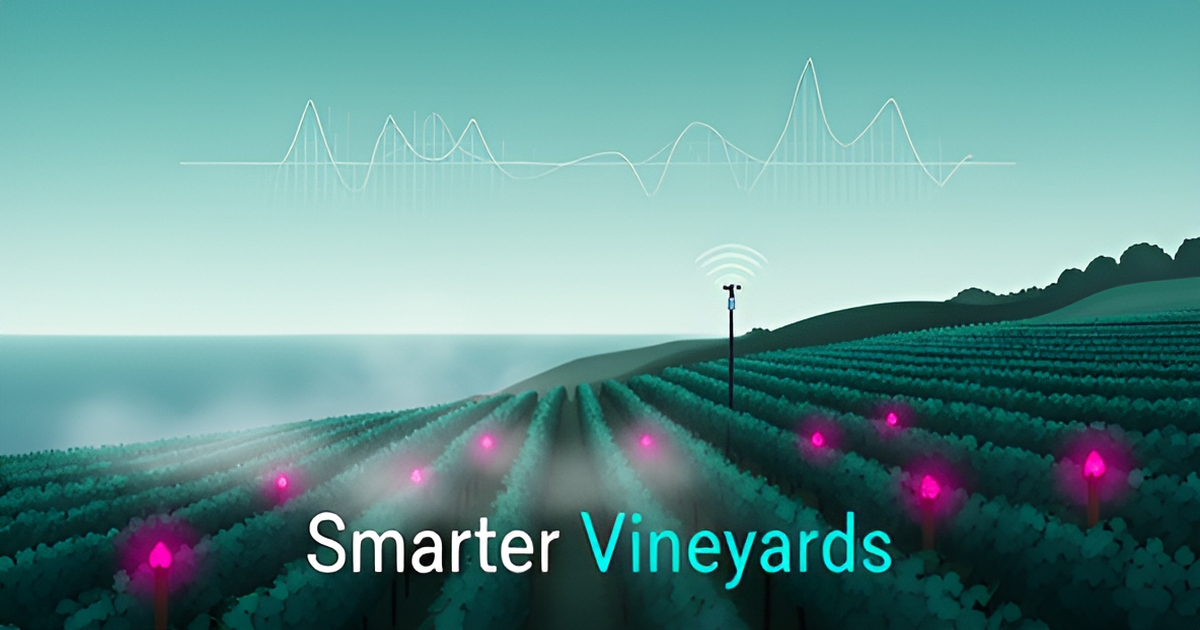
AI-Powered Weather Monitoring for Vineyard Crop Planning in Nova Scotia
Key Facts
- AI weather reliability drops off sharply beyond a short-term window unless localized sensor data is integrated into the model
- Commercial vineyard stations such as the iMETOS line support a large number of sensor inputs for hyperlocal monitoring, per platform specifications
- Platforms like Aura AI project water stress roughly 72 hours ahead by reading soil moisture and temperature at various depths, enabling proactive irrigation decisions
- Vinelytics converts live sensor data into automated spray and irrigation schedules dispatched directly to crews via text and email, eliminating manual dispatch delays
- AIQ Labs' managed AI employees typically cost around 80% less than an equivalent human hire while working 24/7/365 — see the two-minute Fit Check
Hire a team member that works 24/7 — for less than a part-time wage.
AI receptionists, SDRs, dispatchers and 99+ roles. Trained on your business, fully managed.
Not sure where to start? Ask our AI planner
Why Nova Scotia Vineyards Are Flying Blind Without Hyperlocal Weather Intelligence
Nova Scotia's coastal vineyards sit at the mercy of microclimates that shift dramatically within a single property. A regional forecast from the nearest airport might call for 2°C, while a low-lying Chardonnay block drops to −3°C — cold enough to wipe out a vintage before budbreak.
The gap between generic guidance and block-level reality is where crops are lost. Short-term forecasts of one to three days are generally very reliable, but medium-range disease-risk windows of seven to 14 days demand ground-truth sensor data to be actionable — AI reliability drops off sharply beyond a short-term window without localized sensor integration, yet many growers still base frost protection, spray timing, and harvest calls on broad regional models.
Block-level microclimate intelligence closes that gap by measuring temperature, humidity, leaf wetness, and soil moisture exactly where vines grow. Platforms like Vinelytics deploy live sensors that track evapotranspiration, solar radiation, and wind speed at the sub-block level, then convert those readings into automated irrigation and spray schedules. Neuro Vine takes a similar approach, pairing iMETOS field stations with an AI recommendation engine that delivers daily precision decisions for irrigation and disease prevention.
- Frost alerts triggered at the exact block and variety threshold
- Disease-pressure models tuned to cultivar and growth stage
- Spray-window optimization that accounts for drift and wash-off risk
- Harvest-timing guidance driven by real-time Brix progression and weather windows
AIQ Labs applies this same philosophy — integrating local climate streams with predictive AI — so vineyards can move from reactive guesswork to proactive, data-driven crop planning. When every block has its own intelligence, the whole estate gains resilience.
How AI Downscaling Turns Broad Forecasts Into Vineyard-Specific Action Plans
Generic weather forecasts often fail vineyards in Nova Scotia, where microclimates vary dramatically between valleys and coastal slopes. AI-powered downscaling transforms broad regional predictions into precise, block-level insights by integrating on-site sensor data with machine learning models trained on each vineyard's unique conditions. This approach enables growers to move from reactive responses to proactive, variety-specific action plans for frost, disease, and irrigation.
Platforms like Aura AI exemplify this capability by learning what constitutes "normal" for a specific site and tuning alerts to grape variety and growth stage, ensuring recommendations reflect real vineyard physiology rather than generic thresholds. Similarly, Neuro Vine's recommendation engine processes inputs from soil moisture, leaf wetness, and growing degree days (GDD) sensors to generate hyperlocal recommendations, turning raw data into timed interventions for spray windows or irrigation adjustments. These systems don't just report conditions — they interpret what those conditions mean for vine health and fruit development at a granular level.
By fusing real-time field data with predictive analytics, vineyards gain operational clarity that supports smarter scheduling across the season. Vinealytics, for example, integrates local climate data with predictive AI to help vineyards monitor real-time weather and adjust planting, irrigation, and harvesting schedules, reducing reliance on broad forecasts that may miss critical local variations. AIQ Labs enables this level of precision through AI Workflow Builds that unify sensor streams, weather models, and vineyard-specific logic into owned, production-ready systems — allowing growers to act on insights with confidence, not guesswork. (Aura AI, Neuro Vine, Vinealytics)
From Data to Decisions: Automating Irrigation, Spraying, and Harvest Scheduling
The moment a weather forecast shifts from a simple prediction to a direct operational command, vineyard management transforms from reactive art into proactive science. This is the critical juncture where data stops being something you simply observe and starts actively managing your most time-sensitive tasks.
Modern platforms now bridge the gap between environmental sensing and workforce management by automating the entire decision-to-execution pipeline. According to Vinelytics, their system collects live sensor data on temperature, soil moisture, and evapotranspiration, then automatically generates spray and irrigation schedules that are dispatched directly to growers and crews via text and email as actionable work orders. This eliminates the delay between recognizing a need — such as a fungal risk window or soil moisture deficit — and deploying labor to address it.
Precision irrigation represents another layer of this automated operational stack. Rather than watering on a fixed calendar, AI-driven systems analyze soil intelligence to anticipate stress before it becomes visible. Aura AI projects water stress roughly 72 hours ahead by reading moisture and temperature at various soil depths, allowing vineyard managers to irrigate based on future plant needs rather than current guesswork. This forward-looking capability is particularly valuable in Nova Scotia's variable maritime climate, where sudden heat events can rapidly dehydrate shallow-rooted vines.
When it comes to harvest, the operational advantage lies in narrowing the window of uncertainty. Vinealytics demonstrates this through their harvest coordination insights, which track how projected weather windows suggest ideal timing is narrowing for specific varieties as blocks approach optimal Brix. By integrating these hyperlocal forecasts with labor scheduling, vineyards can secure picking crews for the exact days when fruit quality peaks, rather than scrambling when a broad seasonal window arrives.
The operational capabilities that define this new standard include:
- Automated work order generation that converts weather alerts into assigned tasks for field crews without manual dispatching
- Precision irrigation scheduling based on forward-looking water stress projections and real-time evapotranspiration rates
- Dynamic spray timing optimized for weather windows that ensure applications adhere and remain effective
- Harvest coordination that narrows picking windows using block-level ripeness data and short-term forecasts
Implementing this level of integration requires more than off-the-shelf software; it demands a unified architecture where weather data flows seamlessly into task management. AIQ Labs specializes in building these custom operational systems for agricultural businesses, creating owned AI infrastructure that connects climate intelligence directly to your crew's daily workflow. If you are ready to move from monitoring weather to acting on it automatically, start with a two-minute Fit Check to identify your highest-impact automation opportunity, or book a free 30-minute strategy call to map your specific operational needs.
Building a Resilient Nova Scotia Vineyard Operation With Owned AI Infrastructure
Most vineyards still stitch together weather apps, spreadsheets, and paper logs — then wonder why a frost alert arrives after the damage is done. A unified system that owns its data and acts on it changes the calculus entirely.
Platforms like Vinealytics already prove the model: one command center ingests live sensor feeds, CRM records, and accounting data to deliver block-level frost risk, irrigation guidance, and harvest-window predictions. Neuro Vine takes the same approach, fusing iMETOS station data — rainfall, humidity, leaf wetness, soil moisture — into daily irrigation and disease recommendations that replace guesswork with ground-truth decisions. Vinelytics closes the loop by auto-assigning those weather-driven work orders to crews via text and email, turning microclimate intelligence directly into labor scheduling.
- Local climate stations feed hyperlocal microclimate data into predictive models
- Existing CRM and operations tools sync through two-way API integrations
- Managed AI employees triage alerts 24/7 and coordinate crew response without human handoff delays
- Full code and data ownership eliminates subscription dependencies and vendor lock-in
AIQ Labs builds this architecture in phases. An AI Workflow Build rebuilds the one workflow that costs you the most — for a vineyard, that is usually frost alerting and crew dispatch — at a fixed price. From there, an AI Operating System connects sensors, CRM, accounting, and crew scheduling into one operating layer you own outright. Alongside the build, managed AI employees monitor, alert, and dispatch around the clock at roughly 80% less than the cost of a human hire. Payment models are straightforward — start monthly, build in milestones, or own it outright — with no invented numbers and no surprises. See how the payment models work.
Still paying for 10+ subscriptions that don’t talk to each other?
We build custom AI systems you own outright. No vendor lock-in. Full control.
Not sure where to start? Ask our AI planner
Frequently Asked Questions
Will AI weather forecasts actually work for my Nova Scotia vineyard, or is it too microclimate-heavy?
How far ahead can I trust AI weather predictions for spray and irrigation decisions?
What sensors do I need to get hyperlocal data at the block level?
Can AI move my vineyard from monitoring weather to actually automating work orders?
How does AI help with irrigation timing in Nova Scotia's variable maritime climate?
What does it cost to build a vineyard weather intelligence system with AIQ Labs?
From Microclimate Insight to Estate-Wide Resilience
Nova Scotia vineyards can no longer afford the gap between regional forecasts and block-level reality. Hyperlocal sensors, AI downscaling, and variety-specific models turn temperature, leaf wetness, soil moisture and evapotranspiration into timely frost alerts, disease-pressure windows, spray timing that accounts for drift and wash-off, and harvest calls guided by real-time Brix and weather windows. When those insights flow straight into automated irrigation schedules, work orders for crews, and harvest coordination, weather stops being something you react to and becomes an operational command. AIQ Labs helps Nova Scotian growers build that capability by integrating local climate streams with predictive AI, so decisions shift from reactive guesswork to proactive, data-driven crop planning you own outright. If you want to see where hyperlocal intelligence would create the most impact on your estate, start the two-minute Fit Check at aiqlabs.ai/apply, then book your free 30-minute strategy call to map your highest-ROI automation opportunity.
Make AI your competitive advantage — not just another tool.
Strategy, implementation and ongoing optimization. One partner, end to end.
Not sure where to start? Ask our AI planner