AI-Powered Work Order Management: How Utility Contractors Can Cut Operational Costs
Hire a team member that works 24/7 — for less than a part-time wage.
AI receptionists, SDRs, dispatchers and 99+ roles. Trained on your business, fully managed.
Not sure where to start? Ask our AI planner
The Hidden Cost of Manual Work Orders in Utilities
Every work order that begins as a phone call, a sticky note, or a hastily typed email carries a hidden price tag. Utility contractors relying on manual processes face a compounding drain on resources that extends far beyond the visible costs of paper and processing time.
Manual work order creation forces office staff to transcribe customer requests, interpret handwritten notes, and re-enter data across disconnected systems. This repetitive handling creates multiple failure points where critical details get lost, delayed, or miscommunicated to field crews. Contractors that replace these manual workflows with digital automation typically see meaningful reductions in administrative overhead, often the difference between a dispatcher managing a schedule and a dispatcher drowning in it.
The visibility gap between office and field teams compounds these inefficiencies. Dispatchers lack real-time insight into technician locations and job status, while field workers operate without immediate access to updated work order details or customer history. This disconnect forces constant phone tag, redundant site visits, and reactive rather than proactive scheduling decisions.
Manual notification systems create additional friction. Status updates depend on field workers remembering to call in, office staff manually logging progress, and customers waiting for callbacks that may never come. These communication gaps damage service quality and inflate labor costs as teams spend hours each week simply trying to answer the question: "Where does this job stand?"
The operational impact manifests in several measurable ways:
- Delayed response times as dispatchers manually coordinate between multiple technicians and job sites
- Increased error rates from illegible handwriting, misheard phone details, and data entry mistakes
- Higher administrative overhead as staff dedicate hours to paperwork rather than revenue-generating activities
- Reduced customer satisfaction from communication delays and scheduling conflicts
- Difficulty tracking true job costs and technician productivity without automated timekeeping
These challenges explain why utility contractors increasingly adopt digital work order systems that eliminate manual input through features like wireless forms, automated job dispatching, and GPS-enabled tracking. The shift represents more than convenience, it fundamentally restructures how information flows between office and field operations.
AI-powered automation takes this transformation further by removing the human bottleneck from routine work order tasks. Rather than staff manually creating, assigning, and updating each job, intelligent systems can process incoming requests, match them to available resources, and trigger appropriate notifications without intervention. AIQ Labs builds these production-ready systems specifically to integrate with existing field tools, ensuring automation enhances rather than disrupts current workflows.
The financial case becomes clear when contractors calculate their true cost per work order. Manual processes that seem "free" because they use existing staff actually consume significant labor hours, create error-related rework, and limit the volume of jobs a team can effectively manage. These hidden costs accumulate silently until they represent a substantial portion of operational overhead.
How AI Automates Creation, Tracking, and Notifications
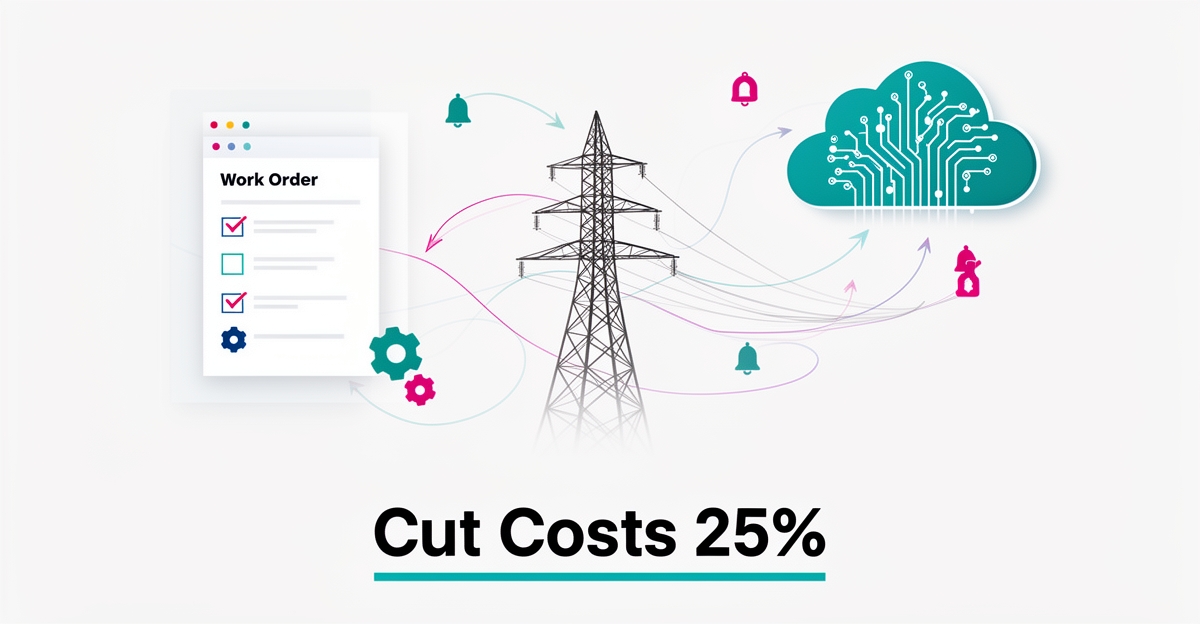
The shift to AI-powered work order management begins with intelligent automation that replaces manual processes from creation to completion. Utility contractors are seeing significant gains by deploying systems that automatically generate work orders from field inputs like sensor data, customer reports, or maintenance schedules. This eliminates time-consuming data entry and reduces errors that lead to rework or delays. As of late 2026, multi-agent systems have matured to the point where this kind of end-to-end automation is production-ready, not experimental, AIQ Labs alone has deployed more than 200 multi-agent systems in live operations.
Real-time status tracking transforms how teams monitor progress across office and field operations. AI agents continuously update work order status as tasks advance, using inputs from GPS tracking, mobile timekeeping, and digital form submissions. This visibility ensures dispatchers can reassign tasks dynamically based on technician proximity and availability, reducing idle time and improving first-time fix rates. The integration of these features creates a closed-loop system where field actions immediately inform operational decisions without manual reporting delays.
Intelligent notifications ensure the right information reaches the right team at the right time, preventing bottlenecks and miscommunication. Using agent-to-agent communication patterns and context-aware routing, AI systems trigger alerts based on predefined rules, such as when a work order exceeds estimated completion time or requires parts replenishment, while respecting organizational policies and access controls. For utility contractors managing dispersed teams, this means fewer missed updates, faster response to emergent issues, and clearer accountability across shifts and locations.
AIQ Labs builds production-ready systems that integrate these capabilities with existing field tools, ensuring seamless adoption without disrupting current workflows. By combining reusable agent patterns with workforce management features like GPS tracking and mobile timekeeping, contractors create a unified operational view. This approach moves beyond simple automation to enable agent-orchestrated operations where AI handles end-to-end tasks, from creation to closure, while humans focus on exceptions and strategic decisions. The result is a more responsive, transparent, and cost-effective work order lifecycle that scales with operational demands.
Platform Options and Integration Patterns That Scale
Choosing the right foundation determines whether AI work order automation scales or stalls in the field. Utility contractors need platforms that deliver cloud delivery, payroll and scheduling integration, and governed access to field data without rebuilding existing tools.
Modern field service platforms typically offer cloud hosting with secure web login access from anywhere, with mobile app installation required only for certain field functionalities. The core capabilities to look for include job dispatching, GPS tracking, mobile timekeeping, and wireless forms that expedite work-order processing and reduce paper usage.
Integration is practical and payroll-ready. Most established platforms can connect with common payroll and business systems, accounting software, scheduling tools, and cloud storage, through APIs. That connectivity eliminates manual data entry between office and field systems, which is where much of the savings lives.
Enterprise agent workflows scale through composable patterns rather than one-off bots.
- Chaining for step-by-step intelligence where each step interprets context, transforms data, and feeds the next
- Parallel processing to run multiple branches simultaneously for faster outcomes with better signal coverage
- Switch mechanisms for context-aware routing that adapts to user, policy, intent, and application state
- Iteration for goal-seeking refinement valuable for scheduling, planning, and allocation tasks
Governance must precede automation. A broker-before-bot approach with trust fabric first, SSO/SCIM mapping to entitlements, and DLP in the prompt path reduces risk. Governed retrieval that respects access controls and emits citations ensures knowledge retrieval stays permission-aware.
The savings materialize when platforms integrate with existing field tools rather than replace them. That principle shapes how AIQ Labs approaches every build: one connected operating layer, built in phases, owned outright by the contractor, no vendor lock-in, no forced rip-and-replace.
AIQ Labs builds production-ready systems that integrate with existing field tools, focusing on AI workflow and task automation for work order creation, status tracking, and notification systems across teams. The result is improved visibility and coordination without forcing crews to adopt unfamiliar software.
Implementation Roadmap for Utility Contractors
Implementing AI-powered work order management requires a structured approach that aligns with existing utility operations while unlocking measurable efficiency gains. AIQ Labs' production-ready, integration-first methodology ensures contractors can deploy systems they own and control, avoiding vendor lock-in from day one. The roadmap begins with a thorough assessment of current field tools, including paper-based workflows, legacy dispatch software, and mobile data collection practices, to identify integration points and automation opportunities. This foundational step ensures the AI platform complements rather than disrupts existing processes, reducing resistance during adoption.
Next, contractors should select an AI platform that supports deep integration with utilities-specific tools, cloud-hosted digital forms, GPS tracking, and job dispatching accessible via secure web login from any location. Prioritize platforms with open APIs and agent-to-agent communication capabilities that enable seamless data exchange between work order systems, CRM, and accounting software. Once selected, the focus shifts to configuring digital forms that replace paper work orders, reducing processing time and errors while enabling real-time status updates from the field. GPS tracking is then implemented to monitor technician locations, allowing dispatchers to assign jobs based on proximity and availability, cutting travel time and improving response rates.
API integrations follow, connecting the AI system with payroll, scheduling, and inventory platforms to eliminate manual data entry and create a single source of truth across operations. Governance controls are established using policy engines that enforce role-based access, data retention, and compliance with utility industry standards, ensuring AI actions remain auditable and secure. Finally, role-based training prepares office and field staff to interact with the new system, emphasizing how AI reduces manual workload rather than replaces jobs. By following this phased rollout, utility contractors can materially reduce operational costs through automated work order creation, status tracking, and cross-team notifications, turning field operations into a coordinated, intelligence-driven process.
For contractors who want to start smaller, AIQ Labs offers managed AI staff, receptionists, dispatchers, and SDRs across 99+ roles, that handle the intake and coordination work surrounding work orders at a fraction of a human hire's cost. Larger operations can rebuild the one workflow that costs the most through a fixed-price workflow build, phased so value lands before the next investment.
From Paper Trails to Profit Margins: Making the Shift That Sticks
Manual work order processes exact a quiet toll on utility contractors, through duplicated data entry, dispatch delays, and miscommunication between office and field teams. As this article has shown, AI-powered automation addresses these inefficiencies directly by streamlining creation, tracking, and notifications while integrating with existing tools. For contractors ready to move beyond incremental fixes, the path forward begins with a clear assessment of current workflows and ends with systems they own and control. AIQ Labs builds production-ready automation tailored to existing field tools, ensuring adoption enhances rather than disrupts operations. To map high-ROI opportunities for your business, start with the two-minute Fit Check at https://aiqlabs.ai/apply, then book a free 30-minute strategy call at https://aiqlabs.ai/book. If there's a clear win, we'll show you how to capture it, if not, we'll tell you that too.
Make AI your competitive advantage — not just another tool.
Strategy, implementation and ongoing optimization. One partner, end to end.
Not sure where to start? Ask our AI planner