AI-Powered Work Order Tracking: How Furnace Repair Shops Improve Accountability
Key Facts
- Most consumers now expect real-time order tracking as a baseline, not a bonus
- "Where Is My Order" (WISMO) inquiries typically account for a large share of support tickets, often 20–40%, and can surge during peak seasons
- A single poor service experience is often enough to lose a customer permanently, especially in a local market
- AI-automated status updates typically cost a fraction of traditional per-ticket support handling
- AIQ Labs has deployed 200+ multi-agent systems and runs 4 live SaaS products daily
Hire a team member that works 24/7 — for less than a part-time wage.
AI receptionists, SDRs, dispatchers and 99+ roles. Trained on your business, fully managed.
Not sure where to start? Ask our AI planner
The Hidden Cost of Lost Work Orders in Furnace Repair
A furnace fails on the coldest night of the year. The customer calls, a technician is dispatched, and the job gets written on a paper ticket or typed into a system nobody checks again. Somewhere between dispatch and invoicing, that work order quietly disappears, along with the revenue it represented.
This scenario plays out in repair shops every day, and the cost is bigger than most owners realize. The problem isn't just the lost job itself. It's the ripple effect of not knowing: unbilled repairs, missed follow-ups, and customers left wondering whether anyone is actually coming. Industry analysis consistently shows that "Where Is My Order" (WISMO) inquiries account for a significant share of support tickets, often 20–40%, and during peak seasons like a January cold snap, they can consume up to half of inbound calls.
For a furnace repair shop, those numbers translate directly into operational drag. Every call asking "is a technician on the way?" is time your office staff spends digging through schedules instead of booking new jobs. And the financial math is unforgiving: every manually handled status call carries real labor cost, and AI-automated responses typically cost a fraction of that, a difference that compounds quickly across a busy season.
The trust damage is harder to quantify but just as real. Consider what consumer research consistently reveals about expectations:
- A majority of consumers now expect real-time order tracking as a baseline, not a bonus
- Most customers actively track their orders until completion
- A large share of shoppers have stopped buying from a brand after a single poor service experience
When a customer calls twice about the same repair and gets two different answers, that relationship is already on thin ice. One bad experience is often enough to lose them permanently, and in a local market, they tell their neighbors.
The root cause in most shops isn't carelessness; it's fragmented systems. Scheduling lives in one tool, billing in another, and technician notes on a clipboard. Nothing connects, so jobs fall through the cracks and nobody notices until the customer calls angry. This is exactly the gap that AI-powered work order tracking closes: every repair is logged, tracked, and verified from first call to final invoice, with real-time visibility for both staff and customers. Systems like those built by AIQ Labs integrate with a shop's existing CRM and field management tools, so the fix doesn't require abandoning what already works.
The shops that solve this problem first gain a quiet but durable advantage, fewer lost jobs, lower support overhead, and customers who trust that when they call, someone actually knows what's going on.
How AI-Powered Tracking Eliminates Blind Spots in Service Delivery
Every furnace repair shop owner knows the sinking feeling of realizing a job slipped through the cracks, a technician dispatched but never confirmed, an invoice never sent, a customer left wondering if anyone is coming. These blind spots in service delivery cost businesses far more than individual repair tickets; they erode the trust that keeps customers calling back.
The core problem lies in visibility gaps between field operations and customer communication. As noted above, WISMO-style inquiries typically make up 20–40% of support tickets and can surge during busy seasons. For furnace repair shops juggling emergency calls, scheduled maintenance, and parts delays, these status inquiries overwhelm office staff who could otherwise focus on dispatching and quality control.
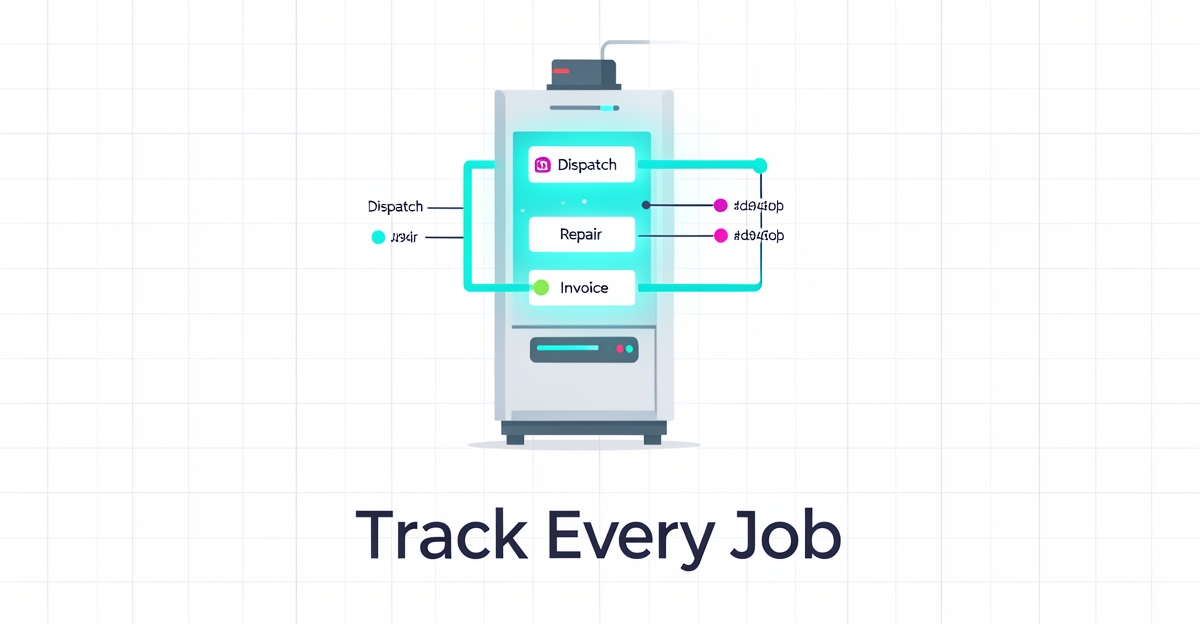
AI-powered work order tracking eliminates these blind spots by creating a continuous connection between your CRM, field management tools, and customer communication channels. Rather than waiting for technicians to call in updates or customers to phone for status checks, AI agents monitor work orders in real time and proactively push updates at every stage, from initial dispatch through parts ordering, repair completion, and final invoicing.
The impact on operational efficiency is substantial. AI-automated responses are instant rather than queued, and they typically cost a fraction of a manually handled ticket. For a furnace repair shop handling hundreds of service calls monthly, these savings compound quickly while customer satisfaction improves, customers get accurate answers in seconds instead of waiting hours for a callback.
The technology works through intelligent integration rather than replacement. AI agents connect directly to your existing systems, retrieving live status information and taking action based on predefined workflows. When a technician marks a job complete in the field management system, the AI automatically triggers customer notification, generates the invoice, and schedules any follow-up maintenance reminders. No manual handoffs, no forgotten steps, no lost revenue from unbilled work.
Key capabilities that eliminate service delivery blind spots include:
- Real-time synchronization between field technicians and office systems, ensuring everyone works from current information
- Automated customer notifications at every work order milestone, eliminating "where is my technician" calls
- Intelligent escalation when delays or complications arise, routing issues to appropriate staff before customers notice problems
- Complete audit trails documenting every action, communication, and status change for compliance and quality review
- Proactive identification of scheduling conflicts or parts shortages before they impact service delivery
AIQ Labs builds these tracking systems to integrate with the tools furnace repair shops already use, creating a unified operational view without forcing teams to abandon familiar workflows. The result is genuine accountability, every job tracked from first call to final payment, every customer informed without manual effort, every billing opportunity captured automatically.
The transformation in customer experience proves equally significant. With most consumers now expecting real-time tracking and actively monitoring their orders until completion, service businesses that provide instant, accurate updates gain a measurable competitive advantage. A large share of shoppers will abandon a brand after a single poor service experience, making reliable communication not just an operational improvement but a customer retention necessity.
Implementation Steps Furnace Repair Shops Can Take Today
Furnace repair shops can start improving accountability today with a clear, phased approach to AI work order tracking. First, analyze support volume to identify how many inquiries involve order status, delayed repairs, or tracking issues, these often make up 20–40% of support tickets and can surge during peak seasons. This analysis reveals where automation will have the greatest impact on reducing technician downtime and customer frustration.
Next, train the AI agent on your shop's specific workflows, brand tone, and service policies. Connect it to your existing CRM, scheduling, and billing systems so it can retrieve real-time work order data, parts availability, and technician locations. This ensures the AI provides accurate, personalized updates that reflect your operational standards.
Before going live, test the system with real customer and technician scenarios, such as a homeowner asking about repair timing or a dispatcher checking on a delayed parts delivery. Validate the AI's accuracy, escalation paths, and handling of edge cases like incomplete service addresses or unclear work order IDs. Finally, deploy across chat, SMS, and voice channels to meet customers where they are, enabling instant, consistent communication that reduces support overhead and builds trust through transparency.
- Analyze support volume to prioritize automation where status inquiries consume the most tickets
- Train AI on brand-specific workflows and integrate with CRM, scheduling, and billing systems
- Test real technician and customer scenarios before full deployment
- Deploy across chat, SMS, and voice for multi-channel consistency
With AIQ Labs' implementation process, shops can move from analysis to deployment in weeks, not months, gaining full ownership of a system that eliminates lost jobs, improves billing accuracy, and strengthens client trust, all while cutting the per-ticket cost of status inquiries dramatically. You can start with a single AI Workflow Build focused on the one workflow that costs you most, or bring in managed AI Employees to handle customer status calls around the clock. Start the Fit Check, https://aiqlabs.ai/apply to assess your current workflow and identify high-ROI automation opportunities, then schedule a free 30-minute strategy call, https://aiqlabs.ai/book to map your implementation plan.
Still paying for 10+ subscriptions that don’t talk to each other?
We build custom AI systems you own outright. No vendor lock-in. Full control.
Not sure where to start? Ask our AI planner
Frequently Asked Questions
How much can AI-powered work order tracking reduce support costs for furnace repair shops?
What percentage of support tickets in furnace repair shops are related to 'Where Is My Order' inquiries?
Will implementing AI work order tracking require replacing our current CRM or scheduling systems?
How quickly can furnace repair shops see improvements in customer satisfaction after implementing AI tracking?
What happens if the AI agent can't find a customer's work order during a support inquiry?
Is real-time order tracking really expected by customers, or is it just a nice-to-have feature?
Every Job Tracked, Every Dollar Captured
The math is hard to argue with: status inquiries consume a large share of support tickets, every manually handled call carries real labor cost, and a large share of shoppers walk away from a brand after a single poor service experience. For furnace repair shops, that combination means lost jobs, unbilled repairs, and customers quietly defecting to competitors, not because the work was bad, but because nobody could answer a simple question: "Where's my technician?" AI-powered work order tracking closes those gaps by connecting your CRM, scheduling, and billing systems so every repair is logged, tracked, and verified from first call to final invoice. The shops that fix this first gain a durable advantage in their local market. The next step is straightforward: take the two-minute Fit Check at https://aiqlabs.ai/apply, then book a free 30-minute strategy call at https://aiqlabs.ai/book, a real working session with an AI engineer to map your workflow and identify high-ROI automation opportunities. If there isn't a clear win, we'll tell you that too. No obligation, just clarity on what's possible.
Make AI your competitive advantage — not just another tool.
Strategy, implementation and ongoing optimization. One partner, end to end.
Not sure where to start? Ask our AI planner