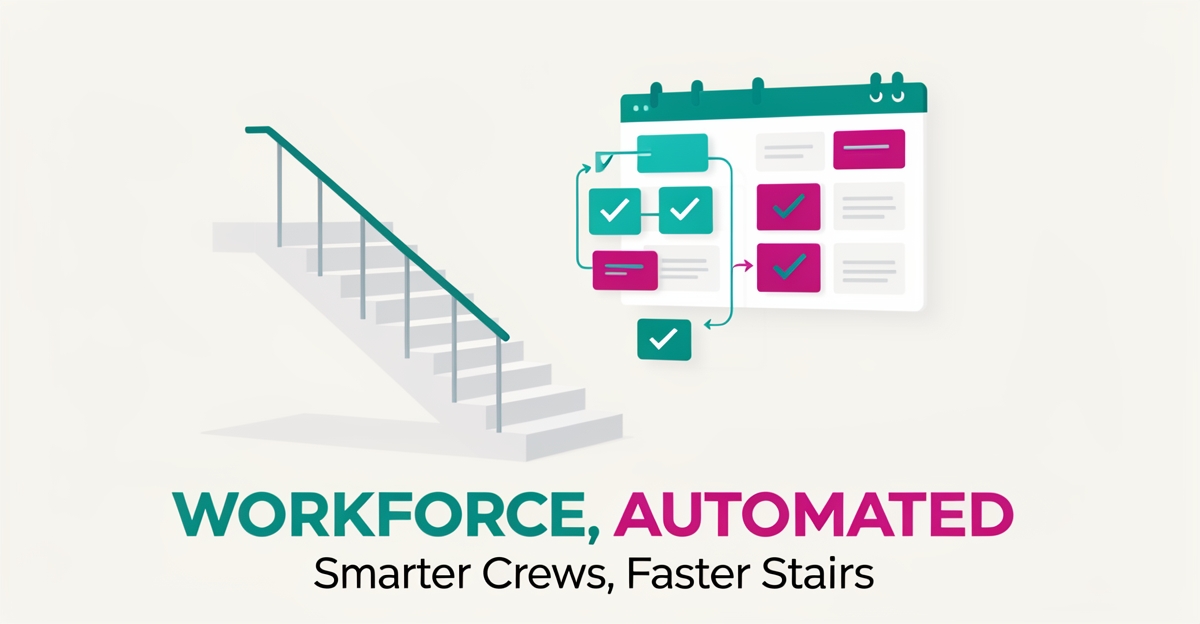
AI-Powered Workforce Management for Small Stair Repair Shops
Key Facts
- Field service platforms typically combine real-time technician tracking, automated scheduling and dispatch, GPS route optimization, and integrated CRM in one system.
- Enterprise workforce management deployments show that automating a large share of manual planning tasks translates directly into lower operating costs.
- AI, at its core, is technology that enables computers to simulate learning, problem solving, and decision-making, capabilities that map well onto dispatch and scheduling decisions (IBM: What is AI?).
- Shops that unify scheduling, tracking, CRM, and invoicing typically complete jobs faster and take on more work without adding headcount.
Hire a team member that works 24/7 — for less than a part-time wage.
AI receptionists, SDRs, dispatchers and 99+ roles. Trained on your business, fully managed.
Not sure where to start? Ask our AI planner
The Scheduling and Tracking Bottleneck in Stair Repair
Manual scheduling is quietly draining stair repair shops. Calls pile up, technicians are double-booked, and customers chase updates that never come.
Disconnected tools make the problem worse. Dispatch runs on texts, job status lives in a notebook, and invoicing waits until the end of the week. That fragmentation creates delays, missed updates, and lost revenue.
Modern AI-powered workforce management systems show what's possible when tracking and scheduling are unified. Field service platforms now deliver real-time technician tracking and status monitoring alongside automated job scheduling and dispatching, with GPS route optimization, integrated CRM, quick invoicing, and asset management in one platform. At its core, this is applied AI, software that learns, reasons, and makes decisions about who goes where and when (IBM's overview of AI covers these foundational capabilities).
For small stair repair teams, the bottleneck shows up in three predictable ways:
- Manual dispatch leads to late arrivals and overlapping jobs
- No live job completion tracking means customers call for status updates
- Disconnected tools force technicians to re-enter data, slowing invoicing and follow-up
Real-time tracking changes the dynamic. Technicians update job progress from mobile, managers see live availability, and customers receive automatic notifications. Route optimization reduces drive time between stair sites, while automated reminders improve first-time fix rates.
Enterprise workforce management deployments prove the principle at scale, when a large share of manual planning is automated, operating costs drop and admin time shrinks. The core benefit is the same for small shops: less admin, more completed jobs.
AI can monitor technician availability, track job completion times, and suggest optimal scheduling without replacing the owner's judgment. AIQ Labs builds these systems to fit your existing operations, focusing on real-time visibility and automated dispatch rather than wholesale replacement, often starting with an AI dispatcher or receptionist that handles intake and scheduling around the clock.
When scheduling and tracking are connected, shops scale without adding headcount. Jobs finish faster, communication improves, and the business can take on more work with confidence.
How AI Workforce Management Optimizes Field Teams
For small stair repair shops juggling multiple job sites, technician availability often feels like a moving target rather than a managed resource. AI-powered workforce management changes that equation by turning real-time field data into predictive scheduling intelligence. Automated dispatch and GPS tracking give managers live visibility into crew locations and job status, eliminating the guesswork that leads to double-booked appointments or idle technicians.
- Real-time technician tracking and status monitoring
- Automated job scheduling and dispatching with route optimization
- Integrated CRM and customer management for unified communication
- Quick invoicing and asset management tied to completed work orders
These capabilities work best when each role gets an interface suited to its day: counter staff handle intake, field technicians update status from mobile, and management sees the whole board. The key is starting with a unified platform that handles scheduling, mobile access, and CRM-invoicing in one workflow, then layering predictive analytics as historical data accumulates.
AIQ Labs applies this principle to small trade businesses through AI Workflow Builds, we rebuild the one workflow that costs you the most (usually dispatch and scheduling) at a fixed price, in phases, so you see value early and never bet the whole shop on a big-bang rollout. For shops ready to connect everything, scheduling, tracking, CRM, invoicing, into one operating layer, AI Operating Systems builds that out over time, and you own it outright.
Implementation Roadmap for Small Repair Shops
For small stair repair shops looking to adopt AI workforce management, success starts with a structured approach. Treat adoption as a change management initiative rather than just a technology rollout.
Begin by securing visible owner support, clearly communicate the purpose behind AI integration, such as reducing scheduling conflicts or improving customer response times, and outline how roles will evolve. Transparent leadership about AI's impact builds trust and treats employees as partners in the transition. Next, establish clear policies and guardrails through an Acceptable Use Policy that defines responsible AI use, empowering staff to engage confidently with new tools.
Select right-fit tooling tailored to field service needs, real-time technician tracking, automated scheduling, and integrated CRM. Identify volunteer champions across technician and administrative roles who can provide peer support and feedback. Foster communities of practice through regular forums where staff share tips on using AI for job completion tracking or customer communication. Provide accessible learning pathways focused on practical applications, such as reducing manual data entry or optimizing daily routes.
Assign a dedicated owner to orchestrate the program, ensuring accountability for training, integration with existing tools like calendars or payment systems, and ongoing optimization. Finally, implement data-driven metrics to monitor adoption rates, improvements in job completion times, and customer satisfaction, key indicators for scaling from basic scheduling to broader operational insights. Starting with core pain points allows shops to build confidence before expanding to advanced features like predictive inventory management or automated invoicing.
AIQ Labs structures this journey in milestones, so you pay as value is delivered and can stop or continue at each phase. Start with the two-minute Fit Check, then a free 30-minute strategy call to map where AI workforce management can deliver the clearest operational gains for your shop.
Choosing the Right AI Workforce System for Your Shop
Small stair repair shops face a critical choice between buying a single platform that does everything, assembling modular tools, or building a custom system that fits exactly how you work. The right fit depends on shop size, technician count, and how much complexity you can absorb.
All-in-one field service platforms consolidate scheduling, CRM, invoicing, and inventory into one system, typically built around real-time technician tracking and automated dispatching with GPS route optimization. They reduce tool sprawl and training time, but you adapt your workflow to their template, and subscription costs compound year after year.
Modular HR and workforce tools prioritize flexibility over breadth: AI-powered payroll, chatbot HR assistants, and analytics reports. Modular stacks let shops keep existing accounting or CRM and add workforce features only where needed, but integration overhead grows with each add-on.
A third option is a custom build. AIQ Labs has deployed 200+ multi-agent systems and runs four live SaaS products daily, so we know what works in production. A custom dispatch-and-scheduling system fits your actual workflow, is built in phases at a fixed price per milestone, and is owned outright, no per-seat subscription forever. You can see the payment models (Start Monthly, Build in Milestones, Own It Outright) on the pricing page.
Match features to business complexity:
- Parts inventory depth: Shops with specialized stair components benefit from inventory tracking tied to job records.
- Seasonal demand handling: Automated scheduling and reforecasting help smooth peaks common in construction-related repair work.
- Technician mobile access: Mobile job status updates, GPS tracking, and on-site invoicing reduce admin time and improve customer transparency.
Small shops with 3-10 technicians often gain the most from a system that reduces tool sprawl and training time, whether that's an off-the-shelf platform or a lean custom build. Larger or multi-location operations may need deeper workforce analytics and compliance features.
AIQ Labs helps small repair shops evaluate these trade-offs, focusing on monitoring technician availability, tracking job completion times, and suggesting optimal scheduling without forcing a one-size-fits-all stack.
Still paying for 10+ subscriptions that don’t talk to each other?
We build custom AI systems you own outright. No vendor lock-in. Full control.
Not sure where to start? Ask our AI planner
Frequently Asked Questions
Will AI workforce management actually help a small stair repair shop or is it just for big companies?
What kind of efficiency gains can I realistically expect?
How does real-time tracking change day-to-day operations?
What features matter most for a stair repair business?
Is an all-in-one platform better than modular tools?
How do I start implementing AI workforce management without disrupting my team?
From Bottleneck to Breakthrough: Your Next Move
The scheduling chaos that plagues small stair repair shops isn't inevitable, it's a solvable systems problem. Manual dispatch creates overlapping jobs, disconnected tools force double entry, and the lack of live tracking leaves customers in the dark. The fix isn't more spreadsheets or another standalone app; it's unifying scheduling, tracking, CRM, and invoicing into one system that gives you real-time visibility without adding headcount. AIQ Labs builds exactly that: start with an AI dispatcher or receptionist, rebuild the one workflow that costs you the most, or connect everything into a single operating layer you own outright. The shops that move first don't just save admin hours, they free up capacity to take on more work with confidence. Ready to see where the biggest win lives in your workflow? Take the two-minute Fit Check and we'll map it together on a free strategy call.
Make AI your competitive advantage — not just another tool.
Strategy, implementation and ongoing optimization. One partner, end to end.
Not sure where to start? Ask our AI planner