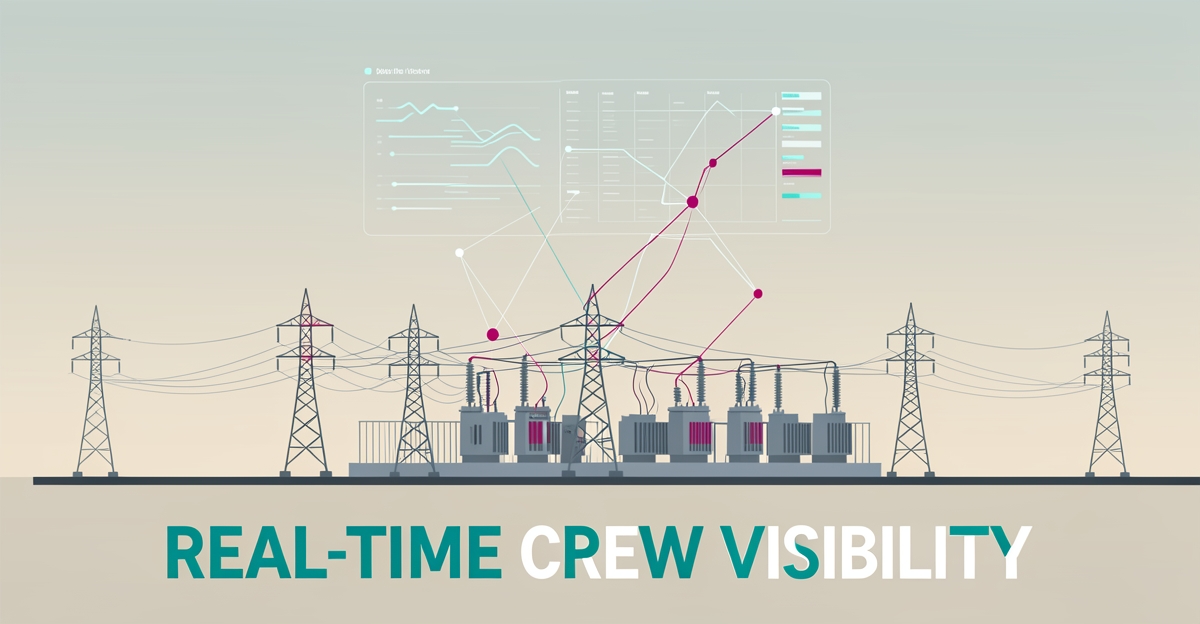
AI-Powered Workforce Management: How Substation Contractors Can Track Crew Performance in Real Time
Key Facts
- Real-time crew transparency helps substation contractors prevent overallocation and deploy skilled technicians where they're needed most
- AI workforce management tracks crew availability, task completion, and compliance metrics simultaneously for operational intelligence
- Manual logs and end-of-shift reporting leave supervisors reacting to problems hours after they start
- AI tools integrated with project management platforms improve accountability without replacing human judgment
- Phased adoption, starting with one high-cost workflow, reduces risk and proves ROI before scaling
- Ownership models eliminate vendor lock-in, transferring code, data, and IP to the contractor
Hire a team member that works 24/7 — for less than a part-time wage.
AI receptionists, SDRs, dispatchers and 99+ roles. Trained on your business, fully managed.
Not sure where to start? Ask our AI planner
The Visibility Gap in Crew Scheduling and On-Site Accountability
Substation contractors often operate with fragmented visibility into crew performance, relying on manual logs and delayed updates that obscure real-time readiness. This gap creates inefficiencies when scheduling crews across multiple job sites, as supervisors lack immediate insight into who is available, where tasks stand, or how delays ripple through project timelines. Without live tracking, even small misjudgments in crew allocation can cascade into idle time, overtime costs, or safety risks when understaffed teams rush to catch up.
The reliance on spreadsheets and paper-based reporting exacerbates these challenges, turning accountability into a reactive process rather than a proactive one. When task completion is only updated at shift end or after site visits, managers cannot intervene early to rebalance workloads or address bottlenecks. This opacity also erodes crew trust and retention, workers experience inconsistent scheduling, unclear expectations, and last-minute changes that wear down morale. The hidden costs of scheduling inefficiency show up as turnover, disengagement, and rework, none of which appear on a project budget line until it's too late.
Real-time visibility transforms this dynamic by turning crew data into actionable intelligence. When AI monitors availability, task progress, and site conditions continuously, supervisors gain the ability to adjust schedules on the fly, prevent overallocation, and ensure that skilled technicians are deployed where they're needed most. This level of oversight isn't just about efficiency, it directly supports safety by ensuring crews aren't stretched thin across hazardous environments and helps protect margins by minimizing downtime and rework. For substation contractors managing high-stakes infrastructure projects, the ability to see and act on crew performance in real time closes the visibility gap that manual methods leave wide open.
How AI Workforce Management Creates Real-Time Crew Transparency
Picture a substation retrofit where the foreman knows, at 7:15 a.m., which linemen are certified, on-site, and halfway through their torque checks, without a single radio call. That level of clarity is no longer a fantasy; AI workforce management makes it the baseline for modern contractors.
Instead of chasing paper timesheets or fragmented spreadsheets, AI systems continuously ingest data from GPS-enabled devices, equipment sensors, and digital work orders. The result is a live operational picture that updates as conditions change, not hours later when the shift ends.
Real-time crew transparency transforms how substation contractors deploy their most valuable resource: skilled labor. For high-voltage work where a missing certification or fatigued crew member creates serious risk, this visibility becomes a safety imperative, not just a scheduling convenience.
The technology tracks three critical dimensions simultaneously:
- Crew availability and location: GPS and mobile check-ins show exactly who is on-site, en route, or delayed, allowing dispatchers to rebalance workloads instantly when emergencies arise.
- Task completion status: Digital workflows update automatically as technicians close out work orders, flagging bottlenecks before they delay energization schedules.
- Performance and compliance metrics: AI monitors certification expirations, safety protocol adherence, and productivity patterns, ensuring only qualified personnel handle specific switchgear or live-line procedures.
This granular visibility matters most on distributed energy and grid modernization projects, where specialized teams must be orchestrated precisely across multiple sites. Rather than relying on end-of-day reports, project managers spot delays as they happen and reallocate resources before deadlines slip.
The financial impact extends beyond overtime reduction. In substation construction, a single day of delay can cascade through interconnection agreements and penalty clauses. Preventing just one scheduling error, catching a certification gap before a crew arrives, or rebalancing a workload before it triggers a fatigue-related incident, often justifies the technology investment on its own.
However, transparency requires guardrails. The same data that optimizes scheduling can feel like surveillance if implemented without clear governance. Successful deployment demands strong governance frameworks and preserved human judgment to maintain trust. AI should surface insights, such as a crew showing signs of fatigue or a pattern of rework on specific transformer installations, but final decisions about personnel remain with experienced supervisors who understand context that algorithms miss.
AIQ Labs approaches this balance by designing workforce management systems that integrate with existing project management platforms rather than replacing human oversight. Our implementations include configurable escalation protocols, ensuring that while AI handles the data aggregation and pattern recognition, field leadership retains authority over crew assignments and safety calls.
When substation contractors combine real-time AI visibility with experienced human judgment, they create an accountability framework that protects both workers and project timelines. The technology doesn't eliminate the foreman's expertise; it amplifies it, ensuring that every decision about who goes where, and when, is backed by current data rather than outdated assumptions.
Integrating AI Workforce Tools with Existing Project Management Systems
AI-powered workforce management tools deliver real value when they work seamlessly with the systems substation contractors already rely on for project tracking and scheduling. Rather than replacing existing platforms, AI enhances them by adding intelligent monitoring of crew availability, task completion, and on-site performance to improve accountability and responsiveness. This integration allows teams to maintain familiar workflows while gaining deeper insights into operational efficiency.
Successful implementation begins with assessing AI readiness across your organization's current technology stack, data infrastructure, and team capabilities. A structured evaluation helps identify gaps in data quality, system compatibility, and staff preparedness before deployment. Organizations that prioritize governance and human judgment in AI adoption typically see stronger outcomes, because AI supports rather than replaces expert decision-making. Establishing clear data leadership ensures that performance metrics from AI tools are accurate, secure, and actionable for daily operations.
Next, focus on high-impact workflows where AI can deliver immediate value, such as crew dispatching, work order tracking, or safety compliance monitoring. Start with the one process that costs you the most, like automating shift assignments based on real-time crew availability and skill matching, to prove the concept before scaling. AIQ Labs supports this phased approach through its AI Workflow Builds service, which rebuilds a single high-cost workflow at a fixed price, delivered in phases and integrated directly with tools like Procore, Primavera, or Microsoft Project. This method reduces risk and lets teams build confidence through measurable improvements.
Finally, embed strong governance and human oversight into daily operations to ensure responsible AI use. This includes defining clear roles for AI-generated insights, maintaining audit trails for compliance, and scheduling regular reviews where supervisors validate AI recommendations against field experience. Human-in-the-loop controls prevent over-reliance on automation while preserving the expertise that drives safe, high-quality substation work. By combining AI's real-time tracking capabilities with seasoned judgment, contractors can optimize crew performance without sacrificing accountability or safety. To explore how these steps apply to your operations, start with a free strategy call to map your biggest bottlenecks and identify high-ROI opportunities. Schedule your free 30-minute strategy call to see where AI workforce integration delivers the clearest win.
From Pilot to Scale: Building an Owned AI Workforce System
For substation contractors, moving beyond AI experimentation requires a clear path from pilot to scalable ownership, one that avoids vendor lock-in while building lasting operational advantage. Many contractors begin with isolated AI tools but struggle to scale due to fragmented systems, unclear ROI, or dependency on third-party platforms. AIQ Labs addresses this by guiding contractors through a structured transformation journey: starting with targeted workflow builds, advancing through milestone-based development, and culminating in full ownership of a custom AI operating system. This approach ensures that every phase delivers measurable value while laying the foundation for company-wide integration.
The journey begins with identifying high-impact use cases, such as real-time crew tracking, task completion monitoring, or availability forecasting, that directly improve scheduling accuracy and accountability. AIQ Labs' Start Monthly model allows contractors to deploy managed AI Employees, like an AI Dispatcher or Service Coordinator, to handle crew logistics and integrate with existing project management tools, providing immediate capability without long-term commitment. As confidence grows, the Build in Milestones approach enables phased development of department-wide systems, such as automating work order management or optimizing field service routing, with each phase delivered, validated, and paid for upon completion. This reduces risk and ensures continuity, as contractors retain all work built to date even if they pause.
Ultimately, the Own It Outright model delivers a fully owned AI Operating System, complete with custom agents, integrated data flows, and a centralized dashboard for monitoring crew performance across sites. Unlike subscription-based tools, this model transfers complete intellectual property, code, and data ownership to the contractor, eliminating vendor dependency and enabling continuous optimization. AIQ Labs supports this transition through ongoing optimization reviews and scaling guidance, ensuring the system evolves with the business. By anchoring AI adoption in ownership, integration, and measurable outcomes, substation contractors transform pilot projects into sustainable competitive advantages, turning real-time crew insights into smarter scheduling, fewer delays, and stronger project outcomes. To explore how this progression applies to your operations, start with a free strategy call to map your highest-impact automation opportunity. Schedule your free 30-minute strategy call to begin building an AI workforce system you truly own.
Still paying for 10+ subscriptions that don’t talk to each other?
We build custom AI systems you own outright. No vendor lock-in. Full control.
Not sure where to start? Ask our AI planner
Frequently Asked Questions
How does AI workforce management improve real-time crew visibility for substation contractors?
What are the three critical dimensions tracked by AI workforce management systems in substation construction?
Can AI workforce tools integrate with existing project management software like Procore or Primavera?
How does AI prevent over-reliance on automation while still improving crew accountability?
What financial impact can AI-powered workforce management have on substation projects?
What is the risk of implementing AI workforce tools without proper governance, and how can it be avoided?
From Visibility to Value: Turning Crew Insights into Action
AI-powered workforce management transforms how substation contractors operate by replacing guesswork with real-time clarity, knowing exactly who's available, where tasks stand, and how performance impacts safety and timelines. This visibility isn't just about efficiency; it directly protects margins by reducing idle time, preventing scheduling errors that cascade into delays, and ensuring skilled crews are deployed where they're needed most. When AI surfaces insights like certification gaps or fatigue patterns, supervisors gain the data to make faster, safer calls, without sacrificing the human judgment that keeps high-voltage work reliable. For contractors ready to move beyond manual logs and reactive scheduling, the path forward starts with pinpointing where crew transparency delivers the highest ROI. Begin with a free strategy call to map your biggest bottlenecks and see how AI workforce integration creates measurable gains in scheduling accuracy, accountability, and project outcomes, without disrupting the systems you already rely on.
Make AI your competitive advantage — not just another tool.
Strategy, implementation and ongoing optimization. One partner, end to end.
Not sure where to start? Ask our AI planner