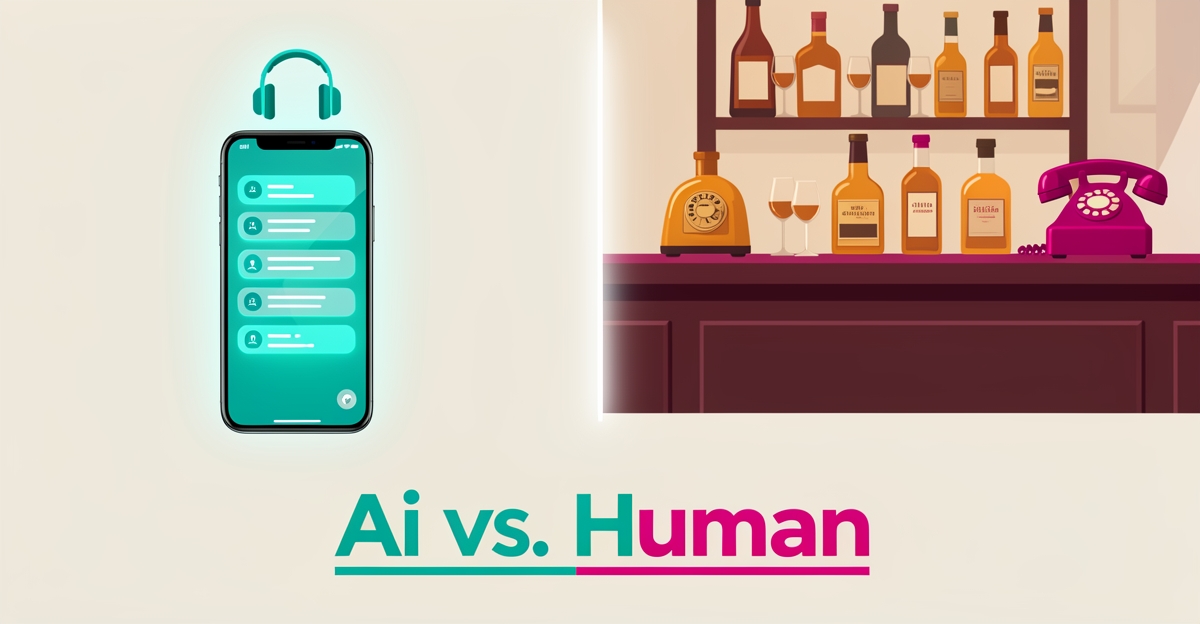
AI Receptionist vs. Human Front Desk: Which Works Better for Spirits Tasting Rooms?
Key Facts
- A full-time human receptionist typically costs $50,000-$61,000 annually including benefits, while AI coverage runs a small fraction of that
- A large share of calls to service businesses, often over a third, arrive outside standard hours, when a human-only front desk is closed
- AI receptionists typically reduce per-interaction costs substantially compared to human-handled calls
- In high-volume front desk operations, AI activation has cut hold times from several minutes to under 30 seconds
- Research suggests roles seeing the most automation also see the greatest augmentation, AI elevates staff rather than replacing them
- Modern voice AI can be trained on hospitality tone, so callers hear warm, on-brand conversations even at 2 a.m.
Hire a team member that works 24/7 — for less than a part-time wage.
AI receptionists, SDRs, dispatchers and 99+ roles. Trained on your business, fully managed.
Not sure where to start? Ask our AI planner
The Missed Call Problem: Why Your Front Desk Is Costing You Bookings
Spirits tasting rooms thrive on personal connection, but their front desks often operate on a schedule that misses peak inquiry times. A human receptionist typically covers just 40 hours per week, while reservation requests and private event bookings surge during evenings and weekends. This mismatch creates a critical gap where valuable opportunities slip through the cracks.
Industry data on service businesses shows that a large share of calls, often more than a third, arrive outside standard hours, a pattern that closely mirrors the calling behavior seen in hospitality venues like tasting rooms. When these after-hours inquiries go unanswered, potential guests often move on to competitors who are available to take their call. The result is not just a missed conversation, it's a direct loss of event revenue that could have been secured with timely engagement.
Even during operating hours, high call volumes can overwhelm a single front desk agent, leading to frustrating hold times that drive callers away. In high-volume front desk operations that added AI, teams handling 60 to 80 calls per day saw average hold times drop from over four minutes to under 30 seconds. For a tasting room, reducing hold times isn't just about efficiency, it's about preserving the warm, welcoming first impression that defines the guest experience.
- After-hours calls often represent over a third of total inquiry volume
- Long hold times directly correlate with abandoned calls and lost bookings
- Every missed call is a potential private event or group tasting that goes to a competitor
- AI receptionists ensure 24/7 availability without sacrificing hospitality tone
- Front desk staff can then focus on in-person guest engagement during peak hours
By automating routine phone inquiries, an AI receptionist ensures that no call goes unanswered, whether it's a Tuesday at 2 a.m. or a Saturday afternoon during a busy tasting flight. This consistent availability captures leads that would otherwise be lost, directly protecting revenue streams from private events, corporate bookings, and large-group reservations. Meanwhile, human staff are freed to deliver the high-touch, personalized hospitality that only they can provide during in-person visits. The front desk becomes less about answering phones and more about orchestrating seamless guest experiences, exactly where human talent delivers the greatest value.
The Cost Math: What a Receptionist Really Costs vs. AI Coverage
Tasting room margins are thin, and the front desk is one of the first places cost pressure shows up. A single missed after-hours call for a private event can mean lost revenue that takes weeks of tastings to recover.
A full-time human receptionist typically costs a business between $50,000 and $61,000 annually including benefits. That covers 40 hours per week, one caller at a time, and zero coverage after close. For a tasting room with seasonal traffic, you are paying for downtime.
AI receptionist solutions, as of late 2026, typically run a small fraction of that, often a low four-figure annual subscription or less, for comparable 24/7 coverage. The math is immediate: you replace a five-figure salary with a modest subscription while gaining round-the-clock availability.
Per-interaction economics reinforce the shift. Customer service benchmarks consistently show AI support reduces per-interaction cost by well over half compared to human-handled calls, and businesses commonly report meaningful first-year returns on AI customer service investments.
That efficiency matters for high-touch hospitality. Spirits inquiries often arrive evenings and weekends when staff are on the floor. An AI receptionist trained for inbound call management can answer hours, confirm reservations, and route event bookings without pulling a bartender away from guests.
AIQ Labs deploys AI Employees, including receptionists, trained to handle spirits inquiries with a personalized, hospitality-based tone, so the first call feels on-brand even when no human is at the desk.
The cost difference shows up in three operational areas:
- Labor: a five-figure annual human cost vs. a small-fraction AI subscription
- Availability: 40 hrs/week human coverage vs. 24/7/365 AI coverage with no missed calls
- Efficiency: substantially lower per-interaction cost and consistent lead capture
For tight-margin tasting rooms, that frees budget for what drives loyalty: in-person experience, staffed tastings, and event execution. The front desk becomes an always-on capture point instead of a fixed cost center.
Human staff remain essential for nuanced hospitality on site. AI handles repetition, data capture, and routing so the team can focus on high-value guest moments.
Can AI Sound Hospitable? Handling Spirits Inquiries With the Right Tone
The biggest worry about an AI receptionist in a spirits tasting room is tone, will callers feel welcomed or processed? Modern voice AI has moved past robotic scripts toward natural conversation that can be shaped for hospitality.
Today's systems handle natural conversation and can be trained on a hospitality-based tone for spirits questions, from tasting notes and distillery history to cask strength availability and food pairings. Industry analysis increasingly frames capable AI as behavior that emulates a well-trained human, agents operating within existing workflows and controls while sounding warm and knowledgeable. That means a caller asking about a private barrel pick gets a polite, informed response instead of a menu of button presses.
Training is the difference between generic and hospitable. An AI receptionist can learn brand voice, product stories, and local etiquette, and keep that tone consistent across every call at 2 a.m. or 2 p.m. It also captures context so callers never repeat themselves.
Context-aware routing is where AI removes friction for high-touch businesses. When an inquiry comes in, the system identifies intent and either resolves it directly or hands off to a human with full context.
- Checks calendar availability and books tasting slots or private events without transfer
- Routes event inquiries to the events manager with caller name, date, guest count, and notes already logged
- Answers hours, directions, and spirit FAQs with a consistent hospitality tone
- Prioritizes messages for the front desk team so urgent bookings are handled first
That continuity matters because missed after-hours calls cost real revenue. Service-industry data consistently shows a large share of calls arriving outside standard hours, a pattern that mirrors tasting rooms fielding reservation and event requests in evenings and weekends. AI provides 24/7/365 coverage so those opportunities are captured.
Where human nuance still wins is complex, emotionally layered moments. AI can fall back to scripted responses on highly unusual or multi-layered requests, and it cannot replicate the in-person warmth of a tasting room host guiding a guest through a flight. That is why the strongest setup pairs AI for first contact and routine booking with human staff for education, storytelling, and relationship building.
AIQ Labs deploys AI receptionists specifically trained to handle spirits inquiries with a personalized, hospitality-based tone, freeing your team to focus on the in-person experience that drives loyalty. The result is hospitality without the missed calls, and a front desk that sounds human even when no one is at the desk.
The Hybrid Play: Freeing Your Staff for What Guests Actually Remember
The true value of an AI receptionist isn't just in answering calls, it's in what it enables your human team to do. By handling routine inquiries about hours, directions, and bookings, AI frees staff to focus on the in-person moments that guests actually remember: the warmth of a personalized tasting, the story behind a rare spirit, and the connection that turns a first-time visitor into a loyal advocate.
This shift isn't about replacement, it's about redefinition. Workforce research, including studies from the Burning Glass Institute, has found a strong correlation between the roles seeing the most automation and those experiencing the greatest augmentation, automation and augmentation happen simultaneously within the same positions. When repetitive tasks are lifted, human potential is amplified.
For spirits tasting rooms, this means your team can redirect energy from the front desk to the tasting bar, where high-touch hospitality drives repeat visits and word-of-mouth referrals. AI doesn't eliminate the need for your staff; it elevates their role by removing distractions and letting them shine in what they do best: creating memorable, human-centered experiences that no algorithm can replicate. With AI handling calls at a small fraction of the cost, your team gains the bandwidth to focus on the moments that build your brand.
How to Deploy an AI Receptionist in Your Tasting Room
First impressions in a spirits tasting room start the moment the phone rings. An AI receptionist ensures that call is answered with a hospitality-trained voice, captures the reservation, and frees your team for in-person guests.
Define the job description before you build. For tasting rooms the core inbound tasks are reservations for tastings and tours, event routing for private bookings and corporate groups, hours and location details, and portfolio questions about spirits, pricing and availability. Clear scope keeps the AI focused and reduces escalation.
Training is where hospitality shows. The AI learns your spirits portfolio, brand voice, tasting notes, and seasonal offerings so it can answer product questions in a warm, knowledgeable tone. The system can be tuned to sound like your brand rather than a generic bot.
Integration turns conversation into action. Connect the AI to your booking calendar and CRM so inquiries become confirmed reservations in real time. Automatic data capture also drives the per-interaction cost savings described above. With a full-time human receptionist typically costing $50,000-$61,000 annually including benefits versus a small fraction of that for AI coverage, the economic case is clear.
Set human escalation rules for high-touch moments. Route complex event negotiations, custom tasting design, or complaints to a human host with full context so the caller never repeats themselves. This context-aware routing preserves the personal experience while eliminating hold times.
Deployment with AIQ Labs follows a practical Start Monthly model. One AI employee is built, trained on your business, integrated with your tools, and monitored with the ability to pause or adjust anytime. That flat monthly plan costs less than a part-time hire and includes build, training, integrations, monitoring and improvements.
A typical implementation covers:
- Reservation handling with real-time calendar checks and confirmation texts
- Event intent detection and smart routing to your events manager with caller details
- Hours, directions and portfolio FAQs answered in brand voice 24/7/365
- Human handoff triggers for VIP guests, large groups, or sensitive requests
After-hours coverage matters. Service-industry data consistently shows a large share of calls arriving after standard hours, a pattern that mirrors tasting room inquiries for weekend tastings and evening events. 24/7 availability ensures you never miss a booking opportunity.
Start the 2-minute Fit Check at aiqlabs.ai/apply for a free 30-minute strategy call to map your biggest bottleneck and identify high-ROI AI automation opportunities.
Still paying for 10+ subscriptions that don’t talk to each other?
We build custom AI systems you own outright. No vendor lock-in. Full control.
Not sure where to start? Ask our AI planner
Frequently Asked Questions
How much does an AI receptionist cost compared to a human front desk for a spirits tasting room?
Will an AI receptionist sound hospitable enough for our tasting room guests?
What percentage of tasting room inquiries come in after hours, and how does an AI receptionist help?
Can an AI receptionist handle complex requests like private event bookings or custom tastings?
How does using an AI receptionist improve the in-person guest experience at our tasting room?
What is the return on investment for implementing an AI receptionist in a hospitality setting like a tasting room?
Let Your Front Desk Work Smarter, Not Harder
Spirits tasting rooms thrive on personal connection, yet missed calls and long hold times quietly erode revenue, especially during evenings and weekends when inquiries peak. An AI receptionist trained on your brand voice ensures 24/7 availability, capturing every reservation and event request while cutting per-interaction costs and freeing your team to focus on the in-person hospitality that builds loyalty. The result isn't just efficiency, it's a front desk that never sleeps and a staff empowered to create the memorable experiences guests actually remember. Ready to see how this works for your tasting room? Start with a free 30-minute strategy call to map your biggest bottleneck and identify high-ROI opportunities, no obligation, just clarity. Book your strategy call and discover where AI can make the biggest impact.
Make AI your competitive advantage — not just another tool.
Strategy, implementation and ongoing optimization. One partner, end to end.
Not sure where to start? Ask our AI planner