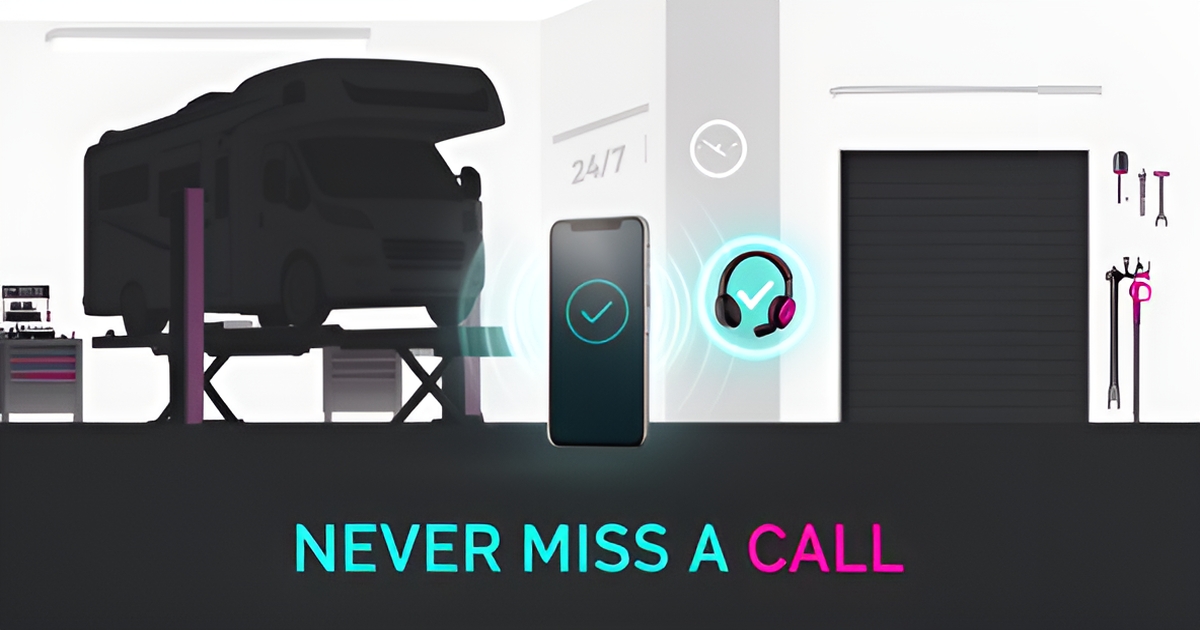
AI Voice Receptionists: How They Improve Phone-Based Service for RV Repair Shops
Key Facts
- A large share of calls to home services and repair businesses typically go unanswered, with industry estimates putting the annual cost of missed opportunities in the hundreds of thousands of dollars for busy shops
- Most customers today expect an immediate response when they call a business, and many will simply move on to a competitor if no one picks up
- Well-implemented AI voice receptionists typically handle the vast majority of routine calls without human intervention, answering within seconds
- Shops that deploy AI answering typically report dramatic reductions in missed calls and significantly more after-hours lead capture than voicemail alone
- A full-time human receptionist typically costs several thousand dollars per month, while AI receptionist plans are structured to cost less than a part-time hire
- Because callers strongly dislike hold times and voicemail, instant answering is one of the biggest levers for customer retention
Hire a team member that works 24/7 — for less than a part-time wage.
AI receptionists, SDRs, dispatchers and 99+ roles. Trained on your business, fully managed.
Not sure where to start? Ask our AI planner
The Hidden Cost of Missed Calls in RV Repair
The phone rings constantly at RV repair shops, but many calls go unanswered, creating a silent drain on revenue. Industry estimates suggest that a large share of calls to home services and repair businesses go completely unanswered, with busy shops losing substantial revenue each year in missed opportunities. For RV repair specialists, this means potential repair jobs, seasonal maintenance bookings, and emergency service requests slipping through the cracks simply because no one is available to pick up the phone.
Customers today have little patience for delays or hold times when seeking service. Most callers expect an immediate response, and a large majority say they dislike being put on hold. When calls aren't answered within seconds, frustration builds quickly, leading many to hang up and contact a competitor instead. This expectation for near-instant responsiveness puts immense pressure on small repair shops that may lack dedicated front desk staff.
The financial impact extends beyond lost immediate jobs. A meaningful share of missed calls would have converted into booked work at a healthy average ticket, directly linking unanswered phones to revenue leakage. Meanwhile, a full-time human receptionist typically costs several thousand dollars per month—a significant expense for coverage that still leaves nights, weekends, and lunch hours vulnerable to missed calls. AIQ Labs addresses this gap with AI Employees: managed AI voice receptionists that work 24/7, answer within seconds, intelligently triage inquiries, and book appointments directly into shop calendars—at a fraction of the cost of a human hire. This approach transforms phone responsiveness from a liability into a reliable revenue protector.
How AI Voice Receptionists Solve RV Shop Phone Challenges
RV repair shops face constant phone pressure, with customers calling for emergency repairs, scheduling maintenance, or asking about parts availability—often outside regular business hours. When calls go unanswered, opportunities vanish quickly, especially for time-sensitive issues like roadside breakdowns or seasonal prep needs. AI voice receptionists solve this by handling the vast majority of routine calls without human intervention, answering within seconds while keeping the caller experience natural, so every inquiry gets immediate attention. Well-implemented systems resolve most common requests—like checking service availability or providing basic troubleshooting—so staff can focus on complex repairs.
These AI agents also enable true 24/7 emergency triage, detecting urgent situations like coolant leaks or electrical faults and escalating them immediately to on-call technicians. By integrating directly with shop calendars and CRMs, they book appointments in real time, which typically means far fewer missed calls and substantially more after-hours lead capture than traditional voicemail or answering services. This seamless integration prevents scheduling conflicts and ensures no lead falls through the cracks, even during peak seasons or overnight. For shops relying on timely service delivery, this means fewer no-shows and higher customer retention.
Beyond call handling, AI receptionists qualify leads by gathering key details—such as RV make, model, and symptoms—before passing them to the team, streamlining the intake process. They also send automated confirmations and reminders, further reducing administrative burden. With natural language understanding, they manage interruptions, clarify requests, and adapt to caller tone, creating a human-like experience that builds trust. Every call gets answered, logged, and acted upon, which is exactly how shops recover revenue that previously disappeared into voicemail. For RV repair shops aiming to scale service without scaling overhead, this technology turns phone chaos into a competitive advantage.
Implementing AI Receptionists: From Setup to ROI for RV Shops
Rolling out an AI receptionist doesn't require a six-month IT project or a full-time hire—it starts with a single, well-trained AI employee that costs a fraction of a human hire. For RV repair shops drowning in missed calls, the path from setup to measurable ROI is shorter than most owners expect.
The rollout begins with the Start Monthly model, where AIQ Labs builds and trains your AI receptionist on your specific service workflows. This flat monthly plan—structured to cost far less than a human hire—includes the initial build, integration with your existing scheduling software and CRM, and ongoing monitoring. Unlike recruiting a human receptionist, this approach eliminates hiring delays and training gaps while providing immediate 24/7 coverage. You can see how the payment models compare at aiqlabs.ai/pricing.
Integration happens at the API level, connecting the AI directly to your shop's calendar and customer database. The system learns to check real-time availability, book appointments without double-booking your technicians, and sync customer details across platforms. Because most customers expect an immediate response when they call, this instant connectivity ensures no RV owner waits on hold while their travel plans hang in the balance.
Training focuses on RV-specific scenarios: distinguishing between routine maintenance requests and emergency breakdowns, understanding seasonal rush patterns, and capturing details like RV make, model, and slide-out configurations for accurate service preparation. The AI learns to triage calls by urgency, escalating true emergencies to your on-call technician while booking standard service appointments directly into your workflow.
To validate your investment, track these specific metrics from day one:
- Appointment conversion rate from inbound calls to booked jobs
- Reduction in no-show rates through automated confirmation calls
- After-hours capture volume compared to previous voicemail rates
- Percentage of calls answered within the first ring versus previous hold times
Shops that deploy AI answering typically see a sharp drop in missed calls and a meaningful lift in after-hours bookings within the first couple of months. Because the system works 24/7 without overtime pay, your shop captures revenue from RVers calling at 9 PM from a roadside rest stop—opportunities that previously went straight to voicemail and then to your competitors.
Ready to see if your shop's call volume justifies the switch? Start the Fit Check—a two-minute assessment that leads to a free 30-minute strategy call where we map your specific phone workflow and calculate your potential missed-call recovery. If the numbers don't show a clear win, we'll tell you straight.
Still paying for 10+ subscriptions that don’t talk to each other?
We build custom AI systems you own outright. No vendor lock-in. Full control.
Not sure where to start? Ask our AI planner
Frequently Asked Questions
How much revenue do RV repair shops actually lose from missed calls?
Can an AI receptionist really handle complex RV repair questions?
What happens if a customer calls with an emergency after hours?
Will customers get frustrated talking to an AI instead of a human?
How does the AI receptionist integrate with our existing scheduling software?
How much does an AI receptionist cost compared to hiring staff?
Turning Missed Calls into Measurable Growth for Your RV Shop
The cost of missed calls in RV repair isn't just about lost jobs—it's about eroded trust, frustrated customers, and revenue slipping away while your team focuses on wrenches, not wait times. As we've seen, AI voice receptionists solve this by answering every call within seconds, triaging emergencies, booking appointments directly into your calendar, and capturing after-hours leads that voicemail simply misses. For shops tired of paying for coverage that still leaves gaps, this technology turns phone responsiveness from a constant worry into a reliable asset—freeing your staff to do what they do best: keep RVs on the road. If you're ready to see exactly how much your shop could recover by ensuring no call goes unanswered, start with our free two-minute Fit Check. It leads to a no-obligation 30-minute strategy call where we map your specific call flow and show you the real opportunity—no pitch, just clarity. Start the Fit Check to find out if AI-powered phone support is the right move for your business.
Make AI your competitive advantage — not just another tool.
Strategy, implementation and ongoing optimization. One partner, end to end.
Not sure where to start? Ask our AI planner