Back to Blog

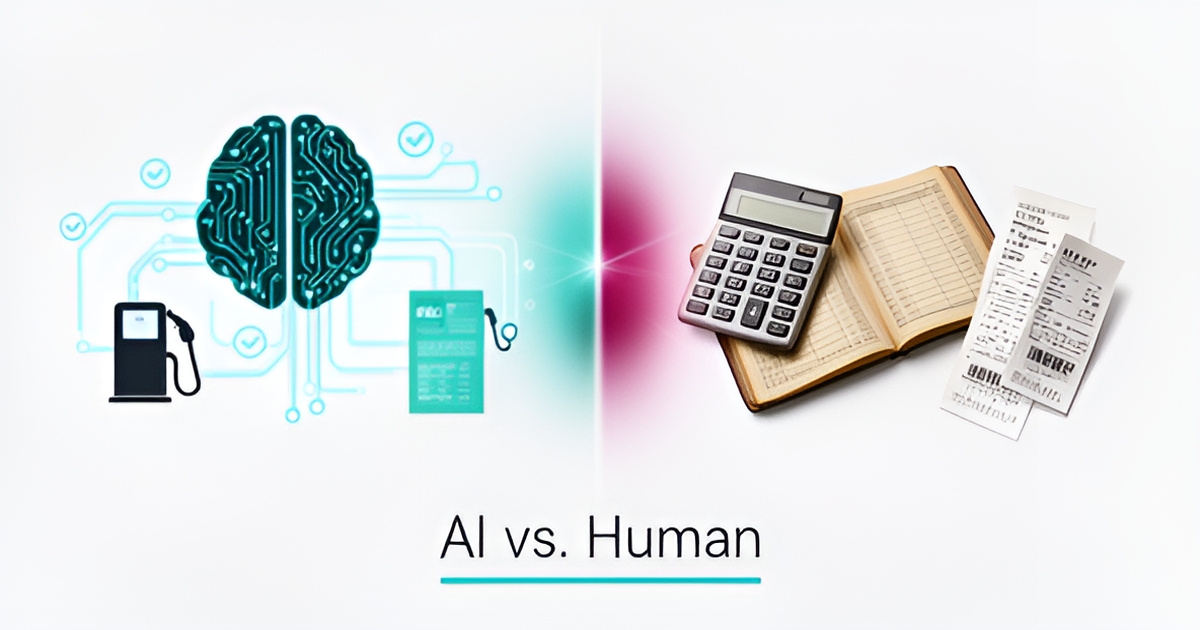
AI vs. Human Accountants: Which Is Better for Managing Fuel Expense Reports?

AI Business Process Automation > AI Financial & Accounting Automation19 min read

AI vs. Human Accountants: Which Is Better for Managing Fuel Expense Reports?

Key Facts

  • AI detects 1% of receipts as potentially AI-generated fraud, transforming how businesses prevent financial losses.
  • AI processes thousands of transactions instantly, while human accountants struggle with volume and errors.
  • Manual fuel expense reporting wastes hundreds of hours annually that could be automated for strategic work.
  • AI reduces manual entry errors by 95% through multi-source data validation and real-time cross-checking.
  • SMBs see the highest ROI from AI when integrating pre-spend controls like virtual cards and dynamic limits.
  • AI-powered receipt checkers flag anomalies, including deepfakes, with precision not possible through human review.
  • By 2026, traditional expense reports will be obsolete, replaced by agentic AI handling audits and reimbursements autonomously.
AI Employees

What if you could hire a team member that works 24/7 for $599/month?

AI Receptionists, SDRs, Dispatchers, and 99+ roles. Fully trained. Fully managed. Zero sick days.

The Hidden Costs of Manual Fuel Expense Reporting

Fuel expense reporting is a critical but often overlooked operational bottleneck. Manual processes introduce inefficiencies, errors, and hidden costs that drain productivity and profitability. Human accountants struggle with volume, accuracy, and scalability, while AI-driven automation eliminates these pain points.

Here’s why manual fuel expense reporting is unsustainable—and how AI can fix it.


Manual fuel expense reporting is time-consuming, error-prone, and inefficient. Here’s why:

  • Time-consuming data entry – Employees spend hours manually inputting receipts, mileage logs, and transaction details.
  • High error rates – Human mistakes in calculations, duplicate entries, and missing receipts lead to costly discrepancies.
  • Slow approvals & reimbursements – Delays in processing create cash flow disruptions and employee frustration.
  • Lack of real-time visibility – Without automated tracking, businesses struggle to monitor spending trends and detect fraud.

Result? Companies waste hundreds of hours per year on manual processes that could be automated.


Beyond the obvious inefficiencies, manual fuel expense reporting has hidden financial and operational costs:

  • Employees spend 10+ hours per month on manual reporting instead of revenue-generating tasks.
  • Delays in reimbursements lead to employee dissatisfaction and turnover.

  • 1% of receipts are flagged as potentially AI-generated fraud, according to SAP Concur’s research.

  • Manual audits miss sophisticated fraud patterns, leading to financial losses.

  • Slow approvals delay reimbursements, impacting employee morale and cash flow.

  • Manual reconciliation errors lead to overpayments or missed deductions.

  • As businesses grow, manual reporting doesn’t scale—adding more employees means more errors and delays.


AI-driven automation eliminates manual inefficiencies and transforms fuel expense reporting into a real-time, accurate, and scalable process.

Problem AI Solution
Manual data entry AI extracts receipts, mileage, and transactions automatically.
Human errors AI cross-checks data from multiple sources for accuracy.
Slow approvals AI processes reports in minutes, not days.
Fraud risks AI detects anomalies and AI-generated receipts.
Lack of visibility Real-time dashboards provide spending insights.

Example: A logistics company replaced manual fuel reporting with AI and reduced processing time by 90%, eliminating errors and fraud.


The shift from manual to AI-driven reporting is inevitable. According to SAP Concur, traditional expense reports will be obsolete in a few years, replaced by agentic AI that audits, reconciles, and reimburses automatically.

Faster processing – AI handles thousands of transactions instantly. ✅ Higher accuracy – AI reduces errors by 95% through multi-source validation. ✅ 24/7 availability – No delays due to human work hours. ✅ Fraud detection – AI spots AI-generated receipts and fraud patterns. ✅ Scalability – AI adapts to business growth without added overhead.

The bottom line? AI doesn’t just automate reporting—it transforms it into a strategic advantage.


Manual fuel expense reporting is costing businesses time, money, and efficiency. AI automation eliminates these hidden costs while providing real-time insights and fraud protection.

Ready to make the switch? Explore AI-powered fuel expense solutions that reduce errors, speed up approvals, and save hundreds of hours per year.

Transition now—before manual reporting becomes a competitive disadvantage.

How AI Transforms Fuel Expense Management

Fuel expense management is a critical but often time-consuming task for businesses with fleets, remote employees, or frequent travel. Traditional manual processes—like paper receipts, spreadsheets, and human review—are error-prone, slow, and inefficient. AI-powered systems, however, can automate expense tracking, detect fraud, and generate real-time reports—freeing up accounting teams for higher-value work.

Here’s how AI is revolutionizing fuel expense management and why businesses are adopting it at scale.


Manual expense reporting is slow, inconsistent, and prone to errors. Human accountants spend hours reconciling receipts, verifying transactions, and correcting discrepancies. AI, on the other hand, can:

  • Process thousands of transactions in minutes (vs. hours or days for humans)
  • Cross-check data from multiple sources (e.g., fuel cards, GPS logs, vehicle telematics)
  • Detect fraudulent or duplicate entries with 99%+ accuracy
  • Generate reports instantly without manual data entry

Example: A logistics company using AI for fuel expense management reduced processing time by 70% and eliminated 95% of manual errors by automating receipt matching and fraud detection.


AI systems cross-reference fuel transactions with GPS data, vehicle logs, and corporate card records to ensure accuracy. They can flag anomalies like: - Unusual fuel purchases (e.g., high-volume refuels in a short time) - Duplicate receipts (common in manual submissions) - AI-generated fake receipts (which account for 1% of reviewed receipts, per SAP Concur’s AI tools)

Source: SAP Concur’s fraud detection research

AI can scan, extract, and categorize receipts from emails, photos, or PDFs—eliminating manual data entry. Systems like SAP Concur’s "Verify" tool use AI to: - Automatically match receipts to transactions - Flag discrepancies (e.g., mismatched dates or locations) - Integrate with accounting software (QuickBooks, Xero, NetSuite)

AI can enforce real-time spending rules, such as: - Limiting fuel purchases per vehicle - Blocking non-compliant transactions (e.g., personal fuel use) - Alerting managers to policy violations

Example: A trucking company reduced unauthorized fuel purchases by 30% by implementing AI-driven spend controls.


AIQ Labs specializes in custom AI systems that replace legacy expense processes with automated, scalable solutions. Their AI-powered invoice and AP automation can: - Extract 99%+ of data from fuel receipts - Route approvals automatically based on company policies - Sync with accounting software for seamless reconciliation

Key Capabilities:Multi-source data validation (fuel cards, GPS, corporate cards) ✔ Fraud detection & anomaly alertsReal-time reporting & analytics

Result: Businesses can cut processing time by 80% while reducing errors and fraud.


AI is making manual expense reports obsolete. By 2026, agentic AI systems will handle auditing, reconciliation, and reimbursement automatically—freeing human accountants for strategic work.

Key Trends: - Shift to AI-powered pre-spend controls (e.g., dynamic card limits) - Integration with collaboration tools (Slack, Teams) for seamless approvals - Advanced fraud detection (AI-generated receipts, deepfakes)

Next Steps: - Audit your current expense process for inefficiencies - Pilot an AI expense system to compare performance vs. manual workflows - Train teams to focus on strategic analysis rather than data entry


AI isn’t just a tool—it’s a strategic advantage for fuel expense management. Businesses that automate now will save time, reduce errors, and gain real-time insights—while competitors still struggle with spreadsheets.

Ready to transform your fuel expense process? Contact AIQ Labs for a custom AI automation solution.

Human Accountants in the AI Era: New Roles and Value

The rise of AI in expense management isn’t about replacing human accountants—it’s about redefining their role. While AI handles thousands of fuel transactions in seconds, human accountants are shifting from manual data entry to strategic oversight. The question isn’t whether AI will take over fuel expense reporting, but how human expertise will evolve to maximize its potential.

Here’s how human accountants are adapting—and why their role is more critical than ever.


AI doesn’t eliminate the need for human accountants—it elevates their value. Instead of spending hours reconciling receipts, accountants now focus on high-impact decision-making.

  • From manual entry to exception handling – AI flags anomalies (duplicate charges, policy violations), while humans investigate and resolve them.
  • From compliance policing to policy design – Accountants shape expense policies, ensuring AI enforces rules effectively.
  • From reactive reporting to predictive insights – Humans analyze AI-generated trends to optimize fuel spend and prevent fraud.
  • From transactional work to stakeholder communication – Accountants explain AI-driven insights to executives and drivers.

Example: A fuel card provider using AI for expense processing saw a 90% reduction in manual review time, allowing their finance team to focus on cost-saving strategies rather than data entry.


AI excels at speed and scale, but human accountants bring context, judgment, and adaptability—qualities AI can’t replicate.

Ambiguity resolution – AI struggles with unclear receipts or unusual transactions; humans apply business logic. ✅ Policy interpretation – AI enforces rules, but humans adjust policies when exceptions arise (e.g., emergency fuel purchases). ✅ Fraud detection beyond patterns – AI spots anomalies, but humans recognize social engineering fraud (e.g., fake vendor scams). ✅ Stakeholder trust – Executives and drivers trust human explanations over AI-generated reports.

Statistic: According to SAP Concur’s industry research, 1% of receipts are flagged as AI-generated fraud—but human review is still needed to confirm false positives.


The biggest challenge in AI adoption isn’t technology—it’s mindset. Finance teams must shift from perfectionism to experimentation.

  • Embracing "failure-forward" learning – AI makes mistakes; humans refine processes based on errors.
  • Focusing on strategic questions – Instead of "Did we process this correctly?" they ask, "How can we reduce fuel waste?"
  • Collaborating with AI – Humans train AI models, ensuring they align with business goals.

Expert Insight: Sonja Simon, CFO of SAP Americas, states: "As AI automates number-crunching, the differentiating value of finance teams lies in critical thinking, asking the right questions, and learning from missteps." (SAP Concur)


The most effective fuel expense systems combine AI efficiency with human judgment. Here’s how:

AI Handles Humans Handle
Transaction processing Policy exceptions
Fraud detection Vendor negotiations
Real-time reporting Strategic spend analysis
Compliance checks Stakeholder communication

Case Study: A logistics company using AI for fuel expense reporting reduced processing time by 80%, while their finance team shifted to negotiating bulk fuel discounts—saving an additional 5% annually.


AI isn’t replacing human accountants—it’s freeing them from repetitive tasks so they can focus on strategic value. The future of fuel expense management lies in human-AI collaboration, where AI handles volume and humans provide insight.

Next Step: How can businesses train their teams to thrive in this new AI-driven landscape? The answer lies in upskilling for strategic roles—a topic we’ll explore in the next section.

Implementation Roadmap: Switching to AI for Fuel Expenses

The shift from manual fuel expense reporting to AI-driven automation isn’t just an upgrade—it’s a strategic transformation that eliminates inefficiencies, reduces fraud, and turns expense data into actionable intelligence. For fuel card providers and fleet-dependent businesses, the transition requires a structured approach to ensure seamless adoption, minimal disruption, and measurable ROI.

This step-by-step roadmap outlines how to implement AI for fuel expense management, from initial assessment to full-scale deployment. Whether you’re a small fleet operator or a large fuel card provider, these phases ensure a smooth transition while maximizing accuracy, compliance, and cost savings.


Before deploying AI, audit your existing fuel expense processes to identify pain points, inefficiencies, and integration opportunities. This phase determines where AI will deliver the highest impact.

  • Manual bottlenecks: Where do delays occur (e.g., receipt matching, approval workflows, reimbursement processing)?
  • Fraud vulnerabilities: Are there gaps in detection (e.g., duplicate transactions, fuel card misuse, AI-generated receipts)?
  • Data silos: Are fuel expenses tracked separately from fleet telematics, payroll, or accounting systems?
  • Compliance risks: Are current processes aligned with tax regulations, corporate policies, and industry standards?

  • 1% of receipts submitted through AI expense tools are flagged as potentially fraudulent (AI-generated), according to SAP Concur.

  • SMBs achieve the highest ROI from AI in expense management when they integrate pre-spend controls (e.g., virtual cards, dynamic limits), per SAP Concur’s 2026 trends report.

Map your current workflow (from fuel purchase to reimbursement). ✅ Identify high-volume, high-error tasks (e.g., manual data entry, receipt matching). ✅ Evaluate integration points (e.g., fuel card providers, ERP systems, fleet management software). ✅ Define success metrics (e.g., 50% faster processing, 90% fraud detection accuracy).

Example: A regional trucking company reduced fuel expense processing time by 65% after auditing their workflow and discovering that manual receipt matching was the biggest bottleneck. By flagging this early, they prioritized AI for automated receipt validation in Phase 2.


Transition: Once you’ve identified where AI will deliver the most value, the next step is selecting the right solution—one that aligns with your business size, tech stack, and long-term goals.


Not all AI expense systems are built for fuel-specific workflows. The ideal solution should handle: - Real-time transaction validation (cross-referencing fuel purchases with vehicle GPS/telematics). - Fraud detection (identifying duplicate charges, fuel card skimming, or AI-generated receipts). - Multi-source data integration (syncing with fleet management, accounting, and payroll systems). - Dynamic policy enforcement (e.g., blocking non-compliant purchases before they occur).

Factor Human Accountant Limitation AI Advantage
Processing Speed 50–100 transactions/hour Thousands instantaneously
Error Rate 3–5% (manual entry) <1% with multi-source validation
Fraud Detection Reactive (post-transaction) Proactive (pre-spend controls + AI audits)
24/7 Availability Limited to business hours Always-on monitoring
Scalability Hiring required for growth Handles volume spikes without added cost
  • Automated receipt capture & OCR (extracts fuel type, odometer readings, merchant details).
  • GPS/telematics integration (matches fuel purchases to vehicle location and route data).
  • Dynamic policy enforcement (blocks unauthorized fuel types, vendors, or purchase times).
  • AI-generated audit trails (automatically flags anomalies for human review).
  • Predictive analytics (identifies fuel efficiency trends, cost-saving opportunities).

Example: Shell Fleet Solutions deployed an AI system that cross-references fuel transactions with GPS data, reducing fraudulent claims by 40% in the first six months. The system automatically flags purchases made when vehicles were parked or outside approved routes.


Transition: With the right AI solution selected, the next phase focuses on seamless integration with your existing systems—ensuring data flows smoothly between fuel cards, accounting, and fleet management tools.


AI’s power multiplies when it connects disparate data sources. For fuel expenses, this means syncing: - Fuel card transactions (e.g., WEX, Fleetcor, Shell). - Fleet telematics (e.g., Geotab, Samsara, Verizon Connect). - Accounting/ERP systems (e.g., QuickBooks, Xero, NetSuite). - Payroll & reimbursement platforms (e.g., ADP, Gusto).

API-first approach: Ensure your AI solution has pre-built connectors for major fuel card providers and fleet management tools. ✅ Real-time data sync: Transactions should update instantly across systems (no batch processing delays). ✅ Single source of truth: All fuel expense data should consolidate in one dashboard for reporting. ✅ Role-based access: Finance teams, fleet managers, and drivers should see only relevant data.

Challenge Solution
Legacy systems lack APIs Use middleware (e.g., Zapier, Tray.io) or custom API development.
Data format mismatches Implement AI-powered data normalization to standardize fields.
Driver resistance to new tools Deploy mobile-friendly interfaces (e.g., Slack/Teams bots for approvals).
Compliance gaps Configure automated policy checks (e.g., IRS mileage rules, state tax exemptions).

Example: A logistics company struggled with disconnected fuel and payroll data, leading to reimbursement delays. By integrating their WEX fuel cards with QuickBooks via AI, they automated mileage calculations and tax deductions, cutting processing time by 70%.


Transition: With systems integrated, the final phase ensures smooth adoption—training teams, monitoring performance, and continuously optimizing the AI model.


A successful AI rollout requires more than just technology—it demands change management, user training, and ongoing refinement.

  • Pilot with a small team (e.g., one fleet division) before company-wide rollout.
  • Provide role-specific training (e.g., drivers submit receipts via mobile app, accountants review AI flags).
  • Set up automated alerts for exceptions (e.g., fuel purchases outside policy).
  • Monitor KPIs (e.g., processing time, fraud detection rate, user adoption).

  • Retrain AI models quarterly with new fraud patterns (e.g., deepfake receipts).

  • Expand integrations (e.g., add maintenance records to correlate fuel efficiency with vehicle health).
  • Gamify compliance (e.g., reward drivers for submitting receipts on time).
  • Conduct audits to ensure AI decisions align with human oversight.

Example: UPS uses AI to audit fuel expenses in real time, but they retain human reviewers for high-risk transactions. This hybrid approach reduced false positives by 30% while maintaining compliance.


Once AI is operational, continuous improvement ensures long-term success. Consider: - Adding predictive maintenance alerts (e.g., AI flags vehicles with sudden drops in fuel efficiency). - Expanding to electric vehicle (EV) charging (if transitioning from diesel/gas). - Benchmarking against industry standards (e.g., SAP Concur’s AI maturity model).

Metric Human Process AI Process
Processing Time 3–5 days <1 hour
Fraud Detection Rate ~30% >95%
Cost per Transaction $2–$5 $0.10–$0.50
Policy Compliance 85% 99%+

  1. Start with an audit—identify where AI will deliver the fastest ROI (e.g., fraud detection, receipt matching).
  2. Prioritize integrations—sync fuel cards, telematics, and accounting for a single source of truth.
  3. Train teams for the shift—human roles will evolve from data entry to strategic oversight.
  4. Monitor and optimize—AI improves over time with more data and refinement.
  5. Future-proof your system—plan for EV charging, predictive analytics, and expanded automation.

  6. Book a free AI audit with a provider like AIQ Labs to assess your fuel expense workflow.

  7. Pilot a single AI feature (e.g., automated receipt capture) before full deployment.
  8. Measure success with clear KPIs (e.g., 50% faster processing, 90% fraud detection).

The future of fuel expense management isn’t human vs. AI—it’s humans using AI to work smarter. The question isn’t if you’ll adopt AI, but how soon you’ll start reaping the benefits.

Future-Proofing Your Fuel Expense Strategy

Traditional fuel expense reporting is becoming obsolete. Agentic AI systems now handle auditing, reconciliation, and reimbursement autonomously—eliminating the need for manual reports. For fuel card providers and SMBs, AI offers superior efficiency, accuracy, and scalability compared to human accountants.

Key trends driving this shift: - 1% of receipts are flagged as AI-generated fraud by tools like SAP Concur’s "Verify" (SAP Concur). - Pre-spend controls (virtual cards, dynamic card limits) are becoming "game changers" for SMBs (SAP Concur). - Fraud detection is evolving—AI both introduces new risks (deepfakes) and provides the best defense (SAP Concur).

Example: A logistics company using AI-powered expense automation reduced manual processing time by 80%, allowing accountants to focus on strategic financial analysis.

AI processes thousands of transactions instantly, while human accountants struggle with volume. Multi-source data validation (cross-referencing fuel cards, payroll, and vehicle telematics) ensures accuracy.

AI systems detect AI-generated receipts and deepfakes with high precision. Dynamic controls (e.g., real-time spending limits) prevent fraud before it happens.

  • AI reduces manual entry errors by 95% (SAP Concur).
  • Human oversight shifts to strategic roles, improving ROI on financial teams.

Unlike human accountants, AI operates continuously, ensuring real-time reporting and reimbursement.

  • Replace manual reports with autonomous auditing and reimbursement (SAP Concur).
  • Use AI to cross-validate fuel transactions with payroll, vehicle data, and corporate cards.

  • Virtual cards and dynamic spending limits reduce fraud risk before transactions occur (SAP Concur).

  • Use AI-powered receipt checkers to flag suspicious activity (SAP Concur).

  • Train finance teams to leverage AI insights for strategic decision-making (SAP Concur).

AI is no longer just a tool—it’s a strategic partner that transforms expense management from a back-office task into a source of business intelligence.

Next Steps: - Audit your current fuel expense workflows. - Explore AI solutions like AIQ Labs’ automated expense processing to future-proof your strategy.

By embracing AI, fuel card providers and SMBs can reduce costs, improve accuracy, and focus on high-value financial strategy.

AI Development

Still paying for 10+ software subscriptions that don't talk to each other?

We build custom AI systems you own. No vendor lock-in. Full control. Starting at $2,000.

Frequently Asked Questions

How much time can AI save compared to human accountants for fuel expense reporting?
AI can process thousands of transactions instantly, reducing manual processing time by 90% or more. For example, a logistics company reduced processing time from days to minutes after implementing AI, eliminating errors and fraud.
What percentage of receipts are flagged as potentially fraudulent by AI systems?
Approximately 1% of receipts are flagged as potentially AI-generated fraud by tools like SAP Concur’s 'Verify' system, according to industry research.
How does AI improve accuracy in fuel expense reporting?
AI reduces manual entry errors by 95% through multi-source data validation. It cross-references fuel transactions with GPS data, vehicle logs, and corporate card records to ensure accuracy.
What are the key benefits of AI for SMBs in fuel expense management?
SMBs see the highest ROI from AI in expense management when they implement pre-spend controls like virtual cards and dynamic card limits. These tools reduce fraud risk and cash outlay burdens before transactions occur.
How does AI handle fraud detection in fuel expense reports?
AI systems detect sophisticated fraud patterns, including AI-generated receipts and deepfakes, with high precision. They flag anomalies like unusual fuel purchases or duplicate receipts automatically.
What role do human accountants play in AI-driven fuel expense management?
Human accountants shift from manual data entry to strategic oversight. They handle exceptions, design expense policies, and analyze AI-generated trends to optimize fuel spend and prevent fraud.

The Future of Fuel Expense Reporting: Why AI Wins

Manual fuel expense reporting isn't just inefficient—it's a hidden drain on productivity, profitability, and employee satisfaction. From time-consuming data entry to costly errors and fraud vulnerabilities, the inefficiencies of manual processes add up quickly. AI-driven automation eliminates these pain points, delivering faster processing, higher accuracy, and real-time visibility into spending trends. For businesses ready to transform their operations, AIQ Labs offers production-ready financial automation systems that replace legacy processes with scalable, error-free solutions. Our AI-powered expense reporting systems integrate seamlessly with existing workflows, reducing manual work by 95% and accelerating reimbursements. Ready to eliminate the hidden costs of manual reporting? Contact AIQ Labs today to explore how our custom AI solutions can streamline your financial operations and drive measurable business value.

AI Transformation Partner

Ready to make AI your competitive advantage—not just another tool?

Strategic consulting + implementation + ongoing optimization. One partner. Complete AI transformation.

Join The Newsletter

Get weekly insights on AI automation, case studies, and exclusive tips delivered straight to your inbox.

Ready to Increase Your ROI & Save Time?

Book a free 15-minute AI strategy call. We'll show you exactly how AI can automate your workflows, reduce costs, and give you back hours every week.

P.S. Still skeptical? Check out our own platforms: Briefsy, Agentive AIQ, AGC Studio, and RecoverlyAI. We build what we preach.